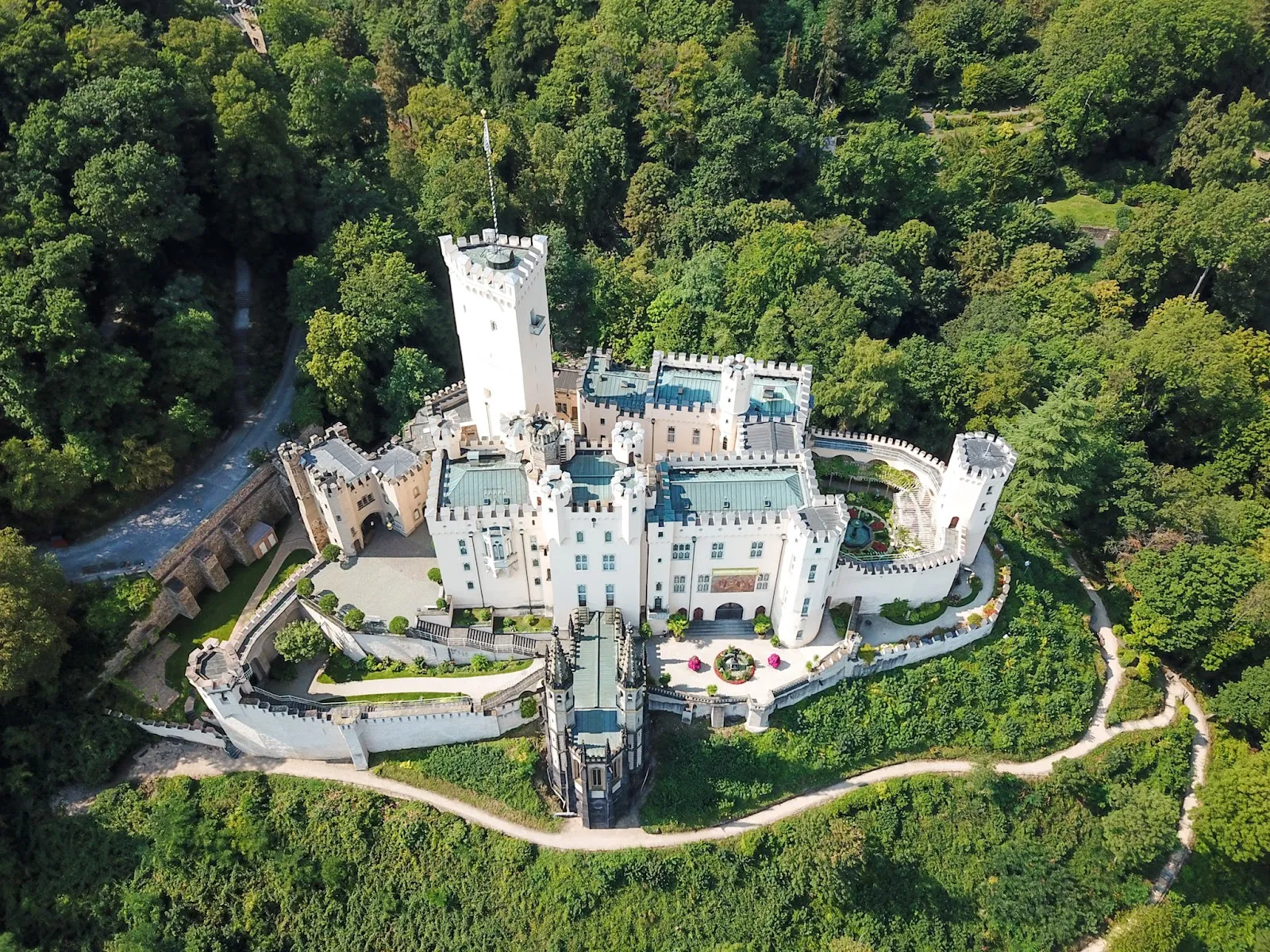
Deutsches Eck, the German Corner, is the tip of land in Koblenz where the Moselle flows into the Rhine. A large equestrian statue of Emperor Wilhelm I stands on a stone pedestal above the meeting point. From the platform at its foot you can watch the two rivers run side by side. The riverside promenade is good for a long walk, and boats pass all day. The cable car to Ehrenbreitstein Fortress starts just behind the monument, so the two fit easily into one outing.
Why it is called the German Corner
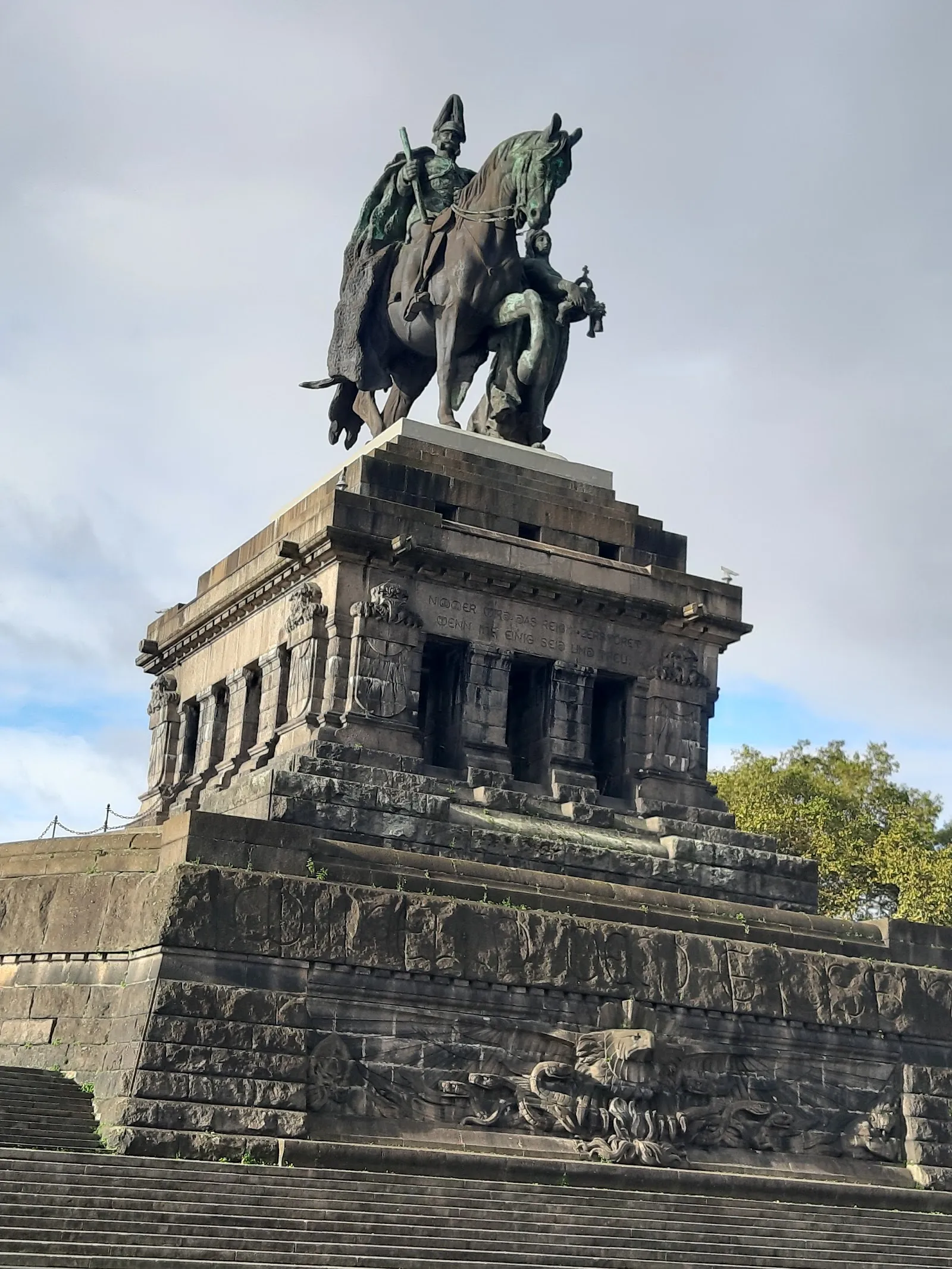
The name goes back to 1216, when the Teutonic Order settled at the confluence of the Rhine and Moselle. The knights came at the invitation of Theoderich von Wied, Archbishop of Trier, and set up a commandery here. The point took its name from that German order. The site has formed part of the city's natural defences since then.
The land itself is an artificially raised tongue of ground, shaped like the bow of a ship. Koblenz takes its own name from the Latin Castellum apud Confluentes, the fort at the confluence. On a clear day you can see the two rivers keep their different colours for a stretch after they meet.
The point also marks the end of the UNESCO-listed Upper Middle Rhine Valley on the left bank, which runs from the mouth of the Nahe at Bingen to Deutsches Eck.
The Kaiser Wilhelm monument
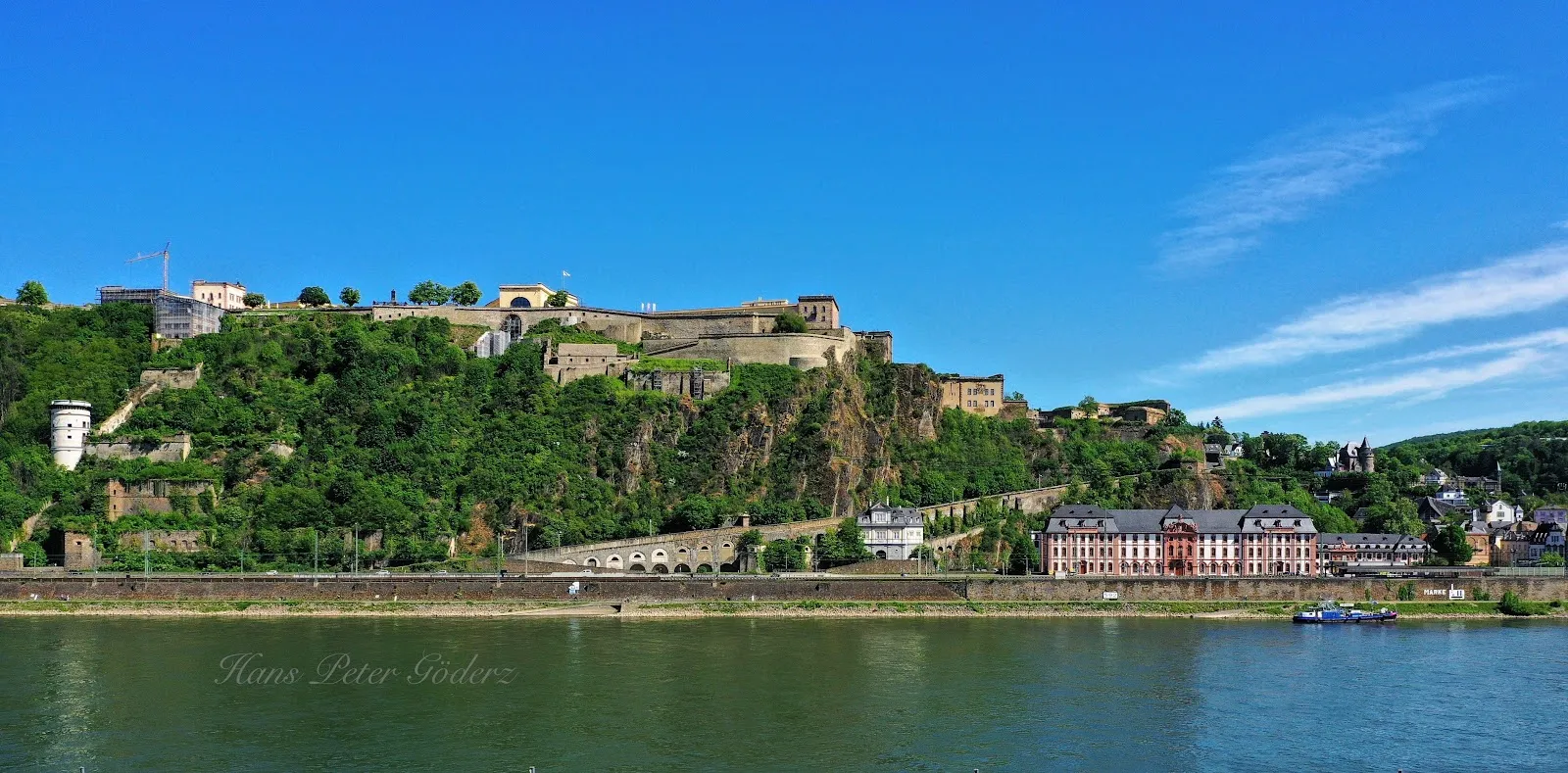
The equestrian statue of Emperor Wilhelm I went up in 1897, nine years after his death, to honour his part in the unification of Germany. The original was copper, weighed about 53 tons and showed the emperor on horseback above a large stone pedestal. The monument is roughly 37 metres high, which is easier to judge when you stand beneath it.
In 1945 an American artillery shell badly damaged the statue, and what remained was taken down. The figure you see today is a replica, in place since 1993.
The monument has long been debated. The French and the Americans both objected to it in the past. Today the corner is generally read as a sign of German unity. Fragments of the Berlin Wall stand near the promenade as a reminder of reunification in 1990.
On the point and along the promenade
A platform at the base of the statue looks over both rivers. Steps lead up to a higher vantage with a view of Ehrenbreitstein Fortress on the far bank. From here you can see bridges, river cruisers and the town.
The approach from the promenade is a wide open space with planted flowerbeds and trees for shade. You can follow the Rhine or the Moselle on foot towards the Electoral Palace and its gardens. Concerts are held here often in summer. Behind the monument is a beer garden where sporting events are shown, and there are cafes along the riverfront for a snack.
There are restrooms and a playground nearby. The entrance is wheelchair accessible.
The cable car and getting here
The cable car station is just behind the monument. The ride crosses the Rhine to Ehrenbreitstein, about half a mile from Konrad-Adenauer-Ufer. The lifts carry up to 7,000 passengers an hour and run from half an hour before the fortress opens until half an hour after it closes. One return ticket was quoted at 15 euros.
The 19th-century fortress is now a museum, a youth hostel and a restaurant, and it houses the Koblenz State Museum. The view back over Deutsches Eck is a main reason to go up.
From the main railway station, bus line 1 runs to the Deutsches Eck stop. A sightseeing train that tours the city's sights also leaves from a short walk away.
Perguntas frequentes
What does Deutsches Eck mean?
It means German Corner. The name dates to 1216, when the Teutonic Order settled at the confluence of the Rhine and Moselle.
Is the Kaiser Wilhelm statue original?
No. The 1897 statue was badly damaged by an American shell in 1945, and the remains were taken down. The figure there now is a replica, in place since 1993.
How long do you need at Deutsches Eck?
Half an hour to an hour covers the platform, the statue and a short walk. Allow more time if you take the cable car, which takes under 20 minutes if you stay on board for the round trip.
How do you get to Deutsches Eck from the train station?
Take bus line 1 to the Deutsches Eck stop. Parking is also available along the river, and it is reported to be free on Sundays on the left side.
Can you take the cable car from Deutsches Eck?
Yes. The station is just behind the monument, and the cable car crosses the Rhine to Ehrenbreitstein Fortress. A return ticket was quoted at about 15 euros.