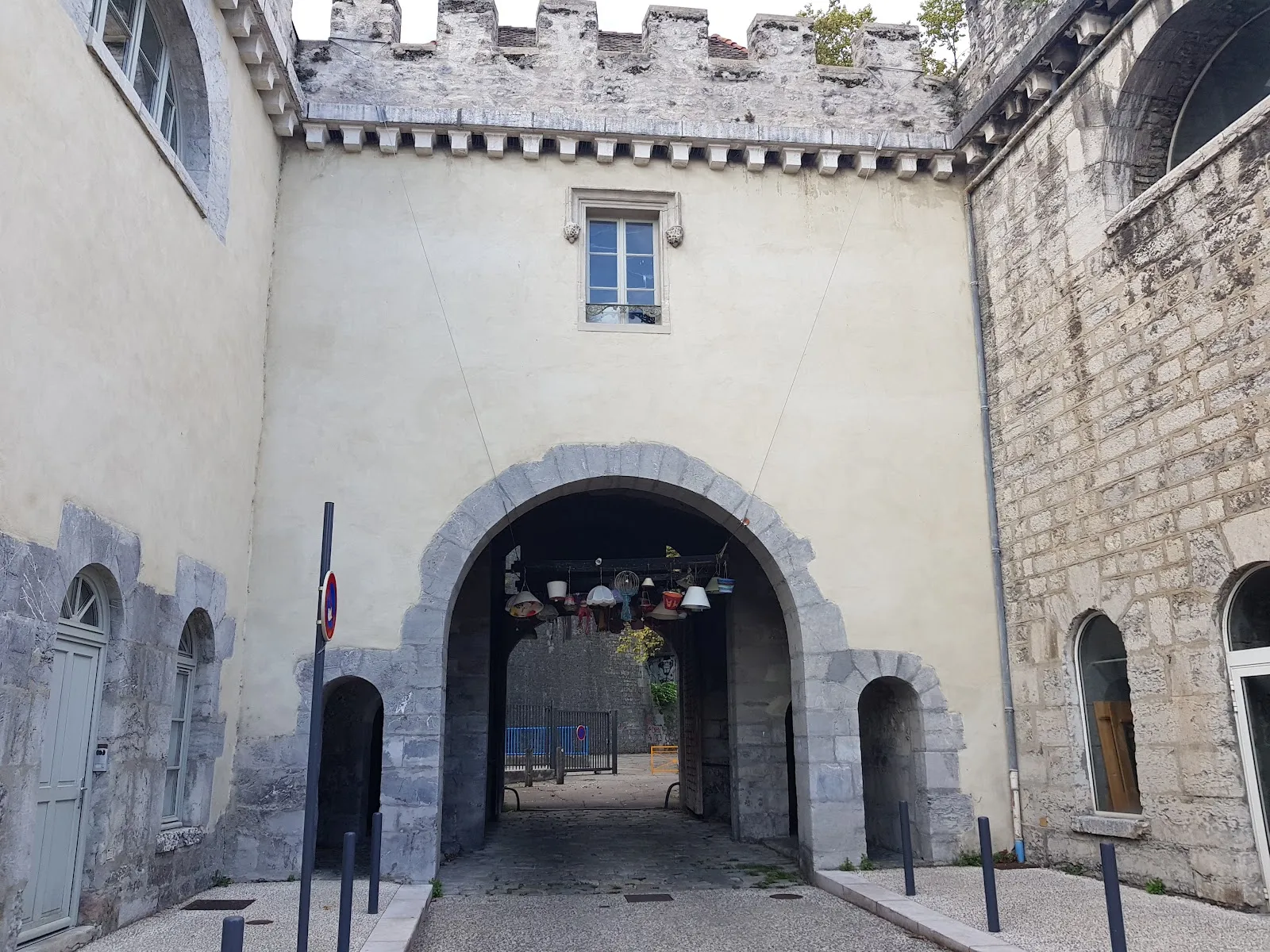
The Bastille is a military fort on a hill above Grenoble, reached by the city's bubble cable car or by walking. It overlooks the Isère and Drac valleys, and on a clear day the view reaches Mont Blanc and the surrounding ranges. Inside, you can walk the ramparts and dungeons, visit two museums, or let children try the adventure courses. The view is the main draw, and the walk up gives a slower way to take it in.
A fort built above the valleys
The Bastille sits on a hill on the northern side of the Isère, above the old town. A fortification stood here in the late 16th century, when Lesdiguières built a defence on the site. The fort seen today was built in the 1820s and 1840s under General Haxo, who strengthened the earlier works.
Its job was to watch the valleys of the Isère and the Drac and to guard the city against the Duchy of Savoy. The steep slopes and narrow valleys around the hill made an attack difficult.
Getting up: the bubbles and the walk
The cable car, known locally as the bulles, has run from the quayside on Quai Stéphane Jay since 1934. It was the first urban cable car in the world. The cabins are spherical and transparent, and the ride lasts about four minutes, crossing the Isère on the way up.
Walkers can choose among four main access routes. Each takes roughly half an hour to an hour, depending on the route and pace, and the climb is challenging in parts. The routes pass the Jardin des Dauphins and the Rabot Fort, and the Montée de Chalemont is a nature trail that leads to the site. At the foot of the cobbled walkway stands the Fontaine du Lion, which shows a stone lion, a symbol of Grenoble, devouring a bronze serpent that represents the Isère.
The walk up is free.
Inside the fort
The fort has ramparts, dungeons and underground tunnels to explore. It holds two museums, one on military history that covers the Mountain Troops and one showing contemporary art. Restaurants on the site serve traditional Dauphinois cooking, and there are picnic tables and places to sit if you bring your own food.
Families can try the Acrobastille adventure courses, a maze, two giant zip wires and escape games. Access to some parts of the fortress is limited, so check what is open before you plan a long visit inside.
What you see from the top
On a clear day, the summit of Mont Blanc is visible. The view takes in the Chartreuse, Belledonne and Vercors ranges, and the city below, with its parks, avenues and buildings laid out between the Isère and the Drac. Orientation tables on the site help you name the peaks.
Nearby sights to pair with the visit
Back in the city, the Musée de Grenoble holds modern art, including works by Picasso, Matisse and Gauguin. The old town, with its squares, mansions and shopping lanes, is also close to the cable car. The Jardin des Plantes botanical garden has a small natural history museum and makes a quieter stop. The Saint-Laurent Archaeological Museum is also in town.
Perguntas frequentes
Is there an entry fee for the Bastille?
The fort is freely accessible, and the walking routes up are free. The cable car is paid, so check the current fare on the official site before you travel.
How do I get to the Bastille?
Take the cable car from Quai Stéphane Jay, which takes about four minutes, or walk up on one of four main routes, which takes roughly half an hour to an hour.
Is the walk up difficult?
The climb is challenging in parts, and several trails suit different fitness levels. Sturdy shoes are a good idea.
Can you see Mont Blanc from the Bastille?
On a clear day, yes. The summit of Mont Blanc is visible from the fort.