
Château de Fontainebleau is a royal palace 55 km southeast of Paris, with around 1,500 rooms and UNESCO World Heritage status since 1981. It began as a medieval hunting lodge and was almost entirely rebuilt in 1528 under Francis I in Italianate style. The core of the visit is the Galerie de François Ier, Napoleon's apartments and the Napoleon I museum. Outside, the courtyards and formal gardens can be walked without a ticket. Crowds are lighter than at Versailles, so the rooms are easy to see and photograph, except on holiday weekends.
Eight centuries of royal residence
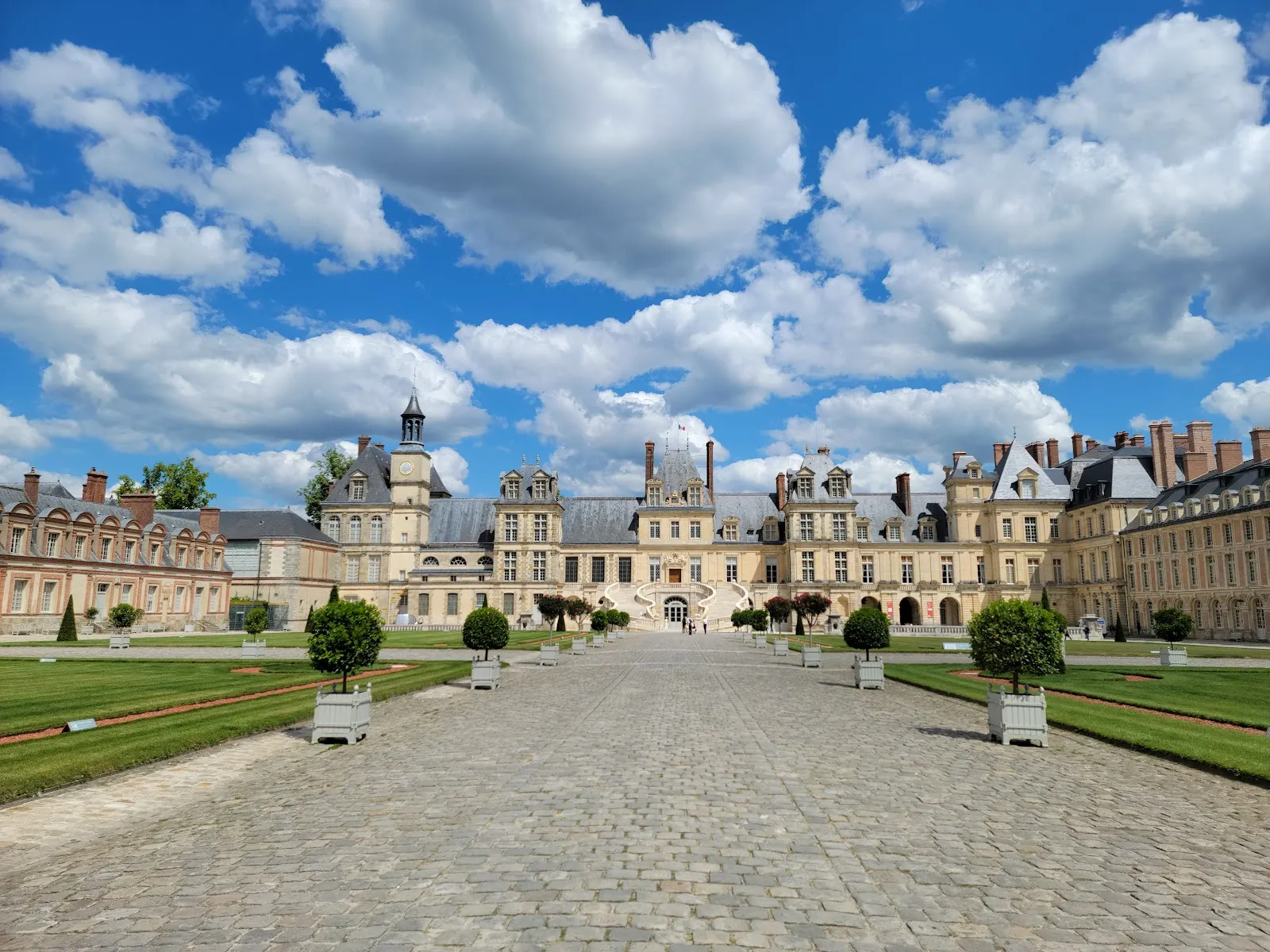
Fontainebleau began in the 12th century as a royal residence and hunting lodge, and some medieval traces survive. Most of what you see dates to the 16th century. In 1528 Francis I rebuilt the palace almost completely in an Italianate style, and later rulers kept adding to it. Henri II and Henri IV lived here, and so did Napoleon Bonaparte. Louis VII to Napoleon III is the span of rulers tied to the house, and about 30 kings of France contributed to the buildings.
The result mixes Gothic, Renaissance and classical styles. It is a national museum today, and UNESCO has listed the château and its domain since 1981. Treaties and decrees tied to the place include the 1685 Edict of Fontainebleau and the 1762 Treaty of Fontainebleau.
Courtyards and rooms to look for
Start in the main courtyard, the Cour d'Honneur, with its double-horseshoe staircase. It is also called the Farewell Courtyard, because Napoleon said goodbye to his old guard here on 20 April 1814 before leaving for Elba.
The west wing holds the Renaissance rooms. The Galerie de François Ier is richly decorated by Rosso Fiorentino, a master of the School of Fontainebleau. Look for the large chimney in the Guard Room, the original Saint-Saturnin Chapel and Napoleon's Throne Room. Marie Antoinette's Turkish boudoir and Napoleon III's ornate theatre belong to later chapters of the palace's story.
Visitors who have walked the rooms say the changes of different centuries are easy to feel, because the palace was in continuous use. Information panels are easy to read when the rooms are quiet.
Napoleon at Fontainebleau
The Napoleon I museum, part of the main château, holds Empire-era furniture, uniforms and personal objects, including field tents and a hat. Napoleon's abdication in 1814 took place here, which gives the farewell courtyard its weight.
A guided tour of Napoleon's apartments adds context, with a guide who explains daily life at court in that period. Guided tours can be short on availability in holiday seasons, so booking ahead is sensible.
Gardens, arboretum and forest
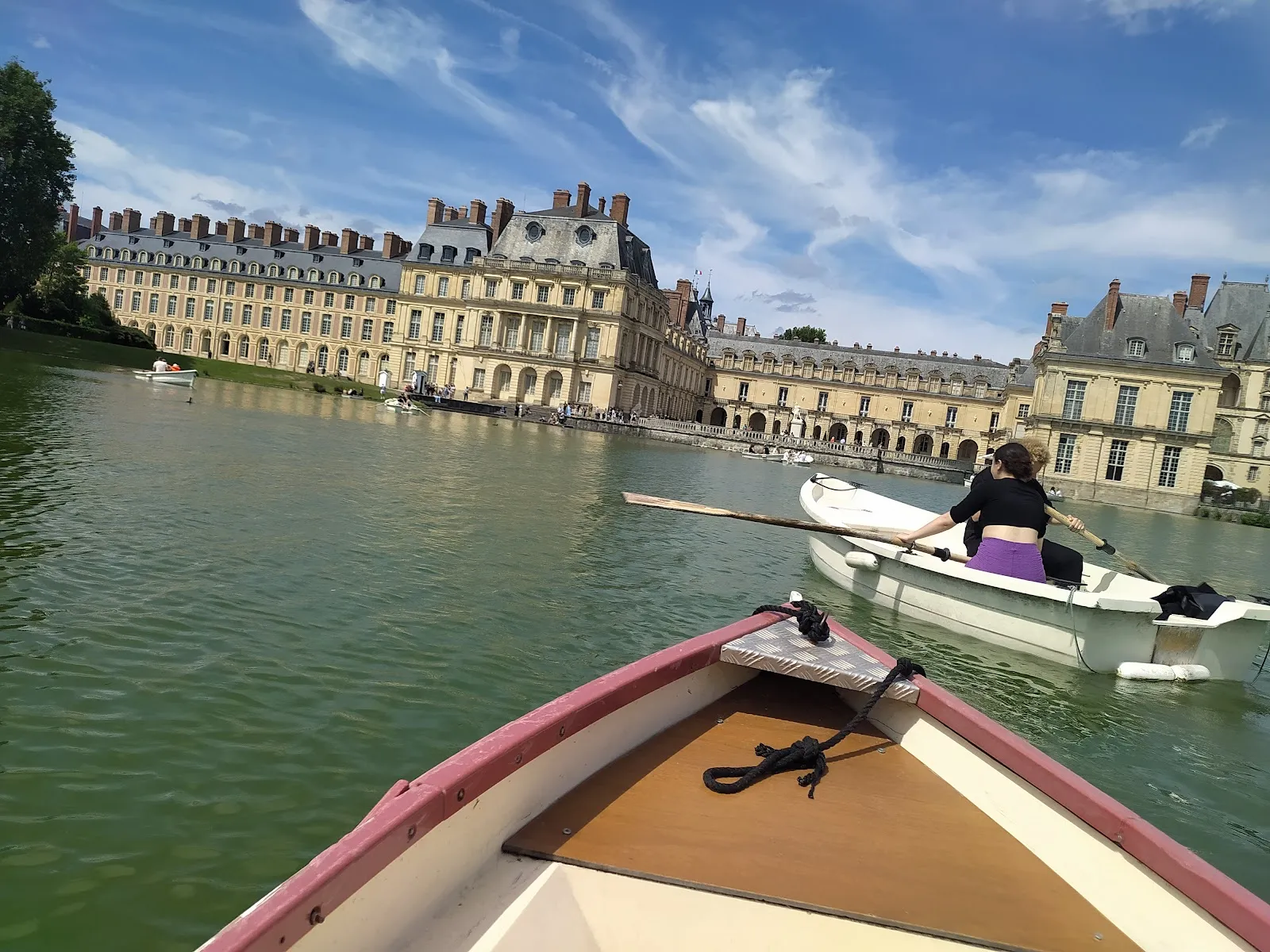
The Grand Parterre was laid out under Louis XIV and bears the mark of André Le Nôtre and Louis Le Vau. The boxwood embroidery has been removed, but the grass compartments and the overall layout remain. A pavilion by the carp pond is another landmark in the grounds. Seeing the gardens takes around two hours, and a tourist train leaving from near the front gate covers the parts that are too far to walk comfortably.
Next to the château, the Arbor&Sens arboretum covers 20 hectares and is free. The Office National des Forêts created it as a sensory trail with accessible routes. Beyond lies the Forêt de Fontainebleau, the third largest national forest in France, which has trails for walking and cycling, and is known for bouldering. Bikes can be rented at the station, and the R train sometimes stops at the forest for walkers. Plan a full day if you add the forest trails.
Planning the day
The town is 55 km southeast of Paris and works as a day trip by train. The route from Fontainebleau-Avon station to the château is a bus ride on Ligne A toward Les Lilas, getting off at the Château stop, or a walk of about three kilometres. Opposite the main entrance, rue Royale leads to the tourist office at 4 rue Royale, which has a map of the town.
The château is closed on Tuesdays, January 1, May 1 and December 25. Not all of the 1,500 rooms are open to the public. The entrance is wheelchair accessible and a hearing loop is available. Schools and groups of children can request adapted tours.
Food inside is limited to a brunch area and a café, so many visitors buy bread and cheese in the shops near the château and picnic in the gardens or forest. The town also has a good choice of restaurants.
Perguntas frequentes
Is there an entry fee for Château de Fontainebleau?
The palace interiors need a ticket, so check the current price on the official website. The gardens and courtyards can be visited for free, and so can the Arbor&Sens arboretum.
How long do you need at Fontainebleau?
The château interiors take from one hour without a guide to two or three with one. The gardens take about two hours. Add more time if you want to walk the forest trails.
How do you get from Paris to Château de Fontainebleau?
Take the R train to Fontainebleau-Avon station, then bus Ligne A to the Château stop, or walk about 40 minutes. By car the trip is longer in traffic, and parking can be hard to find.
Do you need to book tickets in advance?
Booking ahead is recommended, especially in holiday seasons and for guided tours. Even with a ticket you may queue at the entrance on weekends and public holidays.
Can you bring a pushchair into the château?
Pushchairs and back-carried baby carriers are not allowed on the tour routes. You can swap them for a front carrier at the cloakroom.
Is the château closed on any days?
Yes. It is closed on Tuesdays, January 1, May 1 and December 25.

