Špilberk Castle sits on a hill above Brno's city center, a short walk from the old town. Begun in the 13th century and rebuilt as a Baroque fortress, it later held political prisoners from across the Habsburg lands and became known as the 'Jail of Nations'. Today it houses the Brno City Museum, and its underground casemates and cells are open to visitors. The park and walls are free to enter, and the views over the city are a good reason to climb up.
From royal castle to fortress
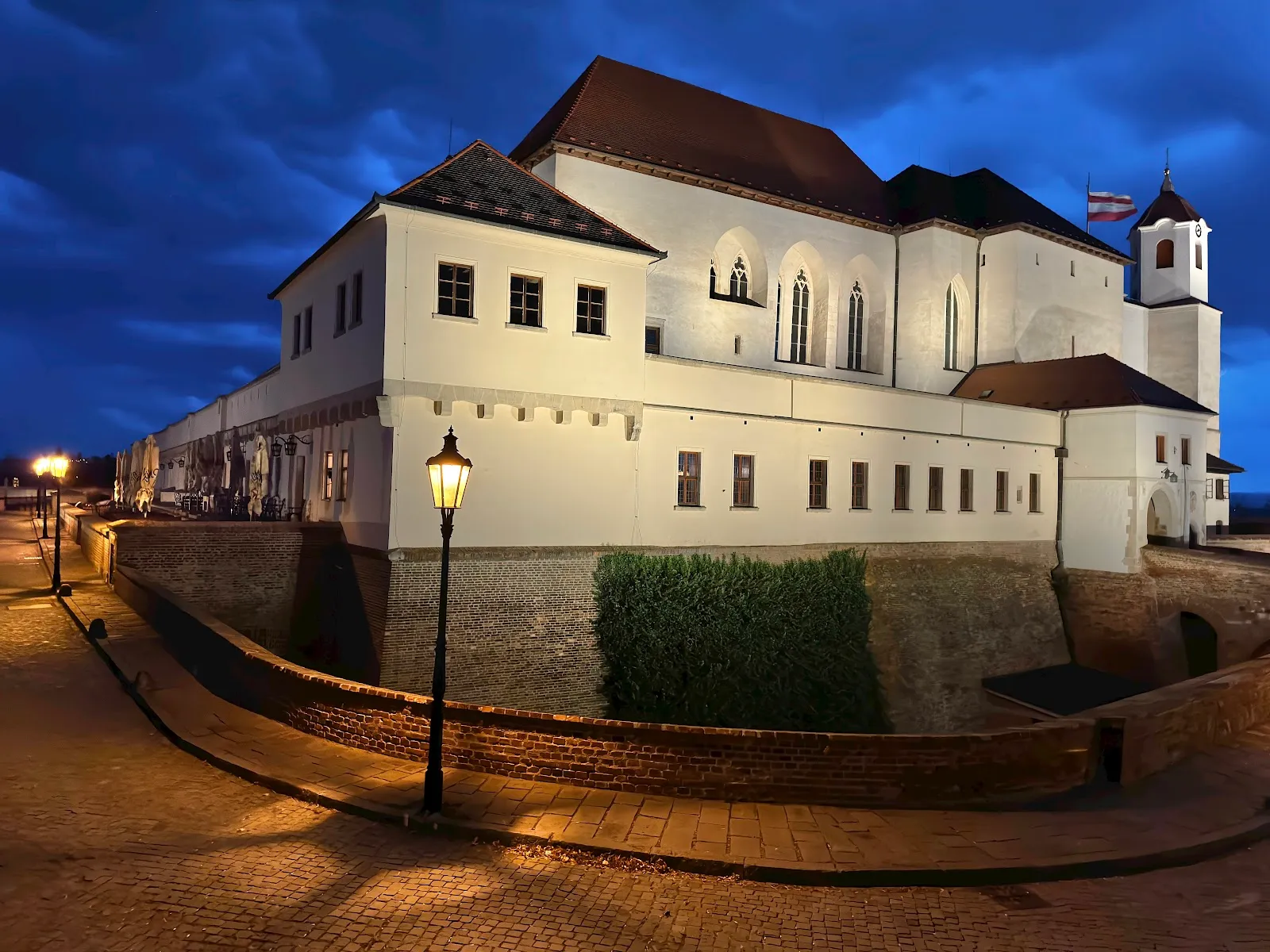
Špilberk began in the 13th century as a royal castle. Construction started under the Přemyslid kings and was completed by King Ottokar II of Bohemia. Over the centuries the building changed its role many times, moving from royal residence to fortress and then to prison.
In the 17th and 18th centuries the castle was rebuilt in the Baroque style as a massive fortress. Its walls held out several sieges, and it is recorded as a major defence against the Swedes during the Thirty Years War. Townspeople took over the castle in 1560 and fortified it.
A prison for political prisoners
From the 18th century the castle was used as a civil jail. Under the Habsburg monarchy it held political prisoners and criminals from across the empire. Revolutionaries from many parts of Europe were held here, and some died in its dungeons. This is why it became known as the Jail of Nations.
Several well-known prisoners were held here. They include the poet Silvio Pellico, the Czech outlaw Václav Babinský, and members of the Italian Carbonari, a 19th-century secret revolutionary society. The prison's role continued into the period of the early Nazi occupation, when civil and political prisoners were held and made to labour here.
The casemates and cells
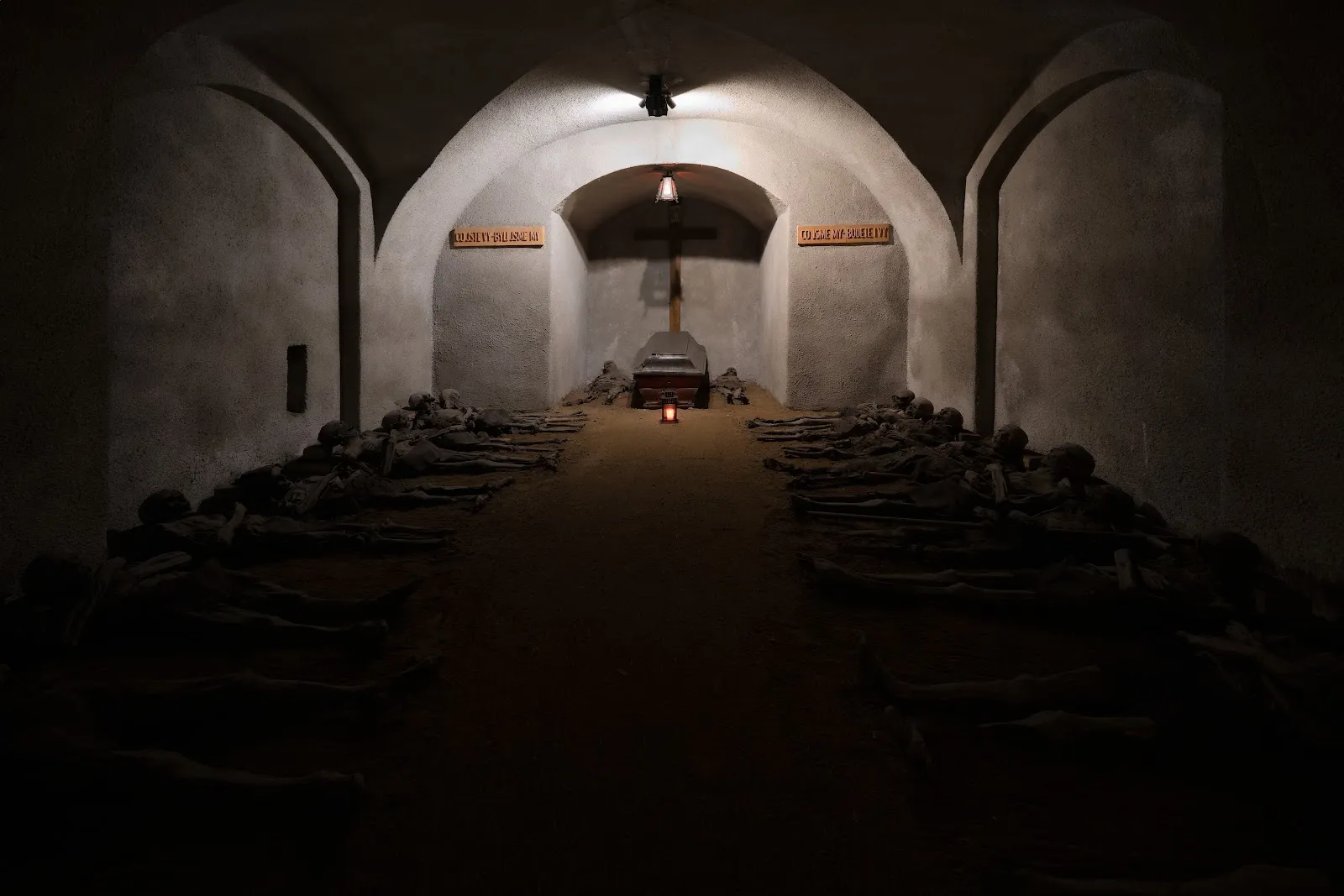
The casemates are the underground part of the castle, with vaulted corridors and prison cells cut into the stone. Walking them gives a direct sense of how prisoners lived in this stronghold.
Not every part may be open at a given time, so check which areas are accessible on the day you visit.
Inside the Brno City Museum
Špilberk houses the Brno City Museum, which tells the story of the city from medieval times to the present. The permanent exhibitions cover the history of the castle and of Brno, and art exhibitions are shown from time to time.
One exhibition, For the New Brno, presents the city's architecture from 1919 to 1939. The museum spreads over three levels, so allow time for each floor. The gift shop is a fun stop on the way out.
The grounds, walls and views
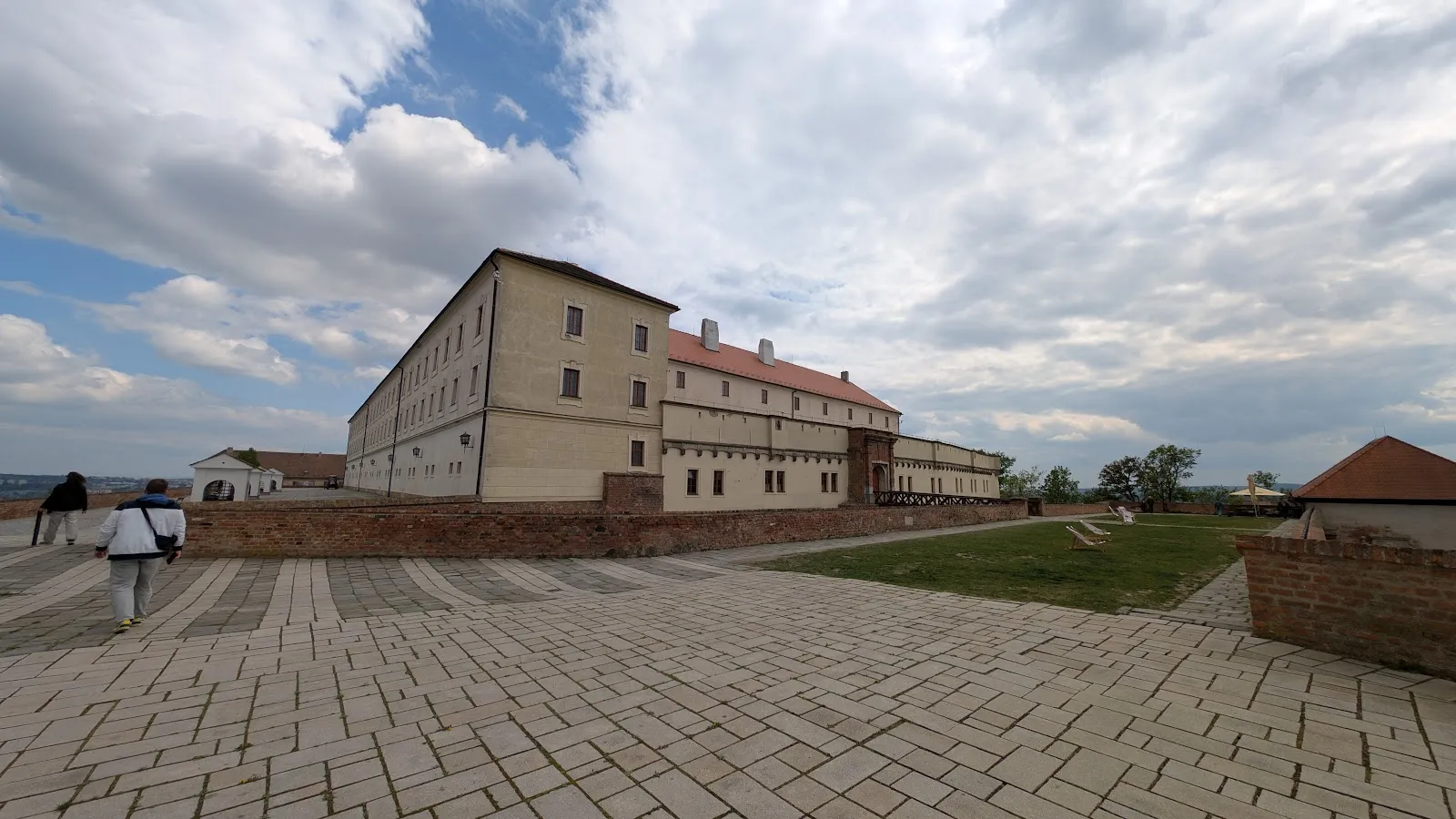
The park and castle grounds are free to enter. On the way up, a winding path climbs through hedgerows and well-kept grounds. From the fortification walls you can see the city and the cathedral of St. Peter and St. Paul. A small artificial waterfall sits near the entrance.
In summer the park is a popular spot for picnics. Concerts, performances and festivals are held in the courtyard and grounds, and folk groups from the city often perform here.
Planning the visit
Tickets are sold for different parts of the castle, and one full ticket was listed at 350 CZK in a travel publication. Prices may have changed, so check the official website before you go. Advance tickets are recommended.
The castle is listed as good for kids, with a family discount and discounts for children. The entrance and restroom are wheelchair accessible. An on-site restaurant serves traditional Czech food, which is a practical place to eat after the climb.
Perguntas frequentes
Is there an entry fee?
The park, castle grounds and walls are free to enter. Museum and casemate tickets are sold for different parts of the castle, and one full ticket was listed at 350 CZK in a travel publication, so check current prices on the official website.
How long do you need?
About 2 to 3 hours covers the main historic exhibitions. Visiting every part of the site can take most of a day.
Is the castle good for children?
The castle is listed as good for kids and offers a family discount as well as discounts for children.
Is the castle wheelchair accessible?
The entrance and the restroom are wheelchair accessible.
Is there English information?
Some exhibits and tours are in Czech only, and English translations are limited, so check before you visit.