Kruispoort is one of Bruges’ four surviving medieval city gates, on Langestraat at the eastern approach to the old city. Built as part of the city’s defences, the gate has a castle-like profile, with a drawbridge. Walk around its outer paths for different views, then follow the nearby canal towards Bruges’ historic windmills. It’s a quieter stop after the main sights, with water and open views adding to the visit.
A surviving city gate
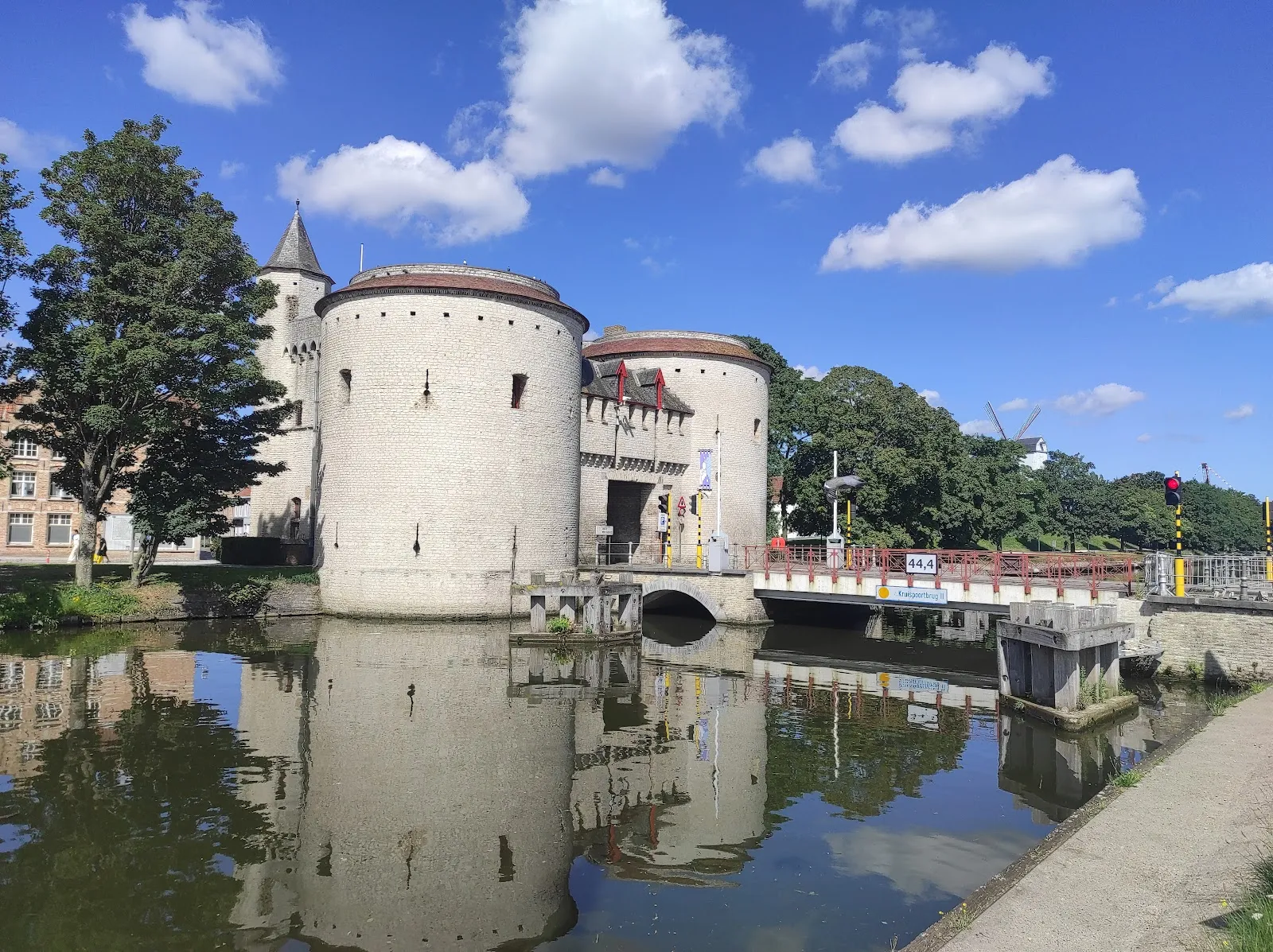
Bruges was once enclosed by defensive walls and a canal that served as a moat. The walls were removed in the 1780s, but four of the city’s original gates remain. Kruispoort is one of them.
The gate formed part of Bruges’ defences and controlled access to the city. The surviving structure dates to the early 15th century and has a monumental, castle-like appearance. A drawbridge is part of its design.
Walk the canal and windmills
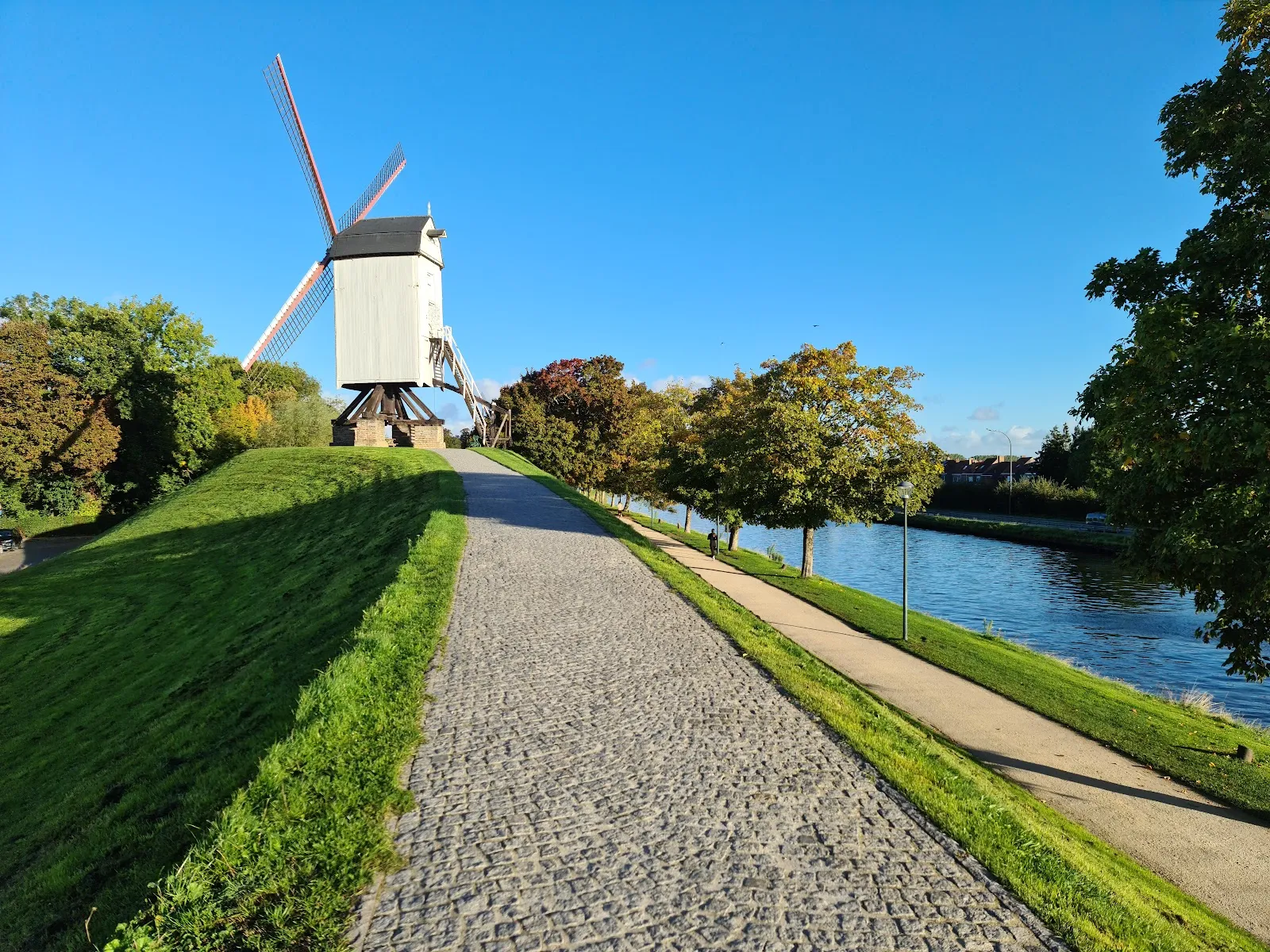
Kruispoort stands beside the canal, with historic windmills nearby. Walking along the water gives you a different view of the gate and a route past the mills. The canal is still part of the Ghent-Ostend network, and barges pass through it. Bridges may be raised to let them through, sometimes for up to 20 minutes during busy periods.
For a longer walk, the route along the water to Gentpoort is about 1.2 kilometres. The paths outside Kruispoort are also useful for viewing the structure from more than one angle.
Perguntas frequentes
How many medieval gates remain in Bruges?
Four of Bruges’ original medieval city gates survive, including Kruispoort.
What can you see near Kruispoort?
Historic windmills stand nearby, and the canal runs beside the gate. You can walk along the water towards Gentpoort, about 1.2 kilometres away.
When was Kruispoort built?
The surviving gate dates to the early 15th century and formed part of Bruges’ defensive walls.