
On Bay Street in downtown Nassau, the Pompey Museum of Slavery and Emancipation traces the history of slavery and the struggle for freedom in The Bahamas. It occupies Vendue House, an 18th-century marketplace where enslaved people were sold. Displays combine historical objects, photographs, written panels, touch screens and audio-visual stories. The ground-floor exhibition follows the story from slavery to independence, while the upstairs space presents older material, including Lucayan history. Set aside about an hour to take in the exhibits at your own pace.
Vendue House and the museum’s name
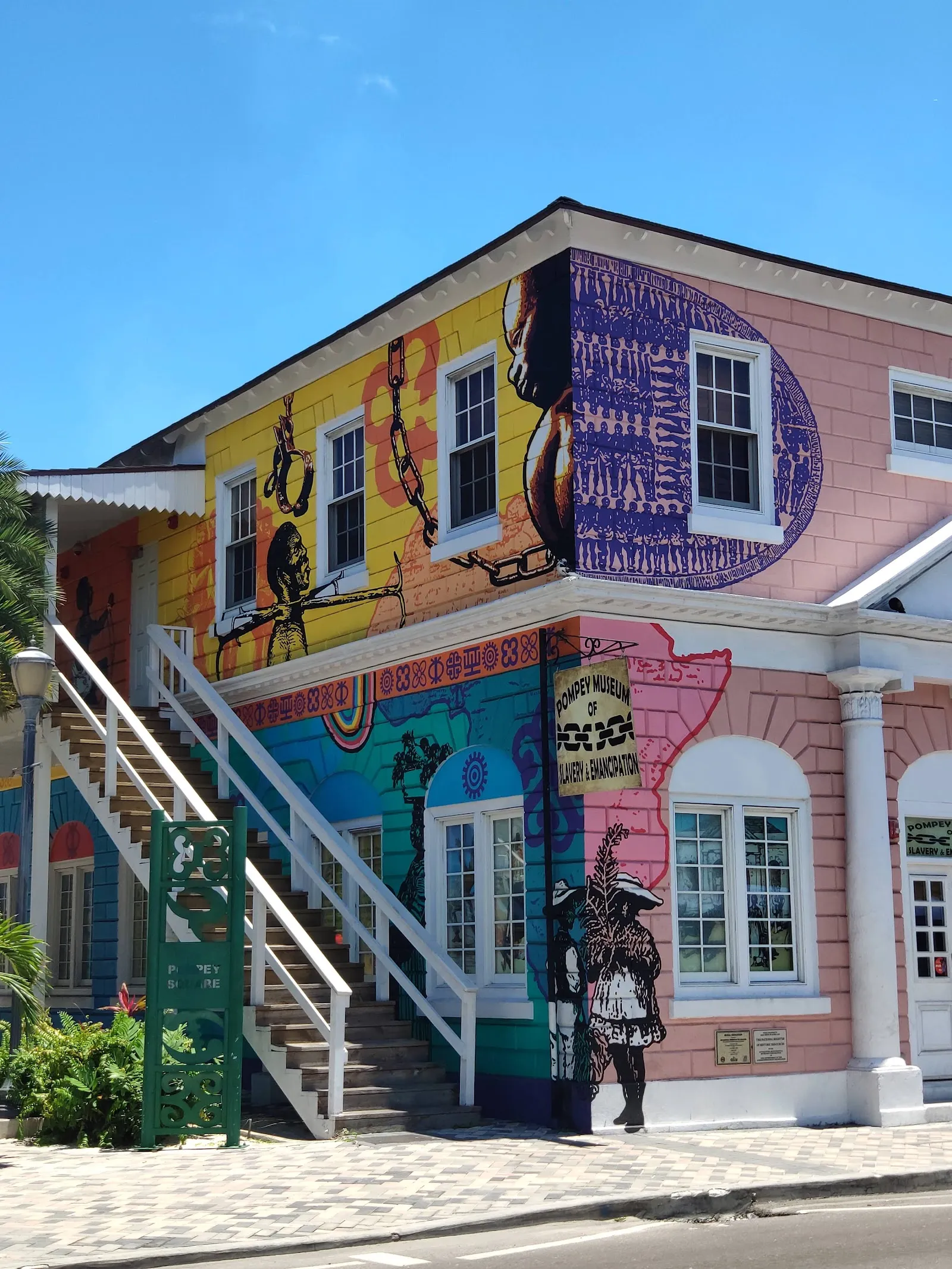
The museum is housed in Vendue House, a building dating to the 1760s that was used as a marketplace, including for the sale of enslaved people. The site’s history is closely tied to the subject of the exhibitions, which document slavery and the struggle for emancipation in The Bahamas.
The museum takes its name from Pompey, an enslaved man on the Rolle Plantation on Exuma. In 1830, he led a revolt after plantation owner John Rolle ordered him and 76 other enslaved people to move to another island. Pompey fled and took a sailboat, intending to reach Nassau and ask the governor to let him remain on Exuma.
Exhibitions across two floors
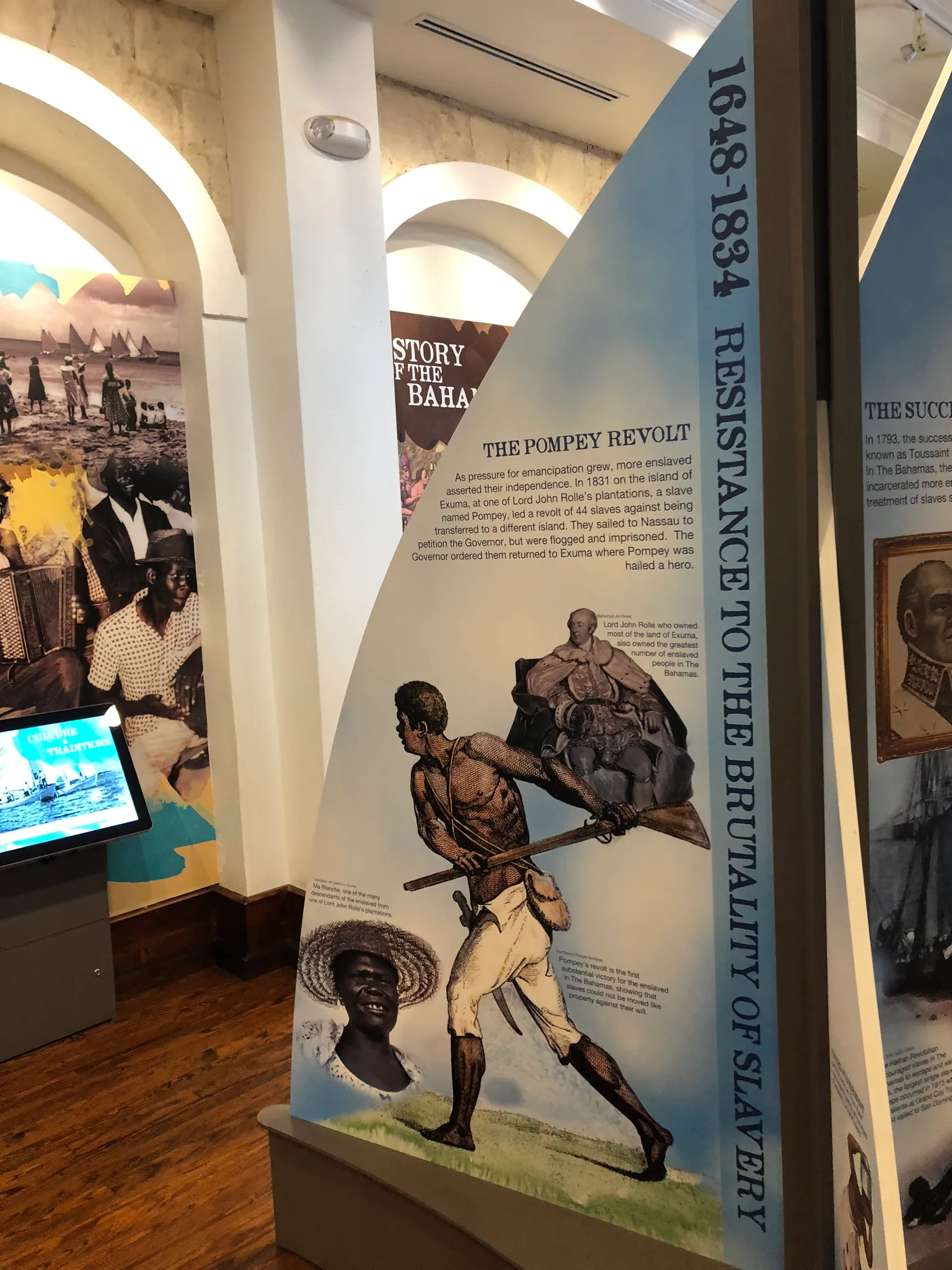
The ground-floor exhibition, Struggle for Freedom in The Bahamas: From Slavery to Independence, follows the history of slavery and the fight for freedom. Written displays, photographs, artifacts, touch screens and audio-visual stories build the account through different formats. The panels are arranged to make the history easy to follow, and the exhibits also address the role of trade in shaping the islands.
Upstairs, a separate exhibition space presents material that changes over time and may have its own admission charge. The museum’s broader displays also include older artifacts and practices associated with the Lucayans before settlement. Check the current details if you plan to visit the upstairs exhibition.
Planning your visit
The museum is self-guided, so you can move through the exhibits at your own pace. A visit takes about an hour. Its compact size means the displays are close together, but there is substantial written and visual material to take in.
Vendue House stands at 2 Bay Street, beside Pompey Square in downtown Nassau. Queen’s Staircase and a nearby fort can be combined with the museum for a longer history-focused outing. The museum has an admission fee, but the available information does not establish a current amount. Tickets in advance are recommended, so check the museum’s website for current visiting and admission details.
Perguntas frequentes
What is the Pompey Museum about?
It documents slavery and the struggle for emancipation in The Bahamas, with displays on Bahamian history and older material related to the Lucayans.
How long should I allow for a visit?
About an hour is enough to explore the self-guided exhibits.
Where is the Pompey Museum?
It is at 2 Bay Street in downtown Nassau, beside Pompey Square.
Is there an admission fee?
Yes. The museum charges admission, and the upstairs exhibition may have a separate fee. Check the museum’s website for current prices.


