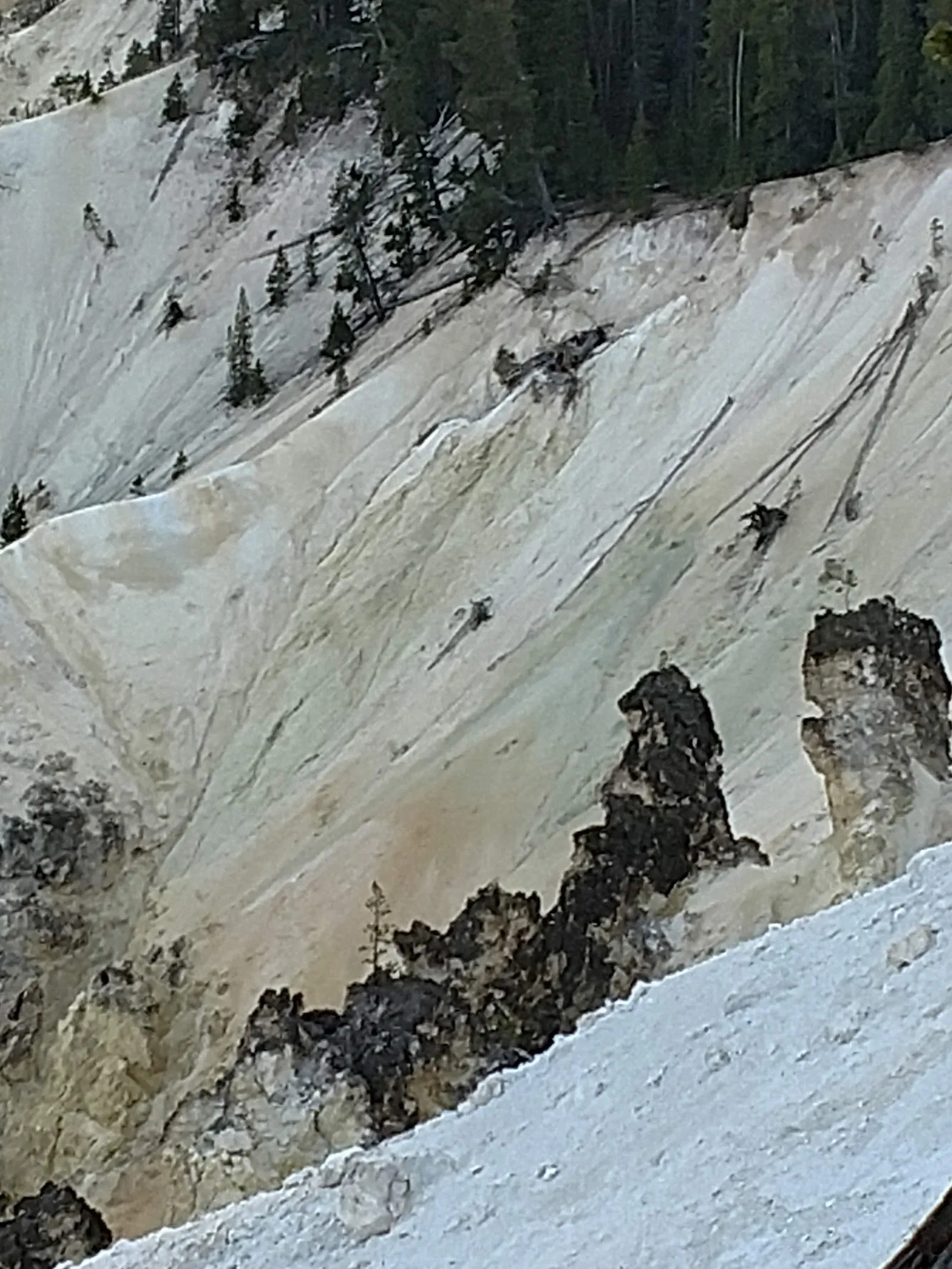
LeHardy Rapids is a turbulent stretch of the Yellowstone River near the outlet of Yellowstone Lake. A short trail and boardwalk lead from the parking area to the water, where the river runs over rocks and cutthroat trout may leap upstream on their spawning run. The best chance to see the fish is in late June and July; July can also bring salmon flies to the river’s edge. Platform overlooks make it easier to watch the rapids and scan for wildlife, including Harlequin ducks in spring.
Where the lake becomes the river
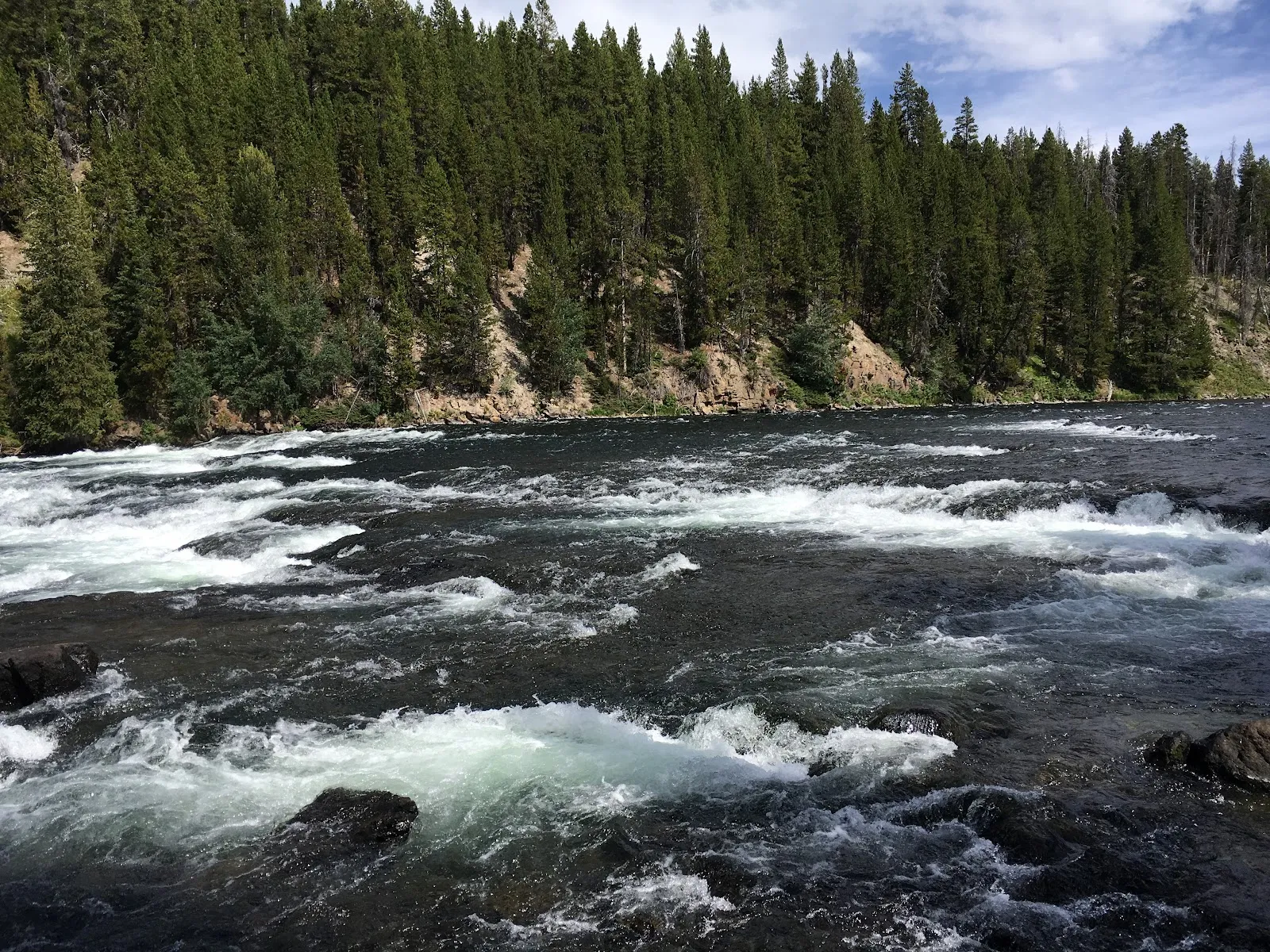
LeHardy Rapids lies on the Yellowstone River just north of Yellowstone Lake. Here, the riverbed drops and water runs against large rocks, creating the turbulent stretch of water that gives the stop its name. The rapids mark the point where Yellowstone Lake ends and the Yellowstone River resumes.
The place is named for topographer Paul LeHardy, who was part of the 1873 Jones Expedition. He capsized his raft while attempting to run the rapids. Today, visitors can reach the river from two pullouts, each with a short route to the water.
A closer look at the rapids
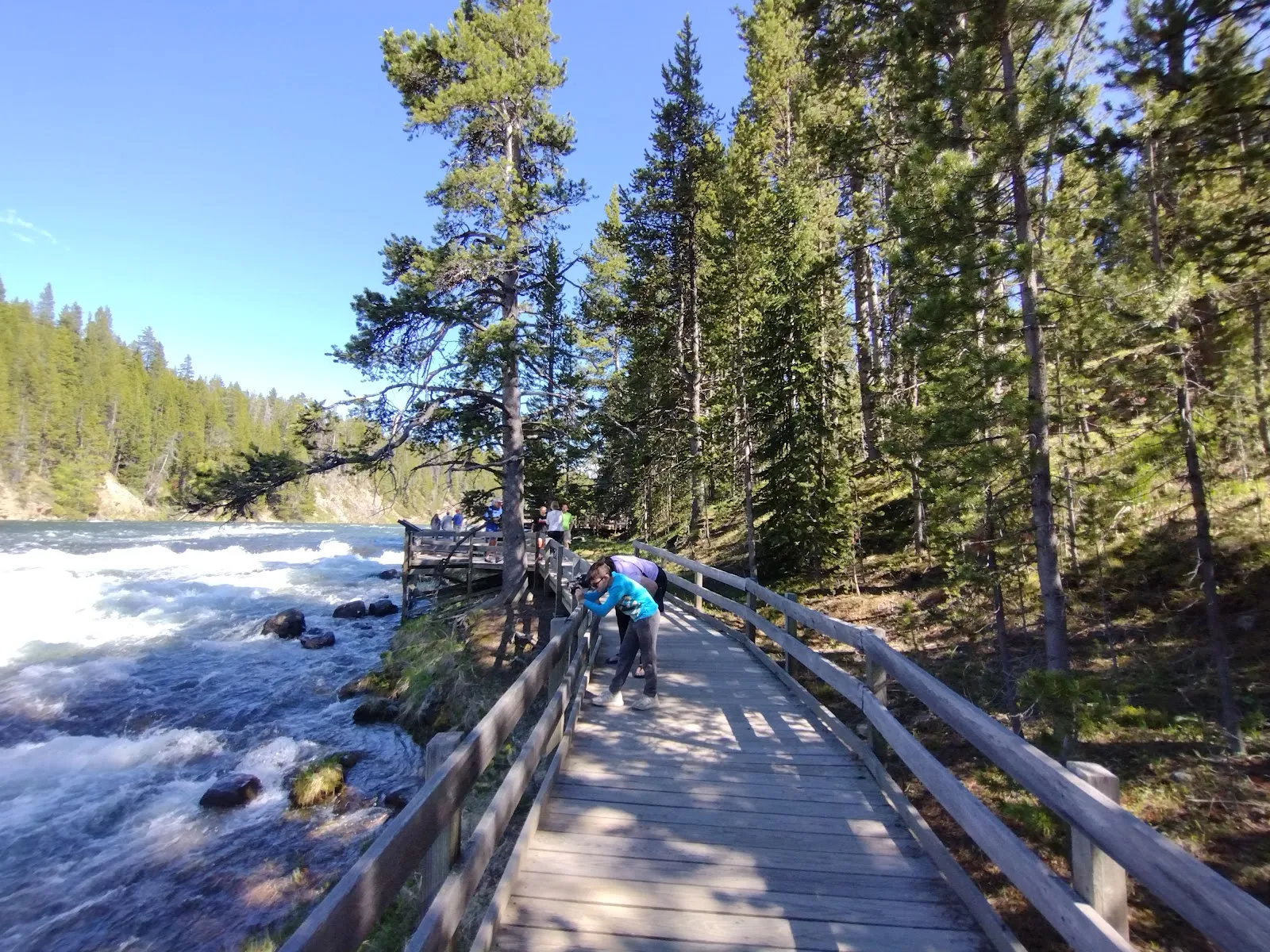
From the parking area, a short trail or boardwalk leads toward the river. Stairs descend from parking level to the water, and a route follows the bank for more than 100 yards. Platform overlooks along the way provide places to pause and watch the current.
The lower pullout has a small picnic area with two tables beside the Yellowstone River, as well as restroom facilities. The river is wide at this point, and the rapids are most forceful in late spring and early summer, when snowmelt raises the flow. Salmon flies, caddis and mayflies can also be found along this stretch; salmon flies may appear in July.
Watching for fish and birds
Native cutthroat trout move upstream toward their spawning grounds near Yellowstone Lake. In late June and July, fish may leap above the water as they work their way through the rapids. Look near boulders and rocks, where trout can be difficult to spot from the trail. In July, trout may rise to feed on salmon flies landing near the river’s edge.
Harlequin ducks are another reason to watch the water, particularly in spring. Bears also feed on trout in this area, so stay alert and keep a respectful distance from wildlife. The overlooks offer a way to scan the river without needing to approach the bank.
Preguntas frecuentes
When can you see cutthroat trout at LeHardy Rapids?
Late June and July are the best time to look for cutthroat trout leaping through the rapids on their upstream spawning run.
How do you get to the river?
Two pullouts provide access by a short trail or boardwalk. Stairs lead from the parking level to the river, with a route continuing along the bank.
Are there facilities at LeHardy Rapids?
Restrooms are available, and the lower pullout has a small picnic area with two tables beside the river.
Can you see wildlife at LeHardy Rapids?
Look for cutthroat trout and, in spring, Harlequin ducks. Bears may also feed on trout in the area.