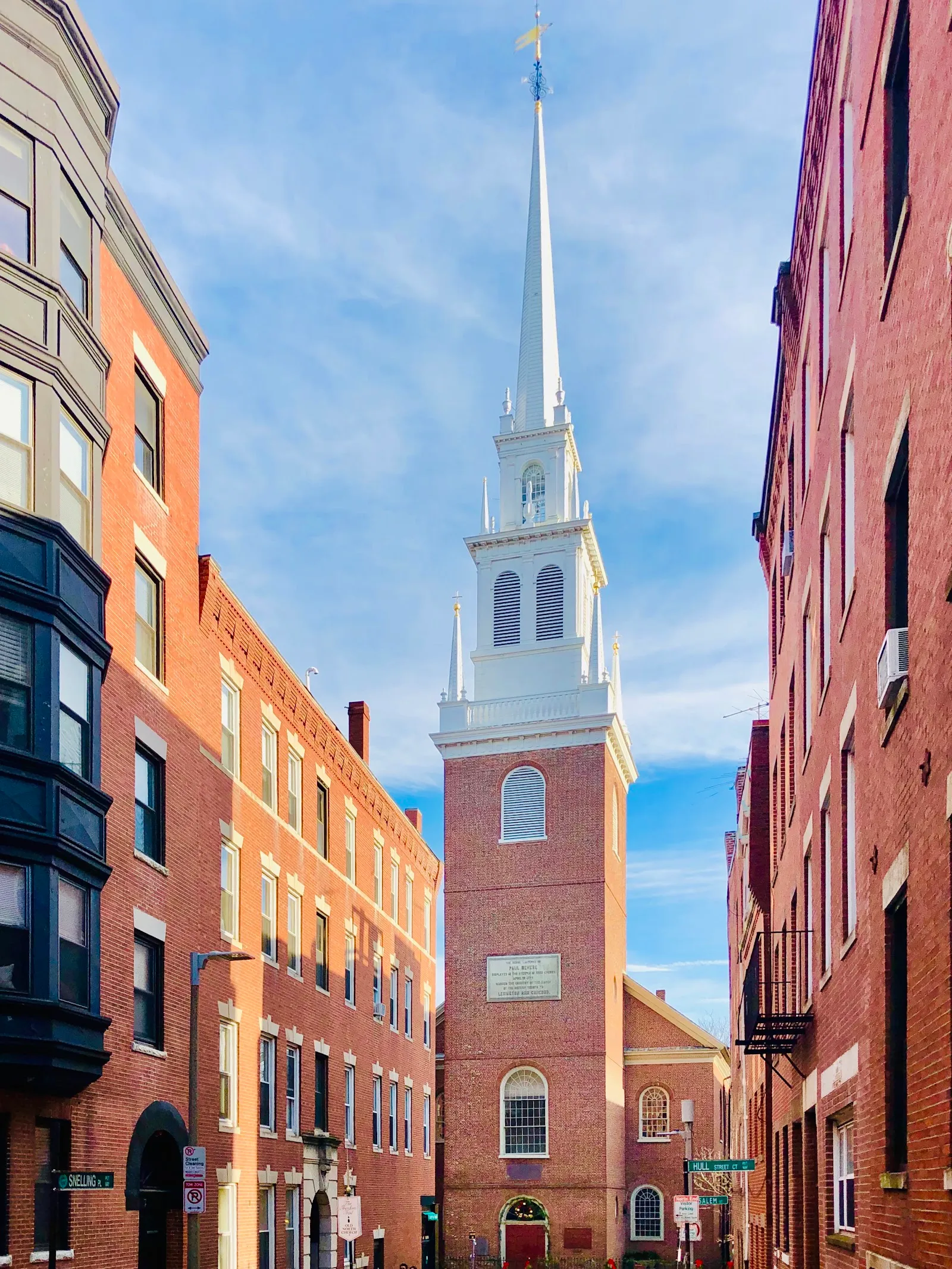
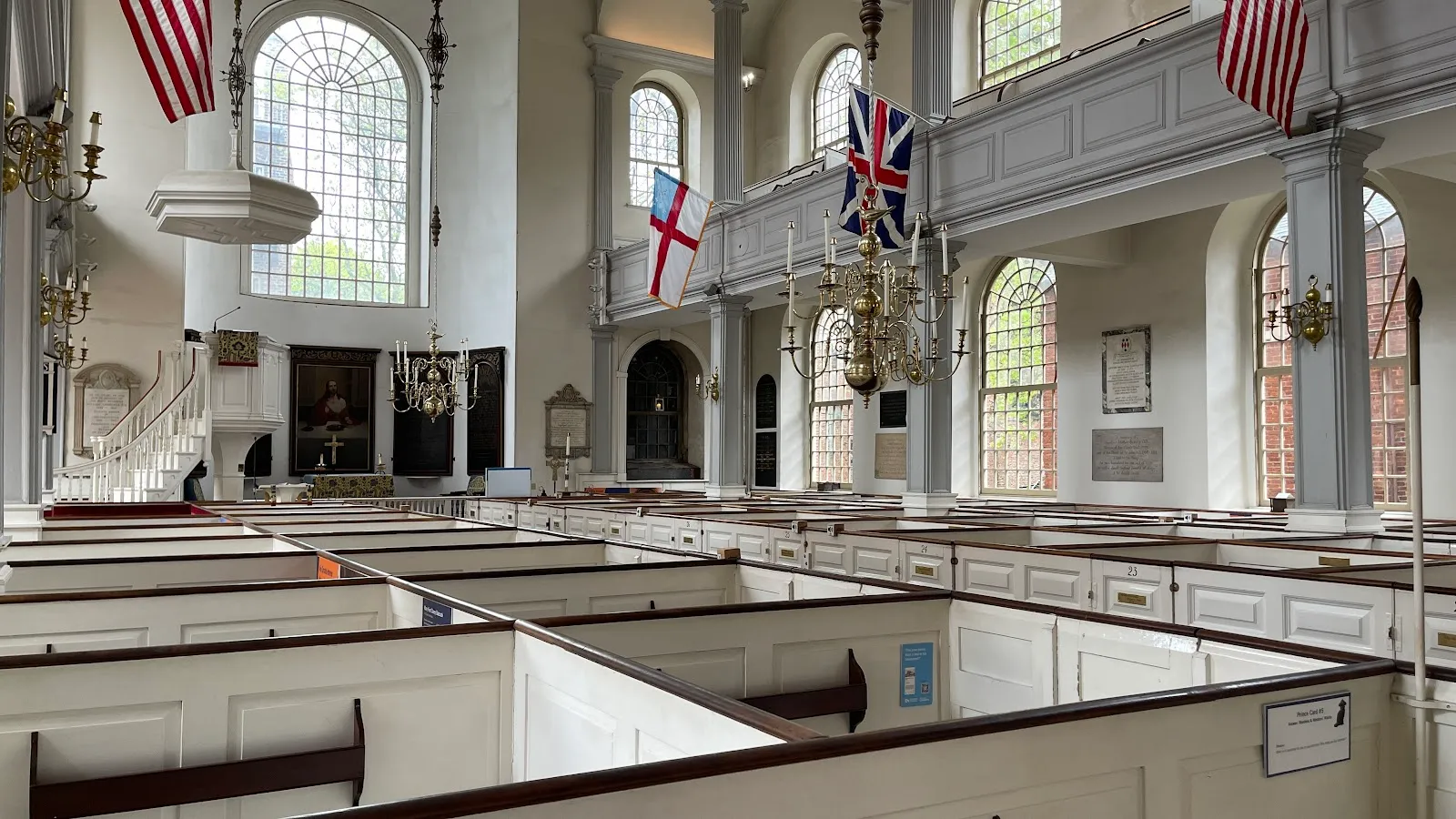
Old North Church, at 193 Salem St in Boston’s North End, is the city’s oldest surviving church building, dating to 1723. Its steeple is tied to the lantern signal of April 18, 1775, when two lights warned that British troops were advancing by sea. Inside, look for the wooden pews, including enclosed family pews that once signaled social standing. The church is still an active Episcopal congregation, and its crypt gives a closer look at the site’s history. It sits on the Freedom Trail, near the Paul Revere House.
The lantern signal of 1775
Old North Church is Boston’s oldest surviving church building. Built in 1723, it is also known by its formal name, Christ Church in the City of Boston. Its place in the story of the American Revolution comes from the night of April 18, 1775, when two lanterns were displayed from its steeple.
Church sexton Robert Newman and vestryman John Pulling, Jr. carried out the signal. The lights told Paul Revere that British troops were moving toward Lexington and Concord by sea across the Charles River, rather than by land. The warning became closely associated with Revere’s midnight ride and the phrase “one if by land, two if by sea.”
The church’s role in the story is specific: the lanterns were a signal about the route of the approaching troops. The event is remembered as a defining moment in the lead-up to the American Revolution. The building remains a working Episcopal church as well as a historic site.
Inside the church
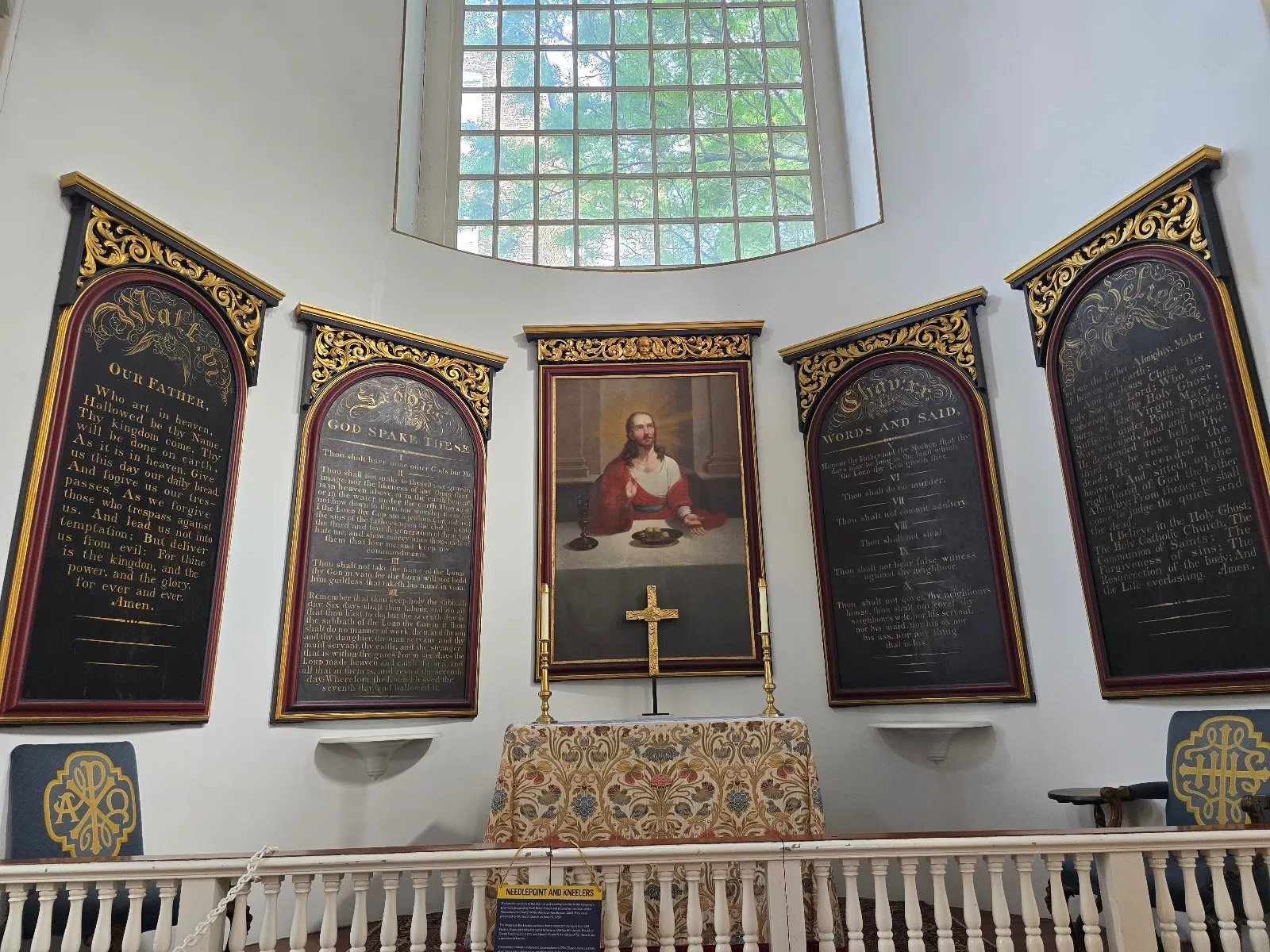
The interior gives a sense of how worship was arranged in the colonial period. Look for the wooden pews, including small enclosed pews reserved for families. These private seats were a marker of status, and their layout offers a tangible detail of social life inside the church.
The church’s Georgian design and tall steeple are part of its historic character. The steeple associated with the lantern signal has been replaced twice after storm damage, so the structure seen today is not the original one from 1775. The church’s interior also contains a bust of George Washington, noted as a feature to look for during a visit.
A visit can be self-guided, with listening devices at different points in the church, or guided. The audio lets you move through the building at your own pace; a guide can explain the church’s history and its connection to Boston’s revolutionary period.
The crypt and the North End
The crypt is one of the church’s more striking historic spaces. More than 1,100 people are buried there, giving the site a direct connection to the lives and deaths of people associated with the church over time. Access to different areas can depend on the tour, so ask about the crypt when arranging your visit.
Old North Church is in Boston’s North End, on the Freedom Trail. The Paul Revere House is nearby, about a five-minute walk away according to the provided travel information. Together, the two sites help place the lantern story within the neighborhood where Revere lived and where the events of 1775 unfolded.
The North End is also known for Italian restaurants and pastry shops, so you can pair a church visit with a meal or a stop for something sweet. As the church remains active, visitors may also encounter worship services. Treat the building as a place of worship as well as a historic landmark, and follow staff guidance during your visit.
Preguntas frecuentes
Why is Old North Church famous?
On April 18, 1775, two lanterns were displayed from its steeple to signal that British troops were approaching by sea. The event became linked to Paul Revere’s midnight ride.
How old is Old North Church?
The church was built in 1723 and is Boston’s oldest surviving church building.
Is Old North Church still an active church?
Yes. It remains an active Episcopal church as well as a historic site.
What can you see inside Old North Church?
Look for the historic wooden pews, enclosed family seating, and a bust of George Washington. Tours may also include the crypt, where more than 1,100 people are buried.