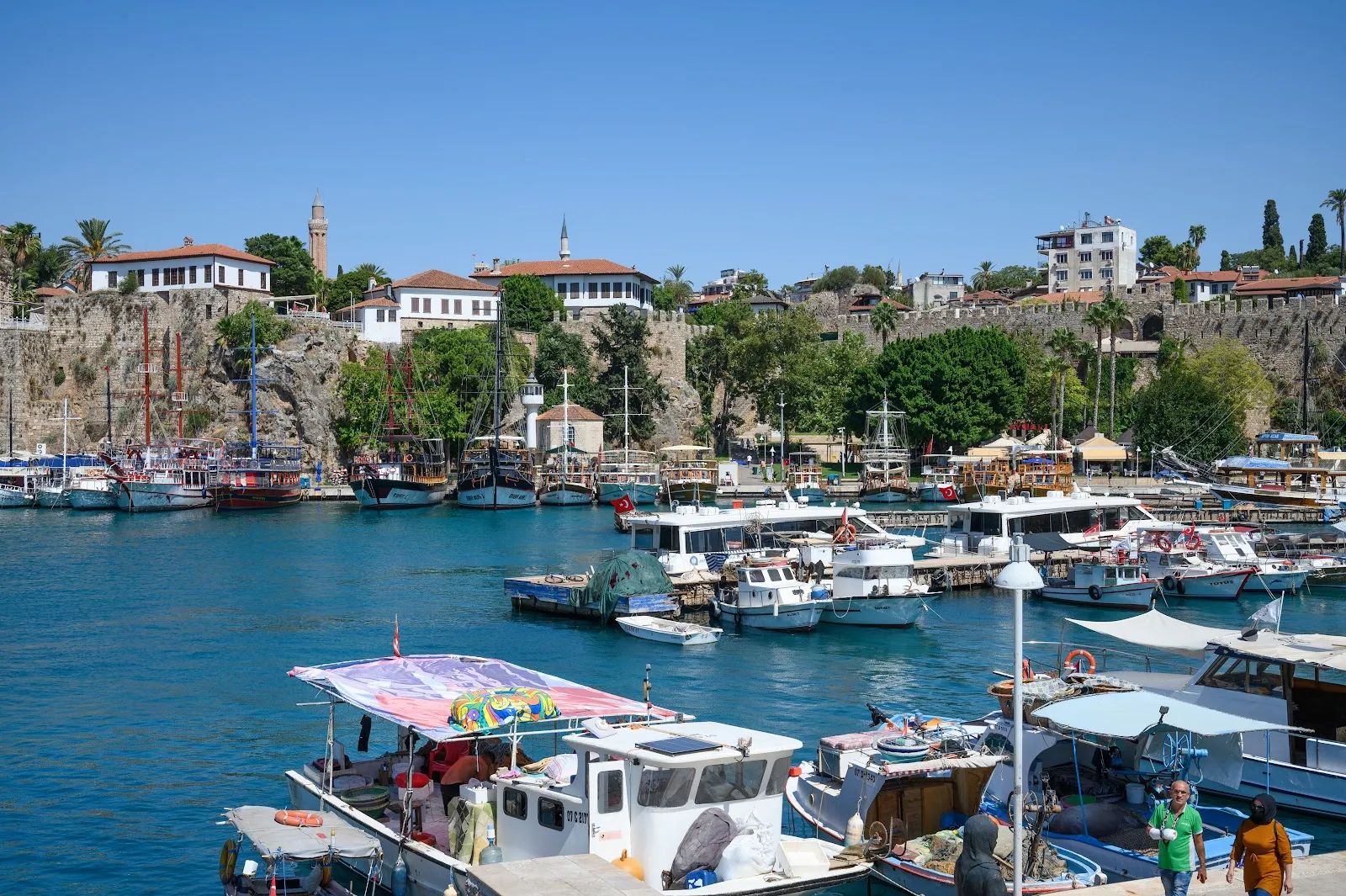
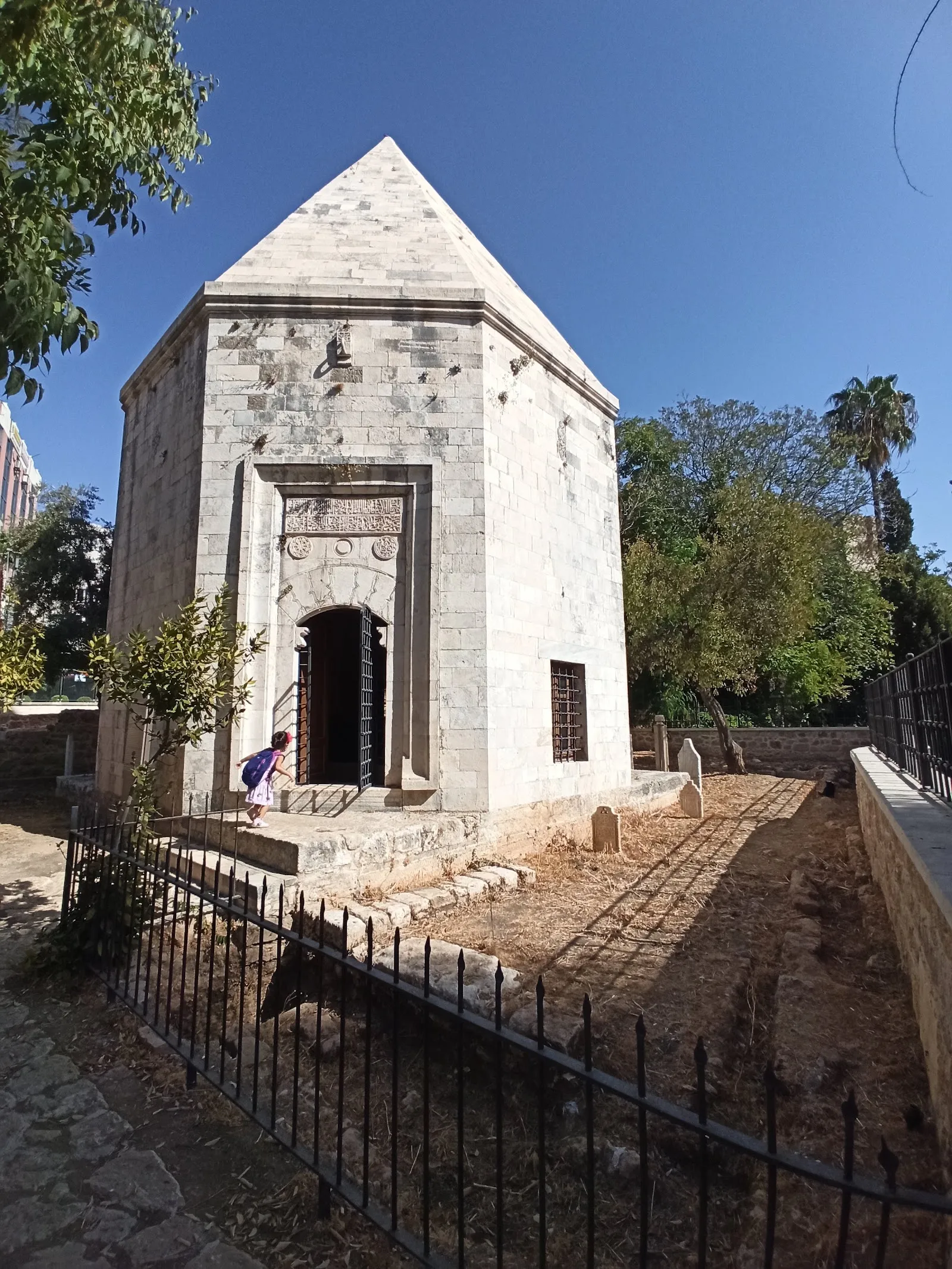
Hadrian’s Gate is a Roman triumphal arch on Atatürk Boulevard, at the entrance to Kaleiçi, Antalya’s Old Town. Built in AD 130 to mark Emperor Hadrian’s visit, it is the only surviving entrance gate in the walls around the old city. Look up at the carved ceiling and floral details, then walk through the three arches into Kaleiçi’s narrow streets and Ottoman-era houses. The marble roadway still bears ruts left by carts. It is an easy stop to pair with a walk through the historic district.
A Roman entrance to Attaleia
Hadrian’s Gate was built in AD 130 to mark the Roman emperor’s visit to Attaleia, the ancient city at the site of modern Antalya. It formed an entrance through the walls around the city and remains the only surviving gate in those walls. Today, it stands at the edge of Kaleiçi, where the modern city meets the Old Town.
The structure is a triumphal arch with three openings of similar height. Its Turkish name, Üçkapılar, means “The Three Gates.” Marble, granite and stone make up the gateway, which is about eight metres tall. Two towers stand beside it, and they belong to different periods. The upper storey, part of the original design, has not survived.
Details to look up at
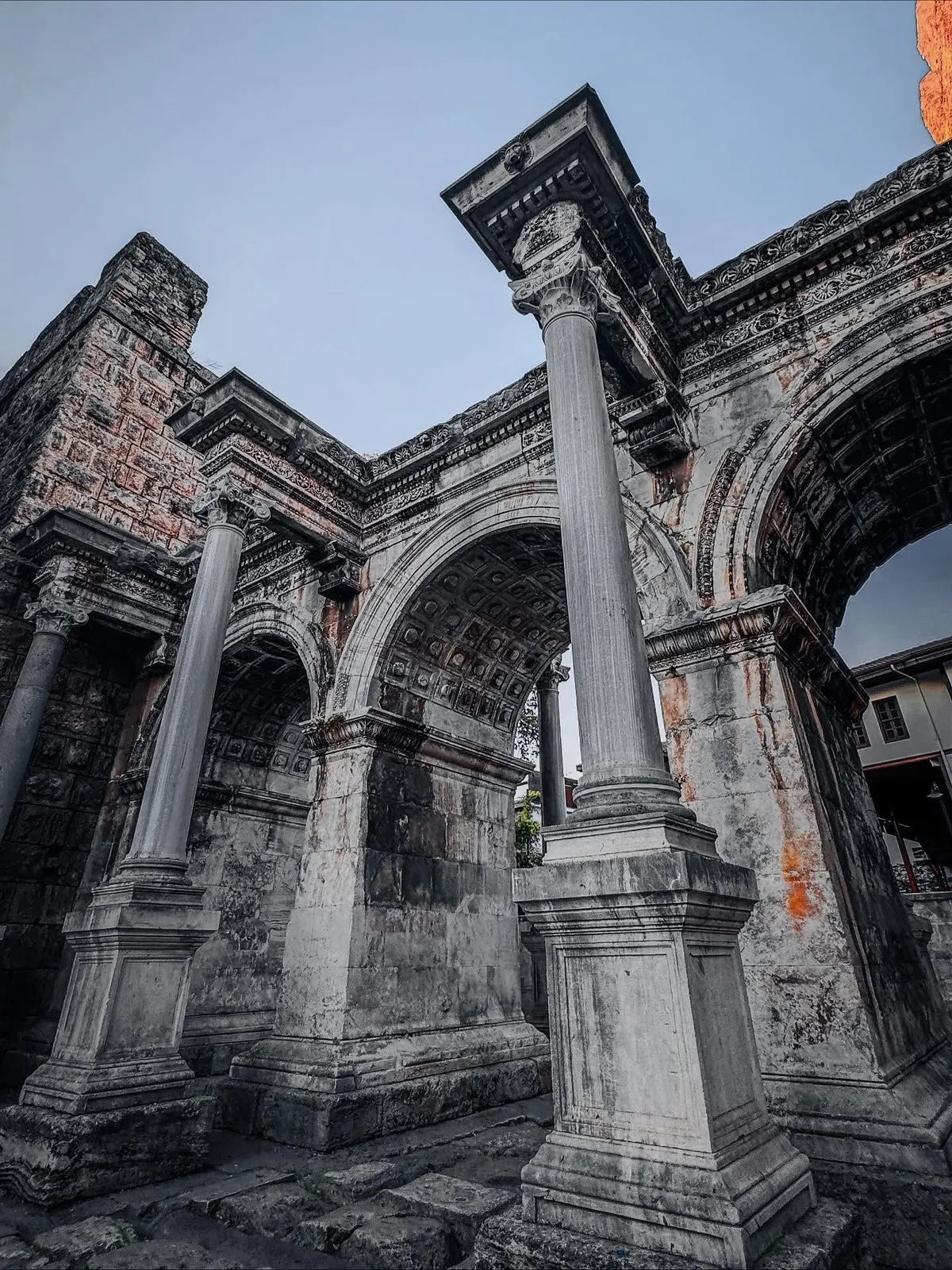
The gate’s decoration rewards a closer look. Carved floral motifs and cornices run across the stonework, while the ceilings beneath the arches have sculptural details and rosette patterns. The columns include marble shafts and Corinthian-style acanthus leaves. Some of the ornament remains visible despite centuries of use and change.
Look down as well as up. The marble slabs under the arches have been worn smooth, and ruts in the roadway record the passage of carts. The surface connects the gate’s monumental design to its everyday role as a route into the city. It was once part of the defensive boundary, but it also carried people and vehicles through the entrance.
From the gate into Kaleiçi
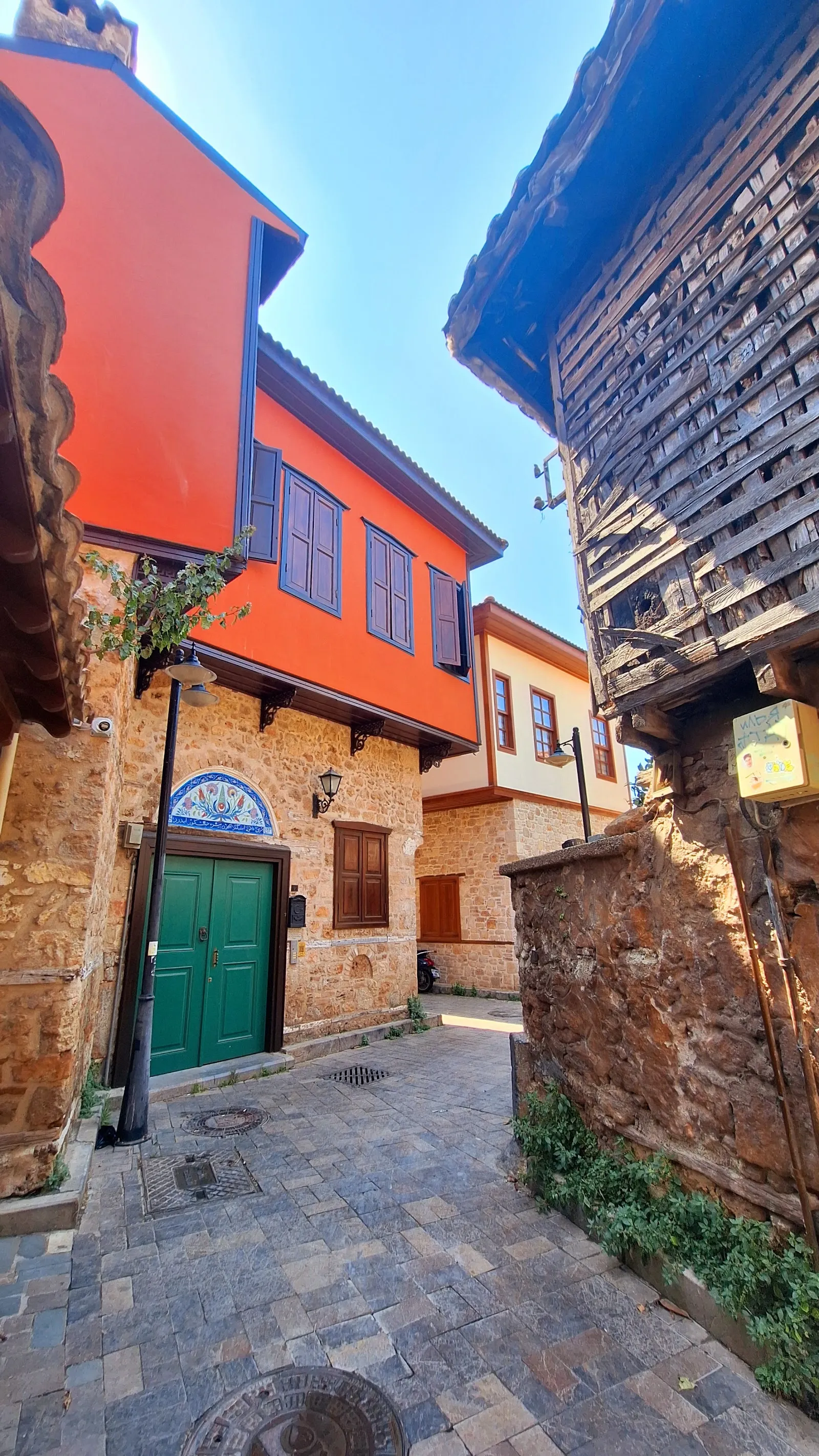
Passing through the arches brings you into Kaleiçi, Antalya’s historic district. Its name refers to the area inside the old walls. From here, narrow streets lead between low-rise historic buildings, including Ottoman-style houses that have been restored as hotels and restaurants.
Hesapçı Sokak is one of the streets to follow through the Old Town. The Broken Minaret, also known as Kesik Minare, is further along it. The gate is therefore a useful starting point for exploring on foot: pause to inspect the Roman stonework, then continue into the surrounding district rather than treating the arch as an isolated stop.
Preguntas frecuentes
Why was Hadrian’s Gate built?
It was built in AD 130 to mark the visit of Roman Emperor Hadrian to Attaleia.
What should I look for at Hadrian’s Gate?
Look for the three arches, carved floral details and ceiling decorations, as well as the ruts in the worn marble roadway.
Where is Hadrian’s Gate in Antalya?
It stands on Atatürk Boulevard at the entrance to Kaleiçi, Antalya’s Old Town.
How long should I spend at Hadrian’s Gate?
About 30 minutes is enough for a stop at the gate.