
Mercado Nuestra Señora de África, known locally as La Recova, is Santa Cruz de Tenerife’s main covered food market. Opened in 1944, its neo-colonial building has two floors, patios and arcades, with an ornate entrance arch and a clock tower. Browse stalls selling fruit, vegetables, seafood, meat, dairy and artisan goods, then look for a casual seafood meal or local specialities such as Serrano ham. The market is a working part of city life, so an early visit gives you more time to explore while the stalls are open.
A market built for the city
Mercado Nuestra Señora de África opened in 1944 and remains Santa Cruz de Tenerife’s principal covered food market. Locals also call it La Recova, a name associated with its covered walkways. Its role is practical as well as social: people come to shop for food, and the stalls and eating spots make it a place to spend time in the city.
The building draws on neo-colonial and neoclassical design. Two floors of stalls sit around patios and arcades, with a minaret-like clock tower above. The layout gives you several routes through the market, so take time to look into the courtyards as well as along the rows of produce.
The entrance and its sculptures
At the ornate entrance arch, two sculptures connect the market to Tenerife’s working life. La Lechera depicts a milkmaid carrying dairy products and honours generations of women who brought milk to the city. Nearby, Homenaje al Chicharrero refers to Santa Cruz’s fishing roots and its association with horse mackerel.
The market is also linked to the city centre by a bridge built to connect the municipal market with the surrounding area. Four lions stand at its ends. Their placement was tied to General Serrador and the political context of the period, so the bridge and its decoration are part of the site’s history as well as a route into the market.
What to find inside
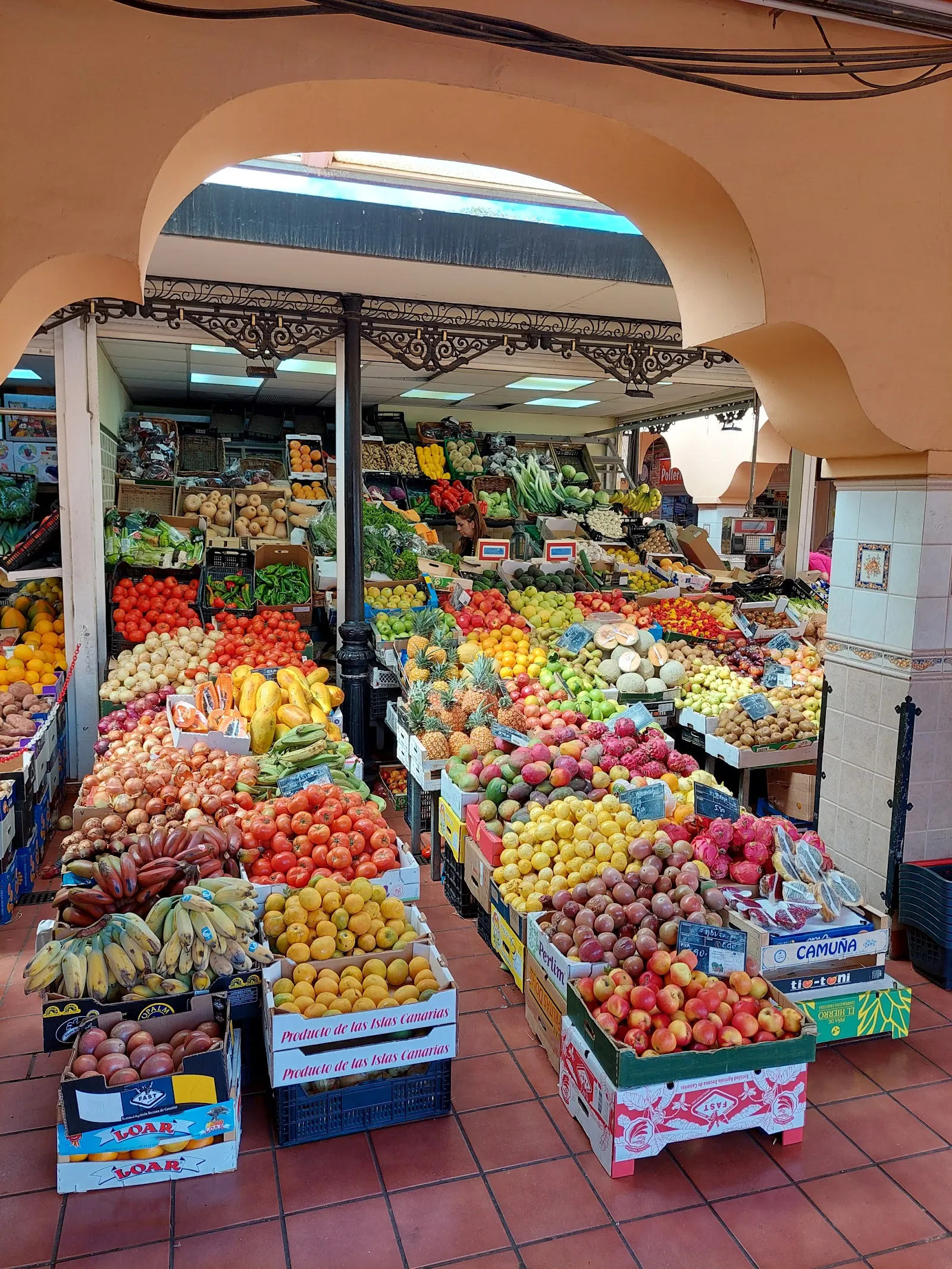
The ground floor is known for fresh produce, including fruit, vegetables, herbs and spices. Other stalls sell seafood, meat, dairy, flowers and artisan goods. The range makes the market useful both for everyday shopping and for browsing Canarian products and crafts.
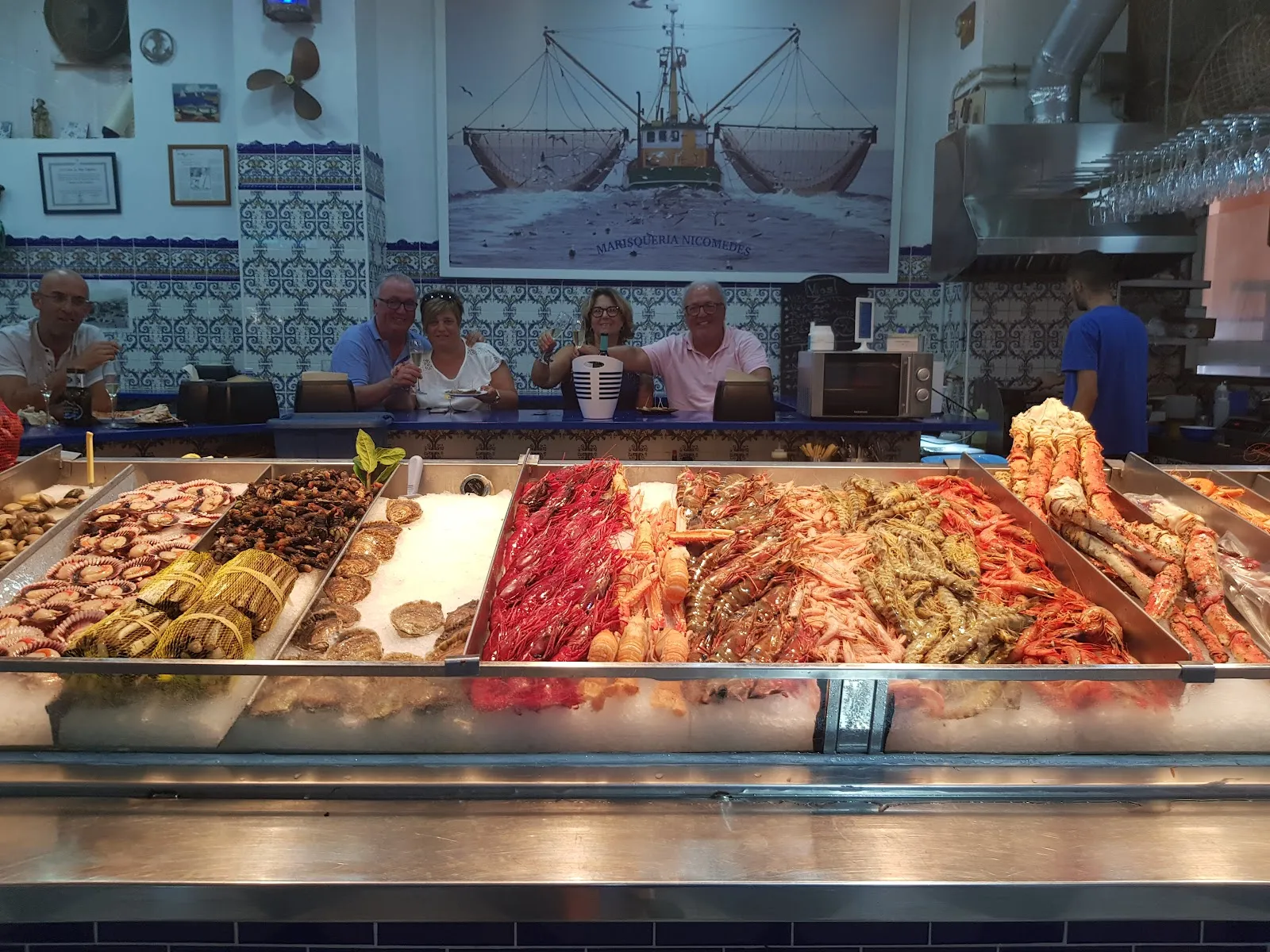
Ready-to-eat food is less common than ingredients, but some stalls have casual eating areas, particularly for seafood. You can also look for local specialities such as Serrano ham. A Barraquito Especial, made with coffee, condensed milk, milk, cinnamon, lemon and liquor, is another drink associated with the market’s food stops.
On Sunday mornings, a flea market joins the regular stalls. For a quieter or more complete food-market visit, go early on a weekday; some stands may be shut on public holidays or later in the day.
Preguntas frecuentes
What is Mercado Nuestra Señora de África also called?
It is commonly known as La Recova.
When did the market open?
Mercado Nuestra Señora de África opened in 1944.
What can you buy at the market?
Stalls sell fresh produce, seafood, meat, dairy, flowers and artisan goods. Some also have casual places to eat.
Is there a flea market at La Recova?
A flea market joins the regular stalls on Sunday mornings.


