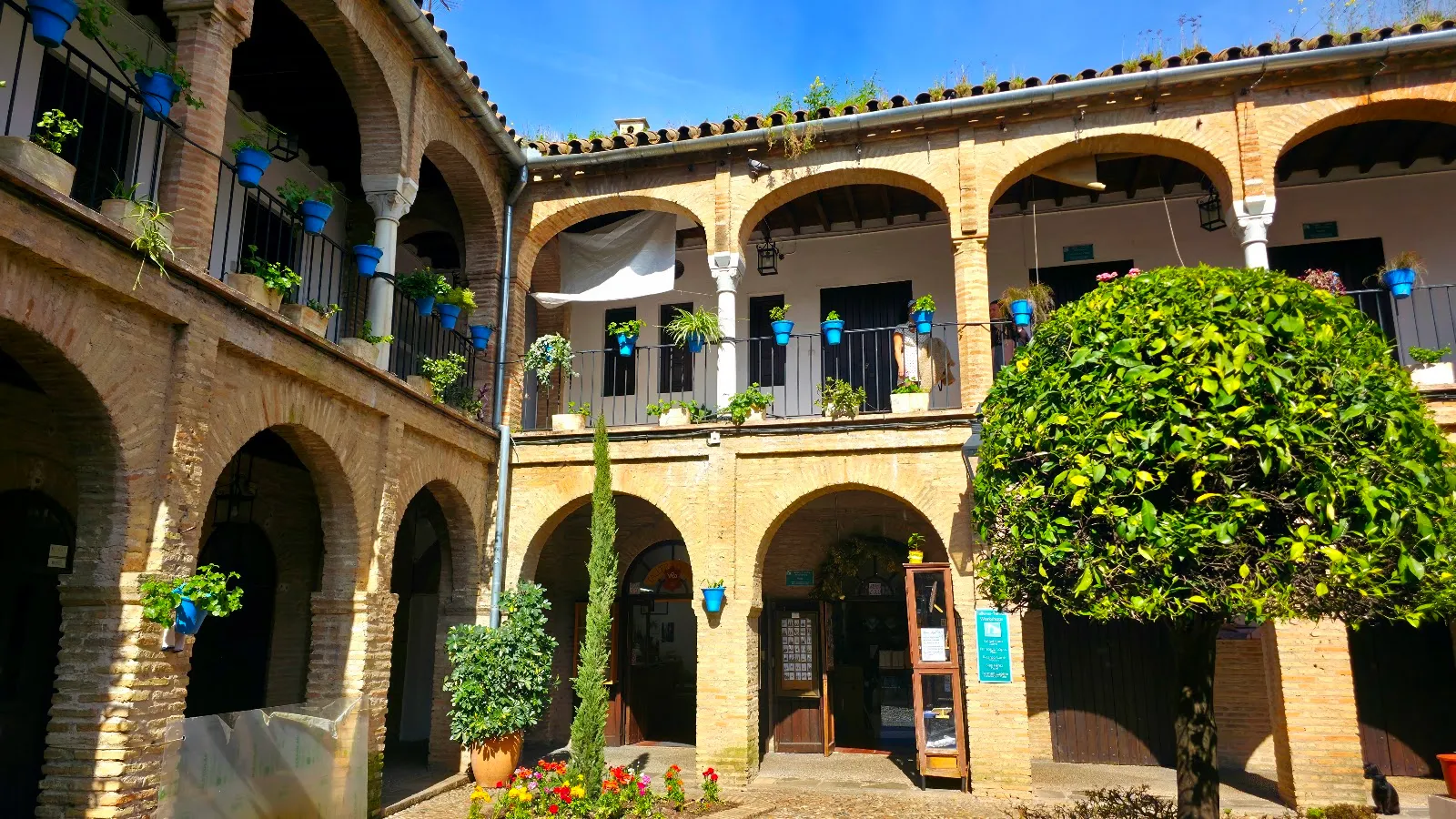
On Calle Judíos in Córdoba’s old Jewish Quarter, this small synagogue dates to 1315 and is one of only three medieval synagogues preserved in Spain. Its plain street entrance leads through a courtyard to a prayer hall decorated with delicate Mudéjar plasterwork, Hebrew inscriptions and geometric patterns. Look up to see the coffered ceiling, then read the small information cards around the room for context on the inscriptions and the preservation of scripture. The building’s later use as a church, hospital and school adds another layer to its history.
A synagogue built in 1315
Córdoba Synagogue stands on Calle Judíos in the city’s historic Jewish Quarter. Built in 1315, it is one of only three medieval synagogues preserved in Spain, and the only surviving example in Andalusia. Its small scale makes the visit intimate: the building measures about 23 by 21 feet, with a prayer hall reached from a courtyard.
The synagogue dates from the period when Córdoba’s Jewish community lived in the Judería, the city’s Jewish quarter between the 10th and 15th centuries. Its survival gives the building particular importance for Jewish heritage in Spain. Though it is no longer used for worship, it remains a significant site for modern Jewish communities.
Plasterwork, inscriptions and the ceiling
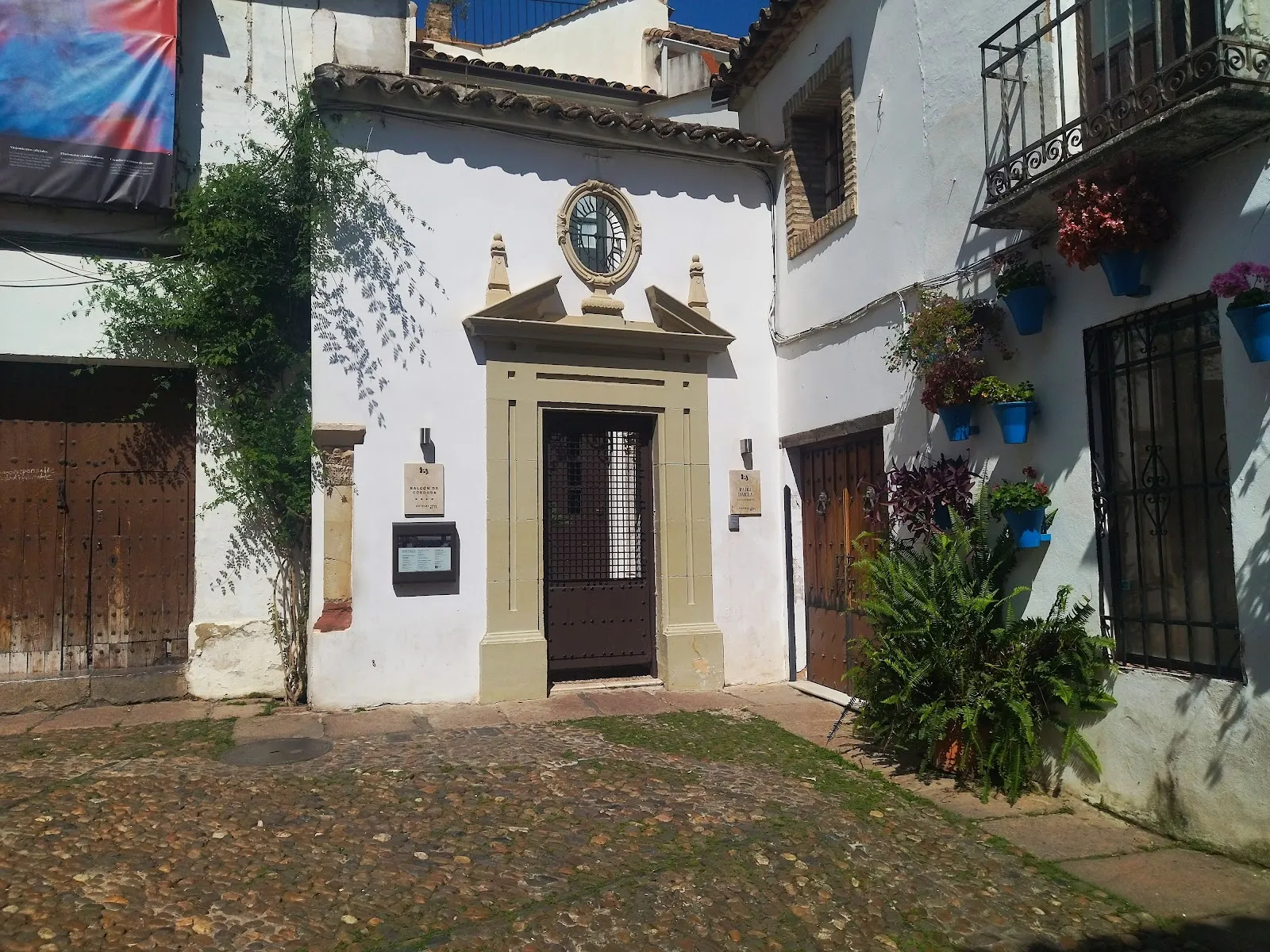
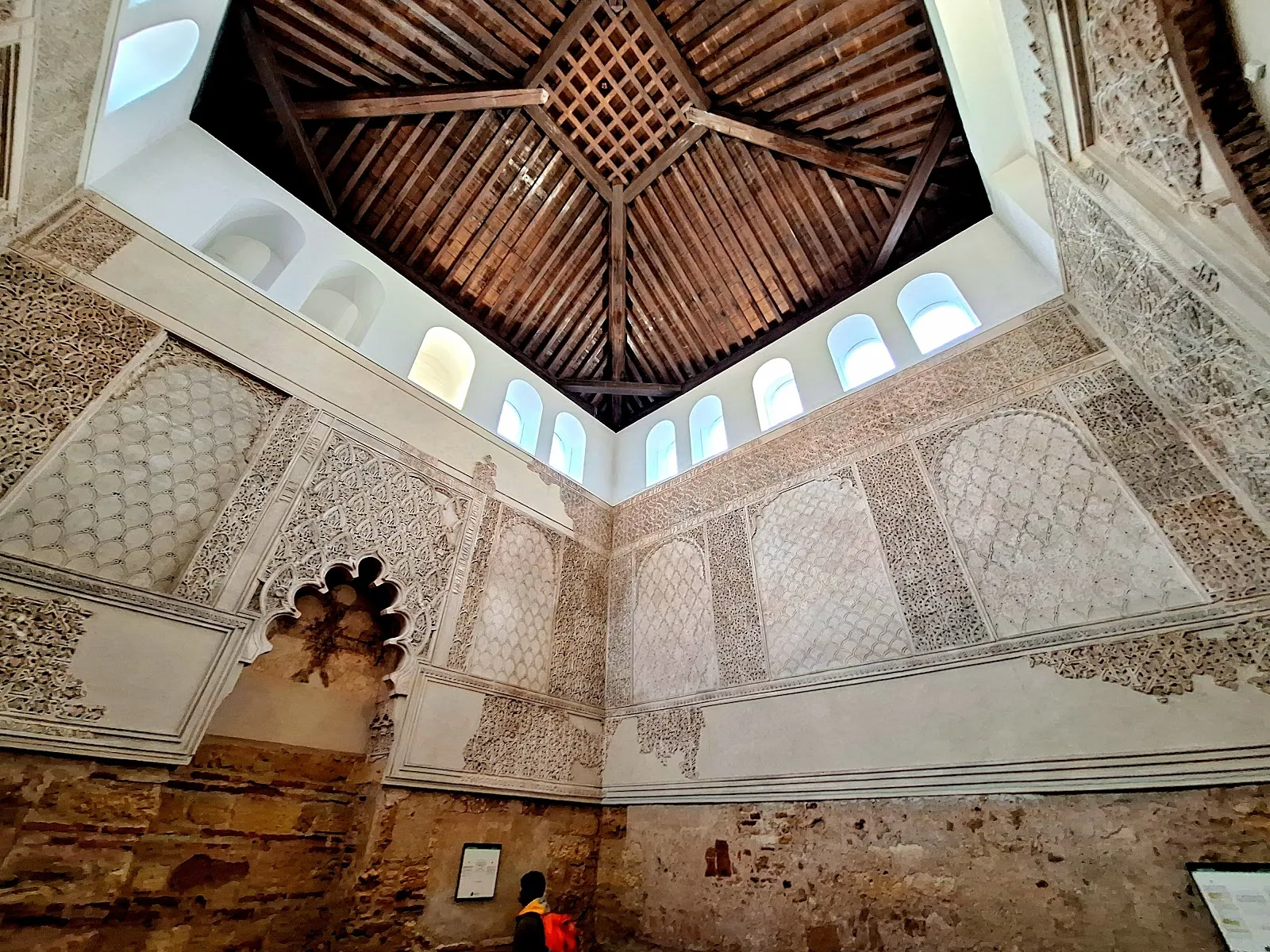
The exterior is plain, so much of the building’s detail is inside. In the prayer hall, look closely at the Mudéjar plasterwork: fine stucco tracery, geometric patterns and decorative motifs cover the walls. Hebrew inscriptions preserve another layer of the room’s history. Some architectural details combine Islamic and Christian influences, characteristic of Mudéjar work.
The coffered ceiling, set about six metres above the floor, draws the eye upward. Small information cards around the room explain details including the inscriptions and the preservation of scripture. A few minutes spent reading them can add context to the decoration rather than leaving it as a series of patterns.
How the building changed over time
After the expulsion of the Jews from Spain in 1492, the synagogue was converted for Christian use. Its later roles included a hospital for people with rabies, a hermitage, a meeting place for the shoemakers’ guild and a primary school. These changes shaped the building’s long history, even as important architectural details remained.
Restoration work began in the late 19th century, and the synagogue was declared a National Monument. The building has also undergone later restoration, including work in 2018. It is now visited as a historic site in the Judería, close to other landmarks in Córdoba’s old quarter.
Preguntas frecuentes
When was Córdoba Synagogue built?
It was built in 1315, in the early 14th century.
What can you see inside Córdoba Synagogue?
The prayer hall has Mudéjar plasterwork, Hebrew inscriptions, geometric patterns and a coffered ceiling. Small information cards explain details in the room.
Is Córdoba Synagogue open on Mondays?
No. It is closed on Mondays.
Should I book tickets in advance?
Advance tickets are recommended.