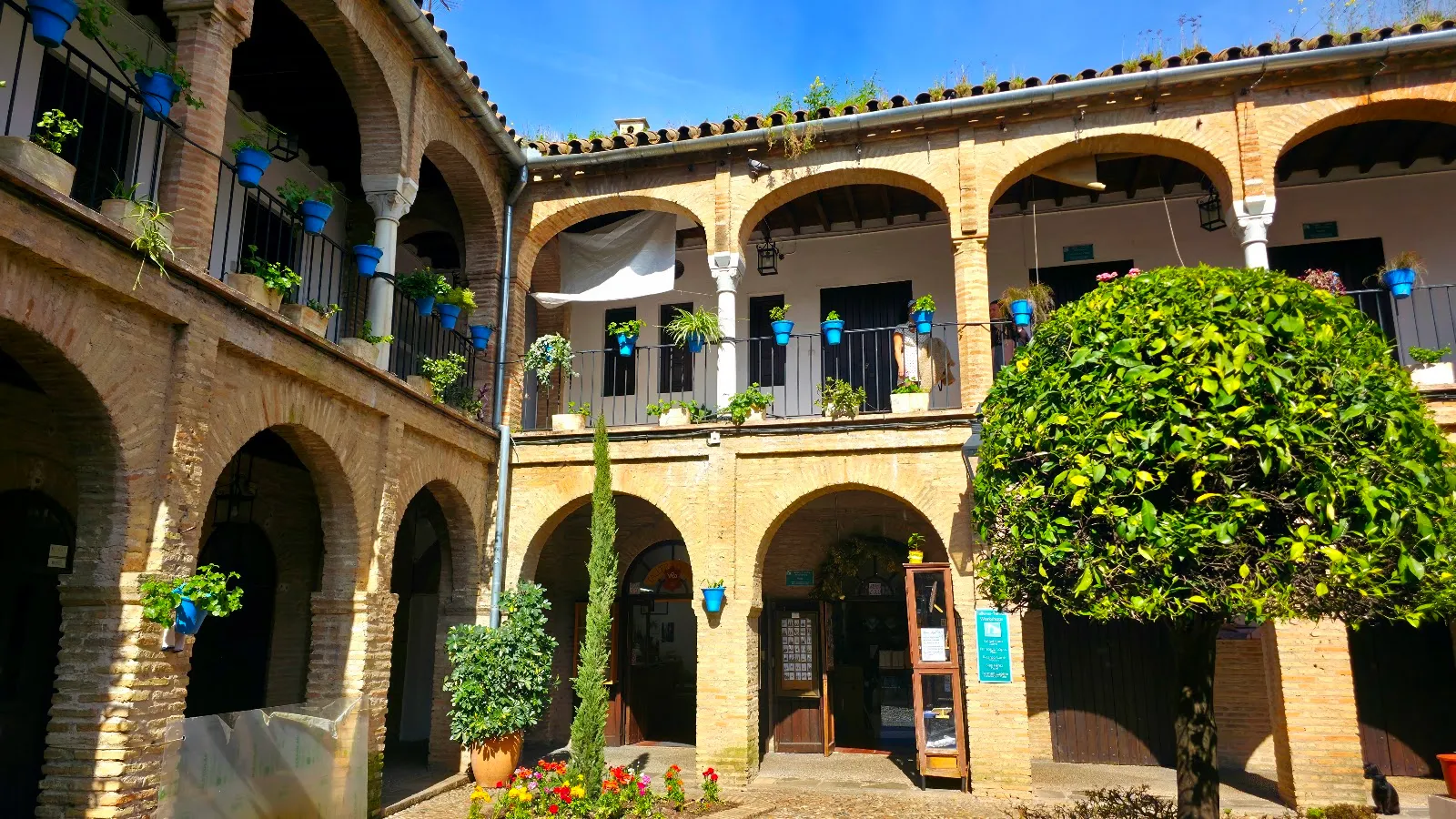
Casa de Sefarad is a museum and cultural centre in a 14th-century house on Córdoba’s Calle Judíos, opposite the synagogue. Its rooms trace Sephardic Jewish life through domestic objects, religious silver, clothing, music, books and stories of the Jewish community in Córdoba. Look for exhibits on women in Jewish history, Maimonides and the Inquisition, as well as paintings of women of al-Andalus. Traditional Sephardic songs are sometimes performed at the museum, adding a musical dimension to a visit that can be brief or take up to two hours.
A house in the Jewish quarter
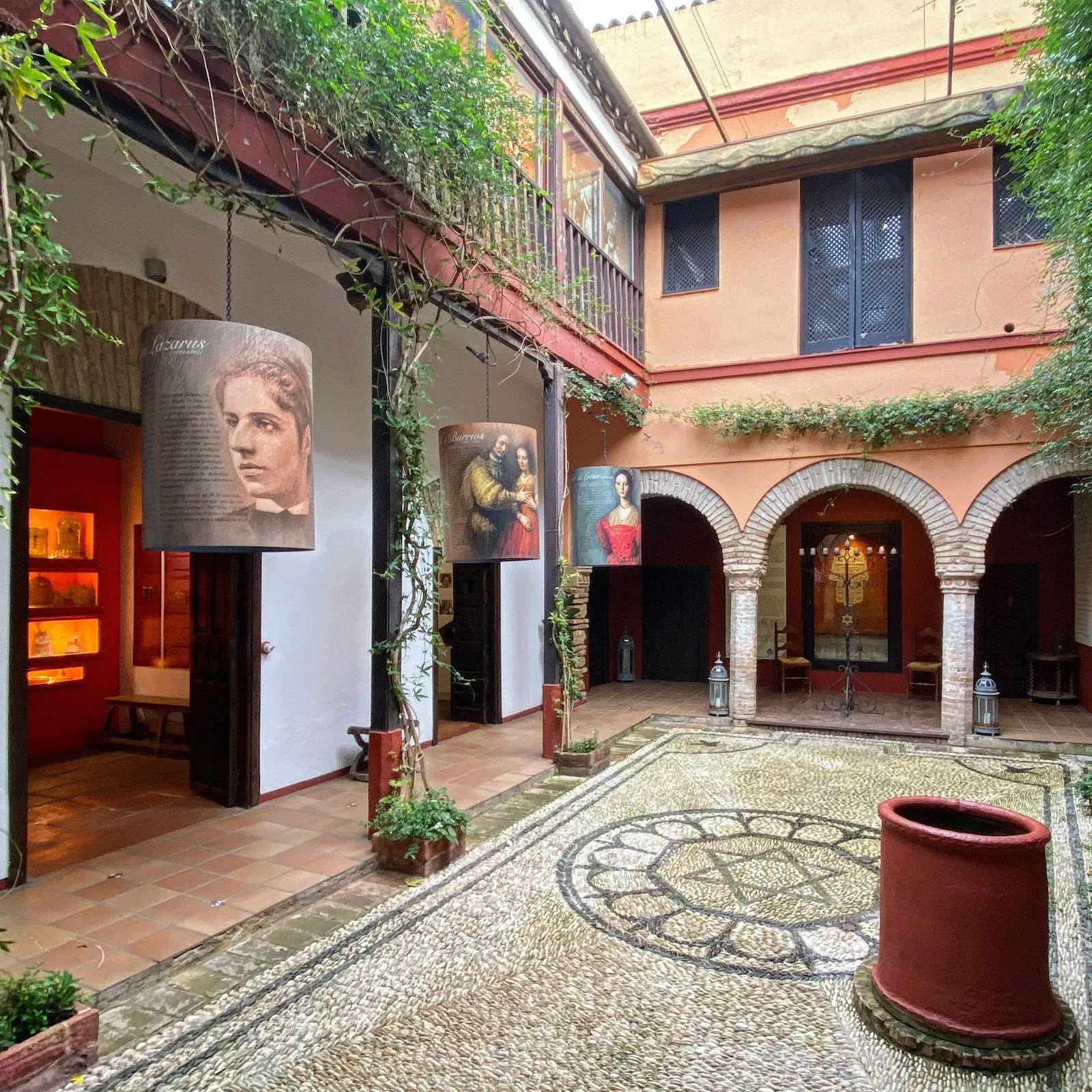
Casa de Sefarad occupies a restored 14th-century home in Córdoba’s historic Jewish quarter. The synagogue stands opposite, placing the museum among the streets and landmarks associated with the city’s Jewish past.
The building’s domestic setting gives the displays a close-up focus. Rather than presenting only a broad timeline, the rooms look at aspects of life and culture, including music, festivities, family life and women’s contributions. Interpretive material is available in English and Spanish.
Objects, music and daily life
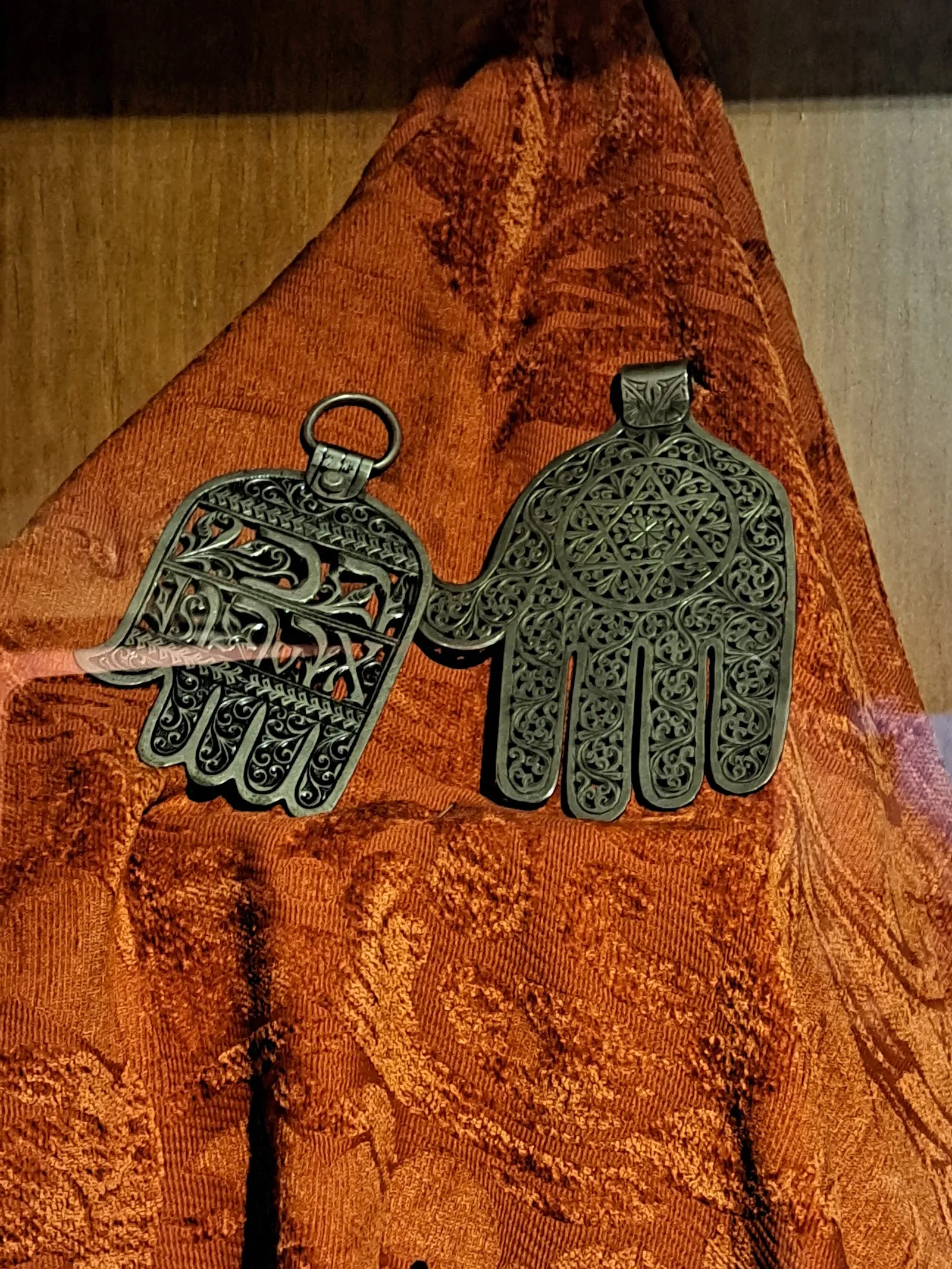
Exhibits cover Sephardic traditions through objects and themed displays. Religious silverware includes chanukiyot, or Hanukkah lamps, with examples connected to northern Morocco. Traditional clothing from Andalusia and Morocco appears alongside material on Jewish music.
Books and documents introduce the history of censorship and persecution. Other rooms explore women in Jewish history and the lives of notable figures. A collection of contemporary paintings focuses on women of al-Andalus, the historical name for the region under Muslim rule. Together, these subjects give the museum a cultural and domestic focus as well as a historical one.
Maimonides and the Inquisition
The museum’s historical displays include material on Maimonides, the Córdoba-born Jewish philosopher also known as Moses ben Maimon. Exhibits concerning the Inquisition include old books and documents from proceedings in the 15th century.
The account of Sephardic history extends beyond medieval Córdoba to the expulsion of Jews from Spain in 1492 and the subsequent diaspora. The museum also considers the Jewish community’s place in the wider history of the Iberian Peninsula. Traditional songs in Hebrew and Ladino, also known as Judeo-Spanish, are sometimes performed at the house; ask staff whether a performance is planned during your visit.
Preguntas frecuentes
How long does a visit to Casa de Sefarad take?
A quick visit can take about 30 minutes. Allow up to two hours to see the exhibits in more detail.
Is Casa de Sefarad opposite Córdoba Synagogue?
Yes. The museum is on Calle Judíos, opposite the synagogue in Córdoba’s historic Jewish quarter.
Are there performances at Casa de Sefarad?
Traditional Sephardic songs are sometimes performed. Ask on arrival whether a performance is scheduled.
Is the upper floor accessible?
Access to the upper floor may be limited. Check which areas are open when you visit.