
Burgos Cathedral, dedicated to Santa María, is a Gothic church on the Plaza de Santa María in the center of Burgos. Building began in 1221 and continued for centuries, so later Renaissance and Baroque work sits within the original Gothic plan. The spires are the first thing you see from the square. Inside, look for the Golden Staircase, the Chapel of the Constable, the central dome and the tomb of El Cid beneath it. Entry includes the Cathedral Museum.
From a Romanesque church to a Gothic cathedral
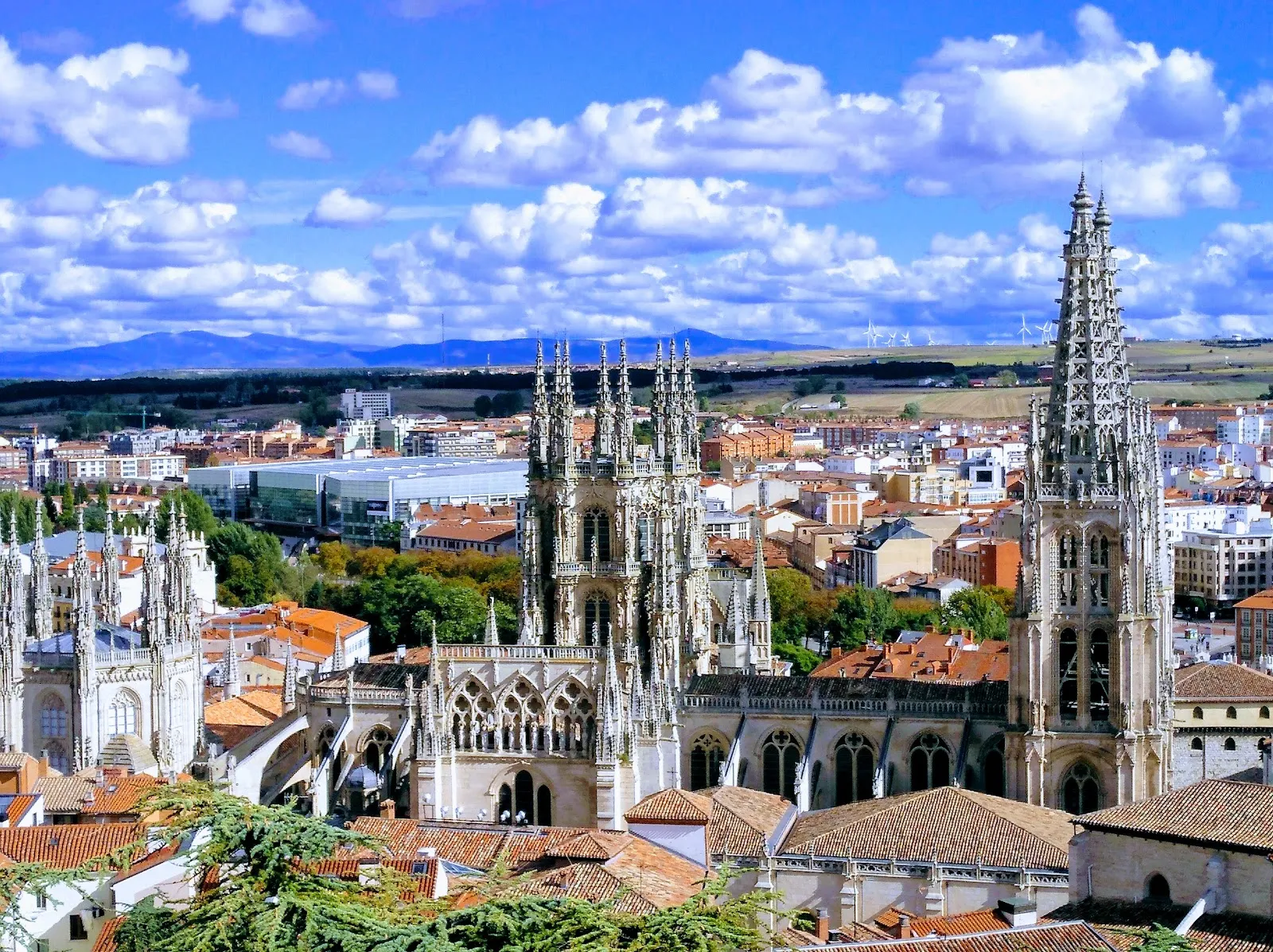
A simpler Romanesque cathedral stood on this site before the present building. Work on the Gothic cathedral started in 1221, under King Ferdinand III of Castile, and continued for centuries after that.
The result mixes styles. The Gothic plan was enhanced by Renaissance and Baroque work added later. The cathedral was among the first buildings in Spain to bring the Gothic style to the country. UNESCO added it to the World Heritage list in 1984, and it is the only Spanish cathedral listed on its own rather than as part of a historic center.
Inside the cathedral
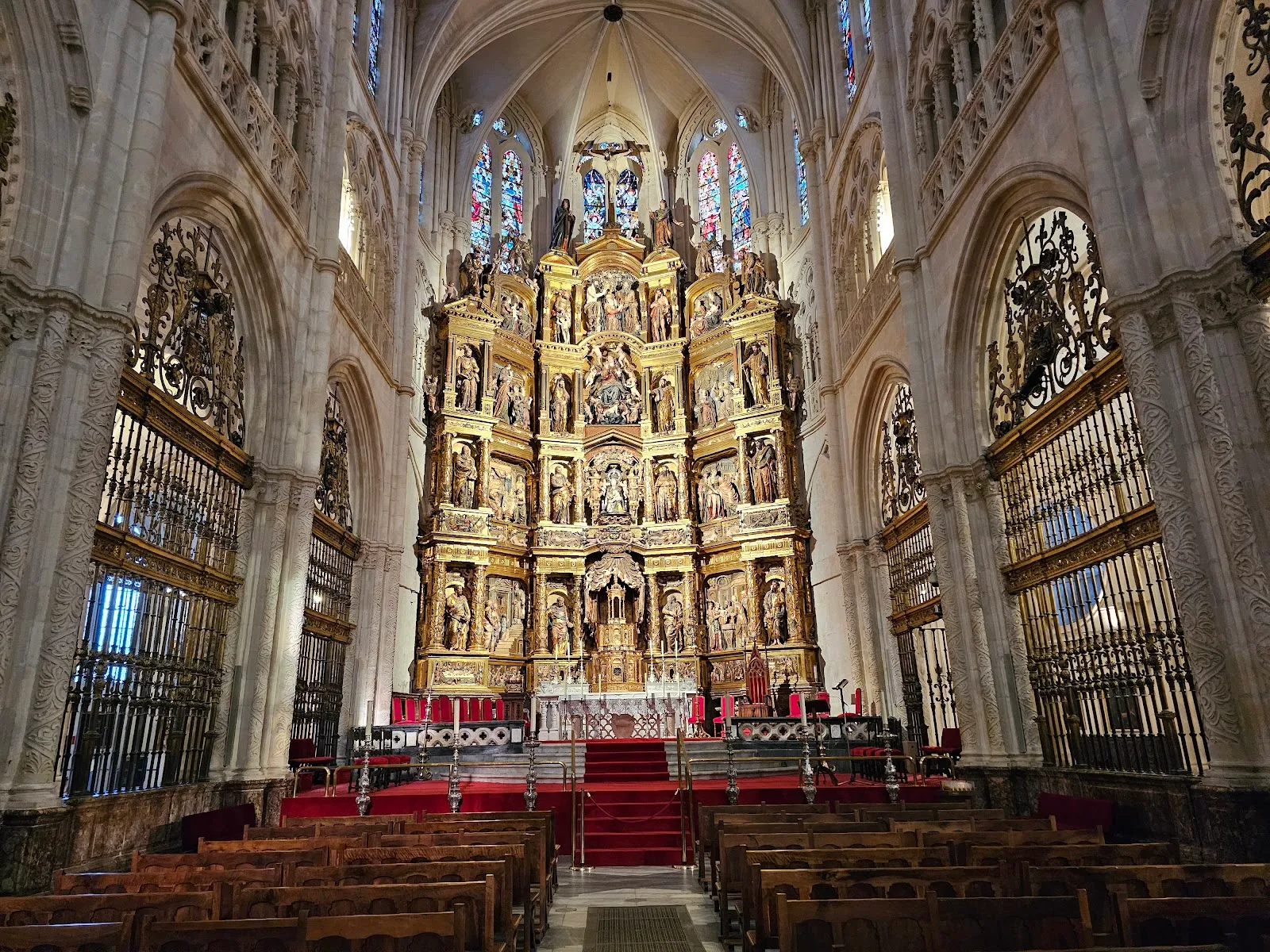
The interior holds many chapels, each with its own altarpieces, paintings and tombs. The cathedral has at least 38 altarpieces.
The Golden Staircase, the Escalera Dorada, was designed by Diego de Siloé and is decorated with gold. It is more sculpture than staircase. The Chapel of the Constable was built by Simón de Colonia and is a transitional work between late Gothic and early Renaissance styles.
The central dome, the cimborrio, was made by Juan de Vallejo, with work dating from 1539. Beneath it lies the tomb of El Cid Campeador, the hero of the medieval epic El Cantar de Mio Cid. His wife, Doña Jimena, is buried in the cathedral too.
The Cathedral Museum
The visit includes the Cathedral Museum, with pieces from the medieval and Renaissance periods. Its collection includes medieval paintings, sculptures, goldsmith and silversmith work, tapestries and a 16th-century Bible.
The museum is a good addition to the interior visit, since it shows the objects that were kept in the cathedral over the centuries.
The clock and the outside
The Papamoscas clock is a mechanical figure that moves on the hour. Plan to be near it at the top of an hour if you want to see it move.
The spires on the west front date from a second phase of building in the 15th century. The exterior blends French Flamboyant Gothic with more characteristically Spanish elements. On the south transept, the Portada del Sarmental stands out for its 13th-century Gothic sculpture.
Planning the visit
Entry is paid, and tickets can be bought in advance. Allow about two hours for a relaxed visit with the audio guide.
The entrance, restrooms and parking lot are wheelchair accessible. Gothic cathedrals show their detail best when the most light enters, so plan your visit for daytime hours.
Preguntas frecuentes
Is there an entry fee?
Yes, there is an entry fee to go inside the cathedral. Advance tickets are recommended.
How long do you need?
Plan about 1.5 to 2.5 hours. A full visit with the audio guide can take about two and a half hours at an unhurried pace.
Is there an audio guide?
Yes, a free audio guide can be used through your phone. Download it before you go and bring earphones.
Is Burgos Cathedral wheelchair accessible?
Yes. The entrance, the restroom and the parking lot are listed as wheelchair accessible.


