The Casino of Constanța is an Art Nouveau building on the seafront promenade of Romania's Black Sea city. It opened in 1910 and has been restored, with a history exhibition on the ground floor, an interactive Black Sea museum in the basement and rooms on the upper floor, including a concert room. The facade is best seen from the promenade, especially at sunset. Plan about an hour inside, and book your ticket ahead.
From an artificial cliff to the 1910 opening
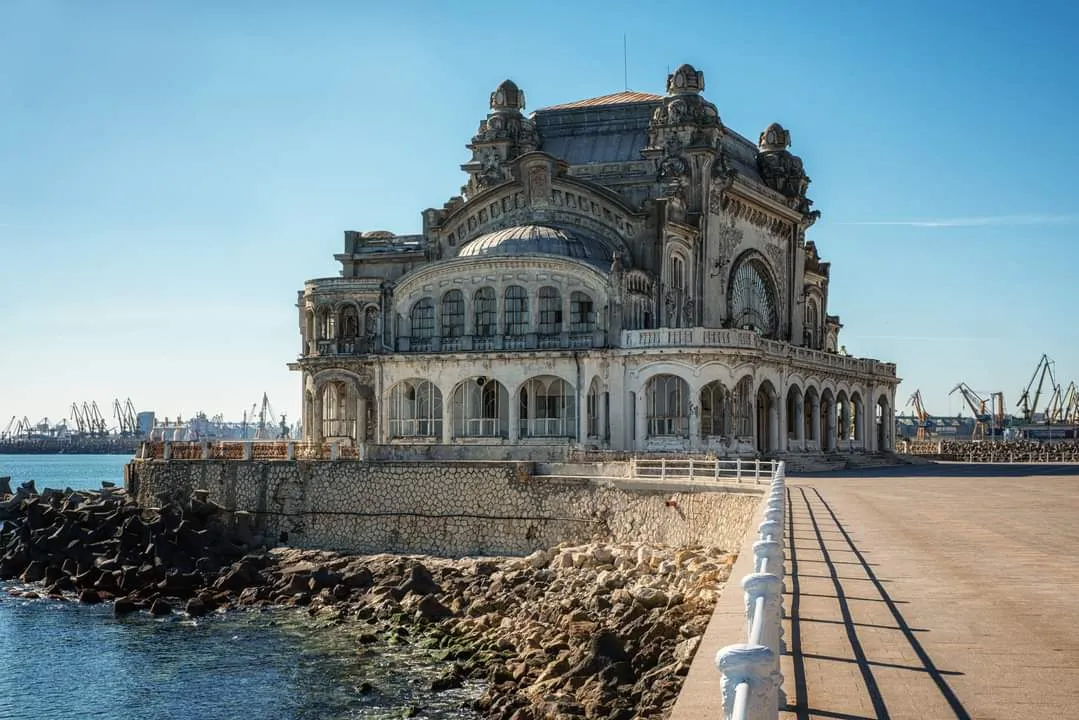
In 1898 the city's beauty commission decided to build the new casino on an artificial cliff. Work began in 1903, and the building was completed on 15 August 1910, St. Mary's Day. Prince Ferdinand attended the opening, together with Prime Minister Ionel Brătianu and other public figures of the time.
The site had a wooden building from 1880 to 1902, used for theatre performances, balls and recreation. The first plan was meant to draw on Romanian art traditions. Once the foundations were in place, the design changed to Art Nouveau, and the architects named for the final building are Daniel Renard and Petre Antonescu.
A building with many roles
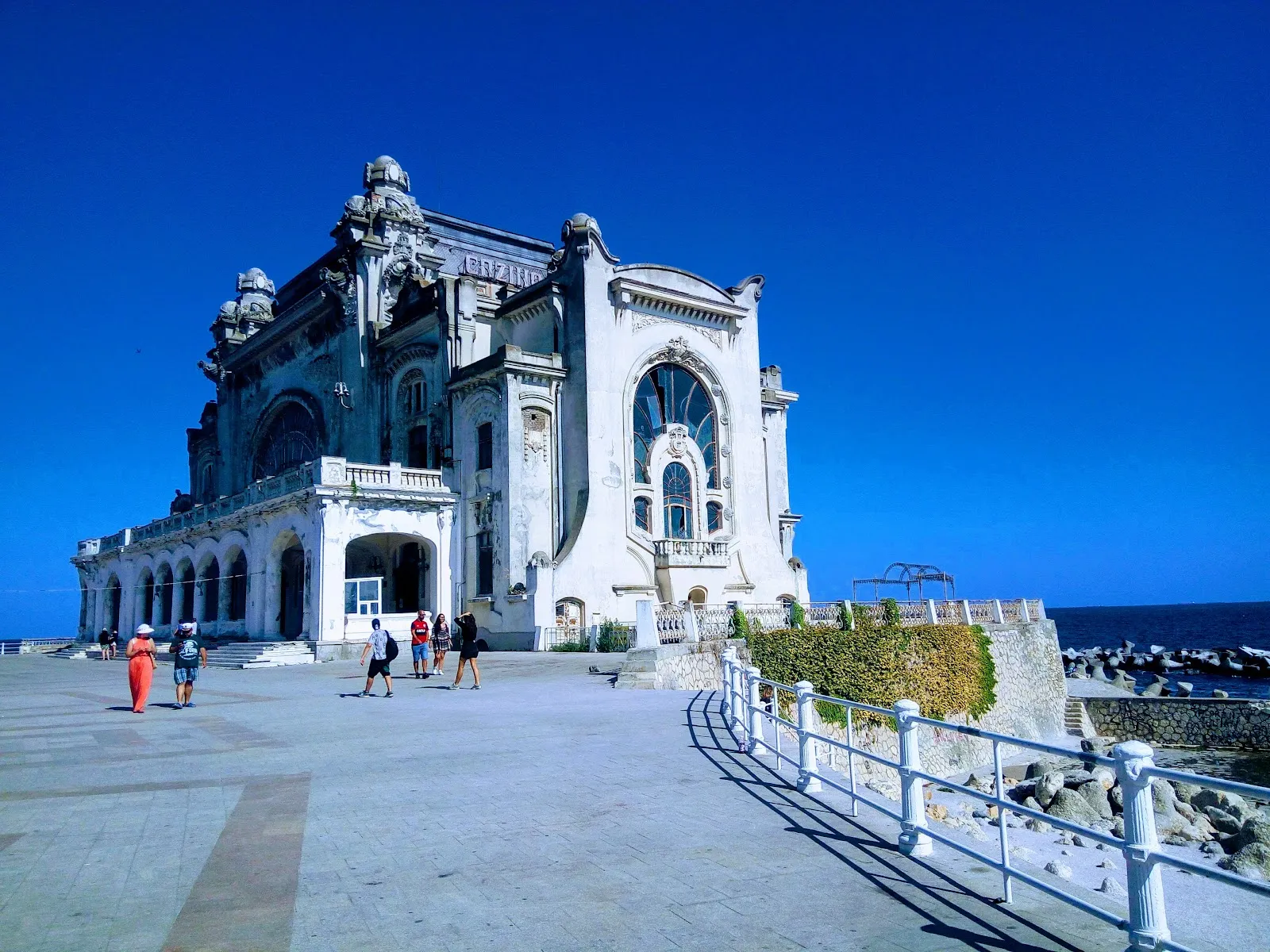
Over the years the casino was a theatre, a ballroom, a place of leisure and a gaming house. During the First World War it served as a hospital. Soon after it opened, it drew wealthy visitors from many countries, and it was counted among the best-known casinos in Europe at the time.
Royal guests came too. Queen Elizabeth held evening receptions there, and Nicholas II of Russia visited shortly before the war broke out. The building later closed and fell into disrepair before its recent restoration.
Inside the restored rooms
The ground floor has an exhibition on the casino's history. The basement holds an interactive museum about the Black Sea, with digital displays on the state of the sea and a seated hall where a film shows the sea's environment and the life in it. The upper floor has a concert room and a museum on Queen Marie, with some of her belongings and paintings, along with period photographs of the casino in use. A sound and light display recalls how the rooms once looked.
The interior murals were remade to match their original appearance, and the restoration followed the original blueprints. Not every surface is original. Some marble columns and stairs are covered with synthetic material made to look similar.
The building is planned as a cultural and event centre, with a multifunctional hall for 200 seats and a festivity hall for 150 seats, for symposia, exhibitions and concerts.
Around the promenade
The casino stands on the seafront in the peninsula district, close to the old town square. Nearby are the Genoese Lighthouse, the Great Mahmudiye Mosque, the Ion Jalea Sculpture Museum, the Roman Mosaic Edifice and the aquarium. The peninsula was the site of the ancient city of Tomis, so the sights span many periods.
The promenade has gardens and benches facing the sea, a good place to sit after your visit and watch the light change over the water.
Preguntas frecuentes
Is there an entry fee?
Yes, there is a ticket for the building. Booking in advance is recommended, and current prices are best checked on the official website.
How long do you need?
About an hour is enough to see the exhibitions and the upper-floor rooms.
Is the casino wheelchair accessible?
The entrance, restroom and seating are listed as wheelchair accessible. One account says step-free access reaches only the first floor, so ask ahead if you need the upper rooms.
Is it suitable for children?
Yes. The basement museum has interactive exhibits about the Black Sea that keep children engaged.
Can you go out on the balcony?
Not always. The upper floor can be closed for events, and the balcony view is then unavailable.