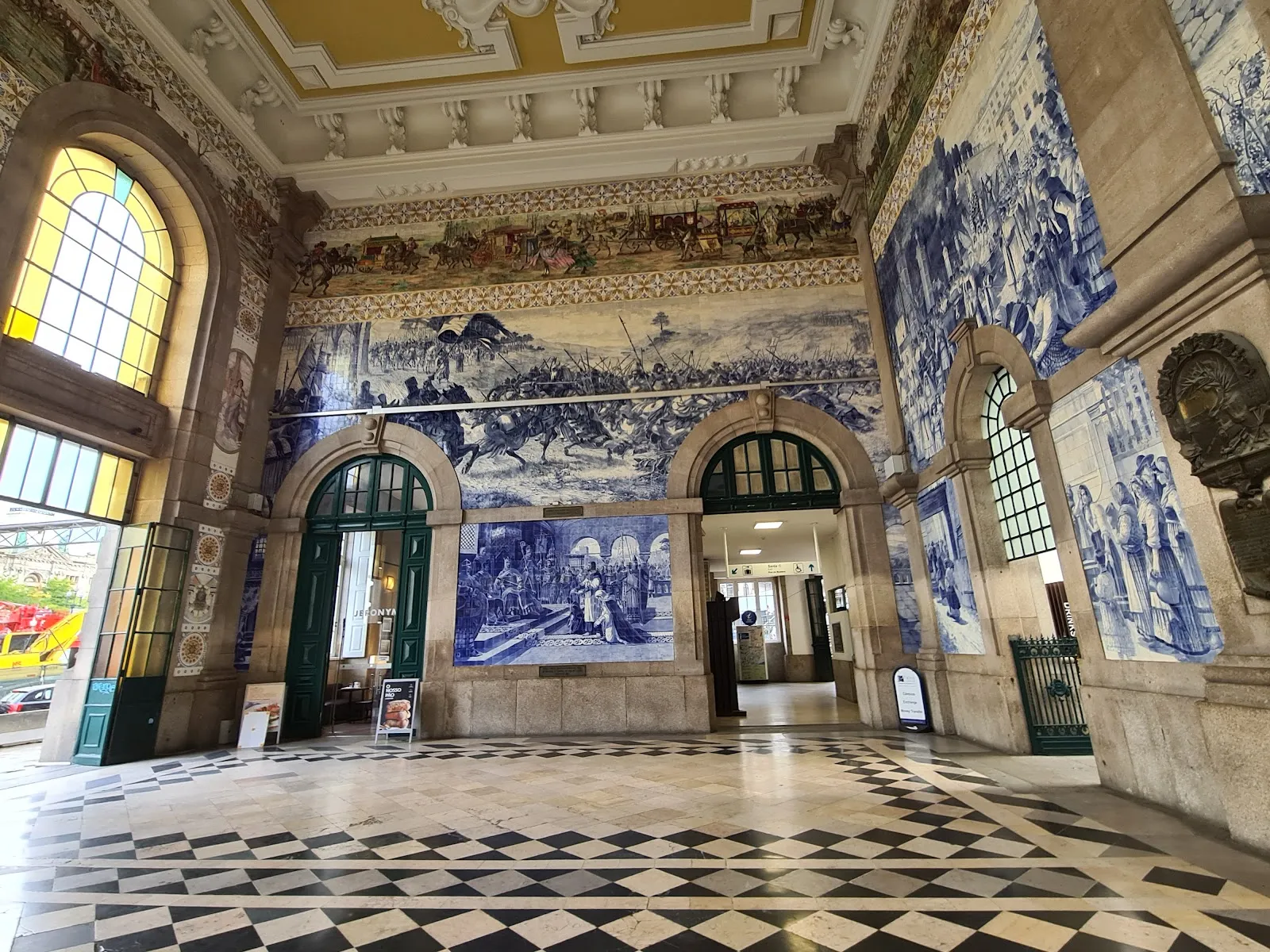
Porto São Bento is a working railway station on Praça de Almeida Garrett in Porto’s old centre. Step into the main hall to see more than 20,000 blue-and-white azulejos, arranged in murals of Portuguese history and daily life. Scenes include royal ceremonies, rural traditions and battles, alongside views of Porto. You can visit even if you are not taking a train. The hall can be busy during the day, so come later in the evening or early in the morning for a quieter look at the tilework.
A station built over a former monastery
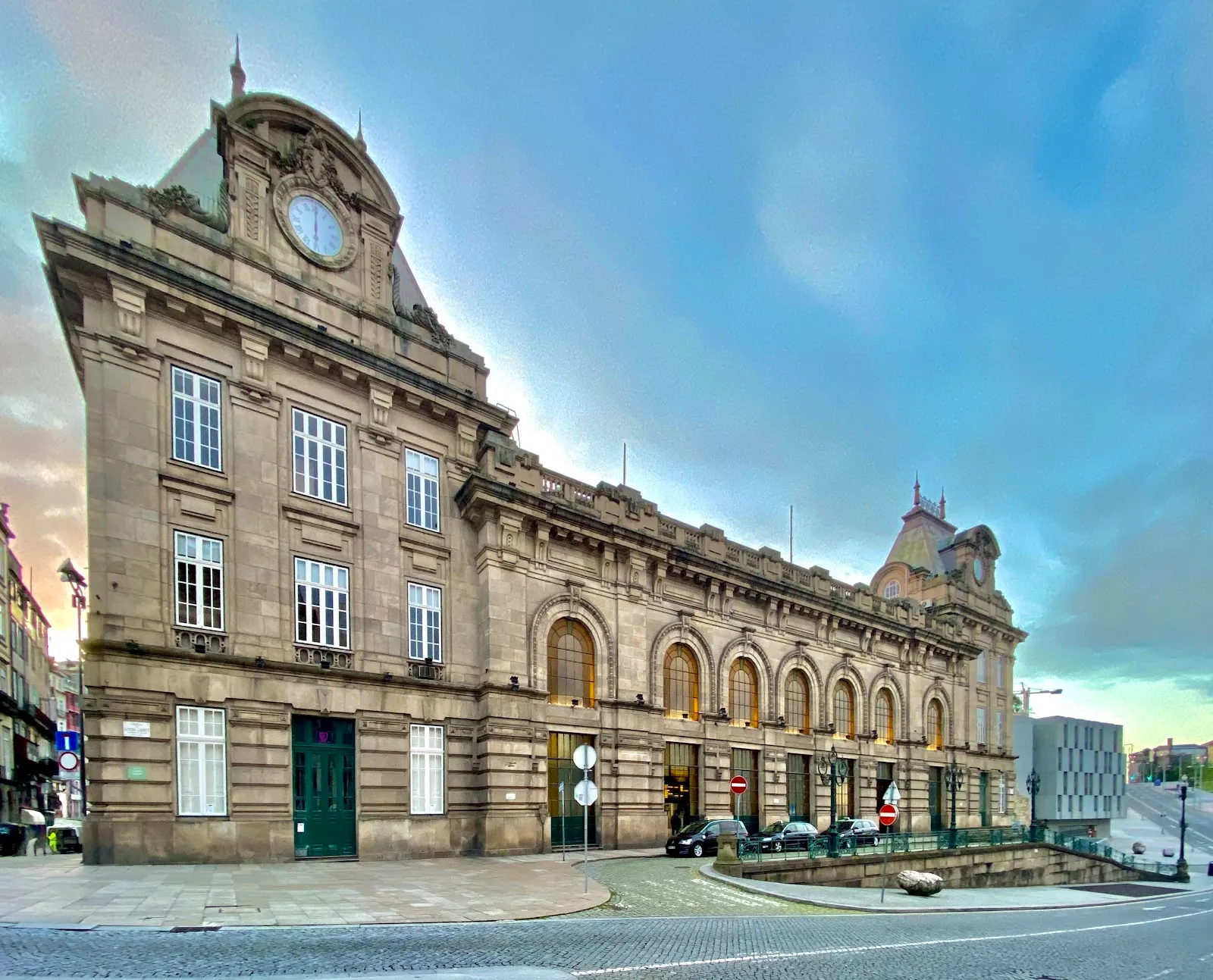
São Bento stands on the site of a former 16th-century monastery. The station had a temporary opening in 1896, construction began in 1904, and it was officially inaugurated in 1916. Its Beaux-Arts design has a symmetrical U-shaped plan, with a central entrance between two towers.
The building remains a working railway station and a transport hub for regional trains. Even if you are not travelling, you can enter the main hall to see its architecture and tile decoration. Its central location in Porto’s older district also makes it easy to include on a walk through Baixa.
The azulejo murals
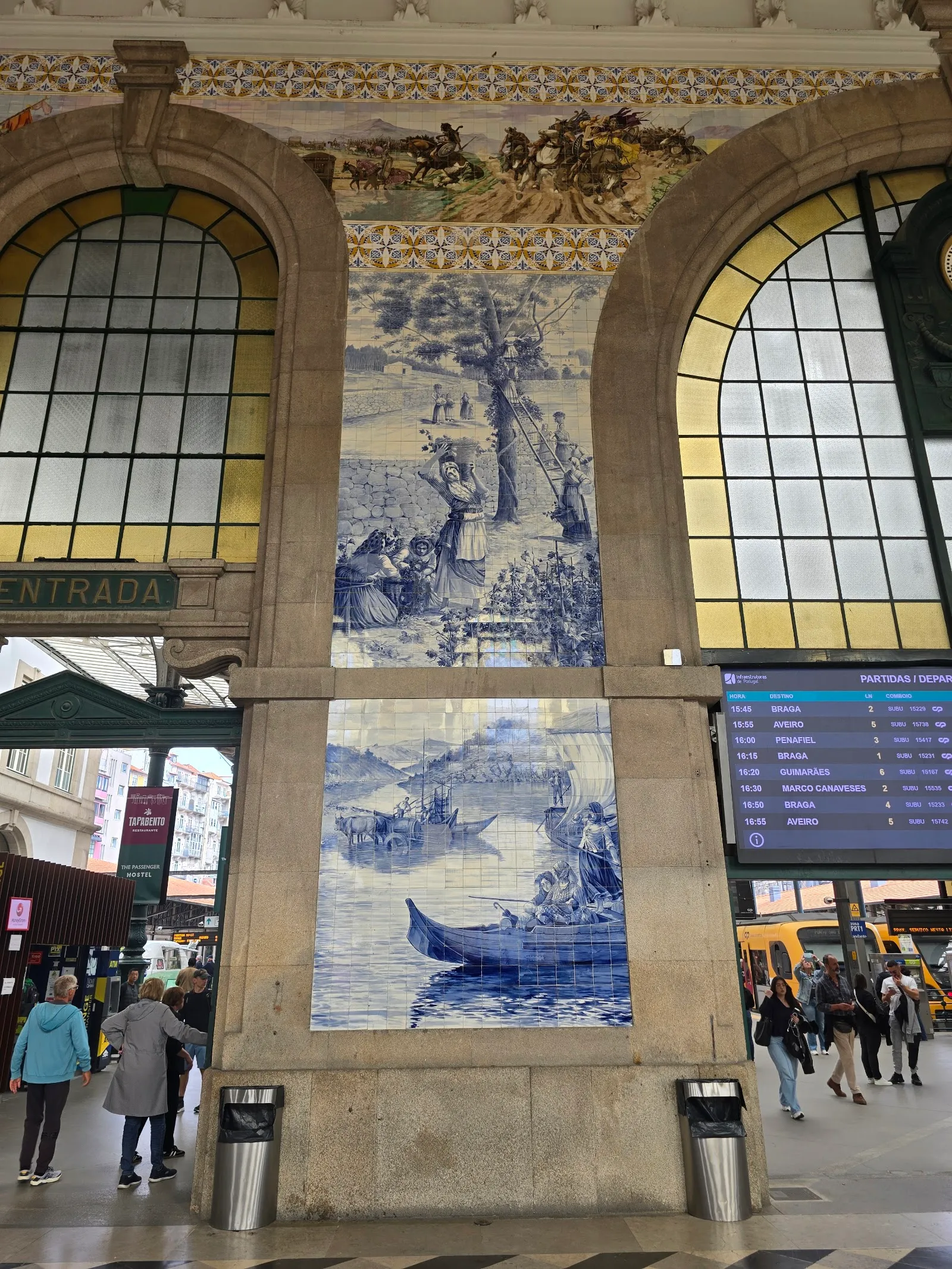
The main attraction is the station’s collection of more than 20,000 azulejos. Artist Jorge Colaço designed the tiles between 1905 and 1916, covering the hall’s walls with large scenes in blue and white. Together, the panels depict moments from Portuguese history and aspects of daily life.
Look for royal ceremonies, rural traditions and battles from the 12th to the 15th centuries. The murals also show landscapes associated with Porto. Their scale makes it worth looking across the walls as well as at individual details; the hall is decorated on three sides.
How to visit the hall
São Bento is open to people passing through the station, as well as those arriving to admire the artwork. The entrance hall is free to visit, according to the information available. Since trains continue to run, the space can be busy with passengers and people looking at the tiles. Early morning or later in the evening is a better choice if you want a calmer visit or room to take photographs.
The station’s exterior may be affected by reconstruction, but the interiors remain accessible. If you are exploring Baixa, you can combine the stop with nearby sights such as Torre dos Clérigos or Livraria Lello.
Preguntas frecuentes
Can you visit São Bento Station without taking a train?
Yes. You can enter the main hall to see the tile murals even if you are not travelling.
Is there an entry fee for São Bento Station?
The main hall is free to enter.
What is shown on the tiles at São Bento Station?
The murals depict Portuguese history and daily life, including royal ceremonies, rural traditions and battles from the 12th to the 15th centuries.
When is a quieter time to visit São Bento Station?
Go early in the morning or later in the evening, when the hall is less crowded.