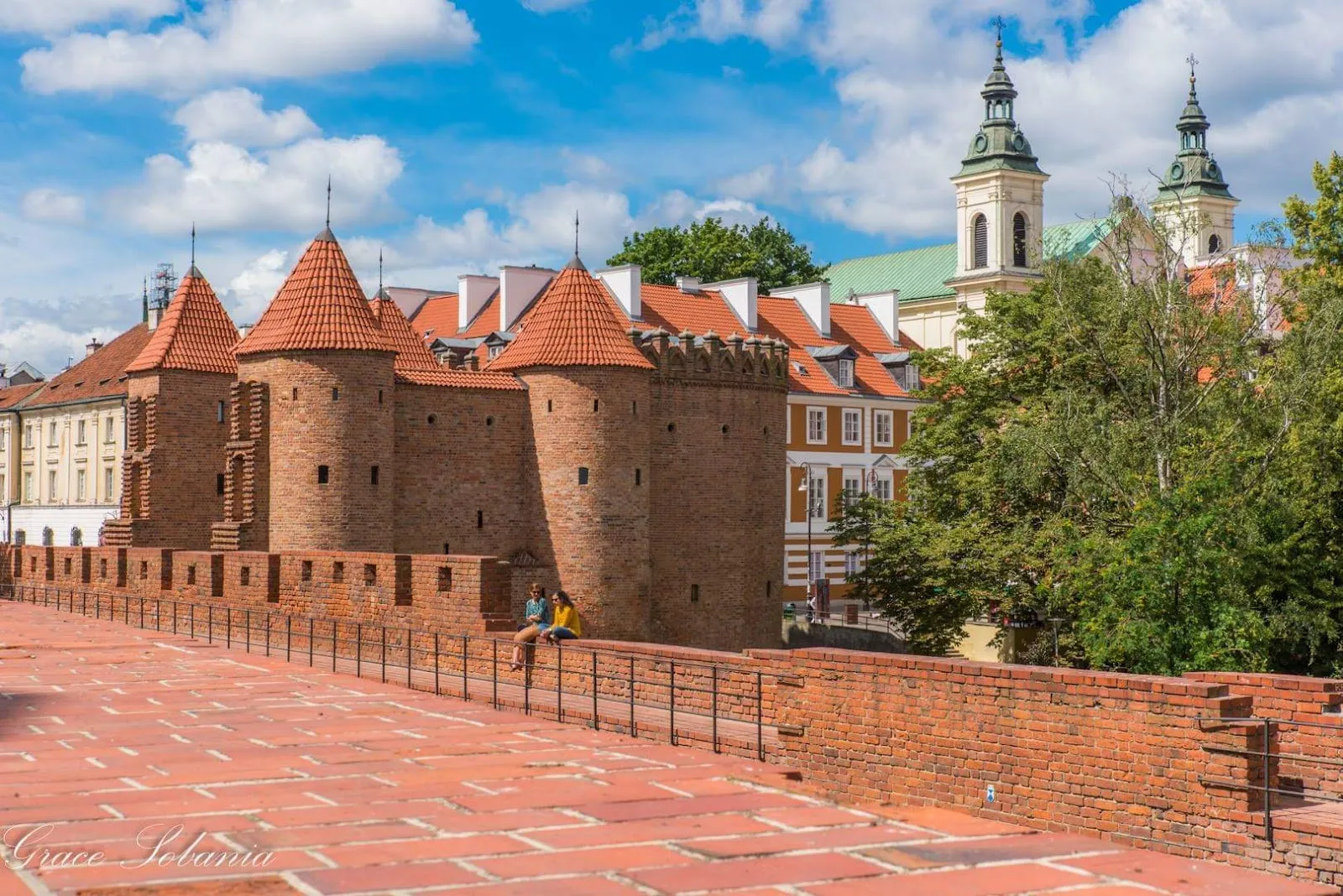
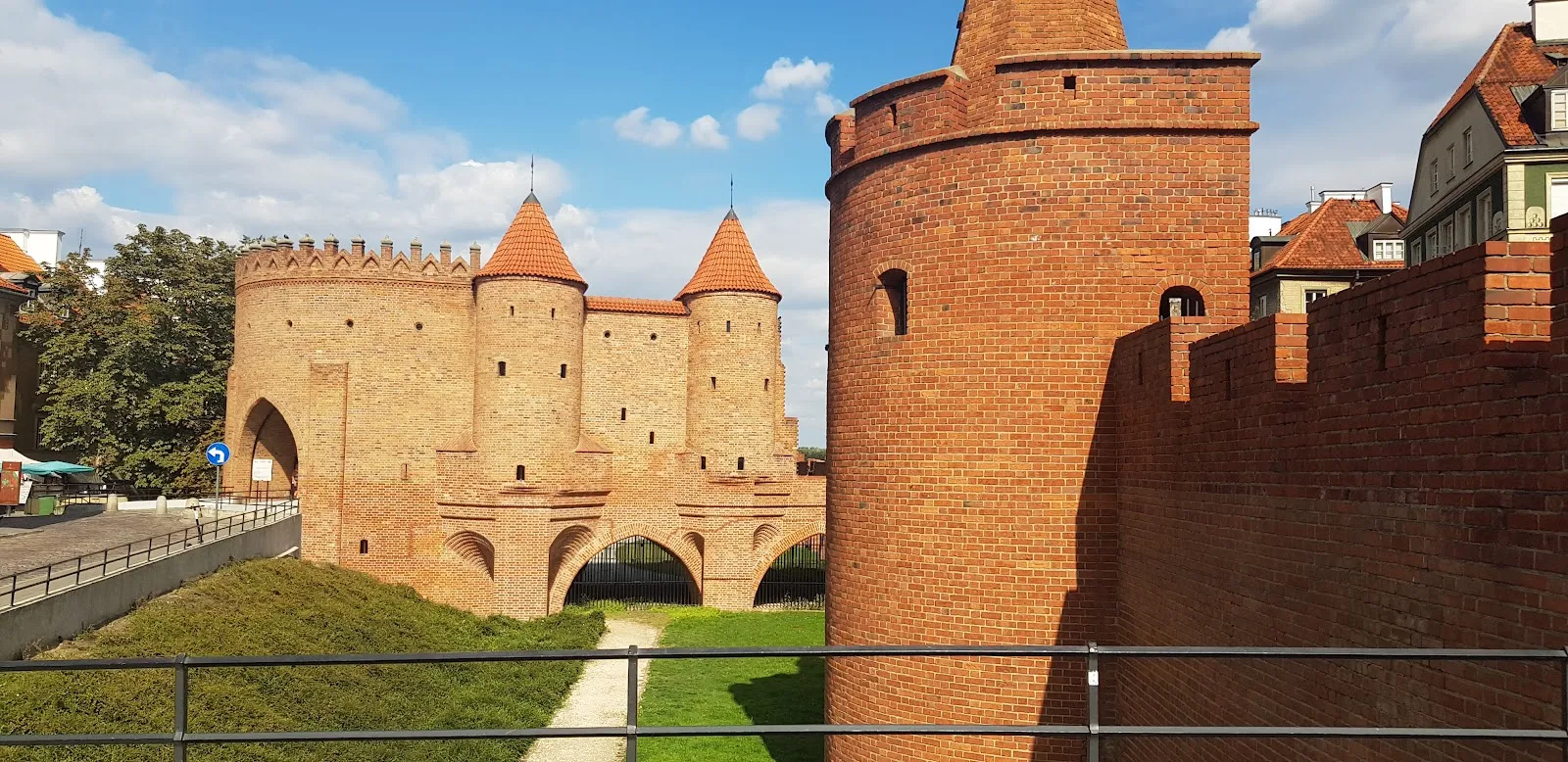
Between Warsaw’s Old and New Towns, the Barbican is a red-brick remnant of the city’s historic defensive walls. Its semicircular form, round towers and gateway arch make a striking entrance to the Old Town. You can walk through and around the fortifications, follow the wall and pause for views over the river valley. The structure dates to the 16th century and is a compact stop for architecture and Warsaw history; there is little to explore inside, so pair it with a stroll through the surrounding streets.
A fortified gateway between two towns
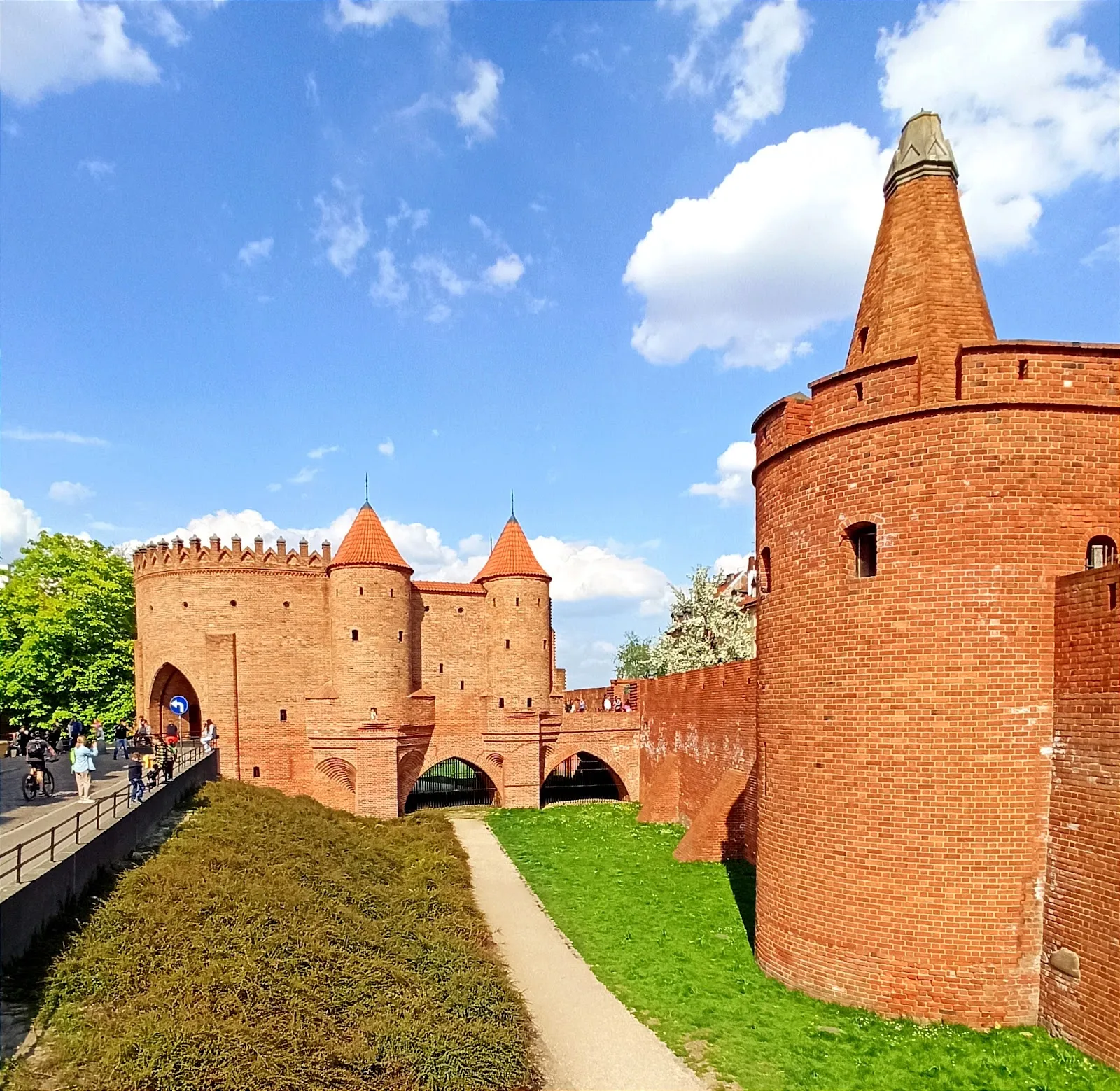
The Warsaw Barbican stands where the Old Town meets the New Town, along the route of the former city walls. Its semicircular brick structure and gateway mark the approach to the Old Town. The walls and Barbican are among the remaining fragments of the larger defensive system that once encircled Warsaw.
The fortification was built in 1540 to protect Nowomiejska Street, replacing an older gate. Italian Renaissance architect Jan Baptist the Venetian designed it as part of work on the 14th-century walls, which had fallen into disrepair. The Barbican had three levels and four towers. It extended out from the outer walls and was surrounded by a moat.
A defense that quickly became outdated
Changes in artillery soon reduced the Barbican’s military usefulness. It was used in the city’s defense once, during the Swedish invasion of Poland in 1656, when Polish forces recaptured it from the Swedes. In the 18th century, part of the structure was dismantled. A larger gate was more useful for the movement of people and goods.
The fortifications were later reconstructed. The Barbican and surrounding walls you see today are restored brick structures, and walking around them gives you a close look at their curved form and masonry. There is not much to do inside, so the site works best as a short outdoor visit while exploring the Old Town.
Walking the walls
You can pass through the archway, walk around the Barbican and follow sections of the walls. The cobbled paths below the ramparts add another way to explore the area. Viewpoints along the route look toward the river valley and nearby historic buildings; the walls also provide photo opportunities.
The Barbican is an easy stop to combine with a walk between the Old and New Towns. For more detail on its history, consider joining a guided tour or hiring a local guide. The site is wheelchair accessible at the entrance, though the cobbled paths and ramparts may affect how easily you can explore every section.
Preguntas frecuentes
Is the Warsaw Barbican free to visit?
Walking around the Barbican and along the city walls is free. Interior exhibitions require separate tickets.
How long do you need at the Warsaw Barbican?
Allow around 30 to 60 minutes to walk through and around the fortifications.
Where is the Warsaw Barbican?
It is between Warsaw’s Old and New Towns, at Nowomiejska 15/17.
When is a good time to visit?
Early morning or late afternoon is suggested for a quieter walk.