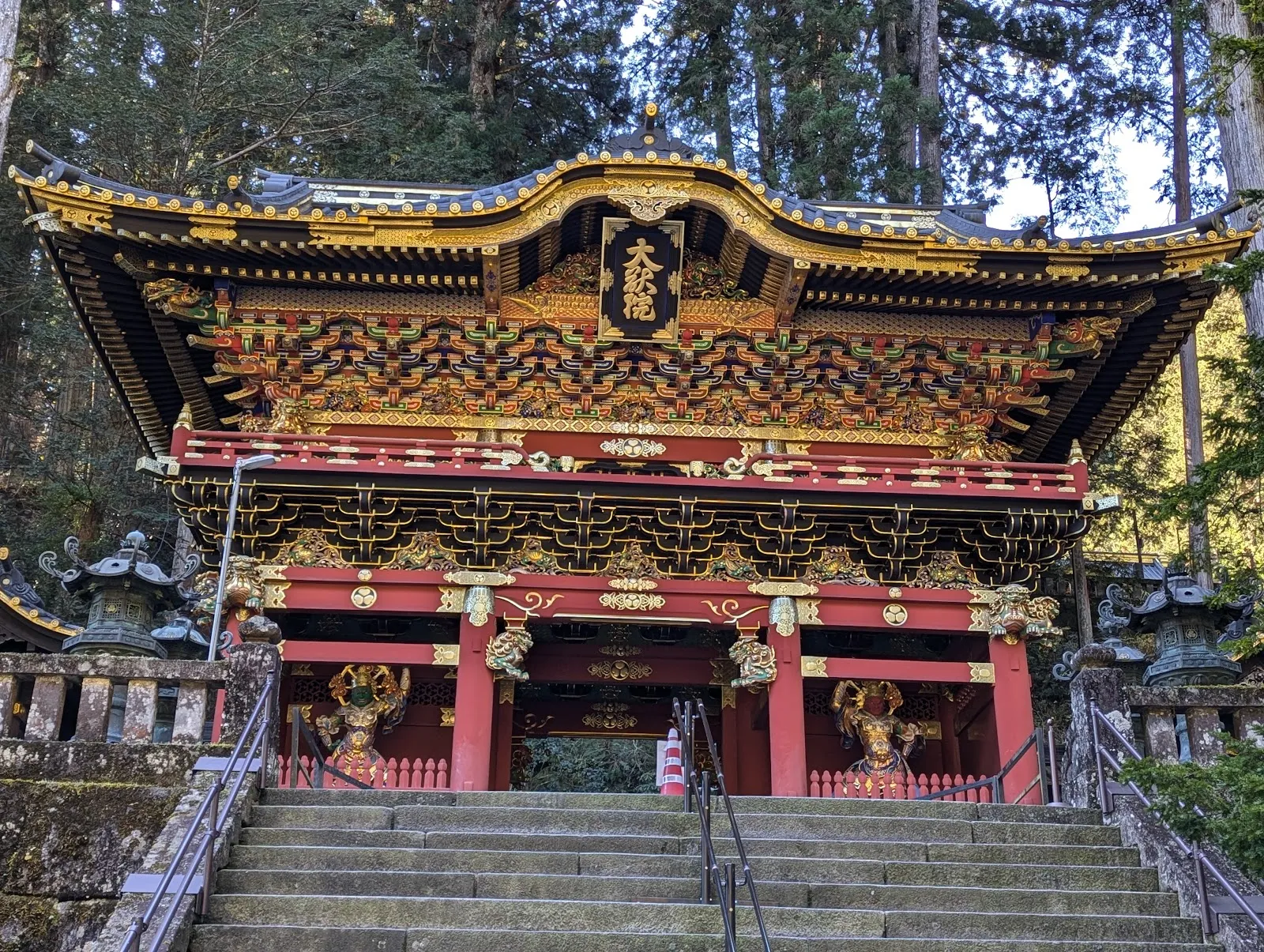
Nikkō Tōshōgū is the shrine complex in Nikkō dedicated to Tokugawa Ieyasu, the first shogun of the Tokugawa shogunate. Its 55 buildings, many of them National Treasures or Important Cultural Properties, are decorated with carvings, red lacquer and gold leaf. Look for the sleeping cat and the three monkeys carved on the horse stable, the five-storied pagoda, and the Yōmei-mon gate. Ieyasu's tomb sits on a hill in a cedar forest above the main buildings. The shrine is part of the UNESCO World Heritage site Shrines and Temples of Nikkō.
From Ieyasu's will to the present shrine
Tokugawa Ieyasu, the first shogun of the Tokugawa shogunate, died in 1616. His will asked to be buried on Mount Kuno in Shizuoka Prefecture, and for a small shrine to be built in Nikkō, where he would be enshrined as a deity. The shrine was built in 1617, and Ieyasu is enshrined there as Tōshō Daigongen.
After his death, his heir and second shogun, Tokugawa Hidetada, built a very simple grave on the site. Later, the third shogun, Tokugawa Iemitsu, Ieyasu's grandson, had skilled artisans rebuild the complex in its present form. The work took 17 months, and most of the buildings you see today date from the rebuilding of 1636.
The shrine and its neighbors were registered as a UNESCO World Heritage Site in 1999 under the name Shrines and Temples of Nikkō.
The buildings and carvings
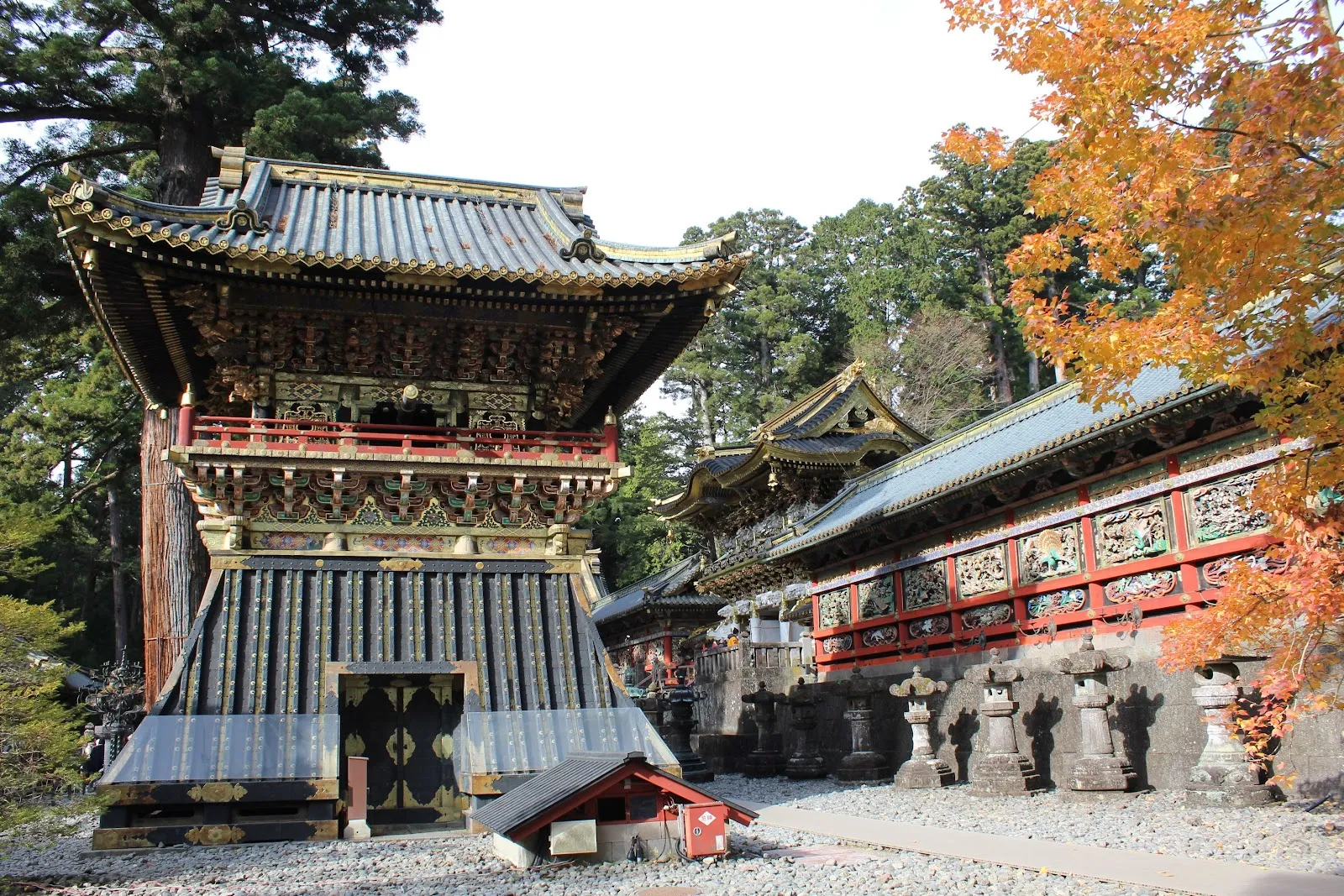
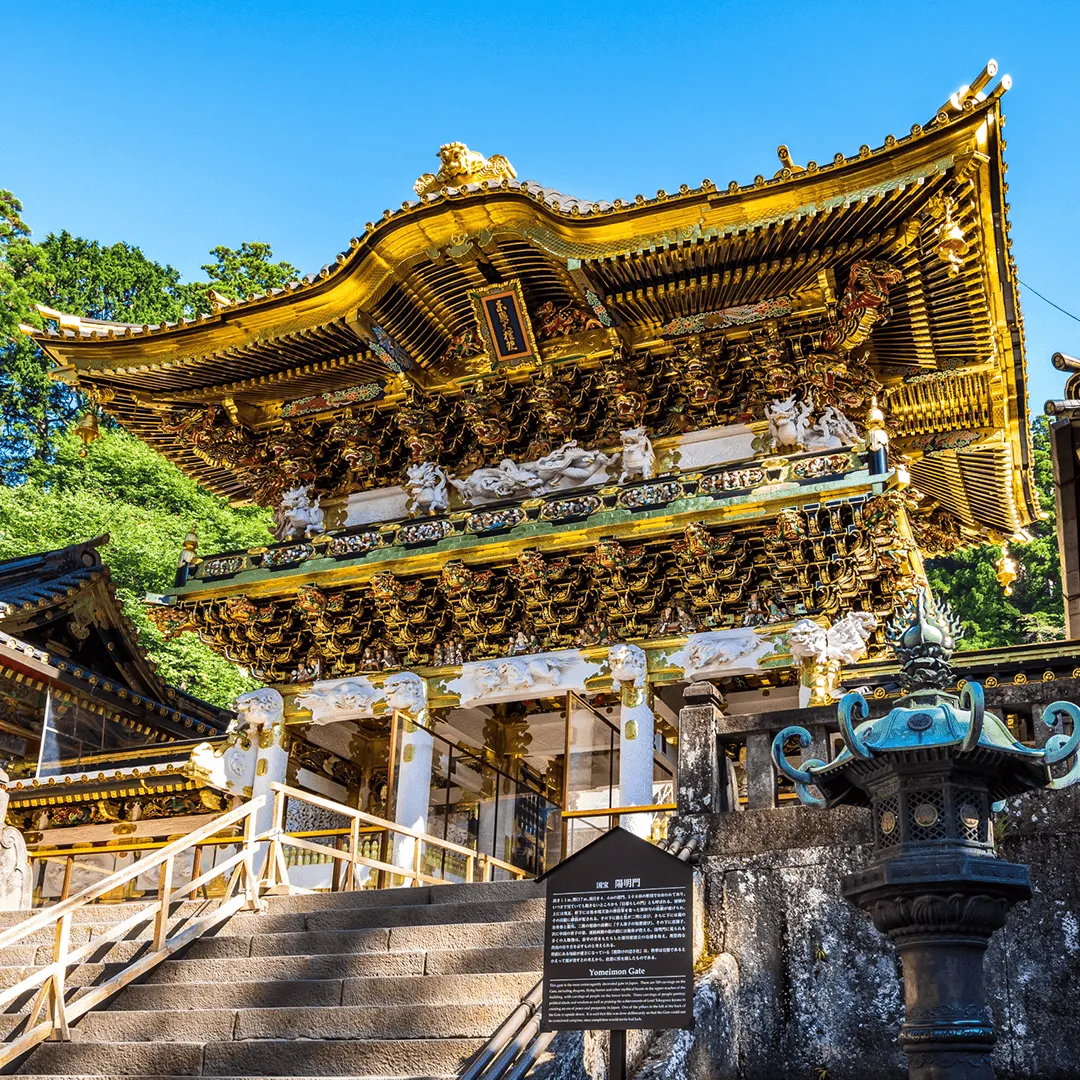
The complex has 55 buildings, many of them National Treasures or Important Cultural Properties. The Yōmei-mon, known as the Sunset Gate, is covered in carved wood, painted panels and gold leaf. It was closed to view for four years during renovation and is open to the public again. Nearby stands a five-storied pagoda, and a dragon painting in the Honji-dō is known as the crying dragon.
Many of the carvings are credited to the sculptor Hidari Jingorō. Look for the sleeping cat, and for the three monkeys carved on the horse stable.
Inside, red-lacquer corridors, inlaid pillars and gold leaf give the buildings a dense, rich look. The anteroom, called the Hai-den, has carved friezes and coffered ceilings with dragons.
How a visit works
To reach the Main Hall (Hon-den), start at the rows of lockers at the far end of the enclosure. Remove your shoes and store them there, then step up into the shrine. A winding corridor leads to the Hai-den.
Ieyasu's tomb lies on a hill in a cedar (sugi) forest, at the top of the complex. The path up has steps and uneven ground, so allow time for the climb and the walk back down.
Seasons, crowds and the wider park
The shrine can be visited all year. In autumn, the maples and lacquer trees around the buildings add red and gold to the gold leaf on the shrine. Crowds are heaviest on holidays, and thousands visit for the New Year visit, called Hatsumode, to ask for blessings.
The shrine grounds are part of Nikkō National Park, which was established in 1934 and spans four prefectures. Kegon Falls and Lake Chuzenji are also inside the park, so a day trip can take in both the shrine and the lake and waterfalls.
Preguntas frecuentes
Is there an entry fee?
Yes. Adult admission is 1,600 yen, and children pay 550 yen. Check the official website for current prices before you go.
How do I get there from Tokyo?
One route from Ueno Station takes about 1 hour 52 minutes and costs 3,230 yen one way per person. It involves a Tōbu line train to Tōbu Nikkō Station, with a change at Kitasenju. The limited express on that route is not covered by a partial JR Pass.
How do I get from the station to the shrine?
Take the bus for about 7 minutes from JR Nikkō or Tōbu Nikkō Station. Get off at Sogokaikan-mae or Yasukawachō, then walk about 3 minutes.
Do I need to take my shoes off?
Yes. Remove your shoes and store them in the lockers before you step up into the shrine.