
Tōfuku-ji is a large Zen Buddhist temple complex in southeastern Kyoto, known for its gardens, historic buildings and maple-filled ravine. The wooden Tsūtenkyō Bridge crosses the valley and draws particular attention in autumn, when the foliage turns red. Take time to see the Hojo gardens, whose four distinct designs include a moss-and-stone checkerboard and a southern rock garden. The grounds offer a quieter change of pace outside the busy foliage period. Keep your visit respectful and quiet, as this is an active temple.
A Zen temple complex in southeastern Kyoto
Tōfuku-ji was founded in 1236, and construction of the complex continued until 1255. The temple follows the Rinzai school of Zen Buddhism and is one of Kyoto’s five great Zen temples. Its name combines characters from the names of Tōdai-ji and Kōfuku-ji, two prominent temples in Nara.
The grounds contain multiple temple buildings and sub-temples, with architecture shaped by additions and repairs over the centuries. The Sanmon gate is among the complex’s most notable structures. It dates to 1425 and is recognised as a National Treasure. The main hall was reconstructed in 1934.
The Hojo gardens
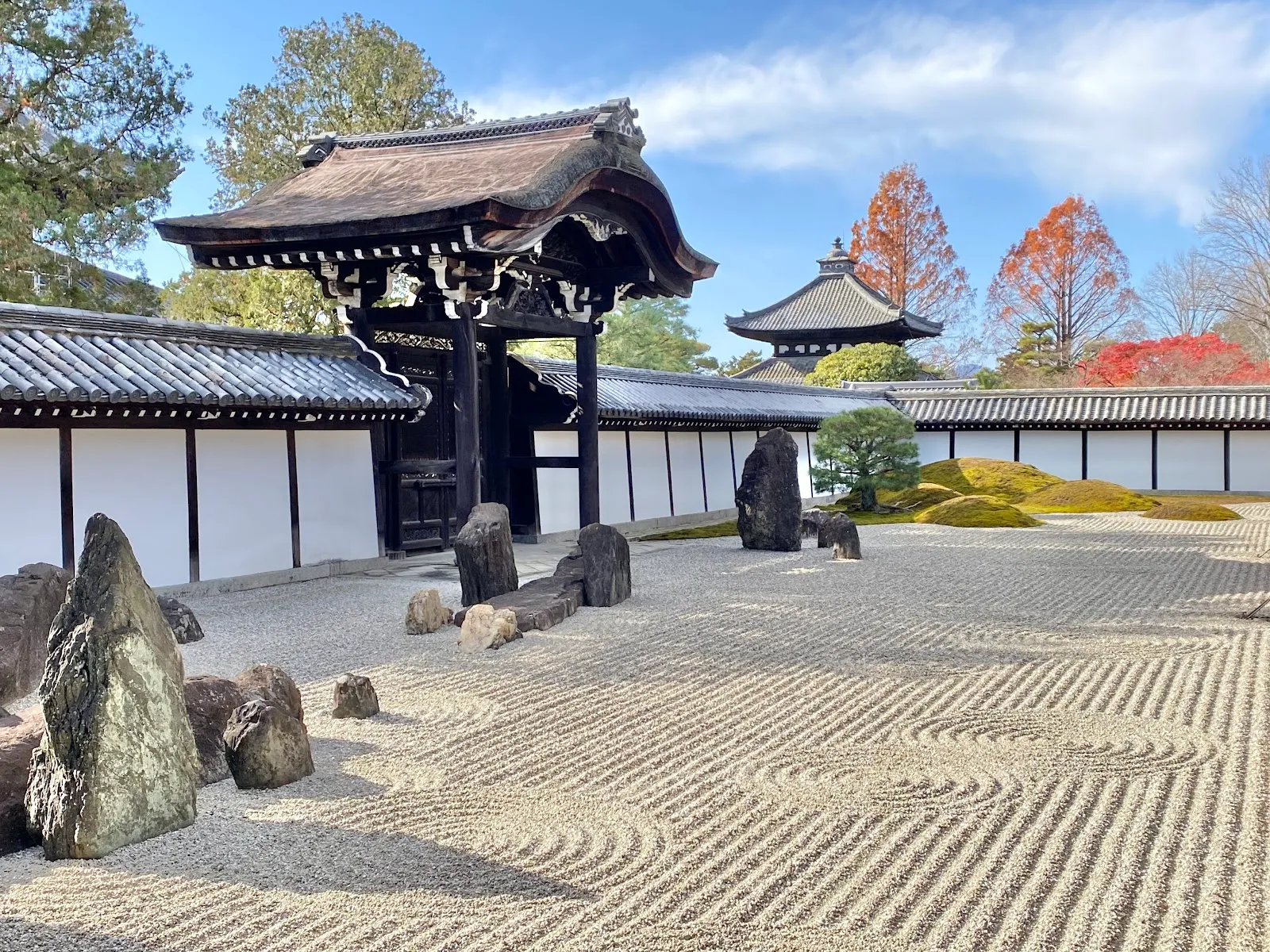
The Hojo, once the head priest’s quarters, is surrounded by four gardens arranged around the building. Their different treatments of stone, gravel, moss and plants make the visit a chance to see several garden designs in one place.
In the southern garden, large rocks stand in raked gravel. Its composition draws on Chinese mythological imagery: the gravel represents the sea, while groups of rocks suggest sacred places. To the north, paving stones and moss form a checkerboard pattern. The gardens were designed by landscape architect Mirei Shigemori in 1939, bringing modern design into a traditional temple setting.
Bridges over the maple ravine
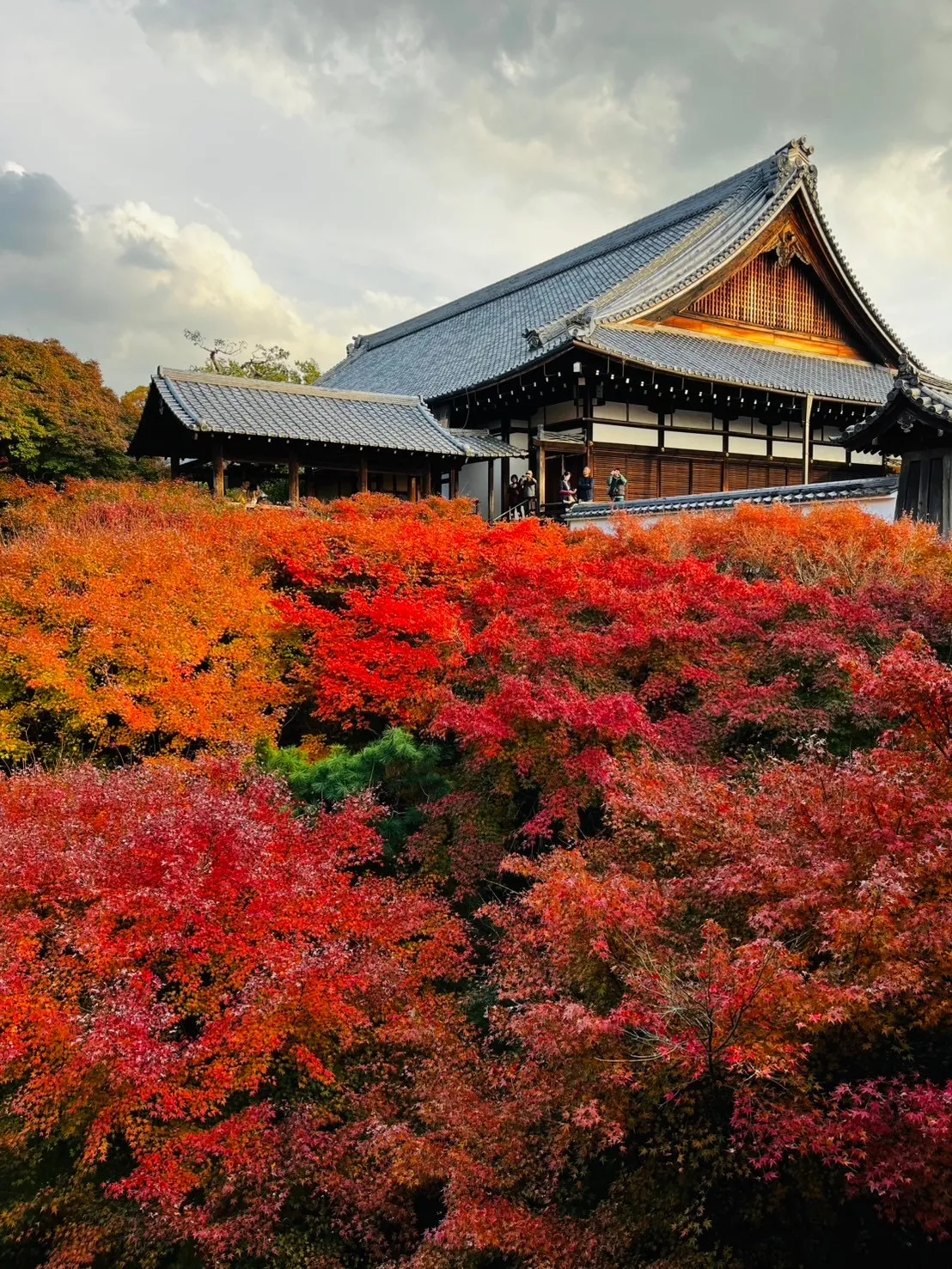
A ravine runs through the temple grounds, crossed by wooden bridges. Tsūtenkyō is the best-known viewpoint, linking areas of the complex and looking out over the valley’s maples. In autumn, the trees turn red and the view from the bridge is the main draw for many people coming to Tōfuku-ji.
Gaunkyo Bridge is another place to look across the ravine, with a view of Tsūtenkyō and the surrounding trees. Foliage season is also the busiest period, so the bridge area can be crowded. Outside autumn, the valley remains a quiet part of the grounds, with green foliage in summer and seasonal changes through the year.
Planning a visit
The temple grounds include both free and ticketed areas. The bridge and garden areas require tickets, while the temple itself can be visited without a ticket. Some buildings have separate admission requirements, so check the temple’s official website before setting out if you plan to visit particular interiors.
Tōfuku-ji is accessible from Kyoto Station by train and on foot. The walk through the surrounding neighbourhood is another way to reach the complex. Early morning is a practical choice for a calmer visit, especially in autumn. Visitors should keep their voices low and treat the temple grounds and buildings with care.
Preguntas frecuentes
What is Tōfuku-ji Temple known for?
The temple is known for its Zen gardens, historic buildings and maple-lined ravine. Tsūtenkyō Bridge is a popular viewpoint, especially in autumn.
Is there an entry fee for Tōfuku-ji?
The temple grounds include areas that are free to visit and ticketed garden and bridge areas. Some buildings may require separate tickets.
When is the best time to see autumn leaves at Tōfuku-ji?
Autumn is the main season for the maple foliage, particularly around Tsūtenkyō Bridge. It is also the busiest time to visit.
How do you get to Tōfuku-ji from Kyoto Station?
You can travel by train from Kyoto Station and continue on foot, or walk through the neighbourhood to reach the temple.


