The Palladian Basilica sits on Piazza dei Signori, the most famous public building in Vicenza and the square where the city's political and economic life has long been centred. Andrea Palladio rebuilt an older Gothic hall and wrapped it in two levels of white marble loggias, a design you can study closely from the square. Inside, the first-floor council room is 52 metres long and often hosts exhibitions. Climb to the upper terrace for views over the rooftops and the piazza below, and see the building lit up after dark.
From a Gothic hall to Palladio's design
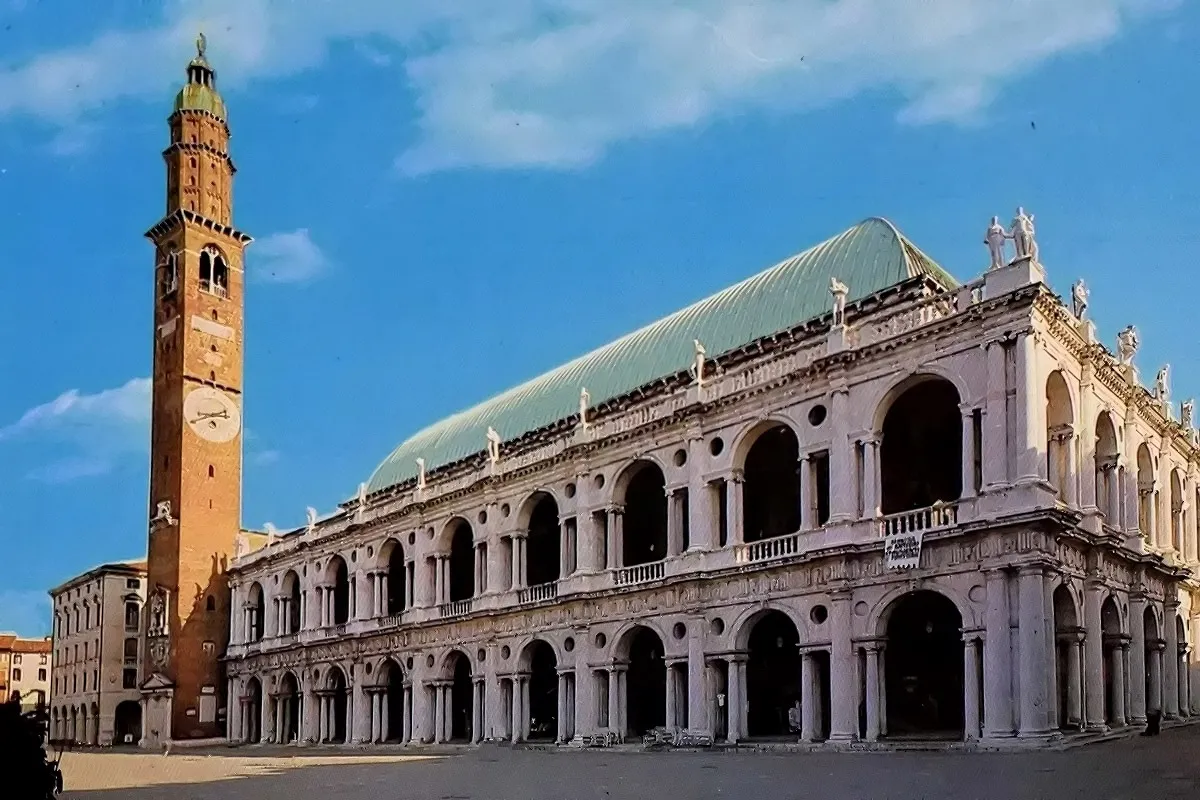
The building began as the Palazzo della Ragione, a Gothic hall that served the city. In the 1540s the Vicentines decided it needed renewal and commissioned Andrea Palladio, a young architect little known at the time. He began the work in 1549 and carried it on until his death, but the building was not completed until 1614.
Palladio wrapped the older structure in a double loggia of white marble, with an open colonnade of Doric columns on the lower level and Ionic columns above. The result is a Renaissance building set around a Gothic core, and the two periods are still visible side by side.
Why it was built
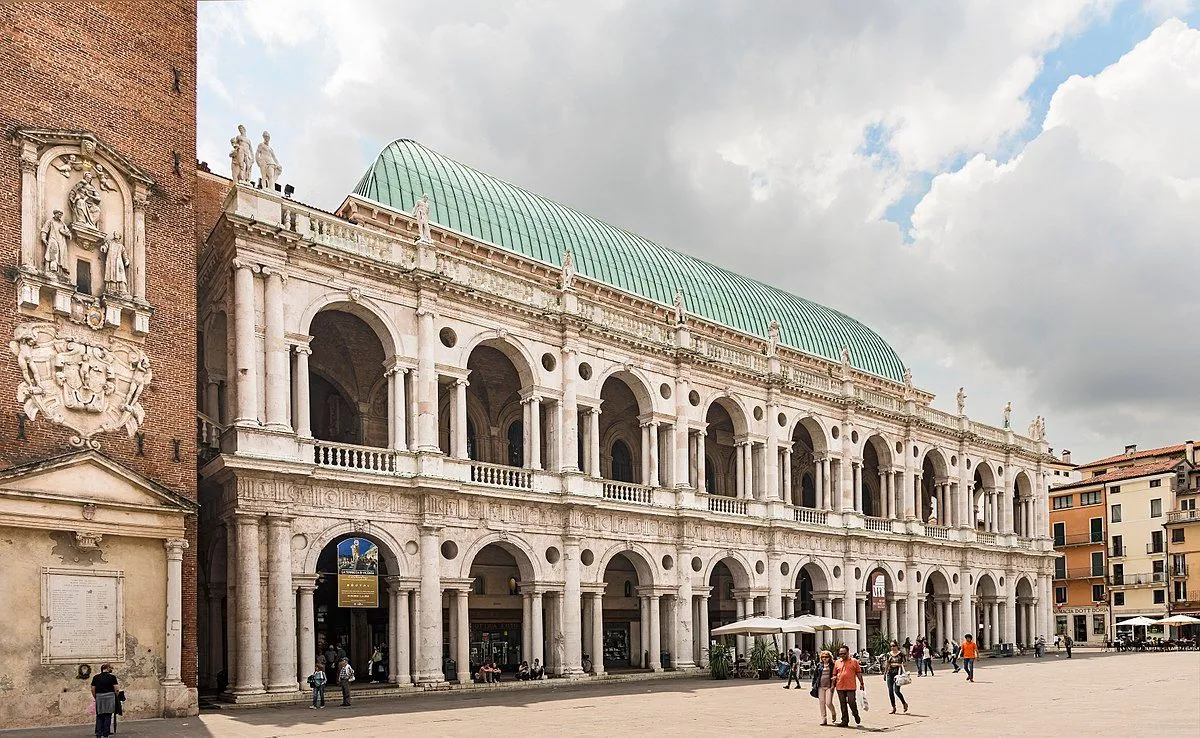
The hall was never meant as a church. Public buildings of this kind were courts of justice and places of public assembly, and this one was used as a meeting place for the Grand Council and as a court of law. Since the Middle Ages the building has been the centre of the city's political and economic life, because of its position on Piazza dei Signori.
Inside the building
The main interior space is the Council room on the first floor. It measures 52 metres in length and 25 metres in height. Events and temporary exhibitions are usually held there, so what you find inside depends on the programme of the moment.
The building also hosts private events, including weddings. Couples can use the upper terrace or the second-floor loggia, which has art on display and offers cooler shade in summer.
Climbing to the top floor brings you to the terrace, one of the best viewpoints over the city and its surroundings.
The roof
The roof is shaped like an overturned ship's hull and covered in copper. Its wide supporting beams date back to the mid-15th century. Bombing during the Second World War seriously damaged the roof, and it was later rebuilt.
Piazza dei Signori and the other Palladio buildings
The basilica stands on the south side of Piazza dei Signori. The square occupies the site of an old Roman forum. Next to the basilica is the Loggia del Capitaniato, another work by Palladio.
The Palazzo Chiericati, which now houses the Civic Art Gallery, and the Palazzo Barbarano, home of the Palladio Museum, are also in the city. The Teatro Olimpico, a sixteenth-century theatre built of wood, survives as well. Villa La Rotonda stands on a hill just outside the centre. The city of Palladio is listed by UNESCO as a World Heritage Site.
Preguntas frecuentes
Is there an entry fee?
Yes, the basilica has an admission fee. A Vicenza pass covering several sites includes the basilica, but temporary exhibitions inside need a separate ticket.
Do I need to book tickets in advance?
Booking tickets in advance is recommended.
Is the basilica wheelchair accessible?
The entrance and the restroom are wheelchair accessible.
Can you go up to the terrace?
Yes, going up to the top floor brings you to a terrace with views over the city and the square.
Is there somewhere to eat on site?
Yes, there is a restaurant on site.