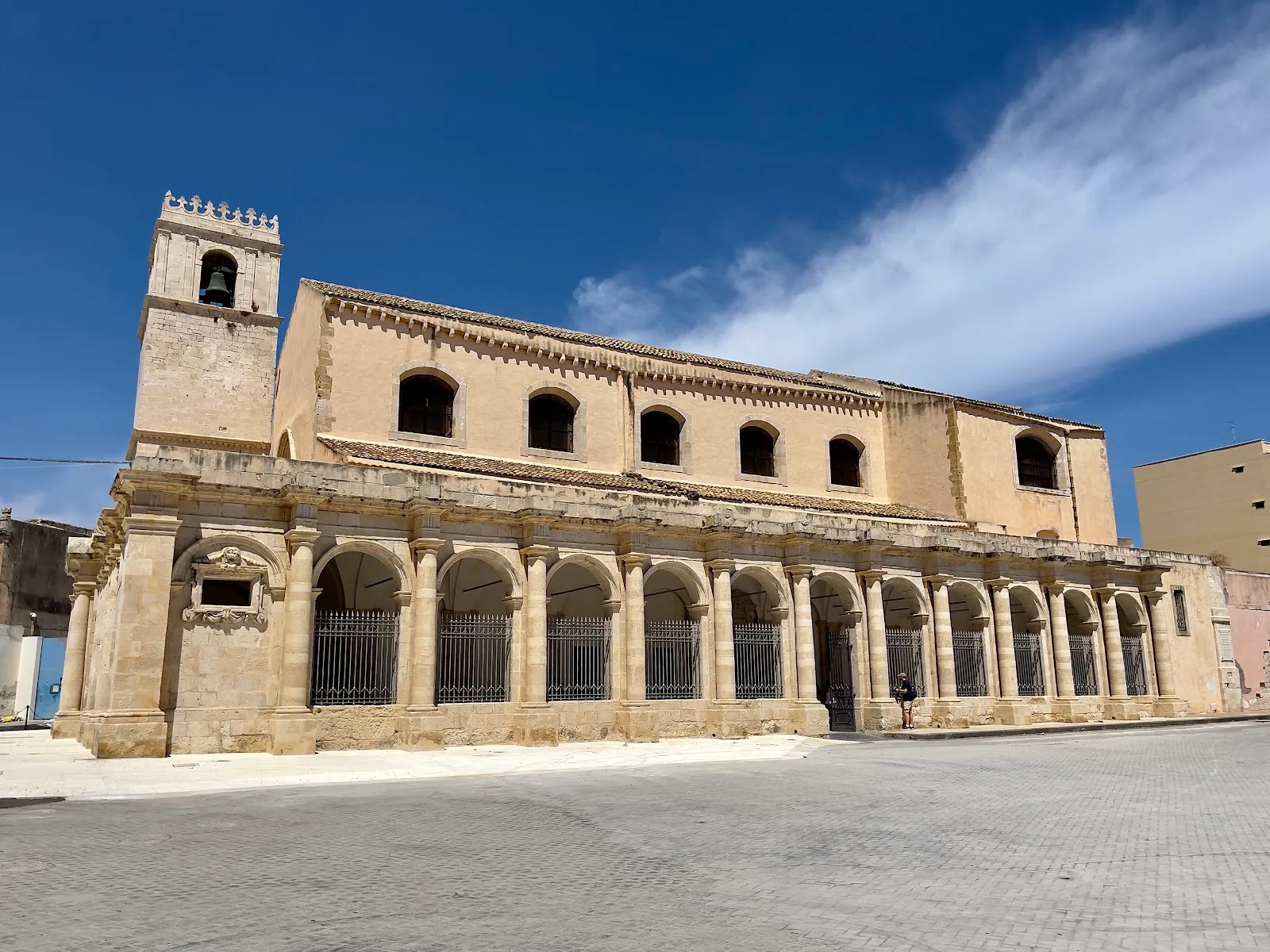
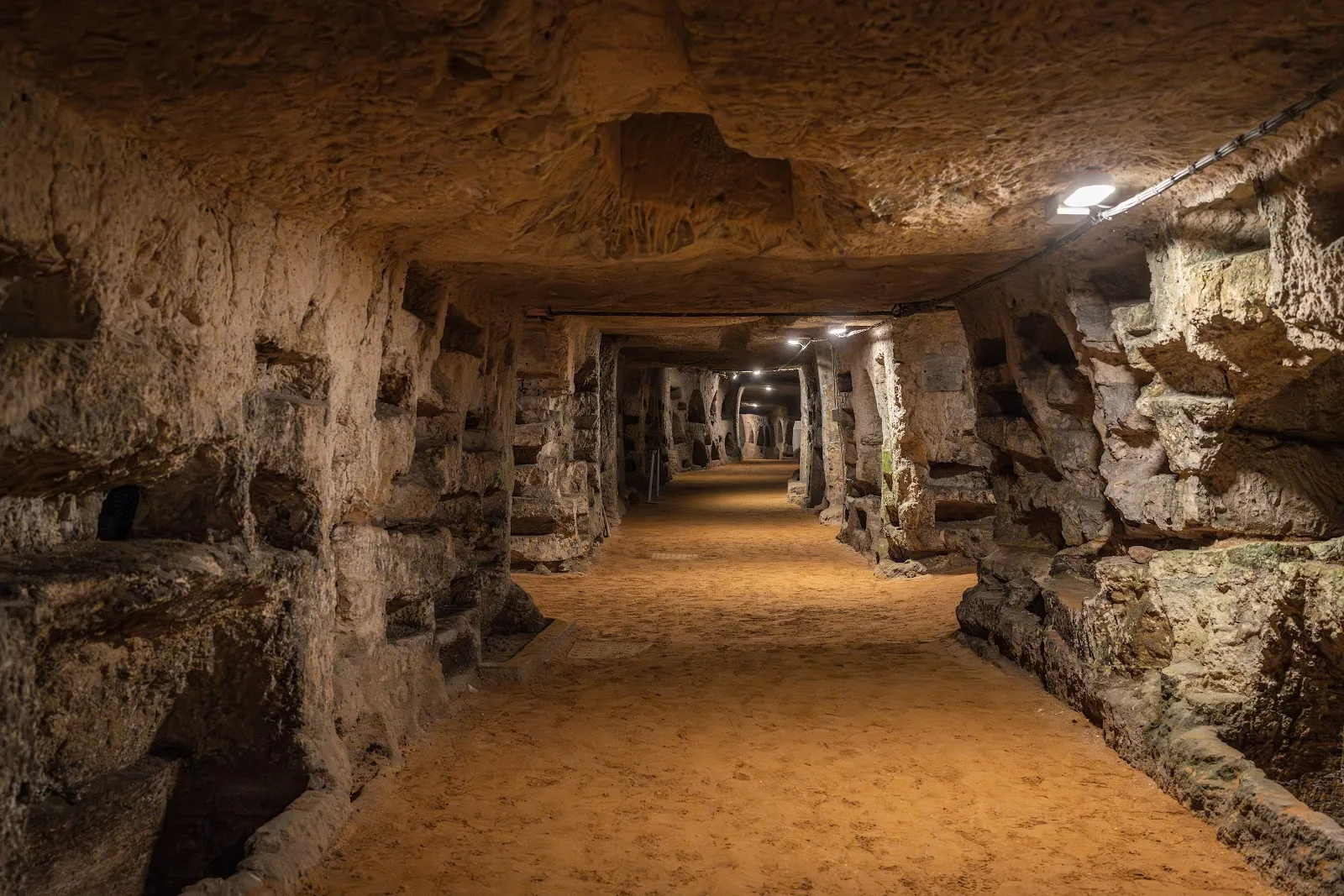
Piazza Duomo is the historic centre of Ortigia, Syracuse, framed by Baroque palaces and the Cathedral of Syracuse. The cathedral draws attention for its unusual blend of church architecture and columns from the Greek Temple of Athena, built on this site in the 5th century BC. Take time to look around the square, where cafés and restaurants line the edges and occasional musicians or dancers perform. The piazza has a different character by day and after dark, when its buildings are lit.
A temple within the cathedral
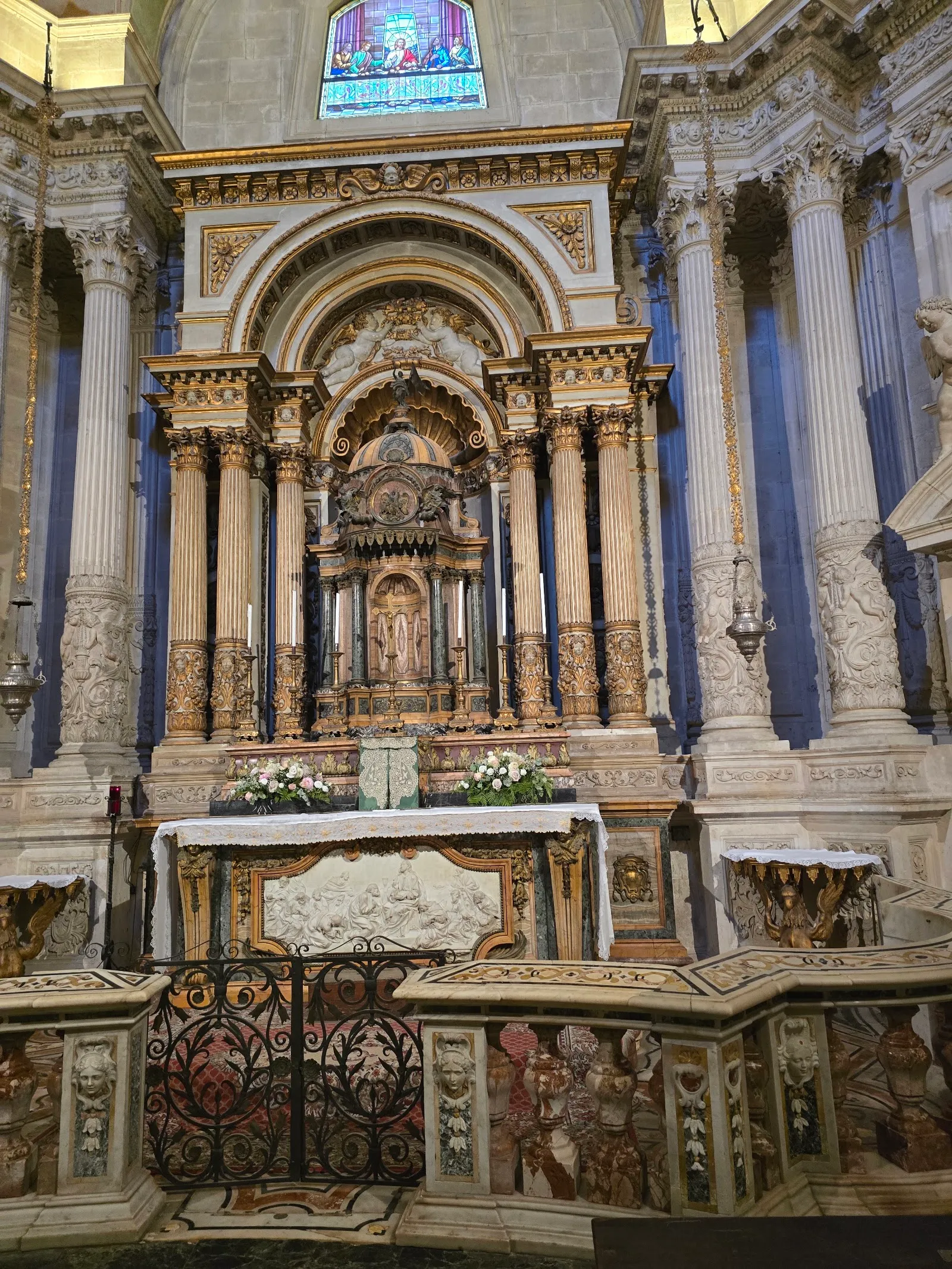
The Cathedral of Syracuse stands on the site of a Greek temple dedicated to Athena and dating to the 5th century BC. The temple’s Doric columns remain part of the cathedral walls, linking the building’s present form to its earlier use. The cathedral was built in the 7th century, and a Baroque façade was added in the 18th century.
Inside, look for the ancient columns alongside marble features and historic artworks. The building brings together traces of the Greek temple and later Christian architecture in one structure.
The buildings around the piazza
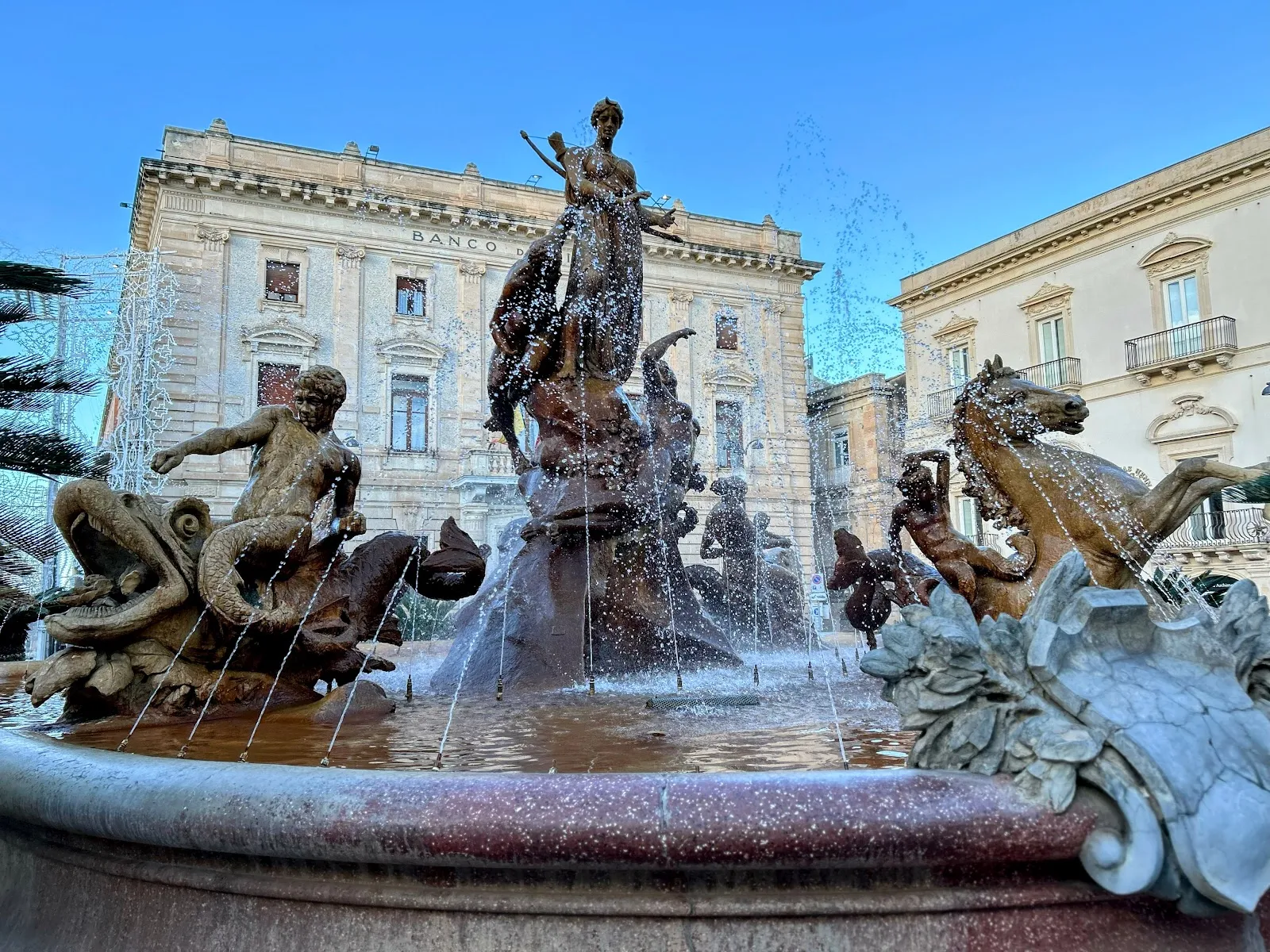
Baroque palaces and religious buildings enclose the square. The cathedral stands among the main landmarks, with the Archbishop’s Palace and Palazzo del Senato, Syracuse’s town hall, also on the piazza. Palazzo Beneventano del Bosco faces the cathedral, while Chiesa di Santa Lucia alla Badia is at the lower end.
Inside Santa Lucia alla Badia, the main artwork to look for is Caravaggio’s The Burial of Saint Lucy, painted in 1609. Nearby sights include Palazzo Arcivescovile and Fontane di Diana.
Preguntas frecuentes
What is Piazza Duomo in Syracuse?
It is the historic square at the centre of Ortigia, surrounded by the Cathedral of Syracuse and Baroque palaces.
What is unusual about the Cathedral of Syracuse?
Its walls incorporate Doric columns from the Greek Temple of Athena, which stood on the site in the 5th century BC.
What can I see near Piazza Duomo?
Nearby sights include Palazzo Beneventano del Bosco, Fontane di Diana and Chiesa di Santa Lucia alla Badia, which houses Caravaggio’s The Burial of Saint Lucy.