
The Basilica of Superga stands on a hill east of Turin, with views across the city towards the Alps on clear days. Filippo Juvarra designed this 18th-century Baroque church, built at the request of Vittorio Amedeo II after Turin’s 1706 victory over the French. Inside, look for the ornate arches and ceilings, then consider visiting the Savoy royal tombs or climbing the dome for a higher viewpoint. The historic rack tram makes the journey up the hill part of the visit.
A hilltop church commissioned by the Savoy ruler
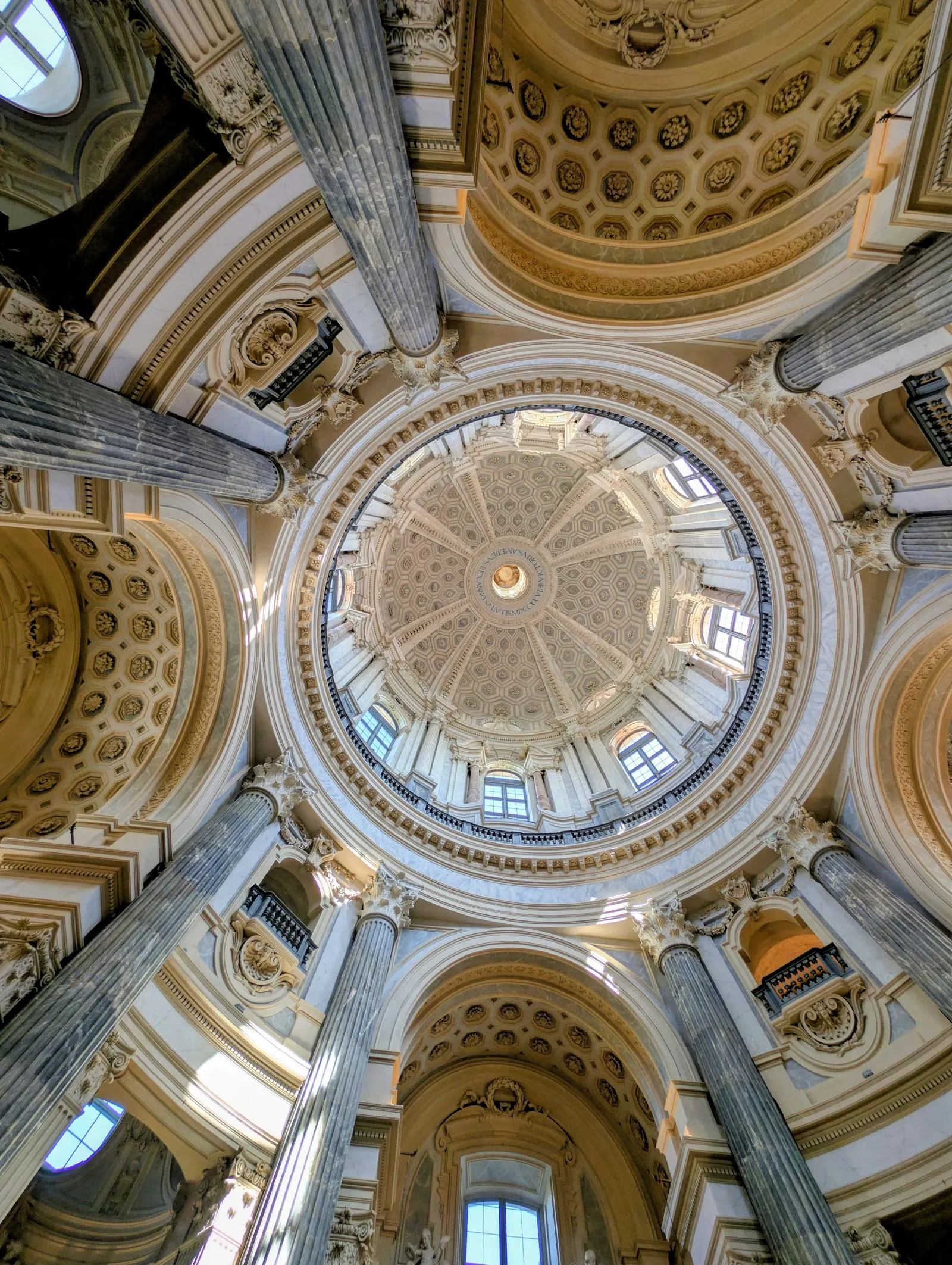
The Basilica of Superga was designed by Filippo Juvarra and built between 1717 and 1731. It replaced a small church that had stood on the hill since 1461. The project is linked to a vow made by Vittorio Amedeo II: according to tradition, he promised to build a church in gratitude to the Virgin Mary if Turin was spared during the 1706 siege. The basilica commemorates the Savoy victory over the French.
The church’s position above Turin was chosen to give it a commanding place in the landscape. From the hill, the city spreads below, and the Alps can come into view on clear days. The location also makes the basilica visible from many parts of Turin.
Juvarra’s design and the interior
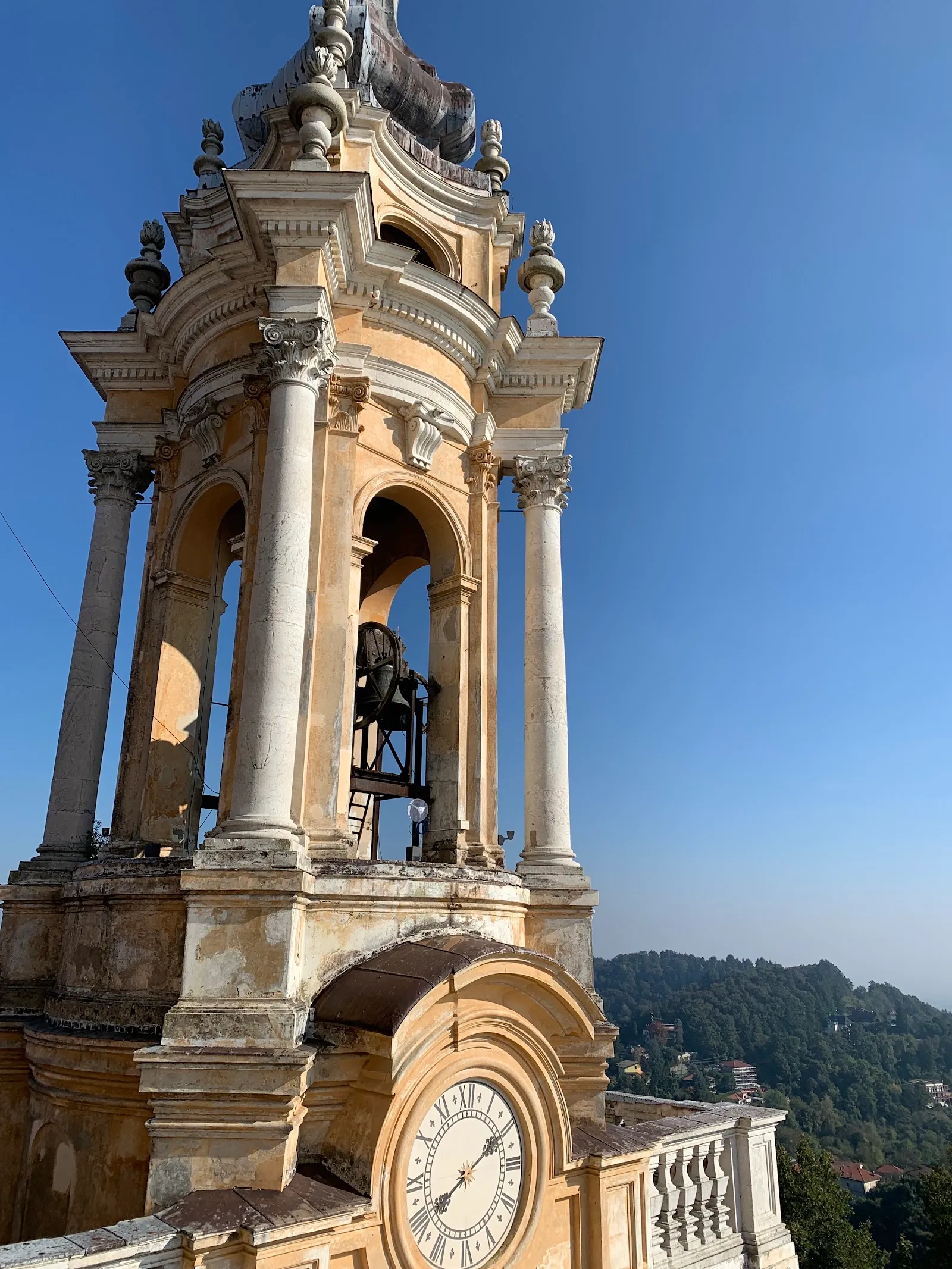
The exterior is marked by a prominent dome, twin bell towers and a colonnaded portico. Juvarra’s work continues inside, where visitors can see decorated arches and ceilings, marble details and altar paintings. The dome is worth viewing from within as well as from outside; a climb of 131 steps leads to a balcony with a broader outlook over the city.
The high altar connects the church’s architecture with the story of Turin’s defence. Its frame was designed by Juvarra, and it surrounds a marble bas-relief by Bernardino Cametti recalling the 1706 battle. The Chapel of the Vow contains a wooden statue of Mary associated with the tradition behind the basilica’s construction.
The Savoy tombs and the 1949 crash
The basilica’s crypt holds the tombs of members of the House of Savoy, including kings and queens. Their burial place gives the church a close connection to the family that ruled Turin. The royal tombs are a separate point of interest from the main church interior, so check the ticket arrangements if you plan to include them.
Superga is also remembered for the 1949 plane crash that killed members of the Torino football team. The tragedy forms part of the hill’s modern history and is distinct from the basilica’s religious and royal significance.
Getting up the hill
One characteristic route is to travel by tram to Sassi and continue uphill on the historic rack tram, often called the dentiera. The ride passes through the hillside countryside and brings you close to the basilica. Public transport is another option, but bus schedules can be limited, so check connections before leaving Turin. Visitors also reach the hill by car; parking at the top is limited.
The grounds and viewpoint around the church give you time to take in the setting before or after visiting the interior. For a broader panorama, the dome climb adds the elevated view. On a clear day, look beyond Turin towards the Alps. The site has accessible entrances, restrooms and parking spaces, though transport and ticket arrangements are worth checking when planning your visit.
Preguntas frecuentes
How do you get to the Basilica of Superga from Turin?
One scenic option is to take a tram to Sassi and continue uphill on the historic rack tram. Public transport connections and bus schedules can be limited, so check your route before setting out.
Can you climb the dome at the Basilica of Superga?
Yes. A staircase of 131 steps leads to a balcony with a higher view over Turin.
What can you see in the crypt?
The crypt contains the tombs of members of the House of Savoy, including kings and queens.
When is the best time to visit for the views?
Choose a clear day for the best chance of seeing the Alps beyond Turin.


