Castello Estense is the red-brick, moated castle at the center of Ferrara. Niccolò II d'Este had it built from 1385, after a revolt over taxes, and it later became the home of the Este court. Four corner towers, a drawbridge and a water-filled moat still give it the outline of a fortress. Inside, the museum route passes ceiling frescoes, the ducal rooms, the kitchens and the dungeons. The Torre dei Leoni can be climbed for a view over the city. The courtyards and the moat can be walked without a ticket.
Built in 1385 against an uprising
The castle began as a response to unrest. In 1385 a popular uprising in Ferrara, driven by heavy taxes, convinced Niccolò II d'Este that he needed strong defenses for himself and his family. He commissioned the architect Bartolino Ploti da Novara, and the fortress was known at first as the Castello di San Michele.
Its position, just inside the northern walls, served two purposes. It supported the city's defenses against attack from outside, and it let the ruler keep control of the city from within. The builders incorporated the older Rocca dei Leoni, which survives as the Torre dei Leoni. One account says the work was finished in about sixteen months.
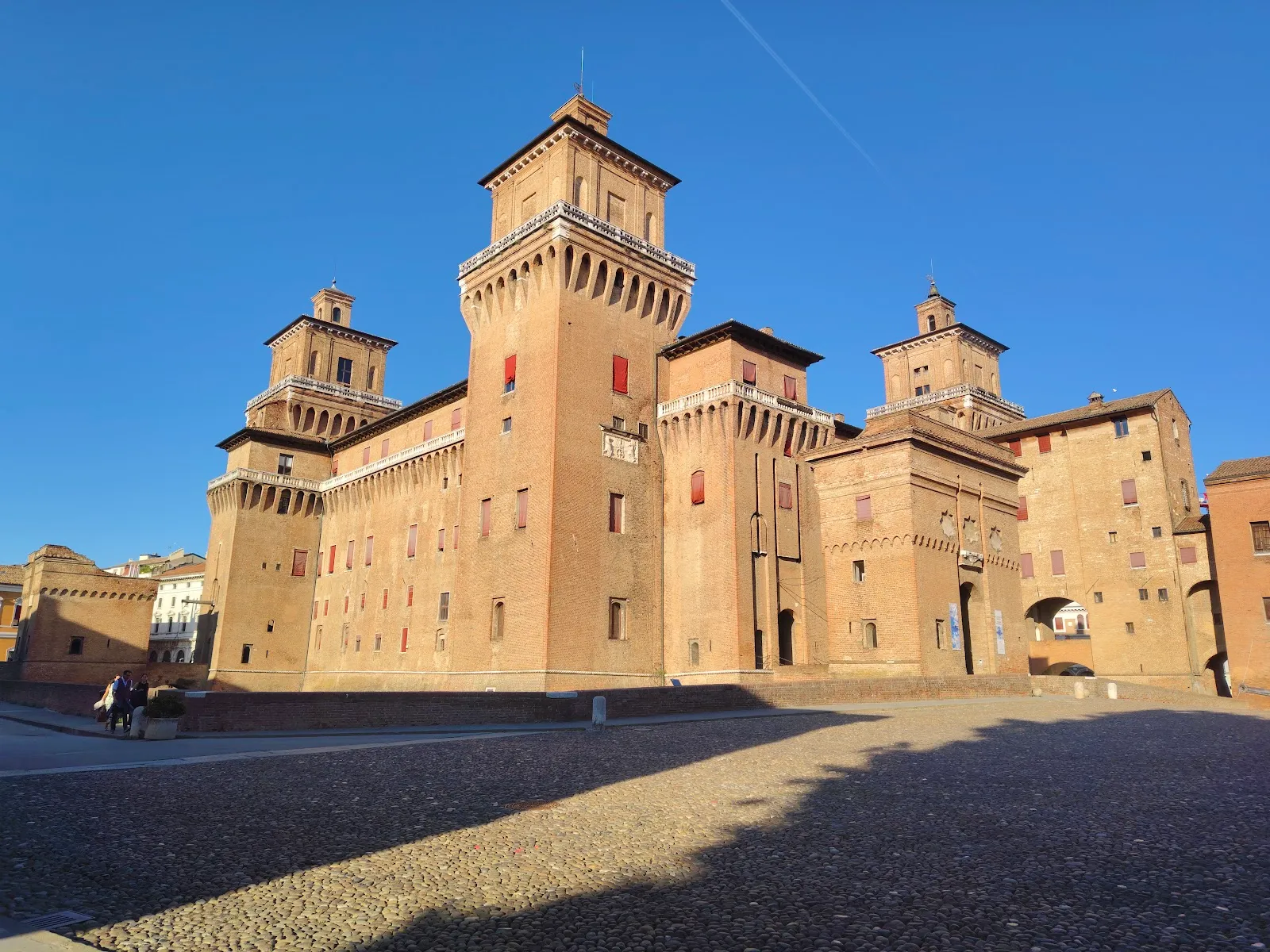
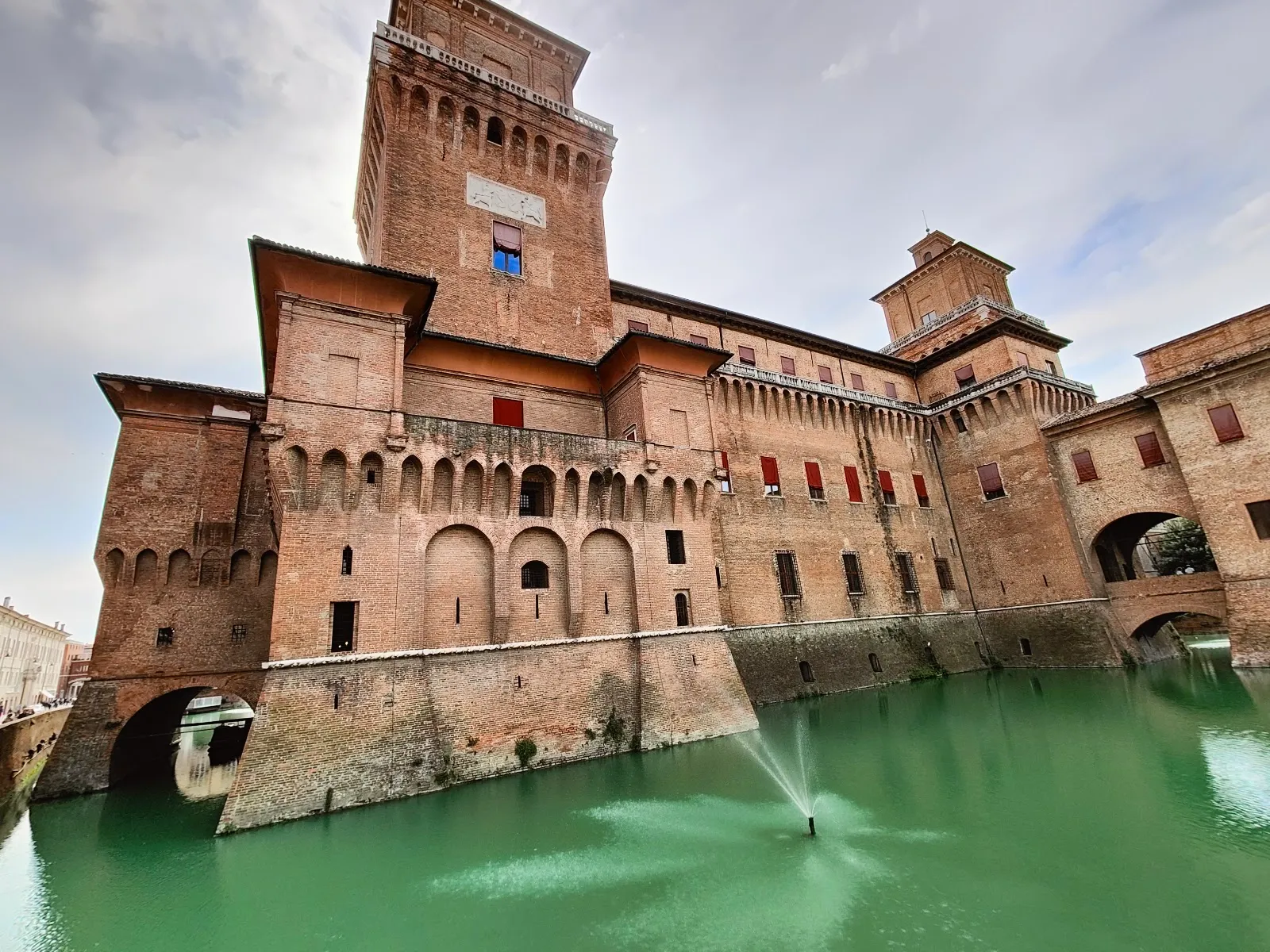
The form is simple and strong: four corner towers joined by lower wings, brick walls, a moat and a drawbridge. The towers are the Torre Marchesana, the Torre di San Paolo, the Torre di Santa Caterina and the Torre dei Leoni. The moat was once connected to the Po river by navigable channels.
From fortress to court residence
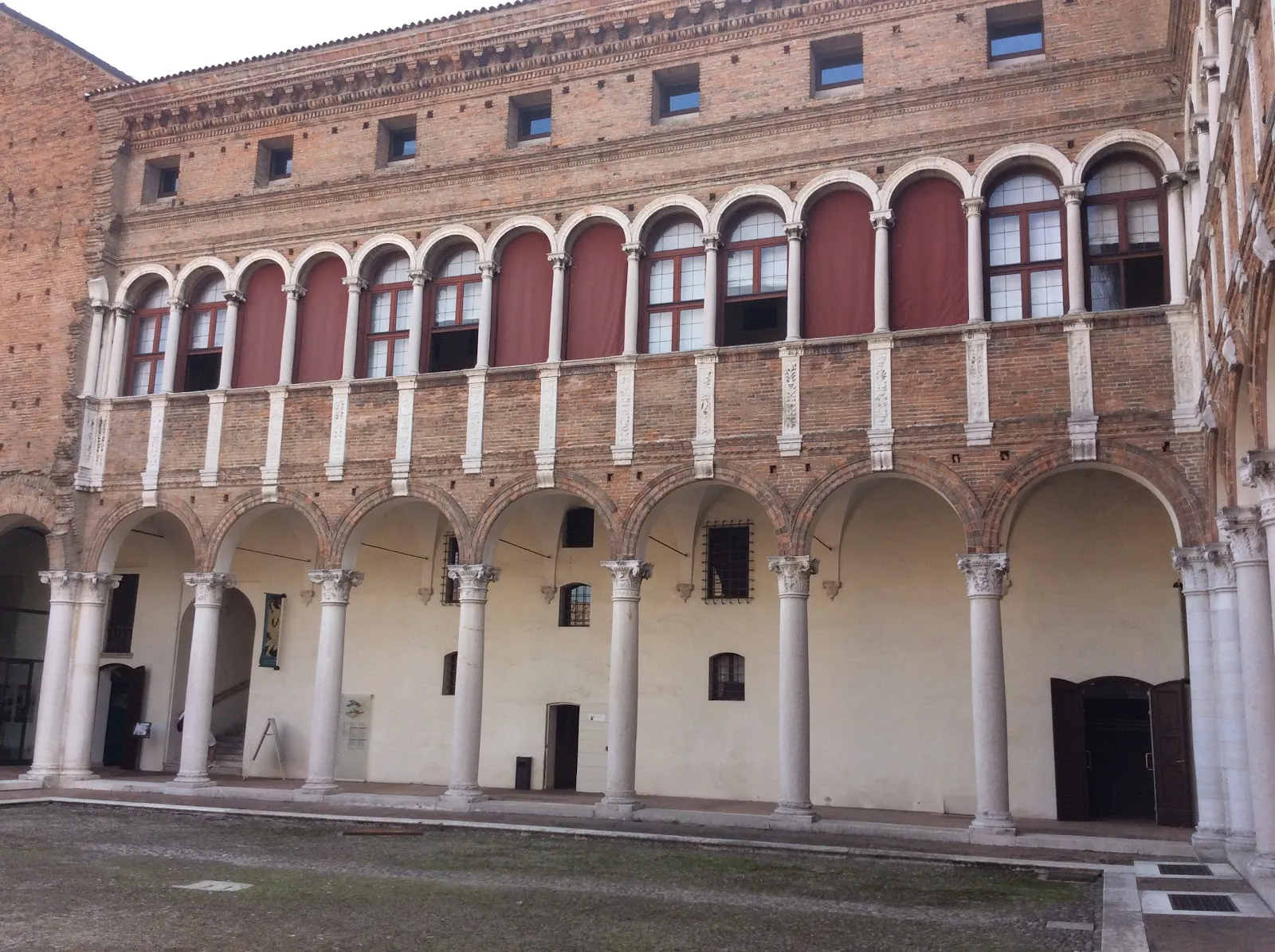
In 1476 the castle became the permanent residence of the Este court. Under Alfonso I and Ercole II it was gradually turned into a refined palace. The architect Girolamo da Carpi softened the medieval character and added one storey to each tower and to the curtain wall. The exterior is largely the one he gave it in the second half of the 16th century.
The Este family lived here for generations, and the rooms are linked to figures from their history, including Lucrezia Borgia. The castle is often described as having led two lives: first a fortress, then a court palace. Most of the old furnishings have been removed over time, so the interest lies in the architecture, the painted ceilings and the frescoes.
Inside the museum route
The interior is visited along a museum route. It passes through the large halls with their frescoed ceilings, the Sala dei Giochi with its scenes of traditional games, the kitchens and the ducal apartments. A small orange garden is part of the visit. The castle also holds art exhibitions, and the information panels give the history of the Este family and the building in Italian and English.
The dungeons, known as the Prigioni, are on the lower level. The doors are very low and awkward to pass through, but the cells are larger than most people expect. Graffiti from the prisoners can still be seen on the walls. Coming from the elegant rooms above, the contrast is striking. The cool air inside is welcome on a hot summer day.
Climbing the Torre dei Leoni
The Torre dei Leoni is the castle's oldest tower, and the climb is paid separately from the main ticket. The stairs are made of metal grating, so you see the height below your feet the whole way, and the descent can feel harder than the ascent. A false summit or two is possible before the final flight. At the top there are chairs, and the view covers the brick roofs and the planned Renaissance layout of Ferrara.
The tower closes to new visitors before the rest of the castle does, with the cutoff at 4:30 pm. Arriving in the early afternoon leaves time for both.
Outside the ticket office
The moat, the drawbridge and the courtyards can be seen without paying, and the exterior alone is worth a stop if time is short. A central courtyard has a water well. The castle also serves as a setting for occasional theatrical performances. In April and May, when the Palio and other historical festivals take place, costumed knights and ladies may be seen around the castle.
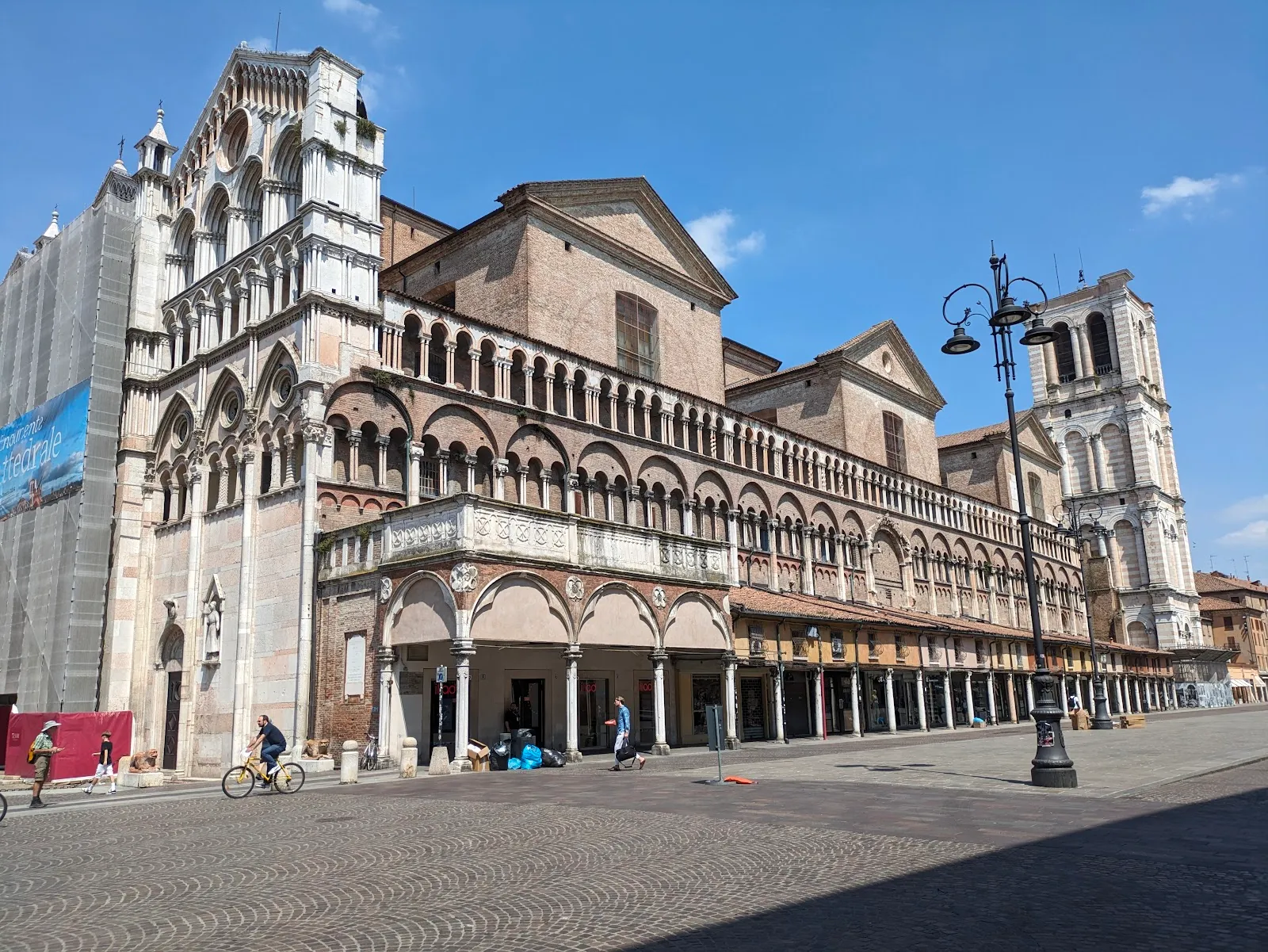
The Cathedral and the arcaded Loggia of the Merchants are about a three-minute walk south, around Piazza Trento e Trieste.
Preguntas frecuentes
Can you visit Castello Estense for free?
The moat and the courtyards can be walked without a ticket. The interior museum route needs a ticket, and the Torre dei Leoni costs extra.
Is Castello Estense open every day?
It is closed on Tuesdays and open on the other days of the week. Buying tickets in advance is recommended.
Can you climb the tower?
Yes, the Torre dei Leoni can be climbed for an extra fee, and it gives a panoramic view of Ferrara. Last admission to the tower is at 4:30 pm. The stairs are metal grating and the climb is tiring.
Is Castello Estense good for children?
Yes. The drawbridge, moat, towers and dungeons suit children well. A coat check is available.
Where do you park near Castello Estense?
There are street parking spaces, both free and paid, and parking lots a 5 to 7 minute walk away. The entrance is wheelchair accessible, and there is a wheelchair accessible parking lot.
Who built Castello Estense and when?
Niccolò II d'Este commissioned it in 1385 after an uprising, and Bartolino Ploti da Novara was the architect. It became the Este court's permanent residence in 1476.