
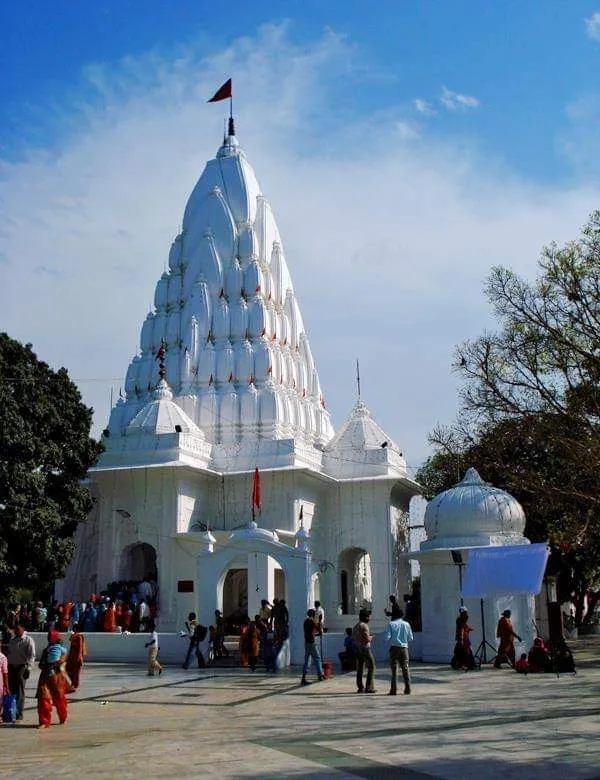
Mansa Devi Temple stands on Bilwa Parvat, a hill in the Shivalik range above Haridwar. It is dedicated to the goddess Mansa, whose name means wish. The temple is one of the five pilgrimage sites of Haridwar, the Panch Tirth, and is also called Bilwa Tirth. You can climb the hill on foot or ride the Udan Khatola ropeway. The main shrine holds two idols of the goddess, and the hilltop looks over Haridwar, the Ganga and the green hills around the city. Many pilgrims tie a thread to the tree in the complex as they pray.
The goddess and the hill
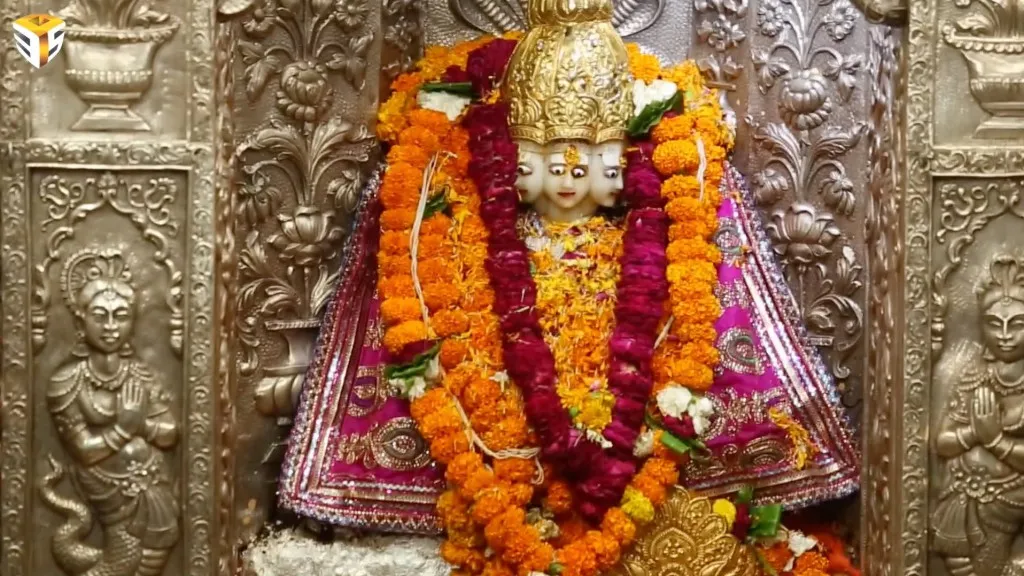
Mansa means wish, and devotees believe the goddess fulfils the wishes of anyone who comes to her with a sincere heart. She is regarded as a form of Shakti. Accounts of her origin differ. Many say she emerged from the mind of Lord Shiva, while other texts call her the mind-born daughter of the sage Kashyap. She is also linked with Vasuki, the king of serpents.
The temple is a Siddh Peeth. Together with the Chandi Devi and Maya Devi temples it forms the Siddhpeeth triangle of Haridwar. It is also one of the five Panch Tirth of the city, the others being Gangadwara (Har Ki Pauri), Kushwart, Kankhal and Neel Parvat, where Chandi Devi stands. Because it sits on Bilwa Parvat, the temple is called Bilwa Tirth. The hill rises to about 2,000 feet at the southern end of the Shivalik hills.
Ropeway or on foot
The Udan Khatola ropeway is the popular way up. The ride passes over Haridwar, the Ganga and the green hills, and it suits all ages. In busy seasons the queues for tickets are long, so booking ahead saves time.
The path on foot is a walk of about 1.5 km, mostly uphill, with stairs through the greenery of the hillside. Some people go up by ropeway and walk down, or the other way round. The cool breeze on the hill is a pleasant change from the city below.
At the shrine
The main temple has two idols of the goddess. One has three mouths and five arms, and the other has eight arms. Pilgrims take darshan at the main shrine, then leave by the exit door. Take off your shoes before entering and keep the token you are given.
A tree in the temple complex carries a custom of its own. Devotees tie a sacred thread to its branches as a sign of their wish, and return to untie it once the wish is granted. You will see many threads on the branches.
Some visitors report that priests ask for money at several points inside. You are free to go straight to the main door, offer your prayers and leave. If you want to donate, you can do so through the temple trust and take a slip.
Crowds and timing
The temple is busiest on weekends and holidays, and especially during Navratri, Makar Sankranti and the Kumbh Mela, when thousands come to pray and tie threads. On those days, expect longer waits both at the ropeway and at the shrine. On an ordinary weekday the crowd is manageable and darshan is calmer.
The view from the top is good all day, and the evening light over the city and the Ganga is the part many remember. Plan the return so that you are not rushing down in the dark.
Preguntas frecuentes
Is there an entry fee for Mansa Devi Temple?
The temple has no entry fee. The Udan Khatola ropeway needs a ticket, and in busy seasons it is wise to book in advance.
How do you get to Mansa Devi Temple?
You can ride the Udan Khatola ropeway or walk up the hill. The walking path is about 1.5 km and steep in parts.
When is the best time to visit?
Early morning or a weekday is calmer. Weekends and festivals such as Navratri, Makar Sankranti and the Kumbh Mela are crowded. The view is also good in the evening.
Why is it called Bilwa Tirth?
The temple stands on Bilwa Parvat in the Shivalik hills, and the name Bilwa Tirth comes from the hill. It is one of the five Panch Tirth pilgrimage sites of Haridwar.
Are there monkeys at the temple?
Yes, monkeys live around the temple premises and may snatch loose belongings. Keep your bags and phone secure.


