
Akbar’s tomb stands in Sikandra, on the outskirts of Agra. Built by his son Jahangir between 1605 and 1613, the red-sandstone and white-marble mausoleum combines Mughal, Hindu and Persian design. Its five levels rise above a garden laid out in the Charbagh style, with a white-marble pavilion at the top. Enter through the ornate southern gateway, then look closely at its patterned inlay and corner minarets. The grounds are also a place to spot deer and peacocks.
A tomb completed by Jahangir
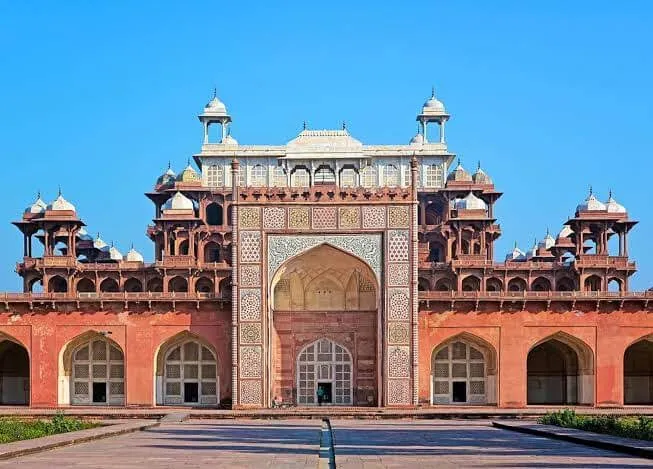
Akbar began planning his tomb, and his son Jahangir completed it between 1605 and 1613. The mausoleum is in Sikandra, a suburb on the outskirts of Agra. Its scale and use of red sandstone and white marble make it a distinctive Mughal monument.
The building brings together Mughal, Hindu and Persian design influences. Its five storeys rise around an open-air court, with a white-marble pavilion crowning the upper level. The different materials and the stepped profile give the structure a marked contrast to the broad garden around it.
The southern gateway and inner spaces
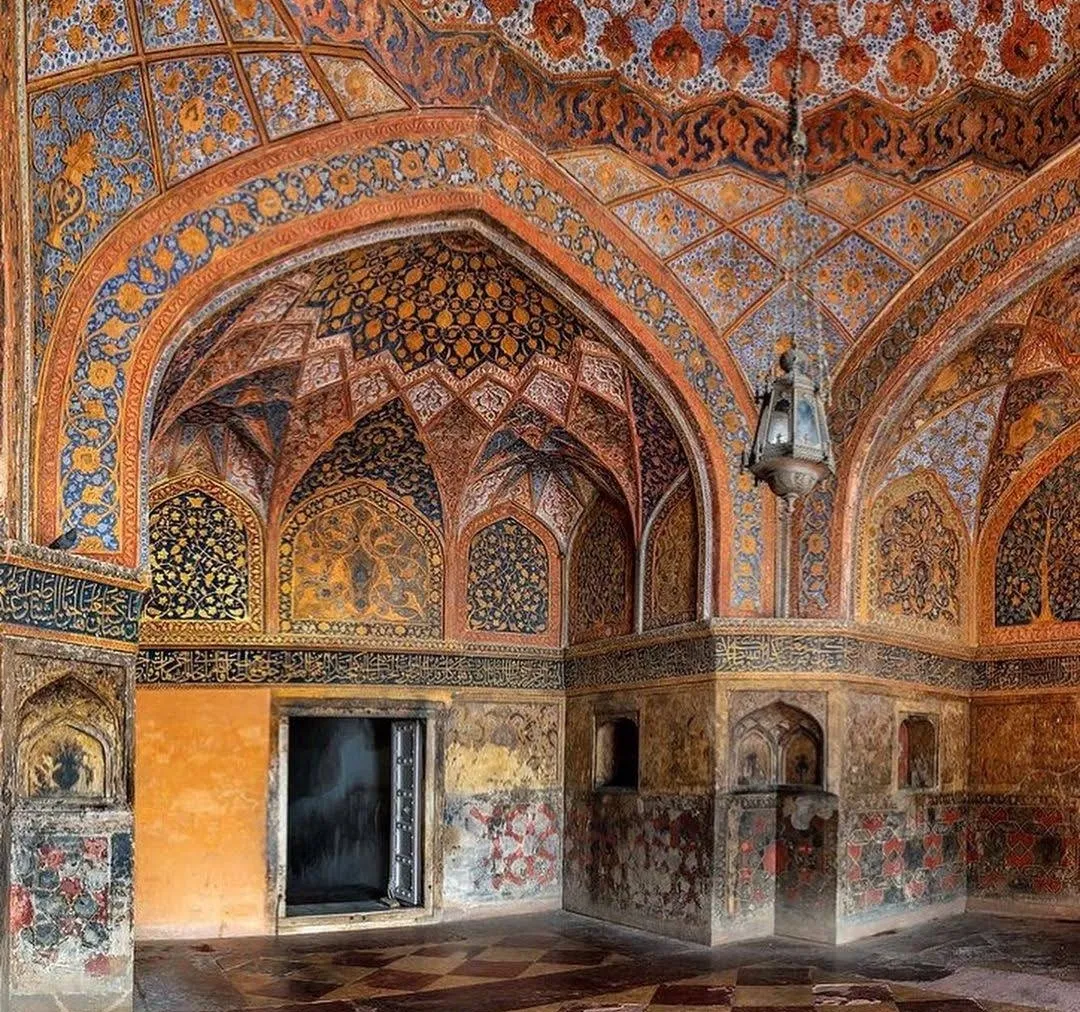
The southern entrance is the largest gateway to the complex. Four minarets rise from its corners, while the red sandstone is patterned with geometric and floral designs in white, yellow and blue marble. Take a close look at the inlay before walking through; the details are easier to appreciate at the entrance than from a distance.
Inside, a vestibule decorated with painted alabaster leads toward the plainer inner tomb. The contrast between the ornamented passage and the simple burial space is one of the interior’s notable details. The upper pavilions are closed, so visitors should not expect to enter those spaces.
The garden around the mausoleum
The tomb sits within a large walled garden arranged in the Charbagh style. Paths divide the grounds into formal sections, giving the approach to the mausoleum a different character from the closely worked decoration at the gateway. Leave time to walk beyond the entrance and see the building from within its garden setting.
Deer and peacocks can be seen in the grounds, along with other birds. Keep an eye out as you walk, and be alert to monkeys around the site. An early visit brings cooler conditions and can mean fewer people around the gateway and garden paths.
Preguntas frecuentes
Where is Akbar’s tomb?
It is in Sikandra, on the outskirts of Agra, Uttar Pradesh.
Who built Akbar’s tomb and when?
Akbar began planning it, and his son Jahangir completed the tomb between 1605 and 1613.
What should I look for at Akbar’s tomb?
See the marble-patterned southern gateway, the five-storey mausoleum and the Charbagh garden. Deer and peacocks may be in the grounds.
Can visitors enter the upper pavilions?
No. The upper pavilions are closed.


