In Chania’s Halepa district, the Archaeological Museum traces the region’s past through finds from prehistoric times to the Roman period. Its modern building holds more than 3,500 objects, arranged in clear displays with descriptions in Greek and English. Look for Minoan pottery, painted clay coffins, Linear A and Linear B tablets, Roman mosaics and gold jewellery. The second-floor collection includes objects donated by Konstantinos and Marika Mitsotakis. Allow about an hour, or longer if you plan to stop at the café, which overlooks the sea.
A collection from western Crete
The Archaeological Museum of Chania presents finds from across the region, arranged by period and excavation context. Its collection spans from prehistoric times to the Roman period, giving you a way to trace changes in the area through objects recovered from ancient settlements, caves and burial sites.
The museum’s more than 3,500 objects include pottery, carved stone pieces, seals, sculpture, metalwork, jewellery and coins. Finds associated with ancient Kydonia, the prehistoric city that occupied the site of Chania, sit alongside material from places such as Aptera and Polyrrhenia. The displays are organised chronologically, with descriptions in Greek and English.
Minoan objects and early writing
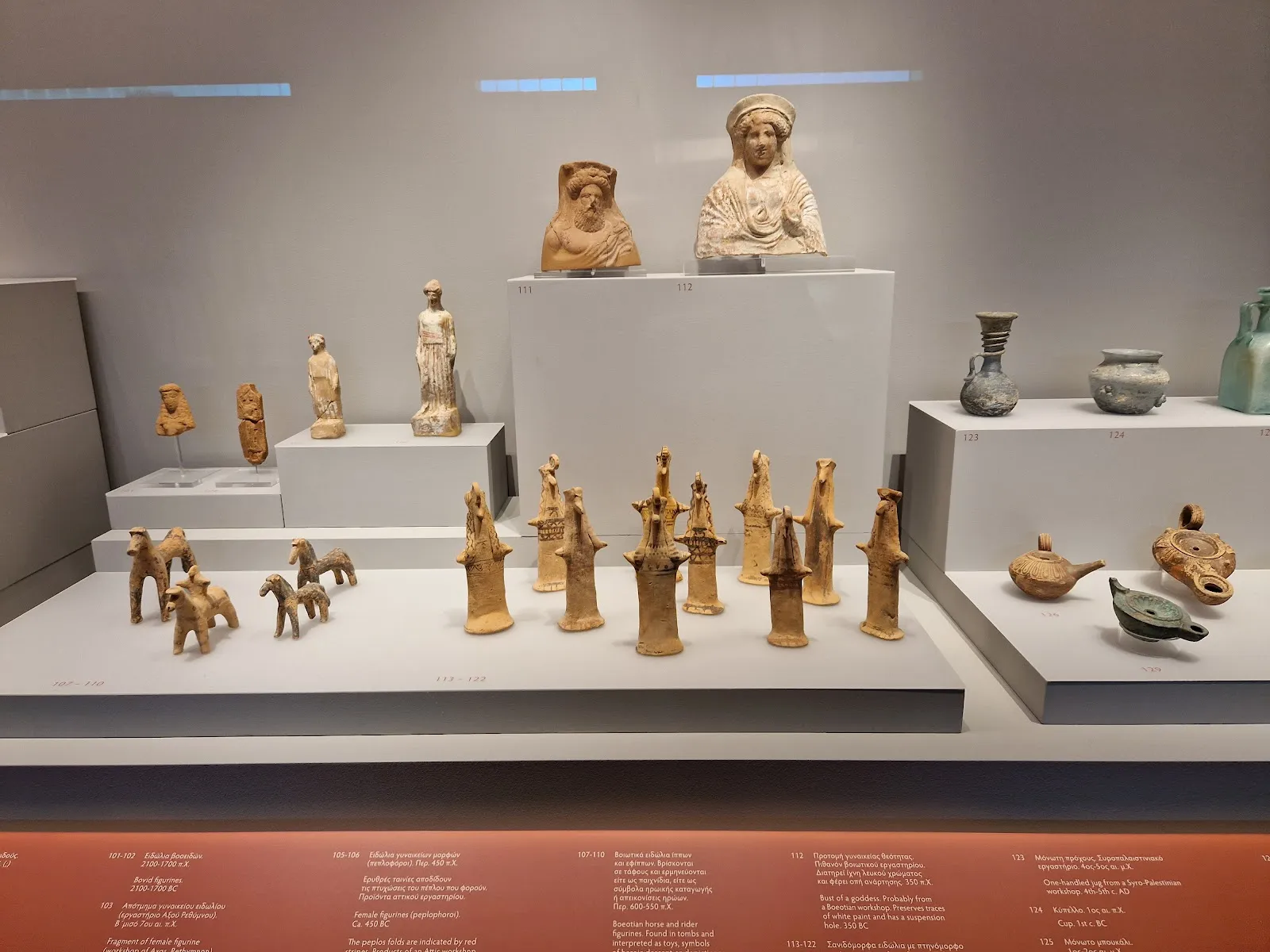
Minoan finds are among the collection’s notable displays. Look for pottery and painted clay coffins, along with objects connected to burial practices and daily life. A group of clay bulls is also on display. The museum’s section on caves examines the final period of cave habitation and western Crete’s links with the Cycladic islands.
Clay tablets bearing Linear A and Linear B scripts offer another glimpse into the ancient record. Other highlights include gold jewellery and seals, objects that show how varied the finds from the Chania region are. Take your time moving through the displays: the collection is broad, and its chronological arrangement helps place individual pieces in context.
Roman mosaics and the modern building
The Roman-era material includes jewellery, coins and floor mosaics. One mosaic depicts Dionysos and Ariadne. Together with earlier objects, these later finds extend the story of western Crete through the period of Roman rule.
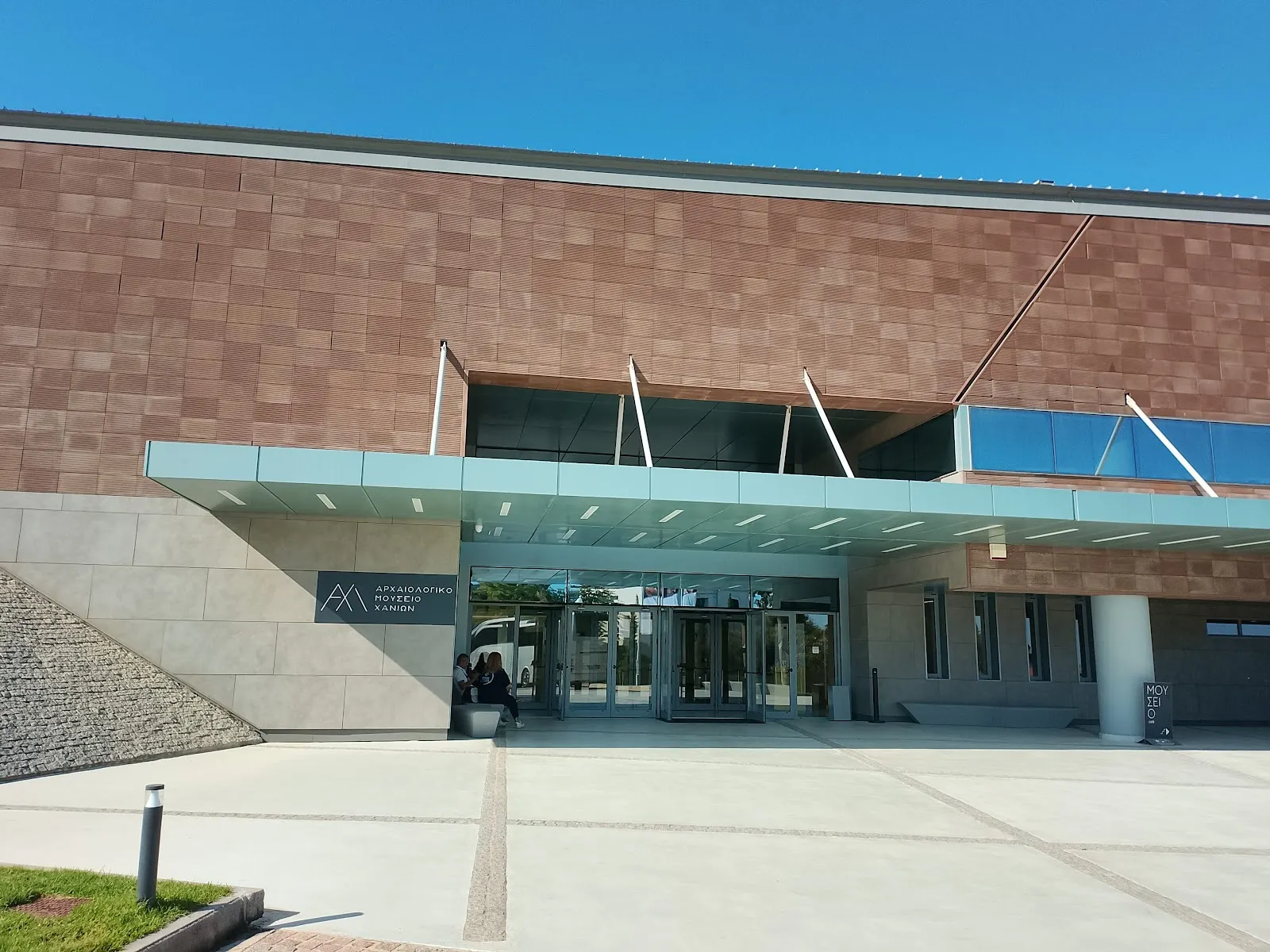
The museum is in Halepa, a historic district of Chania, in a modern building designed with bioclimatic principles. The galleries are described as well organised, and the museum has wheelchair-accessible entry, seating, restrooms and parking. A café on site overlooks the sea. The second-floor display includes the private collection donated by Konstantinos and Marika Mitsotakis, adding another group of objects to explore after the main galleries.
Preguntas frecuentes
How long do you need at the Archaeological Museum of Chania?
Plan about an hour to see the museum. Allow extra time if you want to stop at the café.
What can you see at the Archaeological Museum of Chania?
The collection covers finds from prehistoric times to the Roman period, including Minoan pottery, painted clay coffins, Linear A and Linear B tablets, jewellery and mosaics.
Is the Archaeological Museum of Chania wheelchair accessible?
The museum has a wheelchair-accessible entrance, seating, restroom and parking.
Where is the Archaeological Museum of Chania?
It is in the Halepa district at Skra 15, Chania.