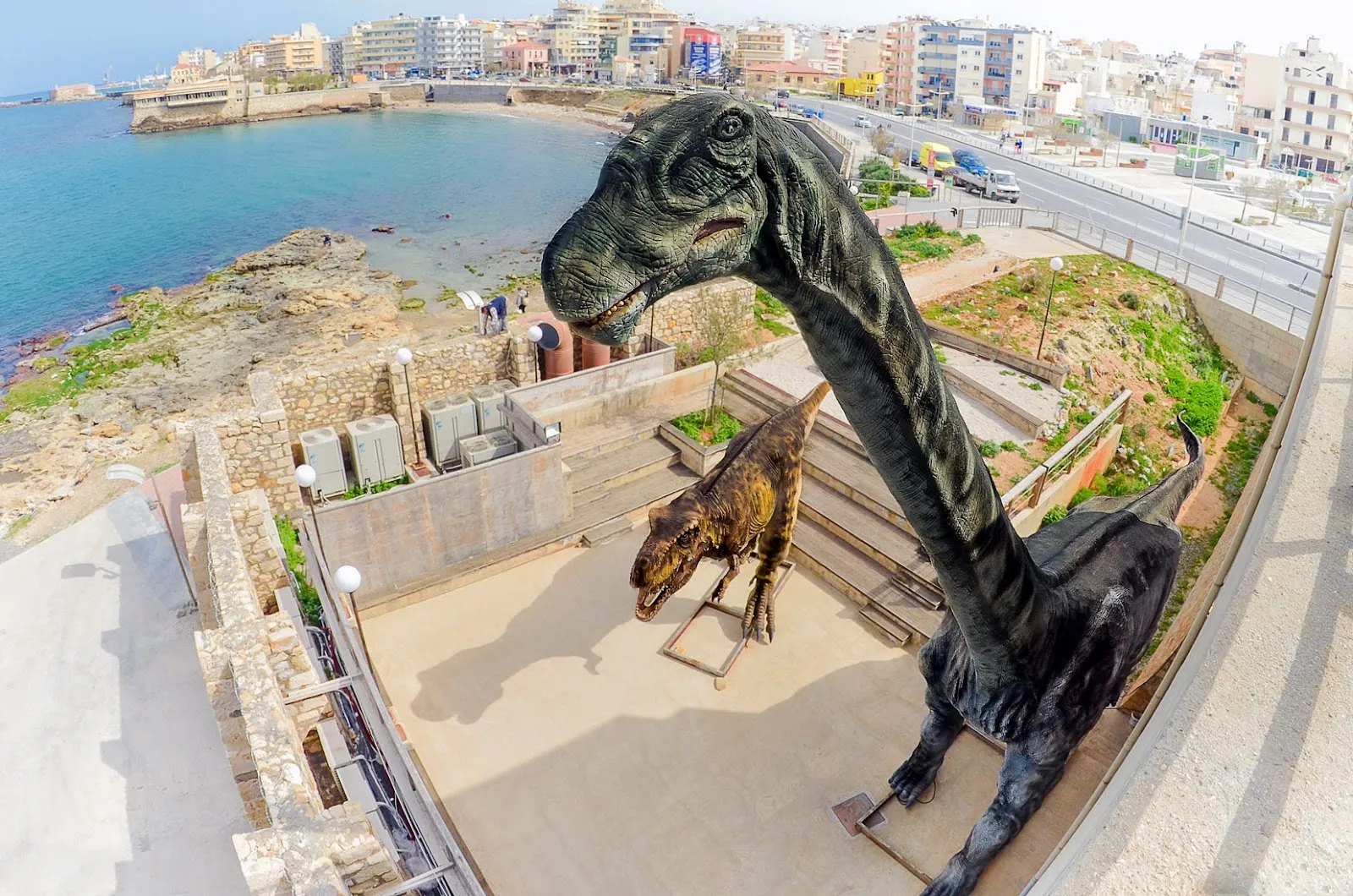
On Heraklion’s waterfront, the Natural History Museum of Crete explores the island’s wildlife, geology and ecosystems alongside those of Greece and the eastern Mediterranean. Its displays range from fossils, rocks and minerals to animals, including live specimens. Families can try the earthquake simulator and children’s discovery activities; the giant prehistoric Deinotherium is another standout. The museum is housed in a former power plant, and its air-conditioned galleries offer a cool indoor stop during Heraklion’s summer heat. Some exhibits have been affected by renovations, so check what is open before visiting.
A former power plant on the waterfront
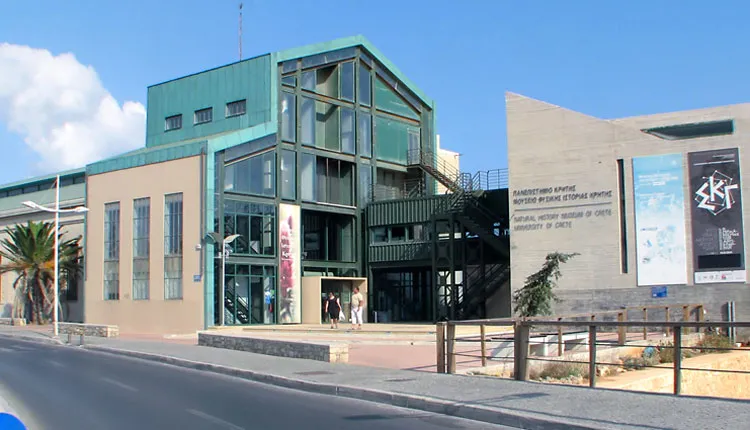
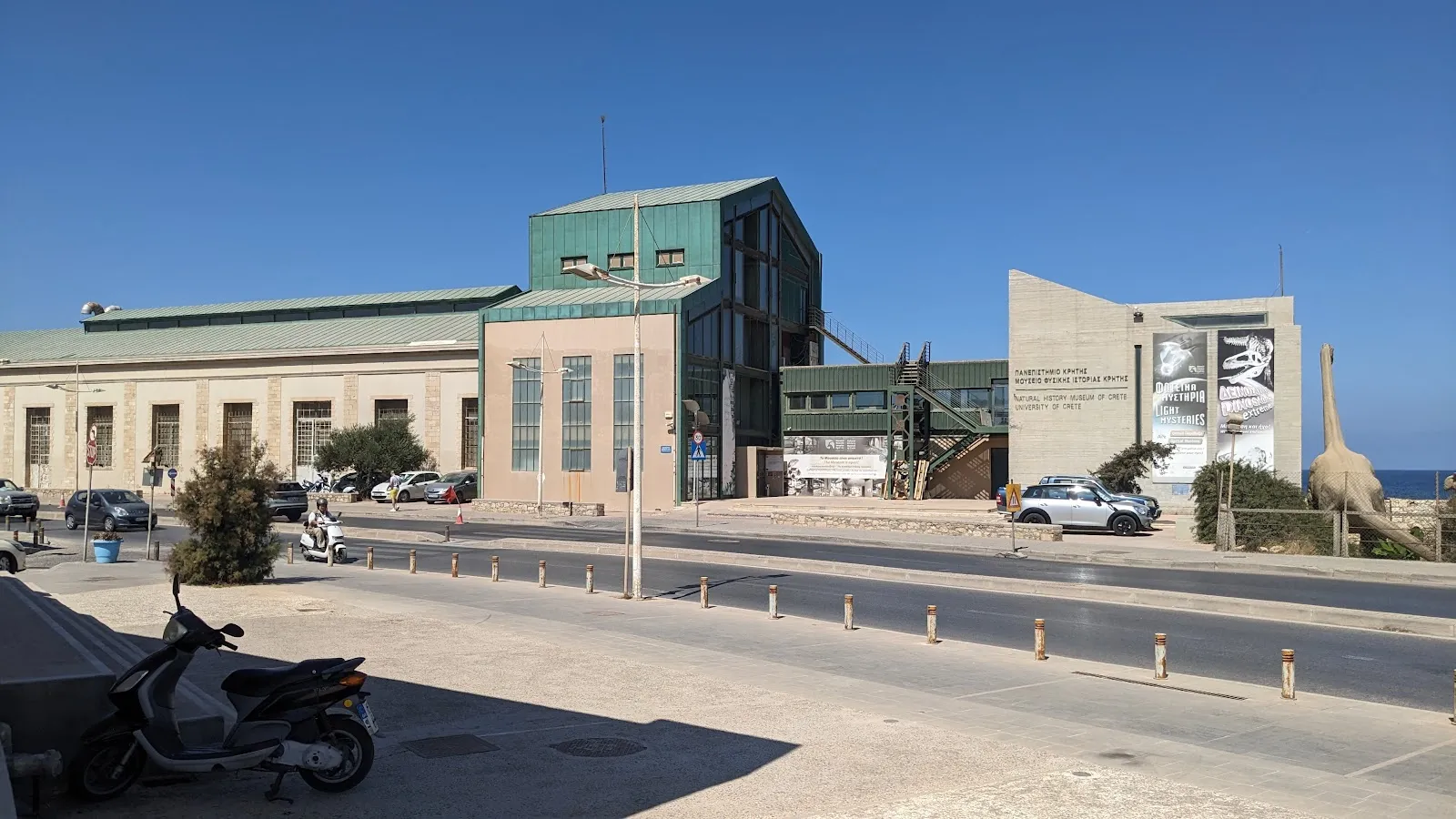
The Natural History Museum of Crete occupies a former electricity plant on Heraklion’s coastal avenue. Run by the University of Crete, it focuses on the natural environment of Crete and the wider eastern Mediterranean. Its collections and displays cover zoology, botany, geology, palaeontology and mineralogy, linking the island’s wildlife and landscapes with those of mainland Greece and the surrounding region.
The museum’s emphasis reaches beyond individual specimens. Its large habitat displays, known as Megadioramas, represent ecosystems found around the Mediterranean. Other exhibits introduce Crete’s geological evolution and the plants and animals that live there, including endangered species. Fossils, rocks and minerals help trace changes in the island’s natural environment over time.
From fossils to living animals
The displays range from prehistoric life to species found in Crete and the Mediterranean today. Fossils and dinosaur exhibits sit alongside representations of the island’s flora and fauna. The giant Deinotherium, a prehistoric mammal that lived on Crete, is a major centrepiece. Aquariums and terrariums, as well as displays of taxidermied and live animals, add another dimension to the visit.
The museum also sets Crete’s ecosystems alongside their counterparts in mainland Greece. This gives the exhibits a wider regional context, with information on habitats, species and the geological forces that shaped the eastern Mediterranean. Some galleries have been affected by renovation work, so the full range of displays may not be available at every visit. Check the museum’s current information before planning around a particular exhibit.
Interactive exhibits for families
Children can explore the museum through hands-on activities and a discovery area designed for educational groups. The earthquake simulator, Enceladus, gives visitors a controlled way to experience earthquake movement. Fossil exploration activities let children take a closer look at palaeontology, while interactive displays help explain natural processes.
The museum has lifts as well as stairs, and free lockers near the entrance give you a place to leave bags. Its air-conditioned interior can also provide a welcome break from summer heat in Heraklion. Allow a few hours if you want time for the displays and interactive areas; the number of galleries open can affect how much there is to see.
Preguntas frecuentes
What can you see at the Natural History Museum of Crete?
Exhibits cover Crete’s wildlife, plants, geology and fossils, as well as the wider eastern Mediterranean. There are also live-animal displays, a giant prehistoric Deinotherium and an earthquake simulator.
Is the Natural History Museum of Crete suitable for children?
Yes. Children can use the discovery area, try interactive exhibits and take part in fossil exploration activities. The earthquake simulator is another hands-on part of the visit.
How long do you need at the Natural History Museum of Crete?
Allow around 2 to 3 hours for the exhibits and interactive areas. Renovation work has affected some galleries, so the amount open can vary.
Is there an admission fee?
Yes, admission is paid. Check the museum’s website for current ticket information before your visit.