
Set into Fourvière hill at 17 Rue Cléberg, the Gallo-Roman Museum of Lyon traces the city’s Roman past through objects found in the region. Its galleries descend along a broad spiral route, with mosaics, statues, ceramics and everyday objects among the collection. Large windows look out towards the Roman theatre and odeon beside the museum, linking the displays to the archaeological site outside. Look for the Circus Games Mosaic and the Coligny Calendar, then continue to the ruins nearby. Plan around three to four hours if you want time for both the museum and its exhibits.
A museum built into Fourvière hill
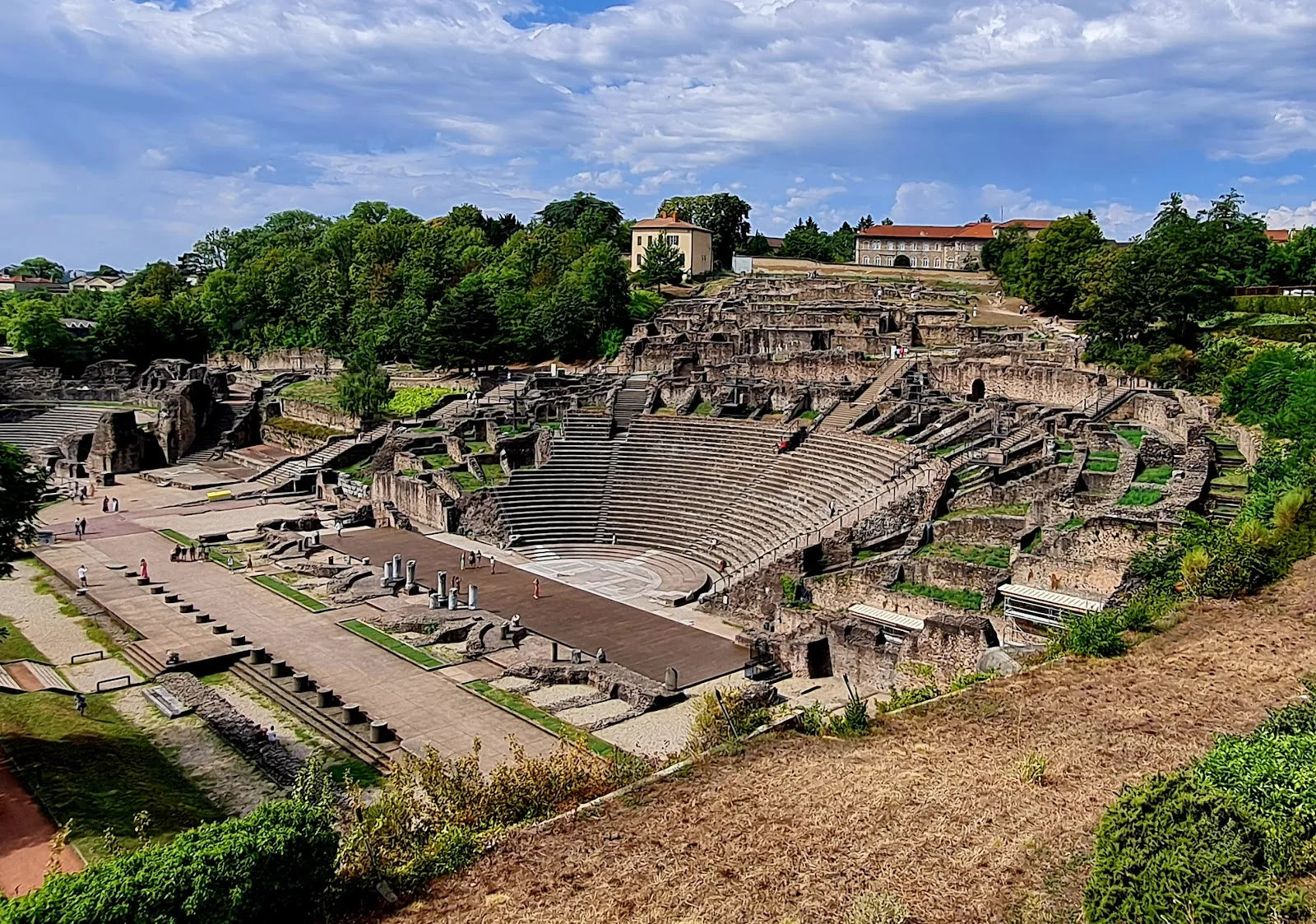
The museum sits within the archaeological site on Fourvière, close to the Roman theatre and odeon. Architect Bernard Zehrfuss designed the building, which opened in 1975. Instead of placing a separate structure in front of the ruins, the museum is set into the slope. Its concrete galleries keep the ancient remains outside in view while making space for a large collection indoors.
The interior route follows a broad spiral ramp down through the building. Visitors can move from level to level while following the collections, and windows cut into the hillside frame views of the theatre. The contrast between the concrete architecture and the Roman objects is part of the visit: the building feels contemporary, while the displays bring together remains from the city’s ancient past.
Objects from Roman Lugdunum
Lyon was called Lugdunum in Roman times. The museum traces the city’s history through archaeological finds from the region, including mosaics, statues, ceramics, stone carvings, jewellery and objects used in daily life. Displays are arranged chronologically, helping visitors follow changes across the city’s past. Explanatory panels give context for the objects, and some displays are interactive.
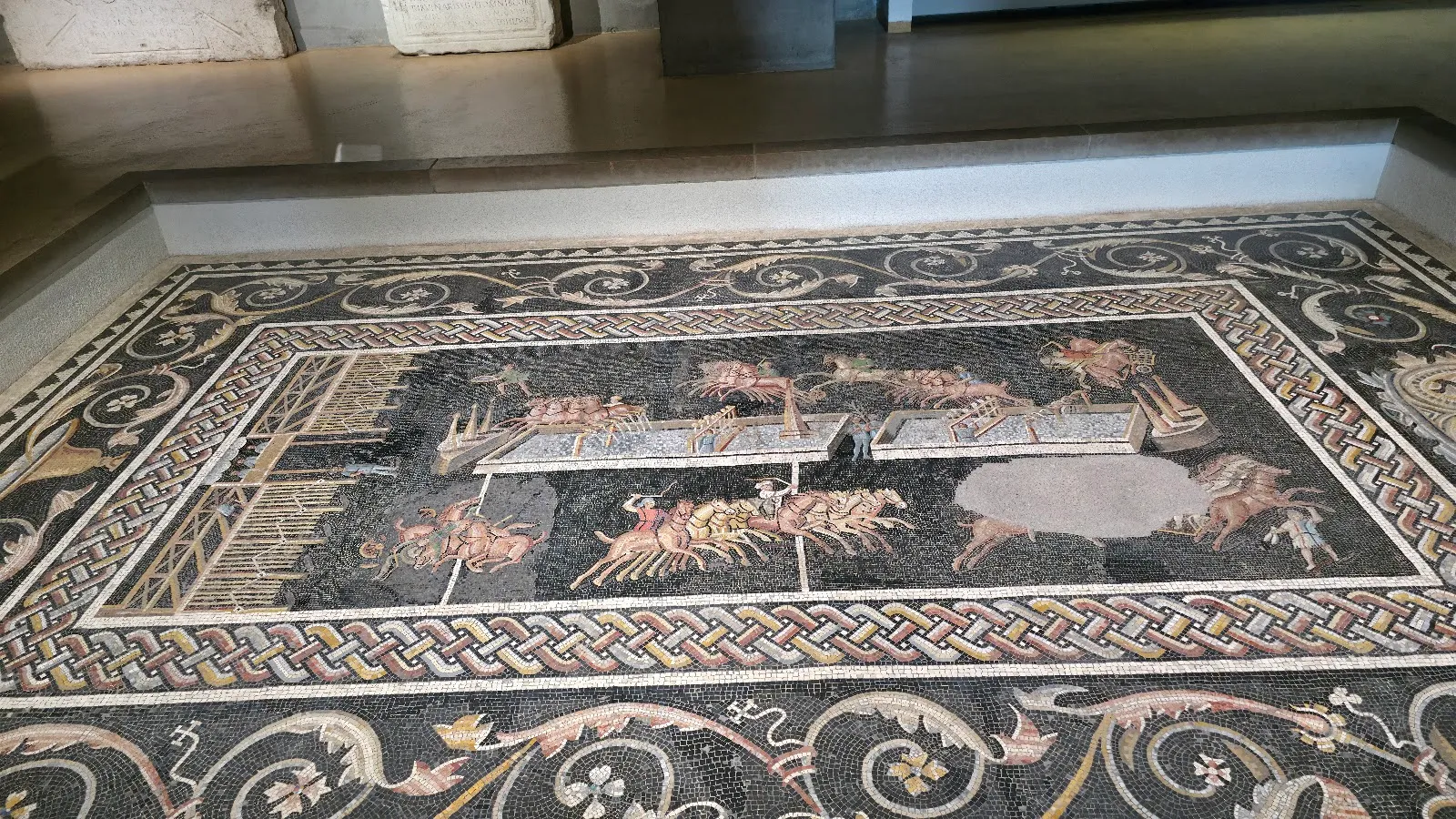
Among the collection’s notable pieces are the Circus Games Mosaic, which depicts a chariot race, and the Coligny Calendar. Mosaics and large stone objects give a sense of the range of material preserved here, from detailed decorative work to substantial architectural remains. The galleries also include models that help visitors picture the Roman town.
Reading the Roman site outside
The museum’s location makes it possible to connect the objects inside with the remains nearby. From the windows, you can look towards the theatre and odeon; outside, the archaeological site also includes traces of roads, cisterns, shops and heating systems. These remains point to a Roman district with everyday, commercial and public spaces, beyond the performance venues.
The theatre and odeon are close enough to visit alongside the museum. The theatre was used for performances, while the smaller odeon was associated with music and public gatherings. Together, the buildings and museum give a fuller picture of Lugdunum than the galleries alone.
Planning your visit
The museum’s descending layout gives the visit a clear direction, but the number and scale of the objects reward a slower pace. Seating is available along the route, and there is a children’s area and interactive material. English appears on many, but not all, of the explanatory panels.
Lockers near the entrance can be useful before starting the galleries. A water fountain is reported on the fifth floor, and a free audio guide may be available. The museum is wheelchair accessible, with an accessible entrance, seating, restroom and parking. Check the museum’s official website for current visit information before setting out.
Preguntas frecuentes
How long do you need at the Gallo-Roman Museum of Lyon-Fourvière?
Allow about three to four hours to explore the museum at a relaxed pace.
What are the museum’s main highlights?
Look for the Circus Games Mosaic and the Coligny Calendar. The large windows also give views of the Roman theatre and odeon.
Is the museum suitable for children?
Yes. The museum has a children’s area and interactive displays.
Is the museum wheelchair accessible?
Yes. It has an accessible entrance, seating, restroom and parking.


