The Royal Castle of Collioure sits on a rocky outcrop above the harbour, where it divides the water into two coves. It began as a fortress with origins in the 7th century and later served as the summer residence of the kings of Majorca. Its current form dates from the reign of Louis XIV, so the walls show several periods at once. The main reason to come is the view: from the towers and walkways you look over the coloured town, the harbour and the sea. Allow time for the rooms, the temporary exhibitions and the underground rooms.
From the 7th century to Louis XIV
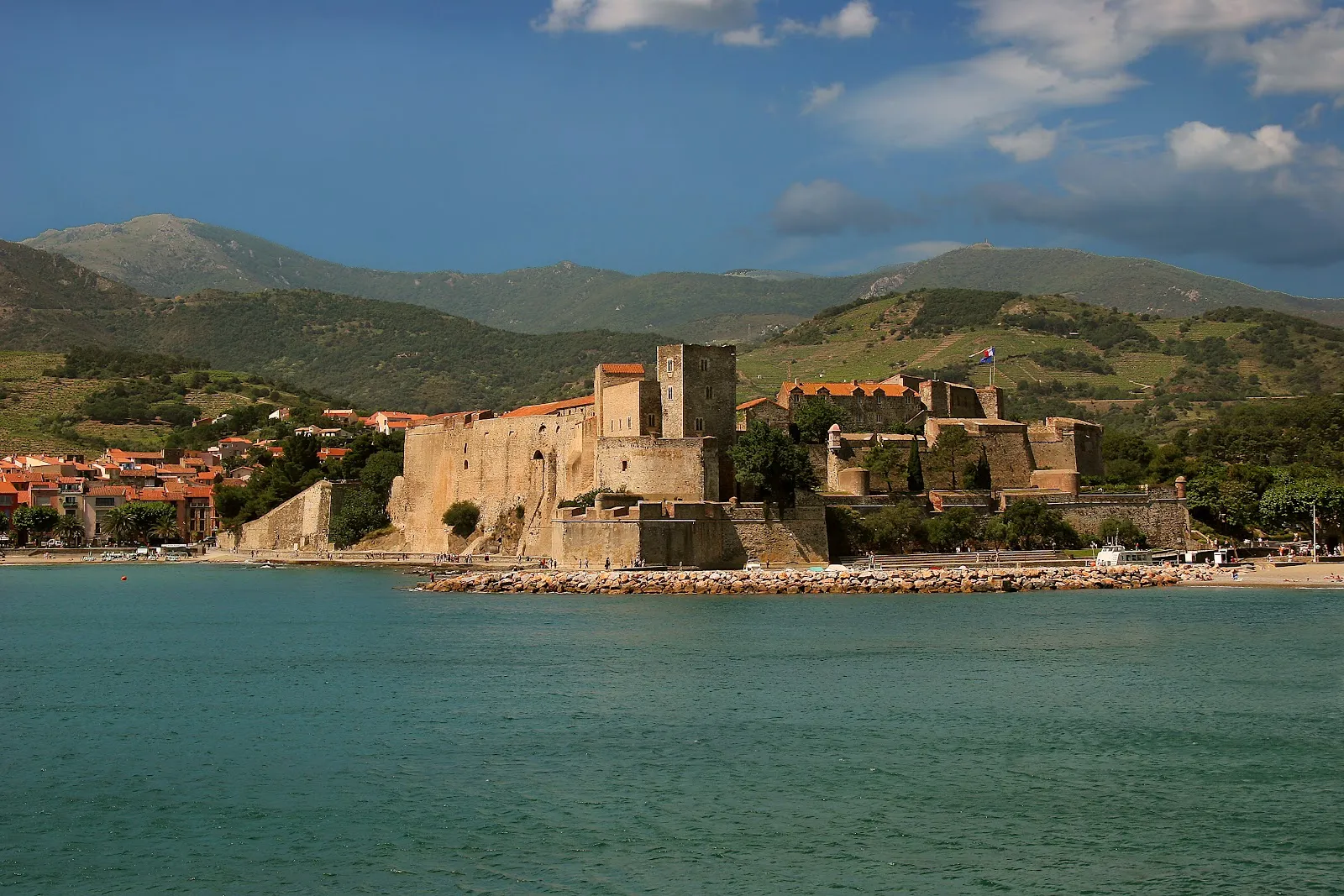
The castle was first mentioned in 673, and its origins go back to the 7th century. Parts of it were built on the ruins of Roman buildings. Over the centuries it passed through several hands: the Counts of Roussillon, the Kings of Majorca and the Kings of Aragon. Between 1276 and 1344 it was the summer residence of the Kings of Majorca.
The region became part of the kingdom of France in 1659, under the Treaty of the Pyrenees. The fortress was then reinforced by Vauban in the 17th century. Vauban also razed the upper town that had surrounded the castle, built outer walls, and added the Fort Saint Elme on the heights above Collioure. The fortress took on its current form under Louis XIV.
Reading the walls
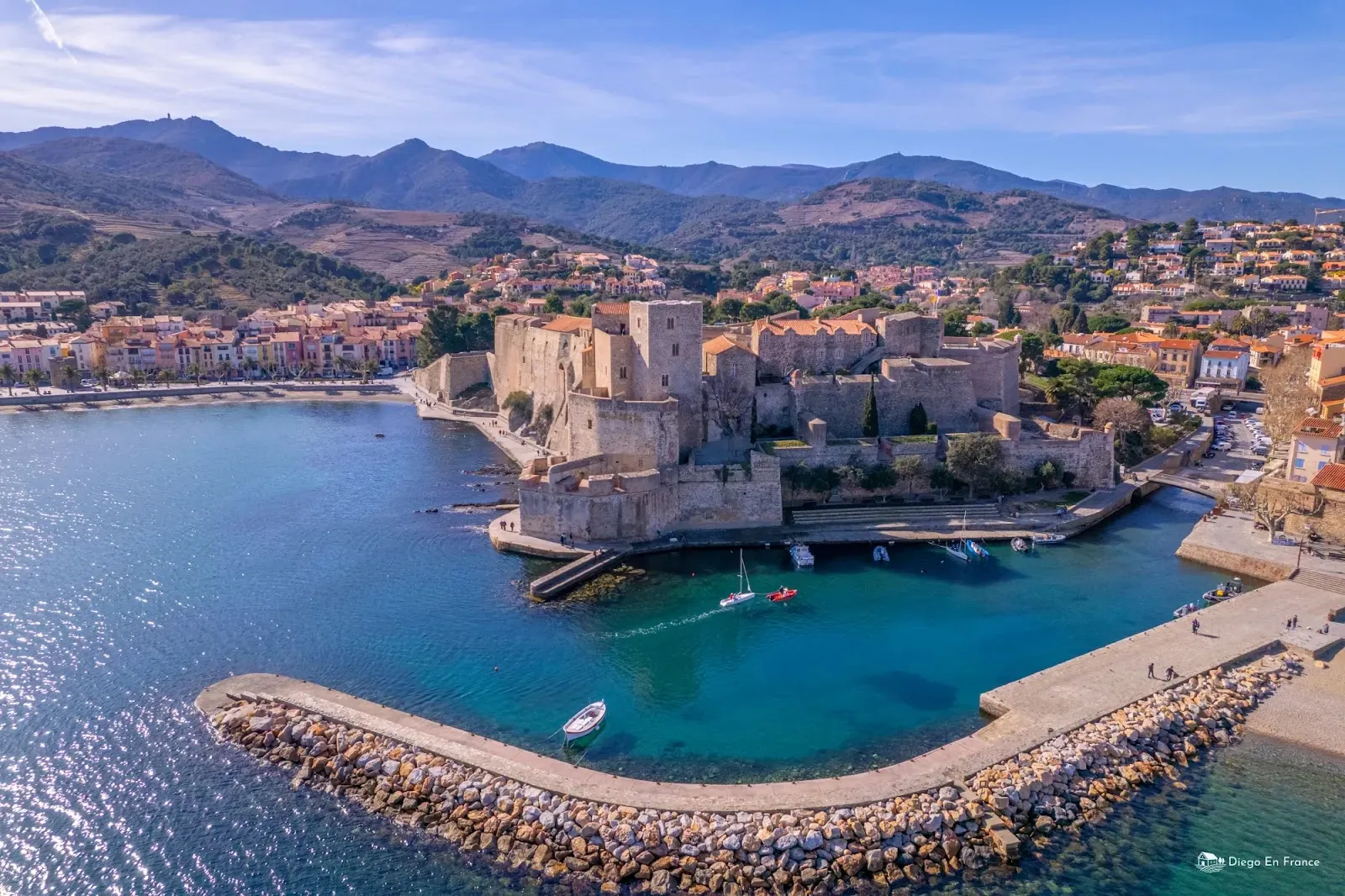
The castle is a composite building, and its walls show the marks of each period that occupied it. The site was built to protect the town and its natural harbour, and its walls run close to the sea.
The route through the castle has many paths, stairs and small rooms, so it can feel like a maze. Follow the signs to reach the upper terraces, where the views are strongest. The highest tower gives a view that many visitors rank as the best part of the visit.
Inside the castle
The temporary exhibitions include one on the history of the town in the 1930s, with displays on the years around the Second World War. One floor houses an art gallery with a range of works. The castle also has an escape room and a projection show.
Guided tours are given in French. Printed guides are available in several languages. A guided visit adds dates and background that the displays do not always explain.
At the end of the route, you reach the underground rooms of the fortress.
The castle in the 20th century
In 1939 the castle was used as a prison and detention camp for refugees from Spain. The displays on the town's history cover this period alongside earlier centuries.
The Royal Castle is part of the Côte Vermeille, the coastline south of Perpignan, which is where most visitors arrive from.
Preguntas frecuentes
Is there an entry fee?
Yes. Visitors under 26 enter free. Entry was about 7 euros per person in August 2025, so check the current price on the official site before you go.
How long do you need?
A typical visit takes one to two hours, including the views, the exhibitions and the underground rooms.
Is the castle wheelchair accessible?
The entrance, the restroom and the car park are listed as wheelchair accessible. There is also an assistive hearing loop.
Do you need to book tickets in advance?
The castle recommends buying tickets in advance.
Are guided tours available?
Guided tours are given in French, and printed guides are available in several languages.