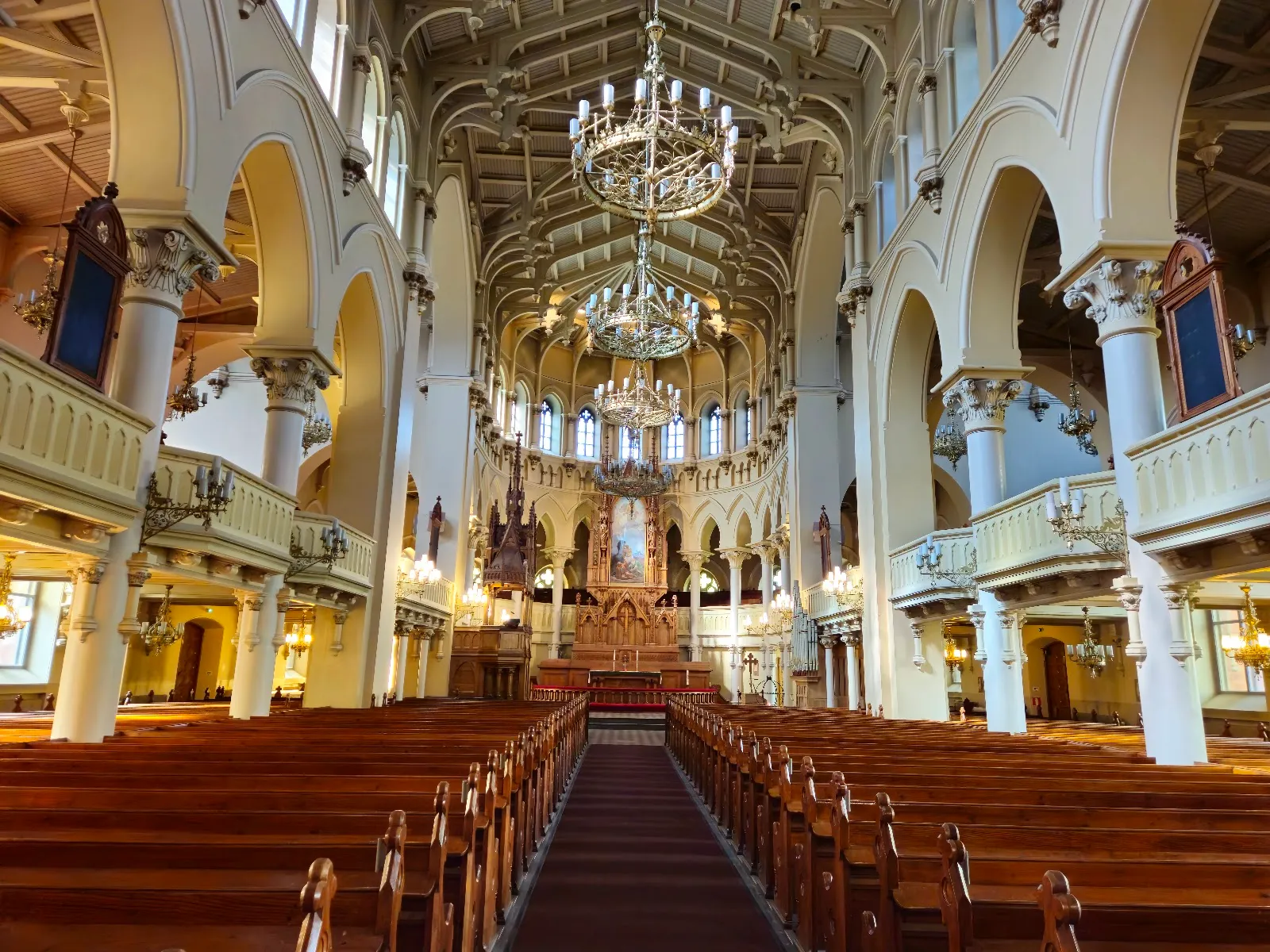
St. John’s Church, or Johanneksenkirkko, is a Lutheran church on a hill in Helsinki’s Punavuori district. Swedish architect Adolf Emil Melander designed it in the Gothic Revival style, and it was completed in 1891 as the city’s third Lutheran church. Its red-brick exterior, twin spires and broad entrance staircase make a strong first impression; inside, look for stained-glass windows, a vaulted ceiling, chandeliers and hymn boards. The church is also a place of worship, so keep your visit quiet and respectful.
A hilltop church completed in 1891
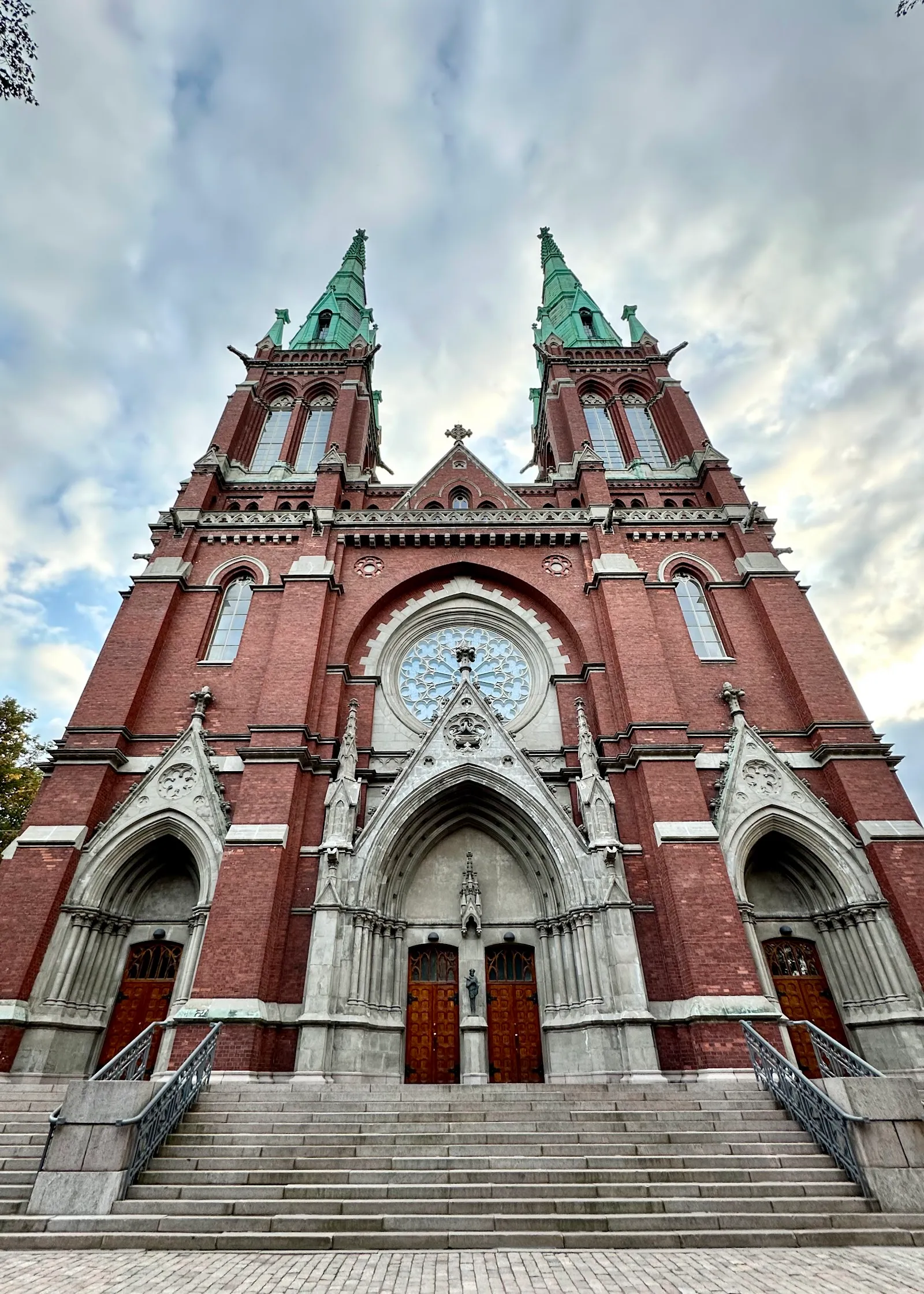
St. John’s Church stands in Helsinki’s Punavuori district, on a hill associated with midsummer bonfires. Designed by Swedish architect Adolf Emil Melander, it was built between 1888 and 1891 in the Gothic Revival style. It became Helsinki’s third Lutheran church, built to accommodate a growing congregation when existing churches did not have enough room.
The church can seat 2,600 people and is Finland’s largest stone church by capacity. Its scale is clear before you enter: the twin towers rise above the surrounding trees and skyline. From the Market Square, the church is about a kilometre away on foot.
The exterior and the entrance
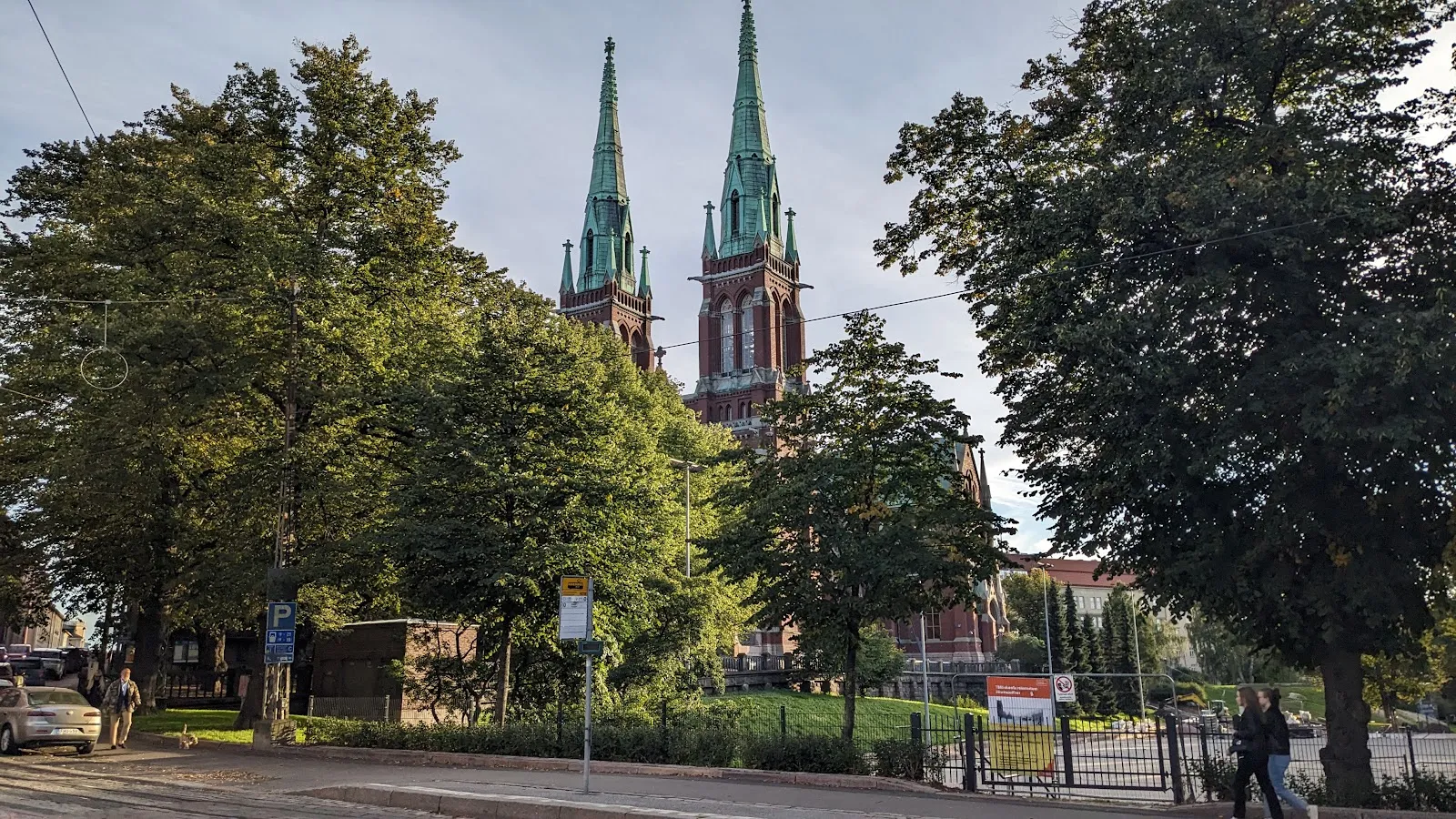
The red-brick façade gives the church a distinct colour against Helsinki’s often grey skies. A broad staircase leads to three arched entrance portals. Above them, an arched frame surrounds a rose window, while gargoyles project from the towers. The spires, described as 74 metres high, are a defining feature of the city view.
The building is a prominent example of Finnish neo-Gothic architecture. Look at the full composition as you approach, then take time with the details around the entrances and towers. The church was damaged during the February 1944 bombing of Helsinki, when several windows were among the parts broken.
Inside the church
The interior has stained-glass windows, a vaulted ceiling, chandeliers and hymn boards. These details give you plenty to look at beyond the building’s size and exterior profile. The church’s quiet atmosphere also reflects its continuing role as a place of worship.
If you want to compare the present interior with historical photographs, a phone image-matching tool can help you identify corresponding views. Keep your visit considerate of anyone praying or attending a service, and allow the architecture and furnishings to speak for themselves.
Preguntas frecuentes
Who designed St. John’s Church in Helsinki?
Swedish architect Adolf Emil Melander designed the church in the Gothic Revival style.
When was St. John’s Church built?
Construction took place between 1888 and 1891, and the church was completed in 1891.
What should I look for inside St. John’s Church?
Look for the stained-glass windows, vaulted ceiling, chandeliers and hymn boards.
Where is St. John’s Church?
It is in Helsinki’s Punavuori district, at Korkeavuorenkatu 12.