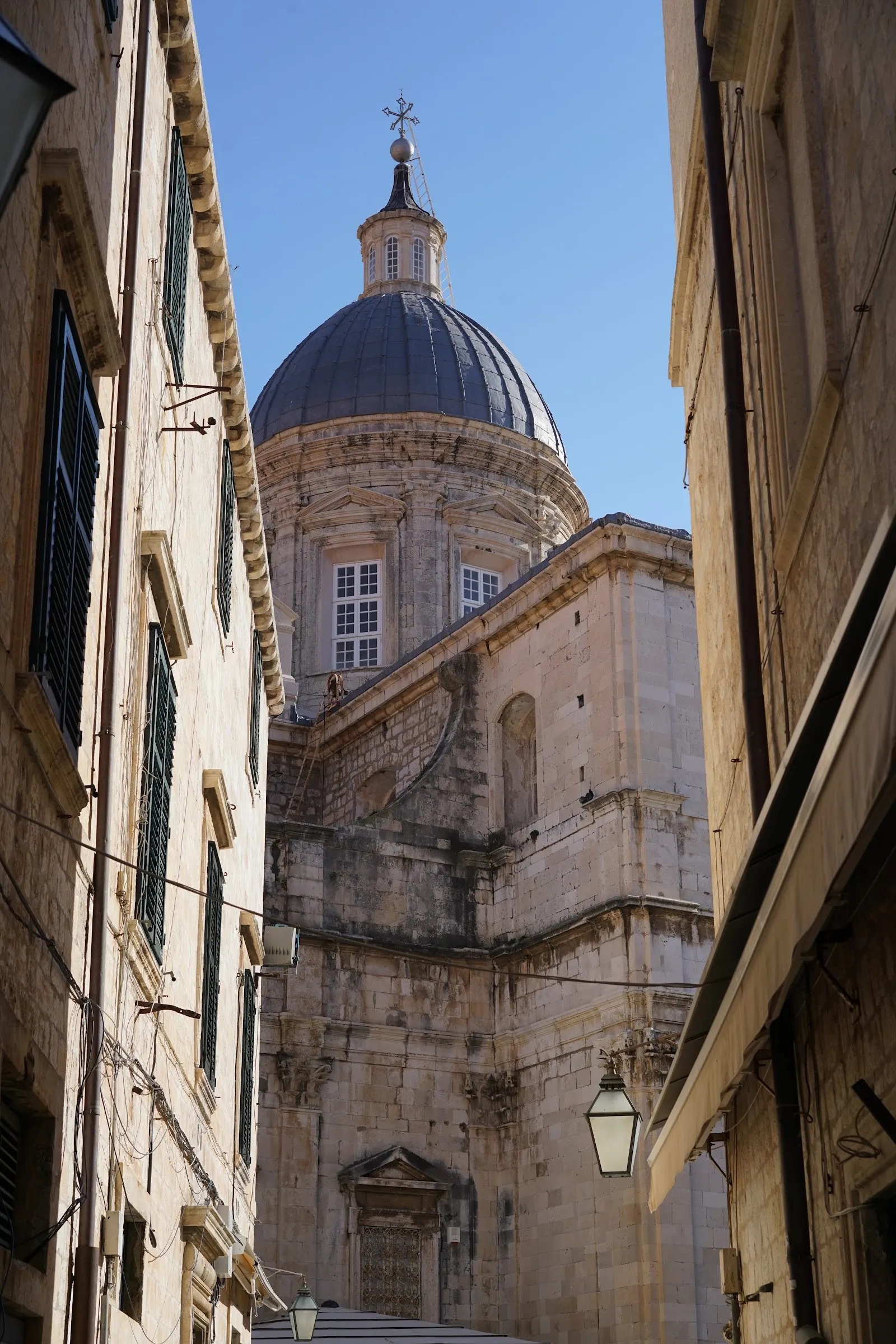
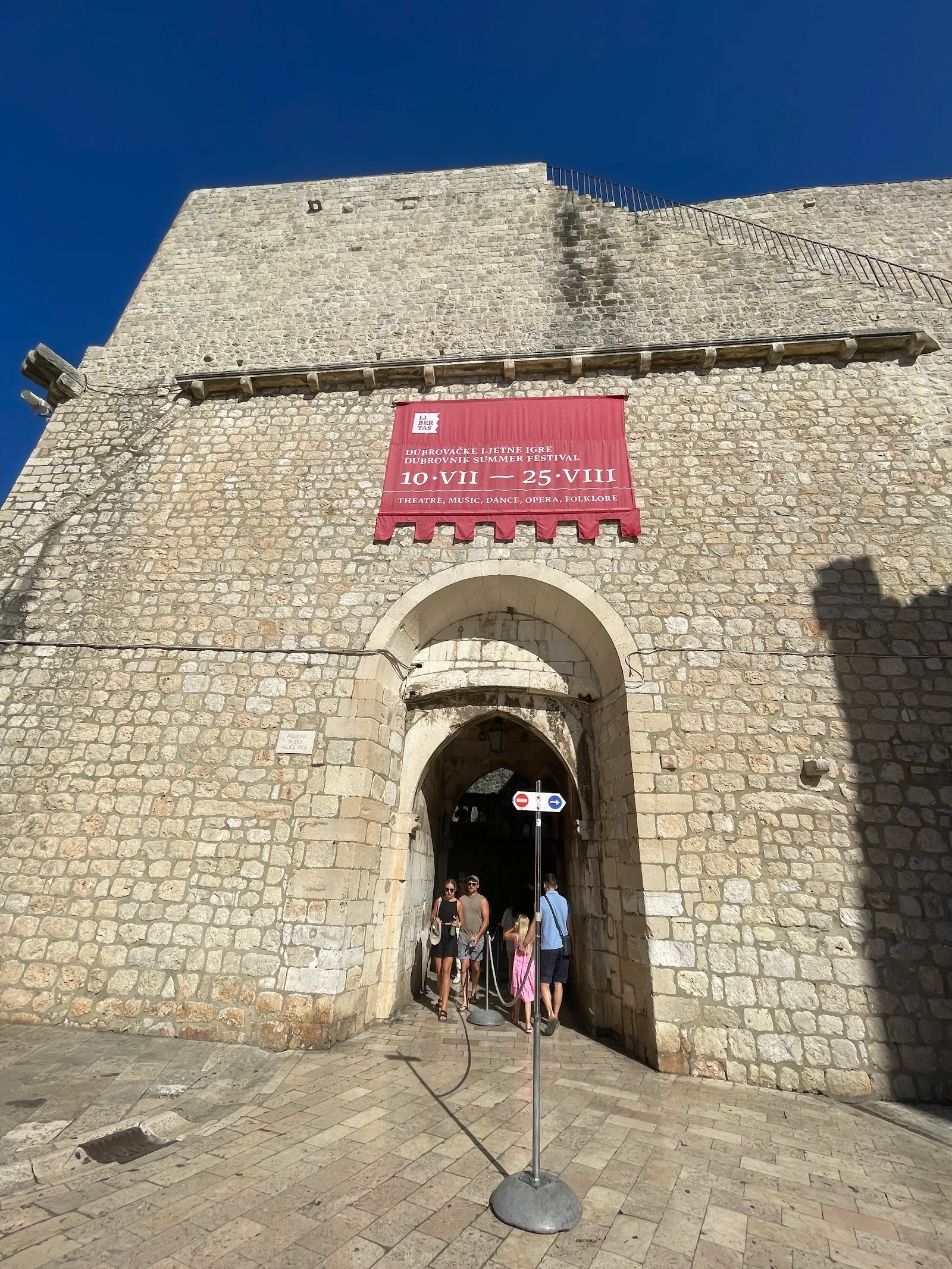
At the eastern end of Stradun in Dubrovnik’s Old Town, Sponza Palace brings together Gothic forms and Renaissance details. Built between 1516 and 1522, it served as a customs house and later as a mint, treasury and other public institutions. Step into the arcaded courtyard to see its stone columns and arches, then visit the Memorial Room of the Dubrovnik Defenders. The State Archives are housed here, though the archival collection itself is not open to visitors; displays include copies of historic documents and exhibitions.
A public building built for trade
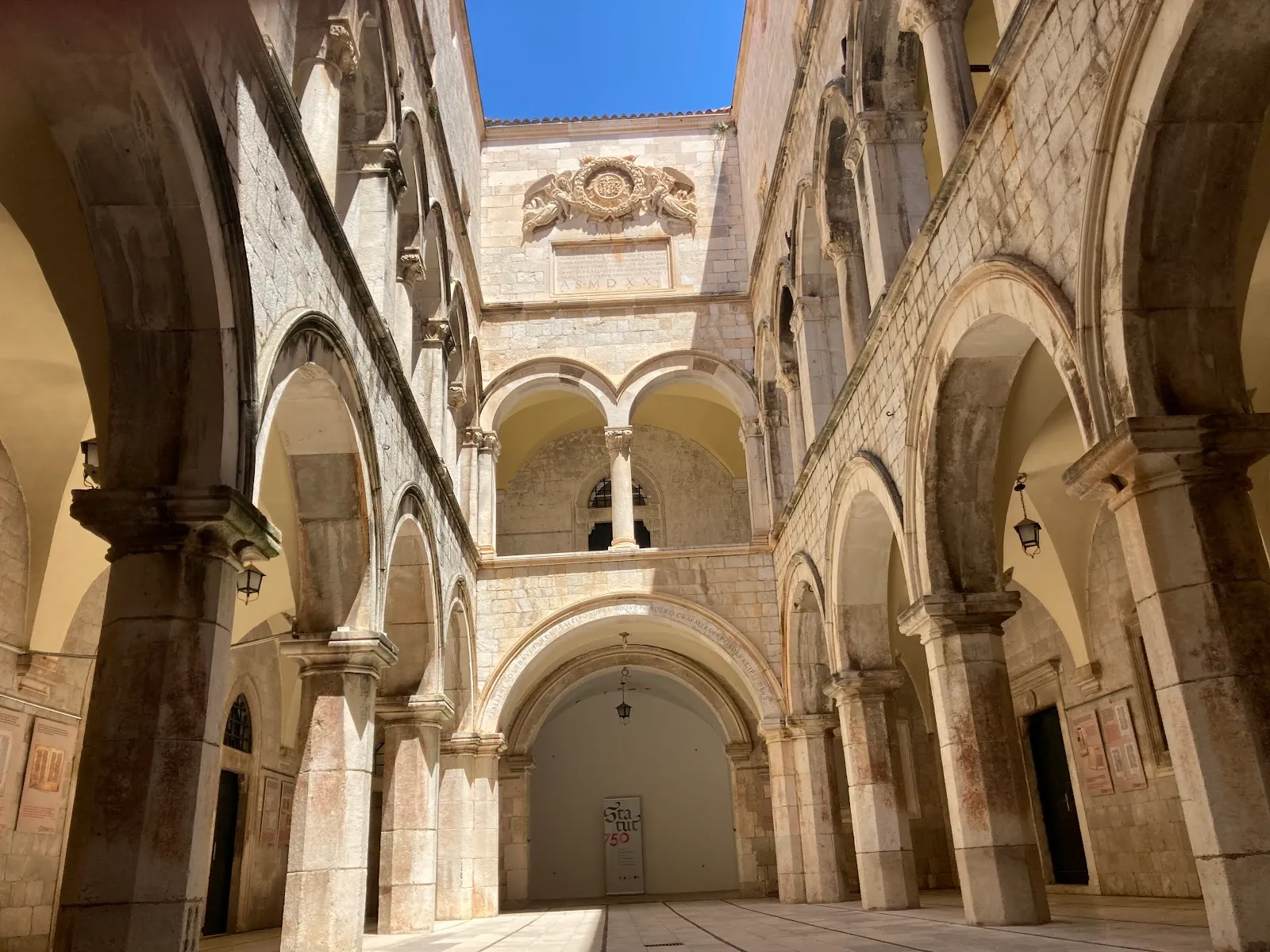
Sponza Palace stands at the eastern end of Stradun, facing Luža Square. Construction ran from 1516 to 1522, under the direction of architect Paskoje Miličević. Its design combines Gothic elements with Renaissance forms, visible in the stone façade, windows and courtyard arcades.
The building began as a customs house, where goods brought into Dubrovnik were taxed. Its public roles changed over time: it was also used as a mint, treasury, armoury and bank, among other functions. The courtyard was once a working place for merchants and traders. An inscription above an arch warned them against dishonest weights and measures, linking the palace’s decoration to its commercial purpose.
Sponza was also a meeting place for the Academy of the Learned, where members gathered to discuss literature, science and culture. Its long use as a public building helps explain why it remains tied to both the city’s trade and civic life.
Courtyard and archive displays
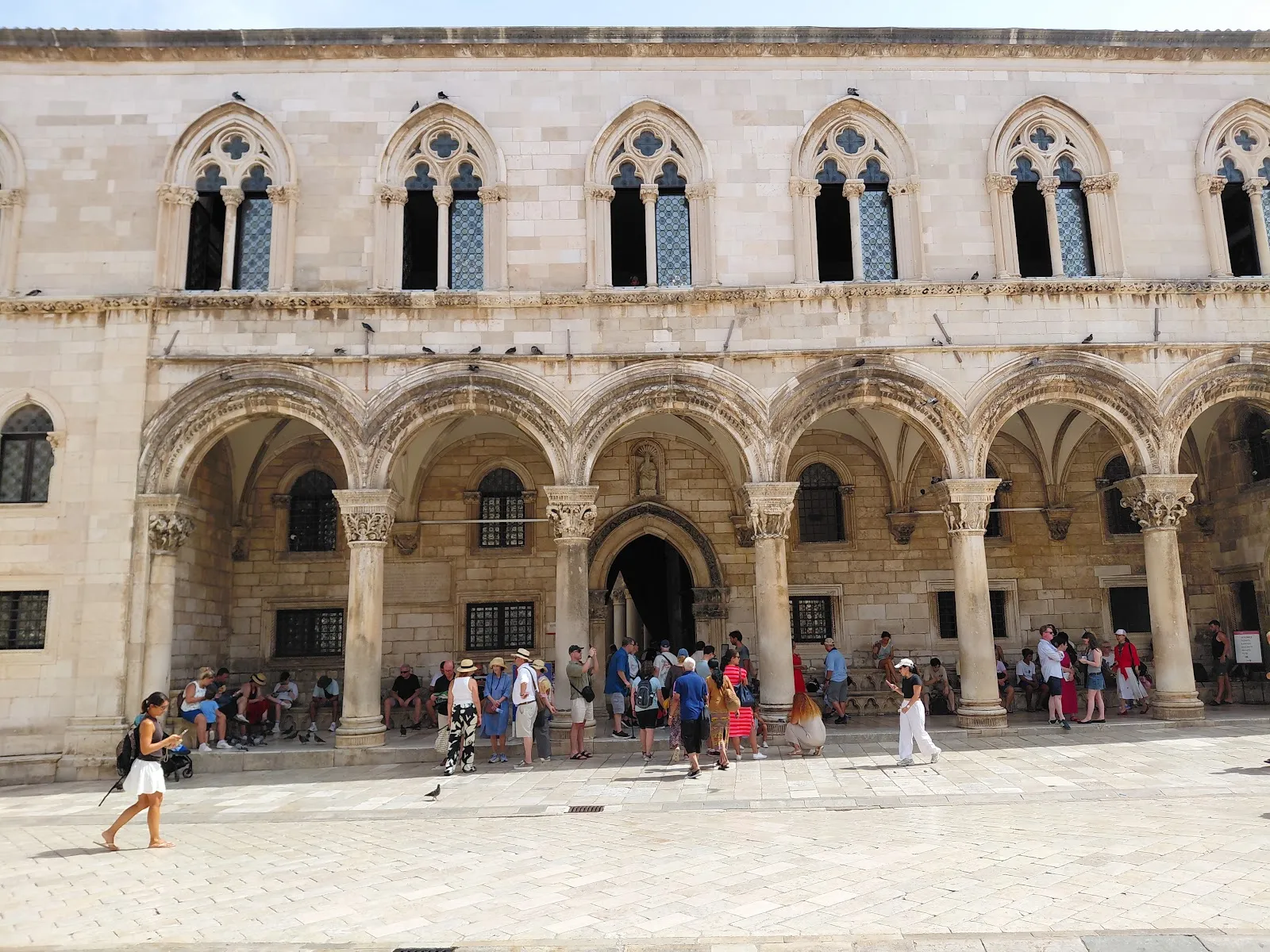
Visitors can enter the central courtyard, where stone arches and columns frame the open space. Rooms around the ground floor have been used for exhibitions, including displays connected with Dubrovnik’s history and copies of important archival documents. The selection may be modest, so the building itself is often a central part of the visit.
The Dubrovnik State Archives are housed in the palace and preserve documents relating to the city and the former Republic of Dubrovnik. The archival collection is not generally accessible as a visitor exhibition. Sponza’s role as its home is still part of what makes the building significant: records kept here document the city’s political, diplomatic and commercial past.
The palace was among the few buildings in Dubrovnik to survive the 1667 earthquake. Its continued presence offers a rare view of the city’s pre-earthquake public architecture, though it should not be taken as a complete picture of the buildings that once stood around it.
The Memorial Room of the Dubrovnik Defenders
A room inside the palace commemorates people who died defending Dubrovnik during the war in the early 1990s. Photographs of those who were killed form part of the display, which also includes reminders of the city’s wartime damage. It is a small, solemn space; take time to view it respectfully.
The memorial provides a different perspective from the palace’s commercial and architectural history. Dubrovnik’s Old Town is closely associated with its long civic past, but the room also records the recent conflict and the lives lost in the city’s defence. Its placement within Sponza connects that remembrance with a building that has served the public for centuries.
Preguntas frecuentes
Where is Sponza Palace?
It is at Stradun 2 in Dubrovnik’s Old Town, at the eastern end of Stradun beside Luža Square.
Can visitors see the State Archives?
The archives are housed in the palace, but the archival collection itself is not open to visitors. Some rooms have displayed copies of historical documents and other exhibitions.
What is the Memorial Room of the Dubrovnik Defenders?
It is a room commemorating people who died defending Dubrovnik during the war in the early 1990s, with photographs and other reminders of the conflict.
How long should I allow for a visit?
Allow about 20 to 30 minutes to see the courtyard and rooms open to visitors.