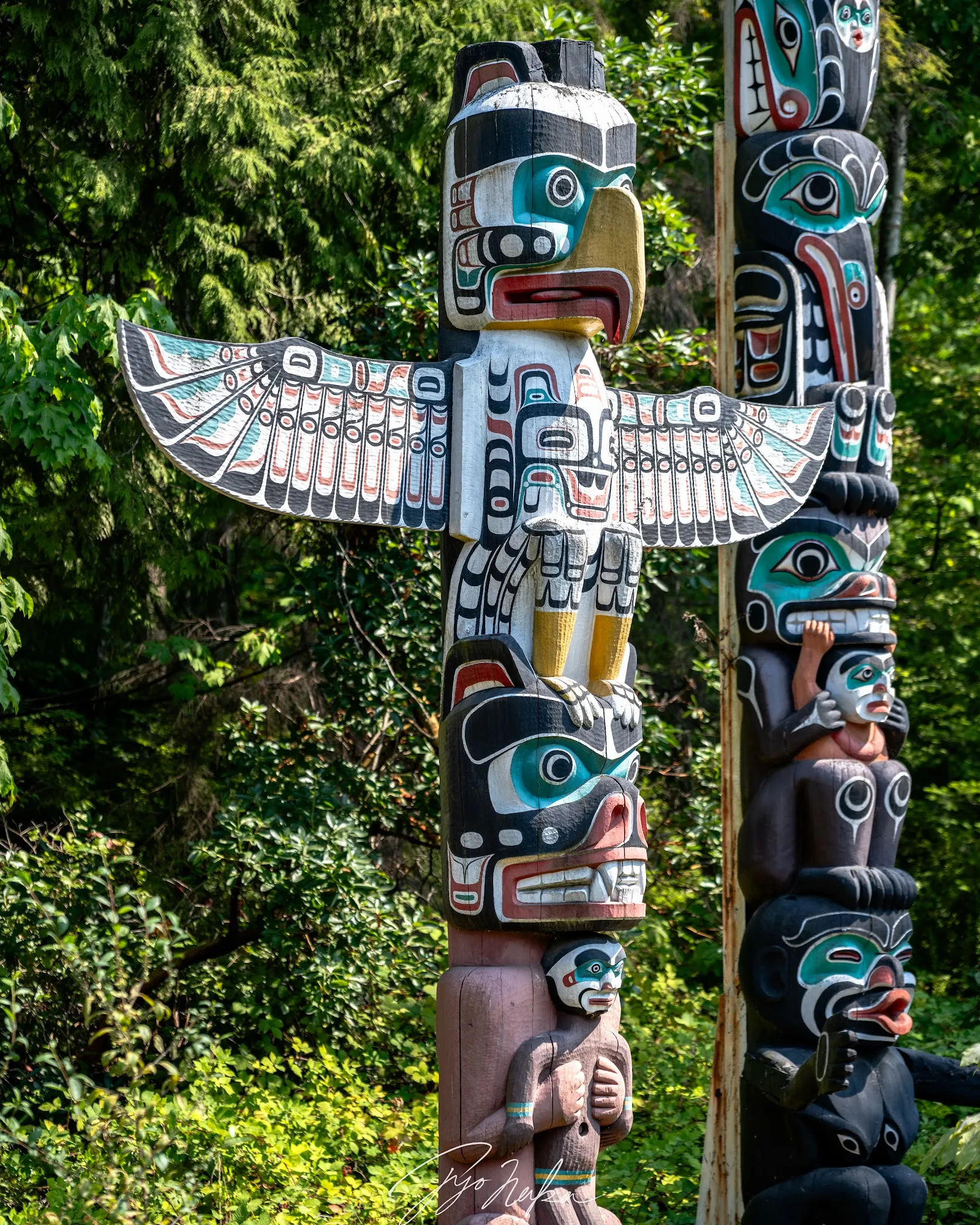
At Brockton Point in Stanley Park, Vancouver, nine carved poles introduce visitors to Indigenous art from British Columbia’s coast. The collection includes works by First Nations artists and replicas of poles brought to the park from the north coast in the 1920s. Look closely at the varied forms and colours, then read the interpretive signs to learn about the stories and communities connected with the carvings. The poles stand in an outdoor setting among the park’s forest and ocean scenery.
The collection at Brockton Point
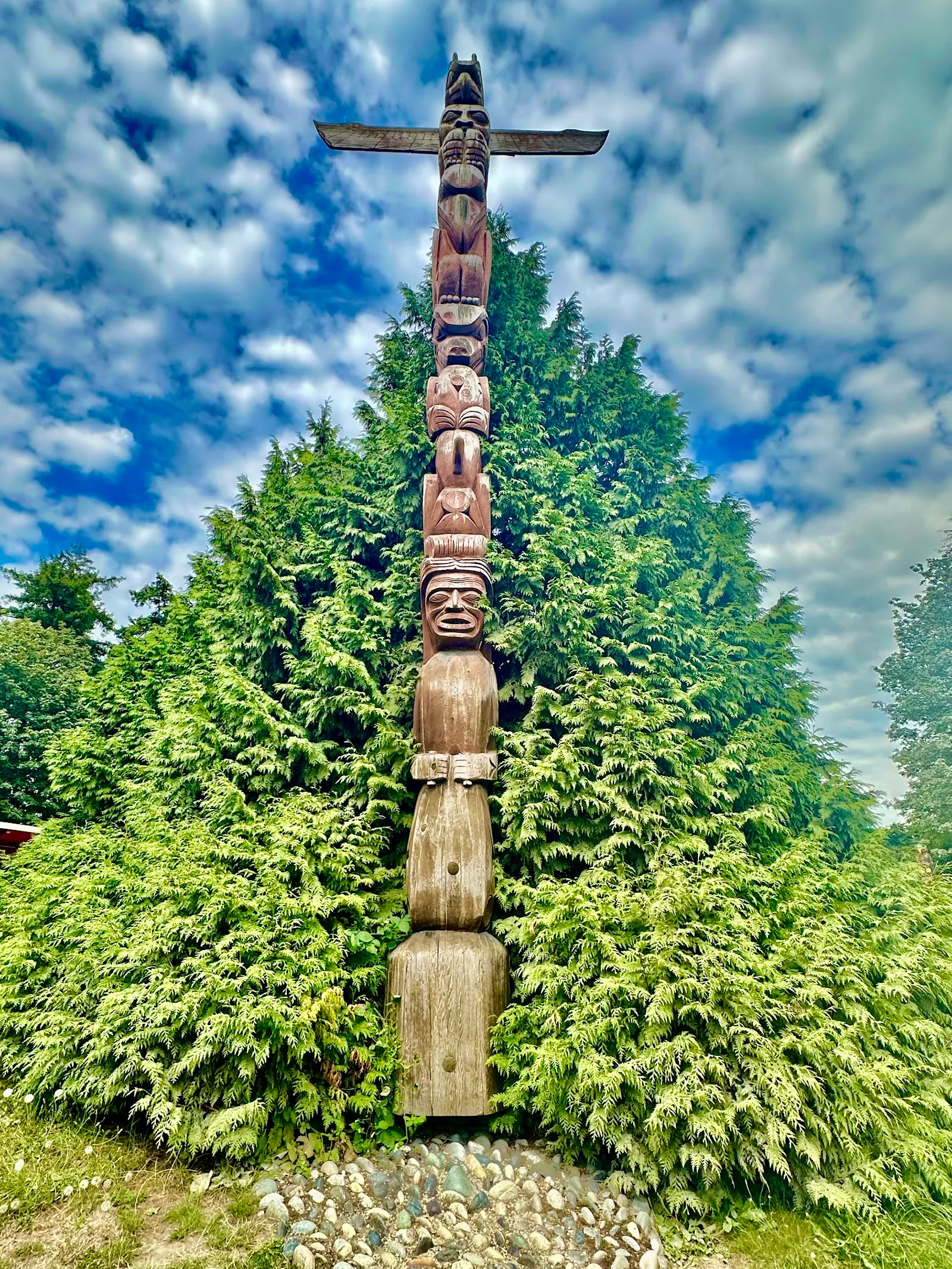
The poles at Brockton Point represent several Indigenous carving styles from British Columbia’s coast, including those associated with Kwakwaka’wakw, Haida and Nisga’a communities. Eight were carved in the latter half of the 20th century, and one was made in 2009.
Some are replicas of poles brought to Stanley Park from the north coast in the 1920s. Others were carved specifically for the park by First Nations artists. The collection has changed over time as poles were added and older examples were replaced or moved to museum storage.
Reading the carvings
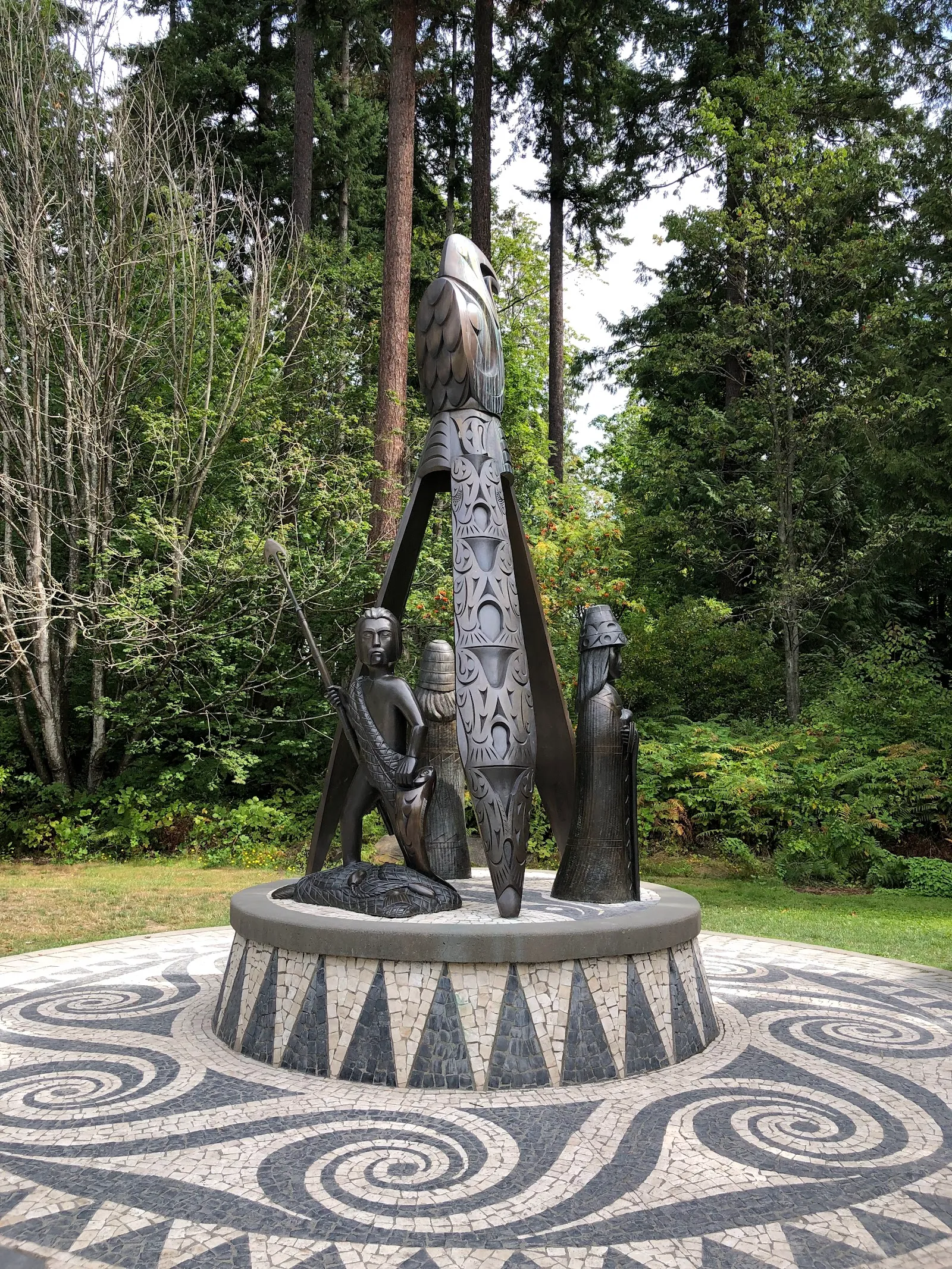
Totem poles, also called story poles, are an important art form among Indigenous peoples along British Columbia’s coast. Their carvings can convey stories, including mythical and historical ones. The works at Brockton Point are individual creations, so the interpretive signs are useful for understanding the stories and communities associated with each pole.
The collection includes carvings made from red cedar. Take time to look at the figures and details before moving on, and keep to the public viewing area. The poles are part of the cultural heritage of the Indigenous peoples whose traditions they represent.
Preguntas frecuentes
Where are the Stanley Park Totem Poles?
They are at Brockton Point in Stanley Park, Vancouver.
How many totem poles are at Brockton Point?
The collection has nine poles.
What can you learn at the site?
Interpretive signs provide information about the poles and their stories.
When is a good time to visit?
Early morning or a misty morning is suggested for an atmospheric visit.