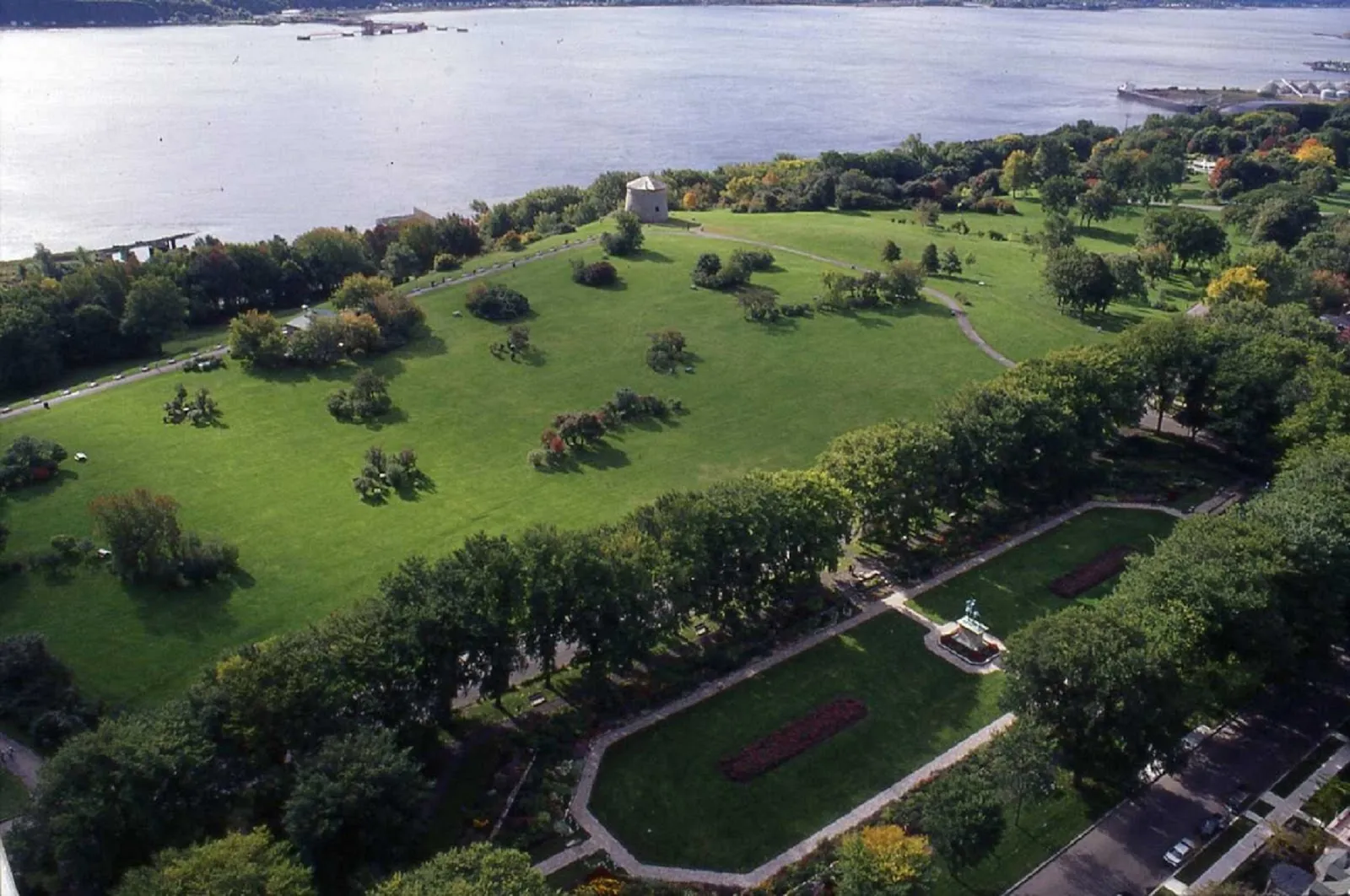
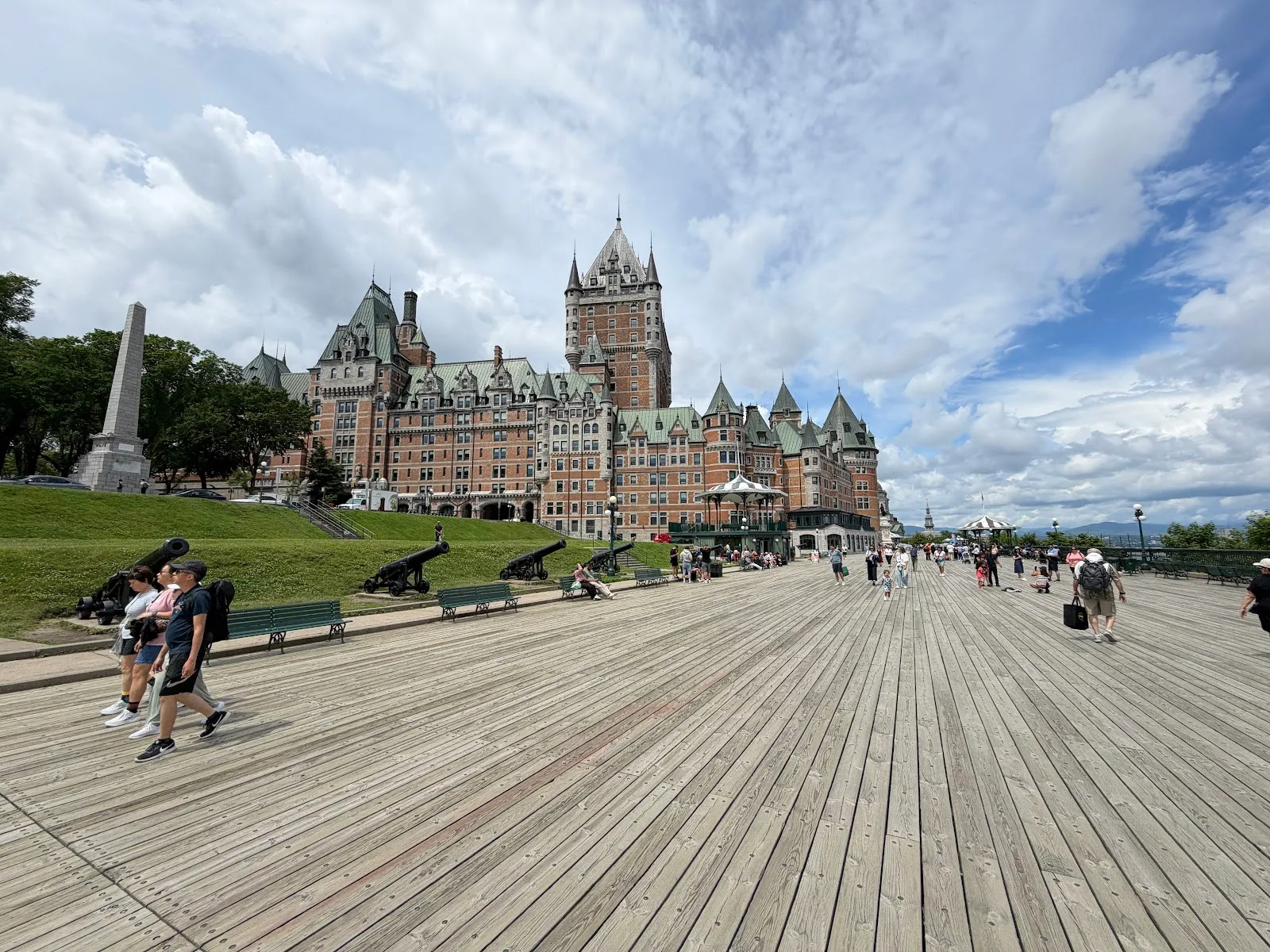
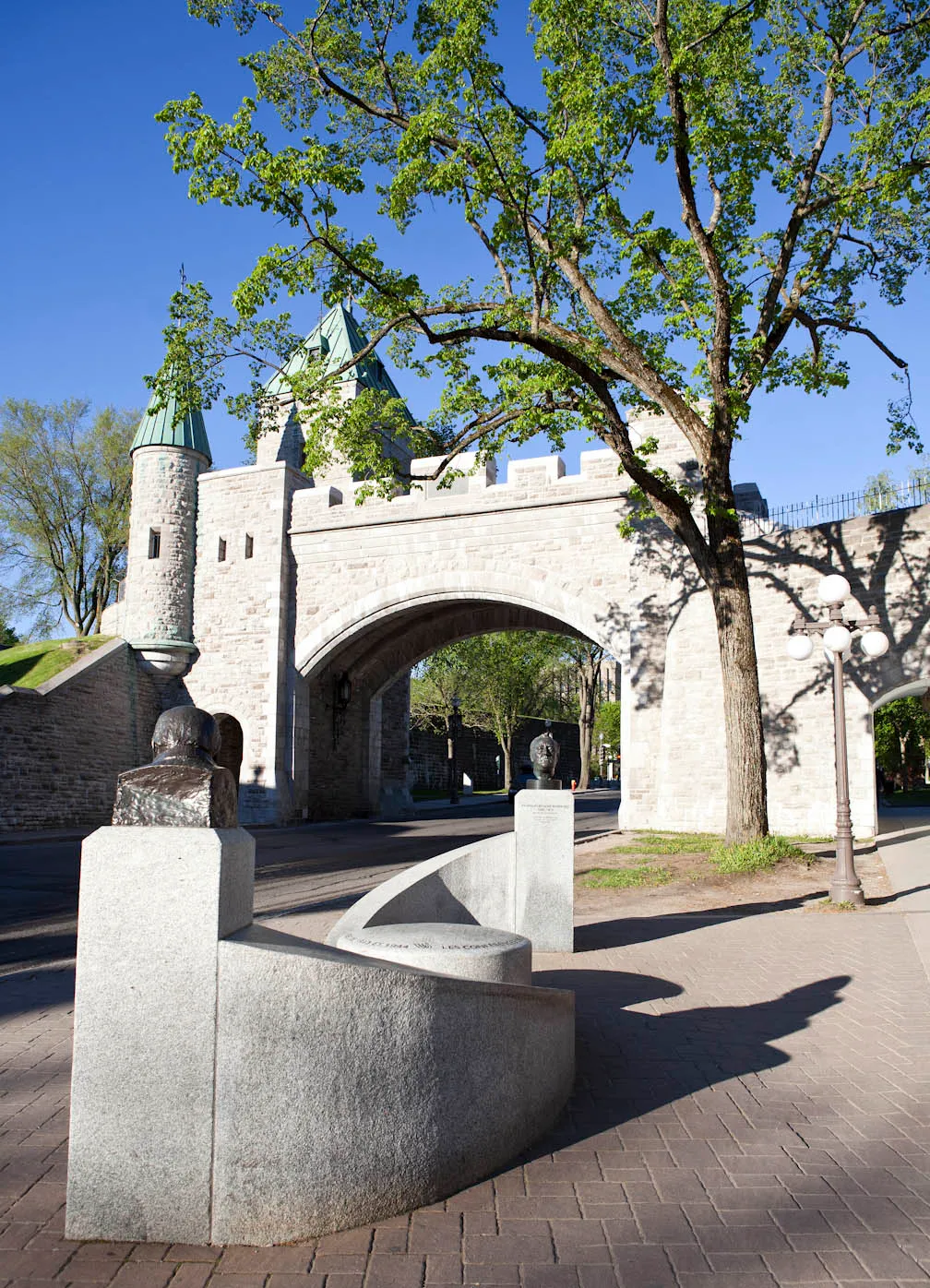
Québec City’s 4.6 km fortifications trace the defensive system built by French and British authorities between 1608 and 1871. The stone ramparts, gates, bastions and cannons surround Old Québec, giving you a close look at its military past and elevated views over the historic district and the St. Lawrence River. Walk part of the walls or follow the route around the old city. At Porte Saint-Louis, an interpretation centre explains how the ramparts were built.
A defensive line around Old Québec
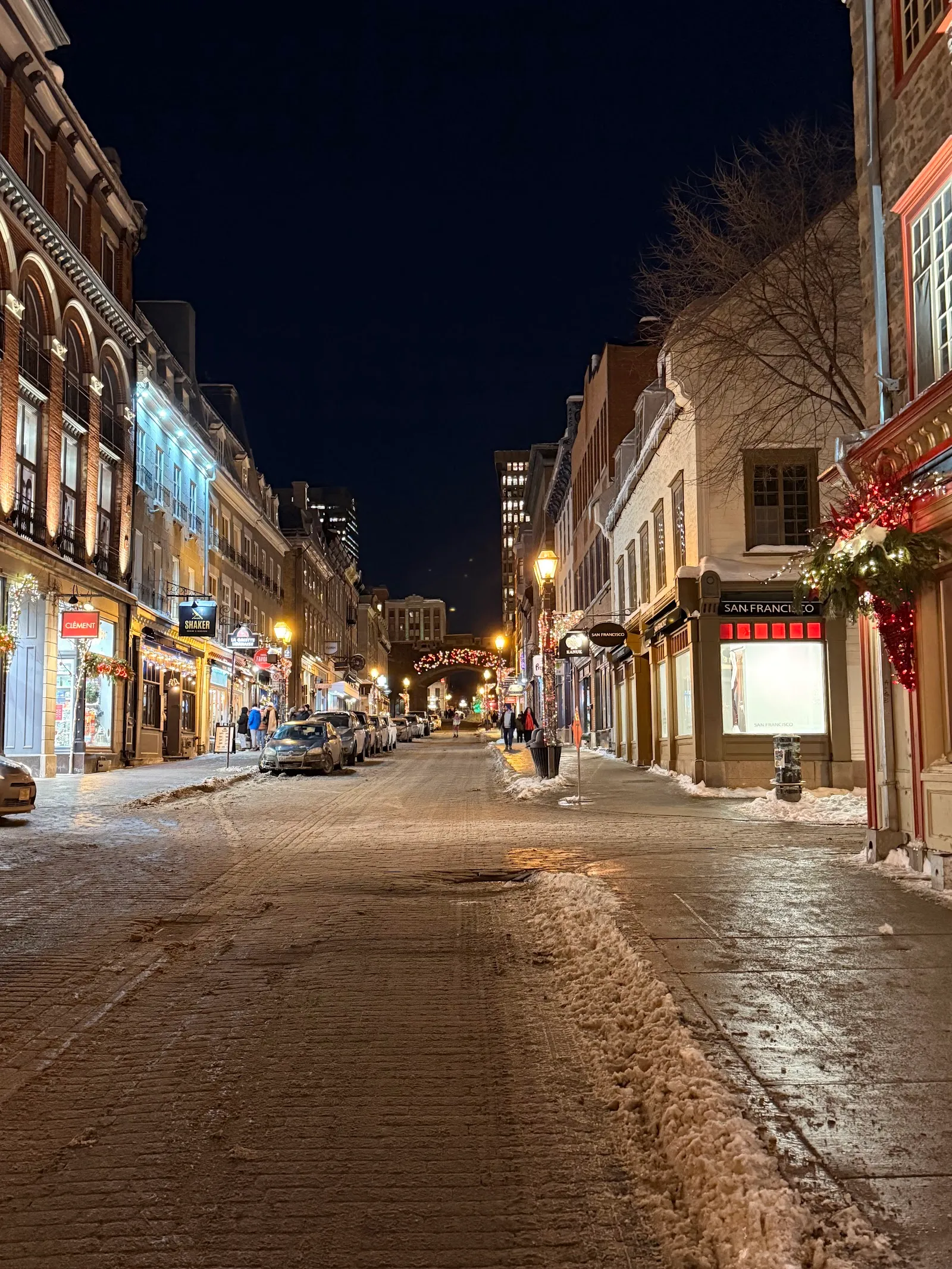
The fortifications form part of a wider system built between 1608 and 1871, during French, British and later Canadian rule. The defences include stone walls and ramparts, gates, guard posts, powder magazines, storehouses, barracks and other military structures. Together, they show how the city’s protection developed over more than three centuries.
French colonists began building defences along the cliffs in the late 17th century. The work followed concern about a possible British attack. In 1832, the British added solid stone fortifications amid fears of an American assault. The walls therefore belong to more than one period of rule, and their form records changing approaches to defending the city.
Gates, walls and views
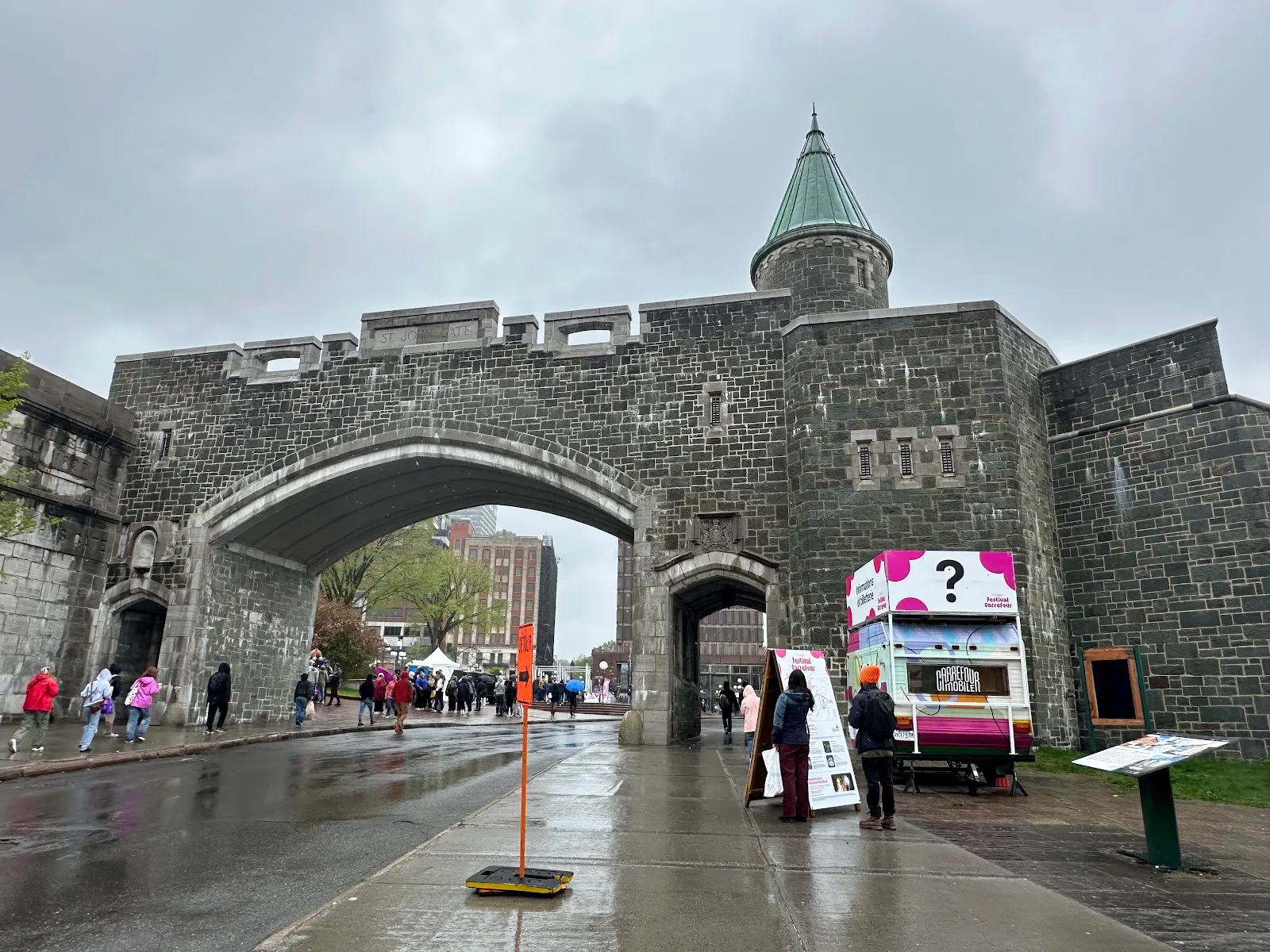
The ramparts run for about 4.6 km around Old Québec. Four surviving gates are named St. Jean, Kent, Prescott and St. Louis. The route also passes bastions, towers and cannons, with the walls offering views across the old city and toward the St. Lawrence River.
You can walk beside or along sections of the defensive line, or follow the route around the city. Stairs at the gates lead to viewpoints above the streets. The circuit is a substantial walk, so comfortable shoes are useful if you plan to cover more than a short stretch. The route is also a way to see how the fortifications connect with the Upper and Lower Town.
Understanding the site on foot
At Porte Saint-Louis, the interpretation centre has exhibits on the construction of the ramparts. Signs along the route make it possible to explore at your own pace, while a guided walk can add context to the walls and their history. Guided tours have been described as lasting about two hours and are available by reservation; check current arrangements before planning around one.
The fortifications are part of the historic district of Old Québec, which received UNESCO World Heritage designation in 1985. The walls are an unusually complete surviving urban defence system in North America, north of Mexico. Take time to notice the gates and military structures as well as the views: together, they explain the scale and purpose of the line around the city.
Preguntas frecuentes
How long are the Québec City fortifications?
The ramparts around Old Québec extend for about 4.6 km.
How long should I allow for a visit?
Allow about two hours for a guided walk. Walking the full 4.6 km route will take additional time.
Can you explore the fortifications without a guide?
Yes. A path with interpretive signs follows the walls, so you can explore independently.
Where can I learn how the ramparts were built?
The interpretation centre at Porte Saint-Louis has exhibits about the construction of the fortifications.