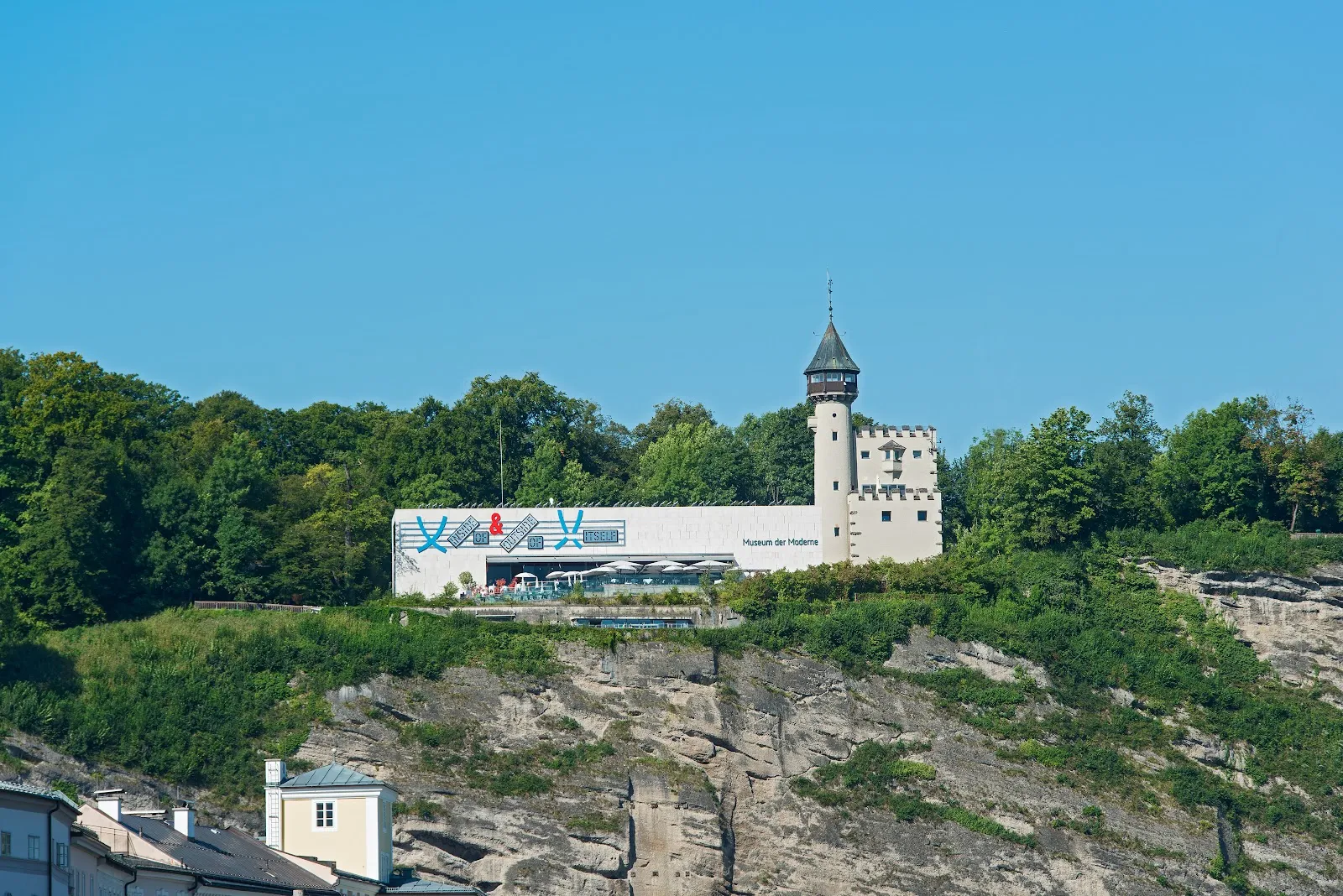
St. Peter’s Abbey is a Benedictine monastery in Salzburg’s Old Town, founded by Saint Rupert in 696. Its church pairs Romanesque origins with a richly decorated Rococo interior, where paintings and altarpieces reward a closer look. Outside, the cemetery’s wrought-iron crosses, family tombs and flower-filled graves sit beneath the Mönchsberg cliff; carved catacombs extend into the rock. The church and cemetery are free to visit, while the catacombs require a ticket. Allow time for both the church and the quiet cemetery paths.
A monastery founded by Saint Rupert
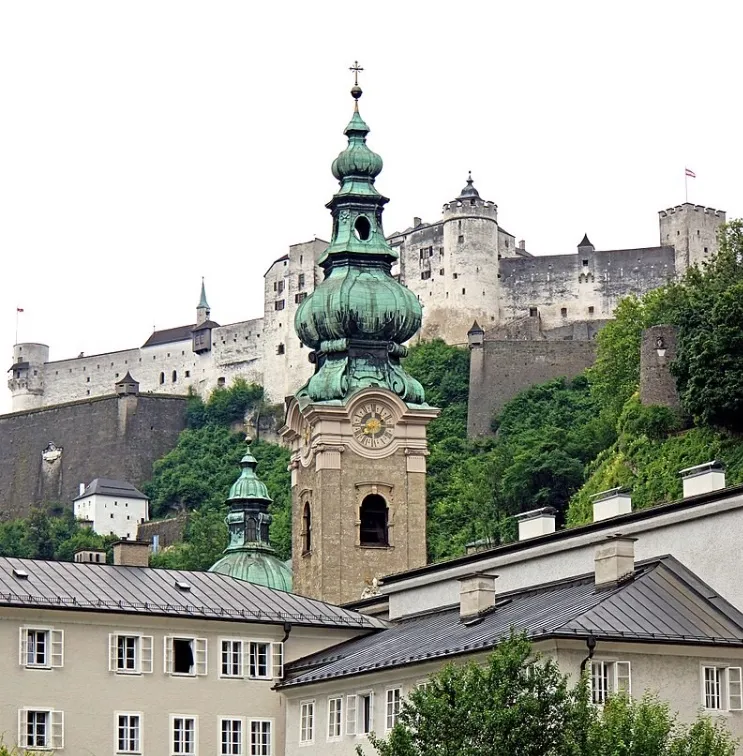
St. Peter’s Abbey, or Stift St. Peter, is a Benedictine monastery in Salzburg’s Old Town. Saint Rupert founded the abbey in 696, and it is considered one of the oldest monastic institutions in the German-speaking world. The site became a centre of Salzburg’s religious life, and the abbey remains active today.
The complex has changed over the centuries. The present church grew from older Romanesque foundations and later gained Baroque additions. Its current Rococo decoration dates to the eighteenth century, giving the interior a very different feel from its early monastic origins.
Inside the abbey church
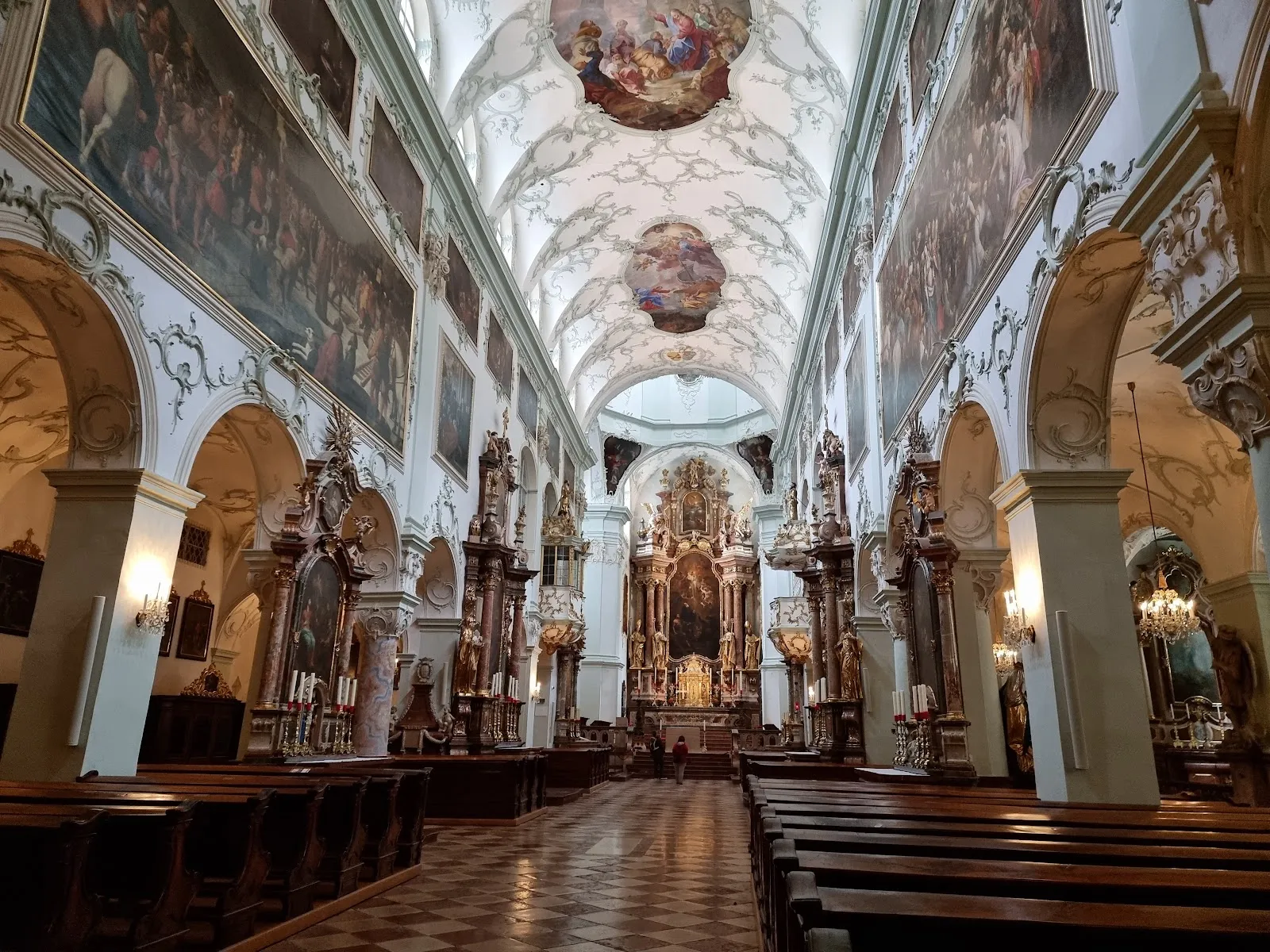
The church’s exterior gives little indication of the detailed interior. Look for the painted decoration and altarpieces, including works by Martin Johann Schmidt. The effect changes with the light: sunlight entering the church can pick out details across the paintings and ornament.
The abbey is a place of worship as well as a historic site. If you enter, dress with care and be considerate of people attending services. Mass and chanting services take place here; the church service is conducted in German.
The cemetery and catacombs
St. Peter’s Cemetery is among Salzburg’s oldest burial grounds. Arcades and family tombs frame the grounds, while wrought-iron crosses mark graves among flowers and weathered stone. The cemetery is the resting place of composer Michael Haydn, opera singer Richard Mayr and Salzburg confectioner Paul Fürst. Mozart’s sister Nannerl is also buried here.
The catacombs are carved into the Mönchsberg cliff beside the cemetery. Their rock-cut spaces offer a closer look at the site’s older history. A ticket is required to enter the catacombs, unlike the cemetery, which is free to walk through.
A quiet walk in the Old Town
The church, cemetery and catacombs sit together at the foot of the Mönchsberg, close to Salzburg Fortress. Take time to walk through the cemetery rather than treating it only as a passage to the church. Its paths and gardens offer a quieter pause in the Old Town.
St. Peter’s cemetery inspired the setting of the graveyard escape in The Sound of Music, but that scene was not filmed here. The abbey is also part of Salzburg’s wider historic centre, where major religious buildings and the Old Town’s narrow streets sit close together.
Preguntas frecuentes
Is St. Peter’s Abbey free to visit?
The church and cemetery are free to visit. You need a ticket for the catacombs.
How long should I spend at St. Peter’s Abbey?
Allow about 1 to 2 hours to see the church, cemetery and catacombs.
Who is buried at St. Peter’s Cemetery?
The cemetery includes the graves of composer Michael Haydn, opera singer Richard Mayr and Salzburg confectioner Paul Fürst. Mozart’s sister Nannerl is also buried there.
Is St. Peter’s Abbey connected to The Sound of Music?
The cemetery inspired the graveyard setting in the film, but the scene was not filmed at St. Peter’s.