Pianifica un viaggio
Lingua: Italiano
Pianificatore di viaggiPianifica il tuo viaggio su una mappa

Le migliori destinazioni

EnglishDeutschFrançaisEspañolPortuguêsPortuguês (BR)Italiano
Avviso di viaggio · ThailandiaAlcuni governi sconsigliano di viaggiare in alcune zone di Thailandia.Gli avvisi riguardano solo queste aree: Fascia di 50 km lungo il confine con la Cambogia, Narathiwat, Pattani, Songkhla meridionale (distretti di Chana, Na Thawi, Thepha e Saba Yoi), Zone di confine con la Cambogia (distanza non specificata), Yala, Fascia di 20 km lungo il confine con la Cambogia.Le indicazioni dipendono dal tuo passaporto. Leggi quelle del tuo governo prima di prenotare.Indicazioni ufficiali
Aree con avvisi
  • Fascia di 50 km lungo il confine con la Cambogia · evitare ogni viaggio · Canada, Francia, Nuova Zelanda
  • Narathiwat · evitare ogni viaggio · Canada, Germania, Spagna, Francia, Irlanda, Italia, Nuova Zelanda, Regno Unito
  • Pattani · evitare ogni viaggio · Canada, Germania, Spagna, Francia, Irlanda, Italia, Nuova Zelanda, Regno Unito
  • Songkhla meridionale (distretti di Chana, Na Thawi, Thepha e Saba Yoi) · evitare ogni viaggio · Canada, Germania, Francia, Irlanda, Italia, Nuova Zelanda, Regno Unito
  • Zone di confine con la Cambogia (distanza non specificata) · evitare ogni viaggio · Spagna, Irlanda, Italia
  • Yala · evitare ogni viaggio · Canada, Germania, Spagna, Francia, Irlanda, Italia, Nuova Zelanda, Regno Unito
  • Fascia di 20 km lungo il confine con la Cambogia · evitare i viaggi non essenziali · Germania, Regno Unito

Segnalata anche da un solo governo: Zone di confine di Buriram (Spagna), A est delle strade 408 e 4113, compresa Sakom (Canada), Città di Hat Yai (Canada), Zone di confine di Sisaket (Spagna), Zone di confine di Surin (Spagna), Confine con il Myanmar (eccetto Mae Sot) (Francia), Zone di confine di Ubon Ratchathani (Spagna), Linea ferroviaria Hat Yai–Padang Besar (Regno Unito), Confine con il Myanmar: province di Mae Hong Son e Tak (Italia), Confine con il Myanmar: province di Tak e Chiang Mai (Spagna), Phatthalung (Francia), Area del tempio di Preah Vihear (Sisaket) (Italia), Satun (Francia)

GovernoConsigliAggiornatoLeggi le indicazioni
Regno Unito (FCDO)No advice against the whole country (regional advisories)–Leggi le indicazioni
Stati Uniti (Dipartimento di Stato)Exercise normal precautions7 lug 2026Leggi le indicazioni
Canada (Affari globali)Exercise a high degree of caution (regional advisories)–Leggi le indicazioni
Germania (Auswärtiges Amt)No advice against the whole country; partial warnings for border and southern areas (regional advisories)26 ott 2026Leggi le indicazioni
Nuova Zelanda (SafeTravel)Exercise increased caution (regional advisories)–Leggi le indicazioni
Irlanda (Dipartimento per gli Affari esteri)Normal Precautions (regional advisories)–Leggi le indicazioni
Francia (Ministero per l'Europa e gli Affari esteri)Increased vigilance across the country (regional advisories)–Leggi le indicazioni

Verificato ogni giorno dalle indicazioni pubblicate dai governi; ultima verifica 3 nov 2026.RoamLedger riassume le indicazioni ufficiali; non è un consiglio di alcun governo.

Wat Lok Moli
Tempio

Wat Lok Moli

Just beyond the northern side of Chiang Mai’s Old City, Wat Lok Moli is an active Buddhist temple with a striking teak prayer hall and a large brick chedi.

Just beyond the northern side of Chiang Mai’s Old City, Wat Lok Moli is an active Buddhist temple with a striking teak prayer hall and a large brick chedi. Its Lanna-style woodwork, Buddha images and painted details reward a slow walk around the grounds. The temple is recorded in a charter from 1367, though its exact founding date is unknown. Come during the day to examine the architecture, or return in the evening to see the grounds lit and join in a wish-writing or water-blessing ritual.

A temple recorded in the 14th century
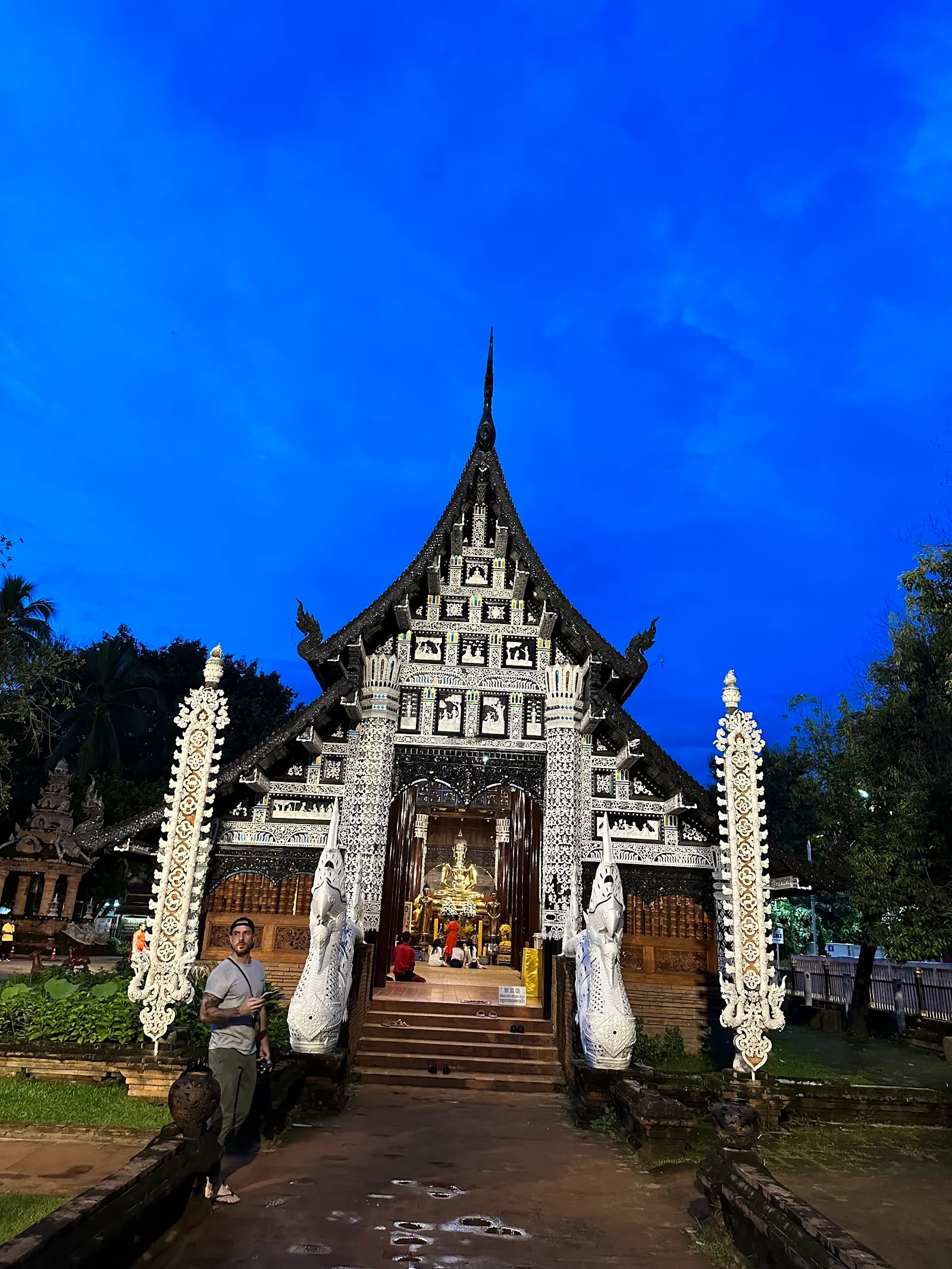
Wat Lok Moli
Wat Lok Moli

Wat Lok Moli’s beginnings are uncertain. The temple is mentioned in a charter from 1367, but that record does not establish when it was first built. Its history is linked to the Mengrai royal family, and the complex is associated with the ashes of members of that dynasty.

The temple stands just outside the northern wall of Chiang Mai’s Old City, near the moat. Its position makes it easy to combine with a walk around the north side of the Old City. The grounds feel removed from the nearby main road once you step inside.

The teak hall and brick chedi
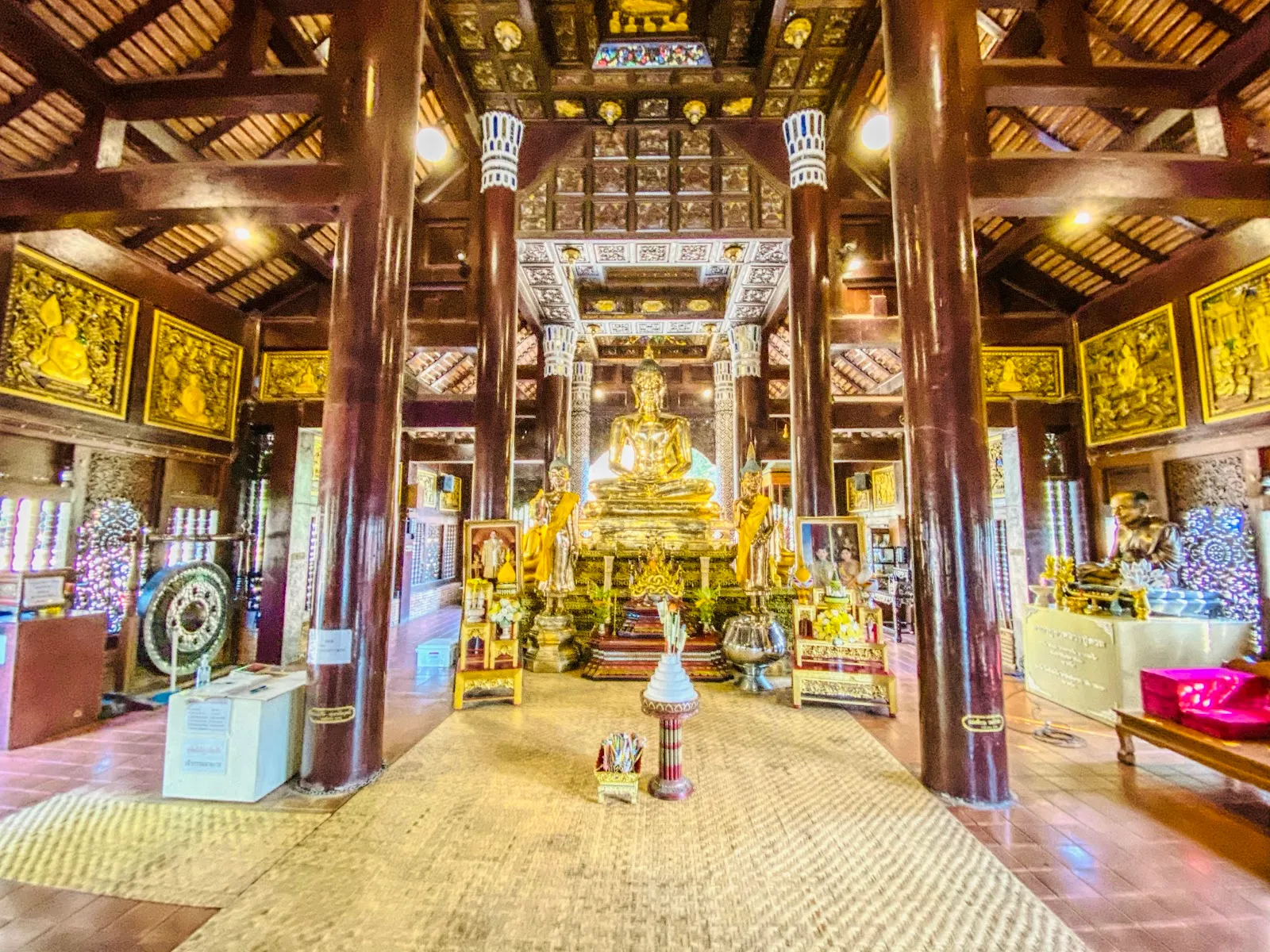
Wat Lok Moli
Wat Lok Moli

The main prayer hall, or viharn, is a wooden structure in the Lanna style. Dark carved teak and layered rooflines give it a different character from the gilded temple buildings found elsewhere in Chiang Mai. At the entrance, guardian figures frame the approach; inside, Buddha images and decorative details draw the eye toward the sacred space.

Behind the hall, the large brick chedi is one of the complex’s most prominent structures. Its mostly bare surface and empty niches contrast with the fine carving on the wooden hall. The temple’s layout also stands out: its main axis runs north to south, unlike the east-facing orientation common among Buddhist temples. The present viharn was built in 2003, while the chedi is associated with the temple’s older history.

Rituals and respectful visiting

Wat Lok Moli remains a place of worship, not only a stop to see historic buildings. People come to pray and make offerings of flowers. Visitors can write a wish and hang it at the temple, or use the rope system to raise a bamboo container of holy water to the top of the chedi, where the water pours over the sacred structure.

Colored paper lamps at the temple provide another way to make an offering or prayer. In the evening, the lights lend the grounds a different appearance from the daylight view. Give people space as they pray, dress modestly and take off your shoes before entering the halls. A short visit is enough to see the main buildings, though taking time to notice the carvings and rituals makes the stop more rewarding.

FAQ

Where is Wat Lok Moli?

It is just outside the northern side of Chiang Mai’s Old City, near the moat.

How long should I spend at Wat Lok Moli?

Allow around 20 to 40 minutes to walk around the complex and see its main buildings.

Is there an entry fee?

The available information describes entry as free.

What can you do at Wat Lok Moli?

You can explore the prayer hall and chedi, write a wish to hang at the temple, or take part in the water-blessing ritual.


Altre attrazioni imperdibili a Provincia di Chiang Mai

Esplora tutto