Planeje uma viagem
Idioma: Português (BR)
Planejador de viagensPlaneje sua viagem em um mapa

Principais destinos

EnglishDeutschFrançaisEspañolPortuguêsPortuguês (BR)Italiano
Alerta de viagem · TailândiaAlguns governos recomendam evitar viagens a partes de Tailândia.Os alertas cobrem apenas estas áreas: Faixa de 50 km ao longo da fronteira com o Camboja, Narathiwat, Pattani, Sul de Songkhla (distritos de Chana, Na Thawi, Thepha e Saba Yoi), Zonas de fronteira com o Camboja (distância não especificada), Yala, Faixa de 20 km ao longo da fronteira com o Camboja.As recomendações dependem do seu passaporte. Leia a recomendação do governo do seu país antes de reservar.Recomendação oficial
Áreas com alertas
  • Faixa de 50 km ao longo da fronteira com o Camboja · evitar todas as viagens · Canadá, França, Nova Zelândia
  • Narathiwat · evitar todas as viagens · Canadá, Alemanha, Espanha, França, Irlanda, Itália, Nova Zelândia, Reino Unido
  • Pattani · evitar todas as viagens · Canadá, Alemanha, Espanha, França, Irlanda, Itália, Nova Zelândia, Reino Unido
  • Sul de Songkhla (distritos de Chana, Na Thawi, Thepha e Saba Yoi) · evitar todas as viagens · Canadá, Alemanha, França, Irlanda, Itália, Nova Zelândia, Reino Unido
  • Zonas de fronteira com o Camboja (distância não especificada) · evitar todas as viagens · Espanha, Irlanda, Itália
  • Yala · evitar todas as viagens · Canadá, Alemanha, Espanha, França, Irlanda, Itália, Nova Zelândia, Reino Unido
  • Faixa de 20 km ao longo da fronteira com o Camboja · evitar viagens não essenciais · Alemanha, Reino Unido

Também indicado por um governo: Áreas de fronteira de Buriram (Espanha), A leste das rodovias 408 e 4113, incluindo Sakom (Canadá), Cidade de Hat Yai (Canadá), Áreas de fronteira de Sisaket (Espanha), Áreas de fronteira de Surin (Espanha), Fronteira com Myanmar (exceto Mae Sot) (França), Áreas de fronteira de Ubon Ratchathani (Espanha), Linha ferroviária Hat Yai–Padang Besar (Reino Unido), Fronteira com Myanmar: províncias de Mae Hong Son e Tak (Itália), Fronteira com Myanmar: províncias de Tak e Chiang Mai (Espanha), Phatthalung (França), Área do Templo de Preah Vihear (Sisaket) (Itália), Satun (França)

GovernoRecomendaçõesAtualizadoLeia a recomendação
Reino Unido (FCDO)No advice against the whole country (regional advisories)–Leia a recomendação
Estados Unidos (Departamento de Estado)Exercise normal precautions7 de jul. de 2026Leia a recomendação
Canadá (Global Affairs)Exercise a high degree of caution (regional advisories)–Leia a recomendação
Alemanha (Auswärtiges Amt)No advice against the whole country; partial warnings for border and southern areas (regional advisories)26 de out. de 2026Leia a recomendação
Nova Zelândia (SafeTravel)Exercise increased caution (regional advisories)–Leia a recomendação
Irlanda (Departamento de Relações Exteriores)Normal Precautions (regional advisories)–Leia a recomendação
França (Ministério da Europa e Relações Exteriores)Increased vigilance across the country (regional advisories)–Leia a recomendação

Verificado diariamente com base nas recomendações publicadas pelos governos; última verificação em 3 de nov. de 2026.RoamLedger resume recomendações oficiais; não são recomendações de nenhum governo.

Wat Lok Moli
Templo

Wat Lok Moli

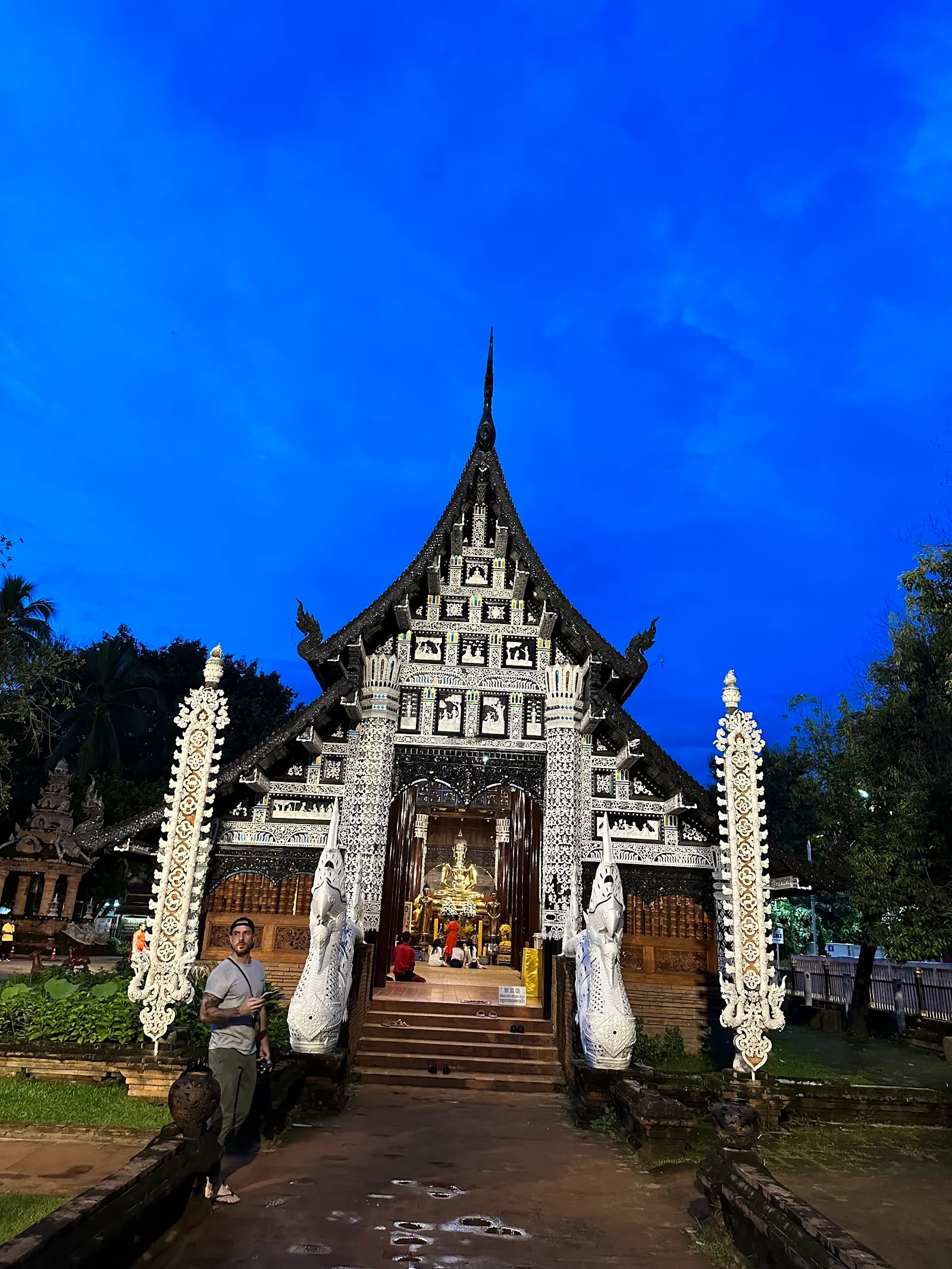
Just beyond the northern side of Chiang Mai’s Old City, Wat Lok Moli is an active Buddhist temple with a striking teak prayer hall and a large brick chedi.

Just beyond the northern side of Chiang Mai’s Old City, Wat Lok Moli is an active Buddhist temple with a striking teak prayer hall and a large brick chedi. Its Lanna-style woodwork, Buddha images and painted details reward a slow walk around the grounds. The temple is recorded in a charter from 1367, though its exact founding date is unknown. Come during the day to examine the architecture, or return in the evening to see the grounds lit and join in a wish-writing or water-blessing ritual.

A temple recorded in the 14th century
Wat Lok Moli
Wat Lok Moli

Wat Lok Moli’s beginnings are uncertain. The temple is mentioned in a charter from 1367, but that record does not establish when it was first built. Its history is linked to the Mengrai royal family, and the complex is associated with the ashes of members of that dynasty.

The temple stands just outside the northern wall of Chiang Mai’s Old City, near the moat. Its position makes it easy to combine with a walk around the north side of the Old City. The grounds feel removed from the nearby main road once you step inside.

The teak hall and brick chedi
Wat Lok Moli
Wat Lok Moli

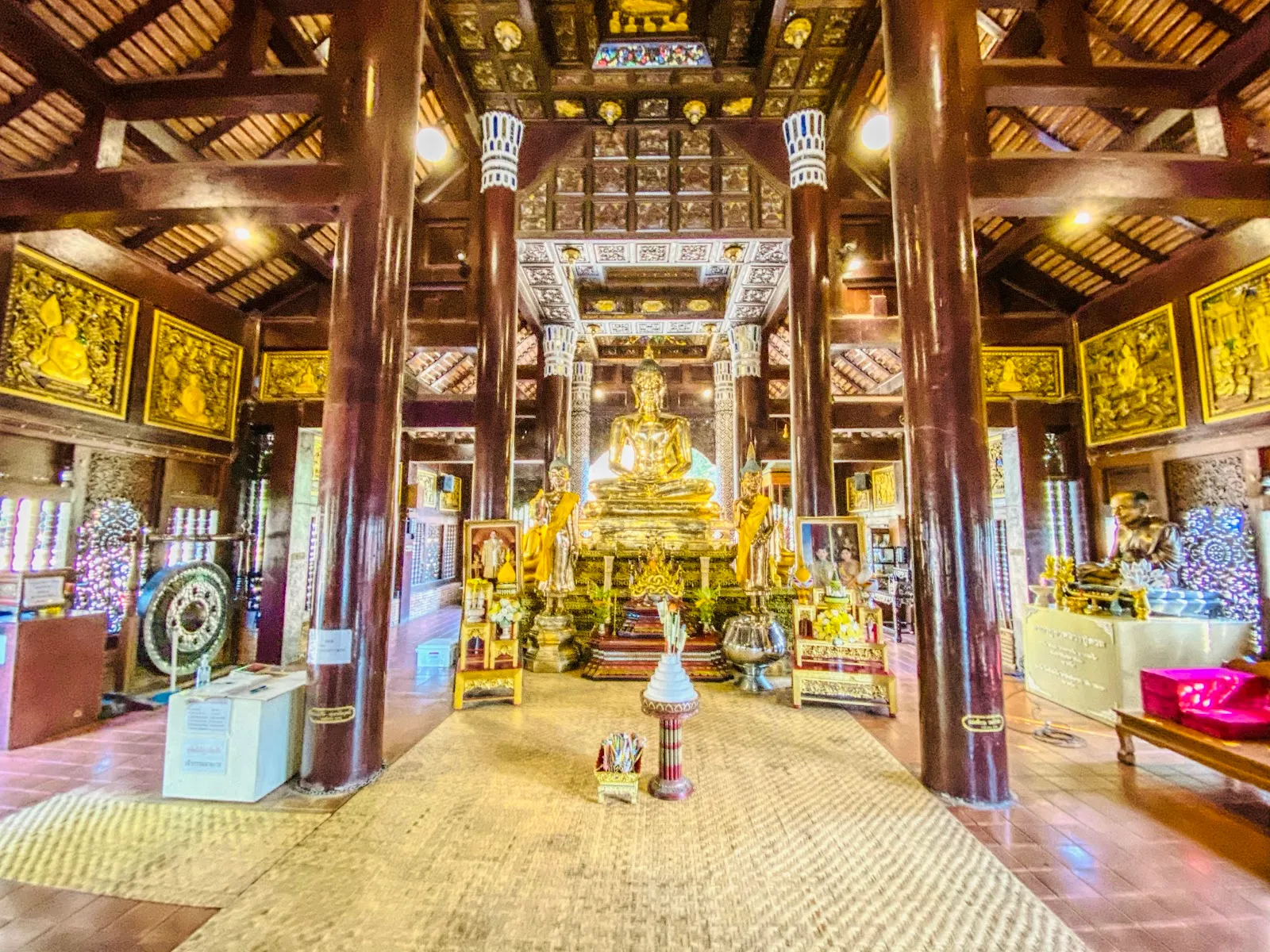
The main prayer hall, or viharn, is a wooden structure in the Lanna style. Dark carved teak and layered rooflines give it a different character from the gilded temple buildings found elsewhere in Chiang Mai. At the entrance, guardian figures frame the approach; inside, Buddha images and decorative details draw the eye toward the sacred space.

Behind the hall, the large brick chedi is one of the complex’s most prominent structures. Its mostly bare surface and empty niches contrast with the fine carving on the wooden hall. The temple’s layout also stands out: its main axis runs north to south, unlike the east-facing orientation common among Buddhist temples. The present viharn was built in 2003, while the chedi is associated with the temple’s older history.

Rituals and respectful visiting

Wat Lok Moli remains a place of worship, not only a stop to see historic buildings. People come to pray and make offerings of flowers. Visitors can write a wish and hang it at the temple, or use the rope system to raise a bamboo container of holy water to the top of the chedi, where the water pours over the sacred structure.

Colored paper lamps at the temple provide another way to make an offering or prayer. In the evening, the lights lend the grounds a different appearance from the daylight view. Give people space as they pray, dress modestly and take off your shoes before entering the halls. A short visit is enough to see the main buildings, though taking time to notice the carvings and rituals makes the stop more rewarding.

Perguntas frequentes

Where is Wat Lok Moli?

It is just outside the northern side of Chiang Mai’s Old City, near the moat.

How long should I spend at Wat Lok Moli?

Allow around 20 to 40 minutes to walk around the complex and see its main buildings.

Is there an entry fee?

The available information describes entry as free.

What can you do at Wat Lok Moli?

You can explore the prayer hall and chedi, write a wish to hang at the temple, or take part in the water-blessing ritual.


Mais atrações imperdíveis em Província de Chiang Mai

Explorar tudo