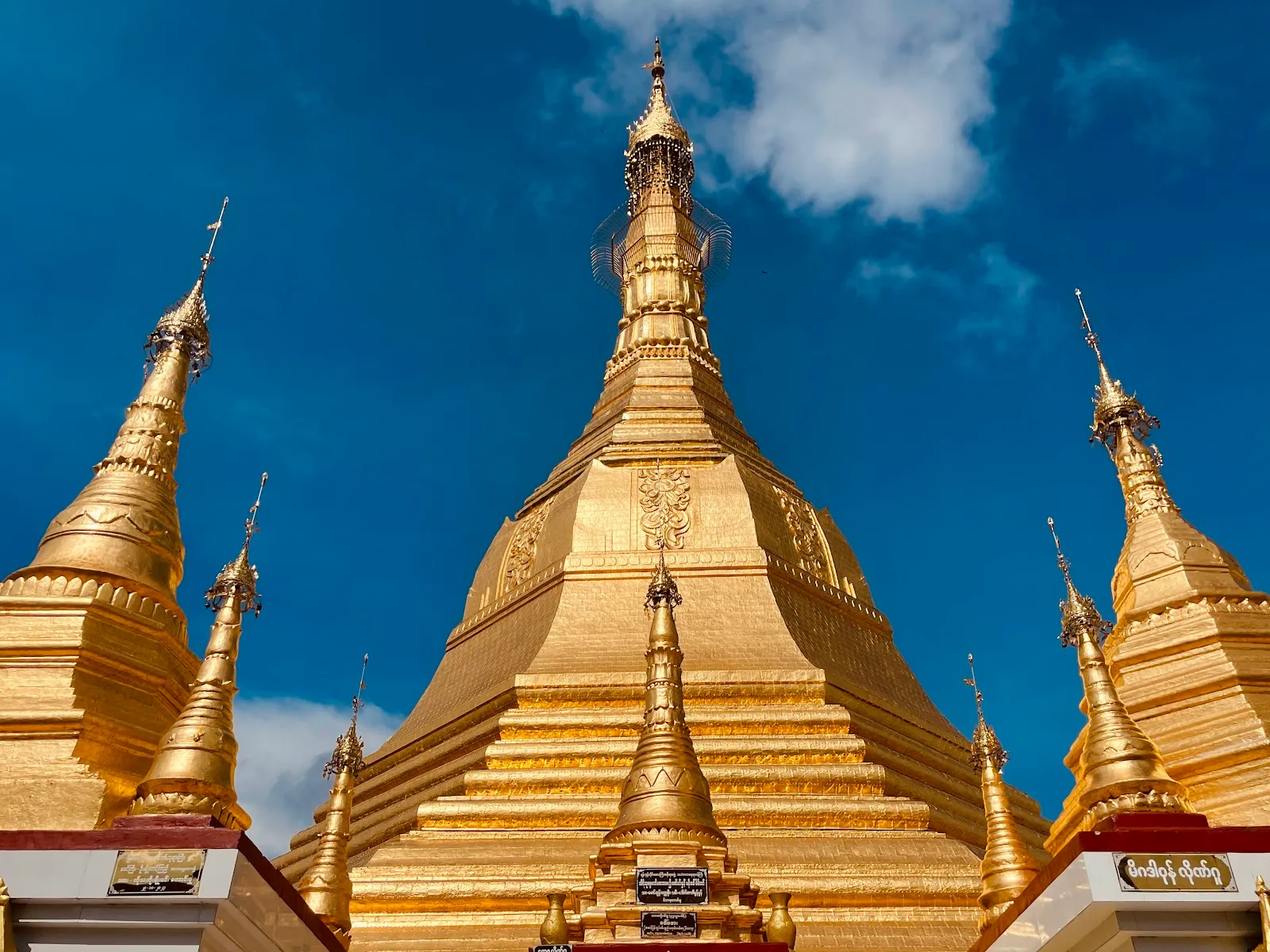
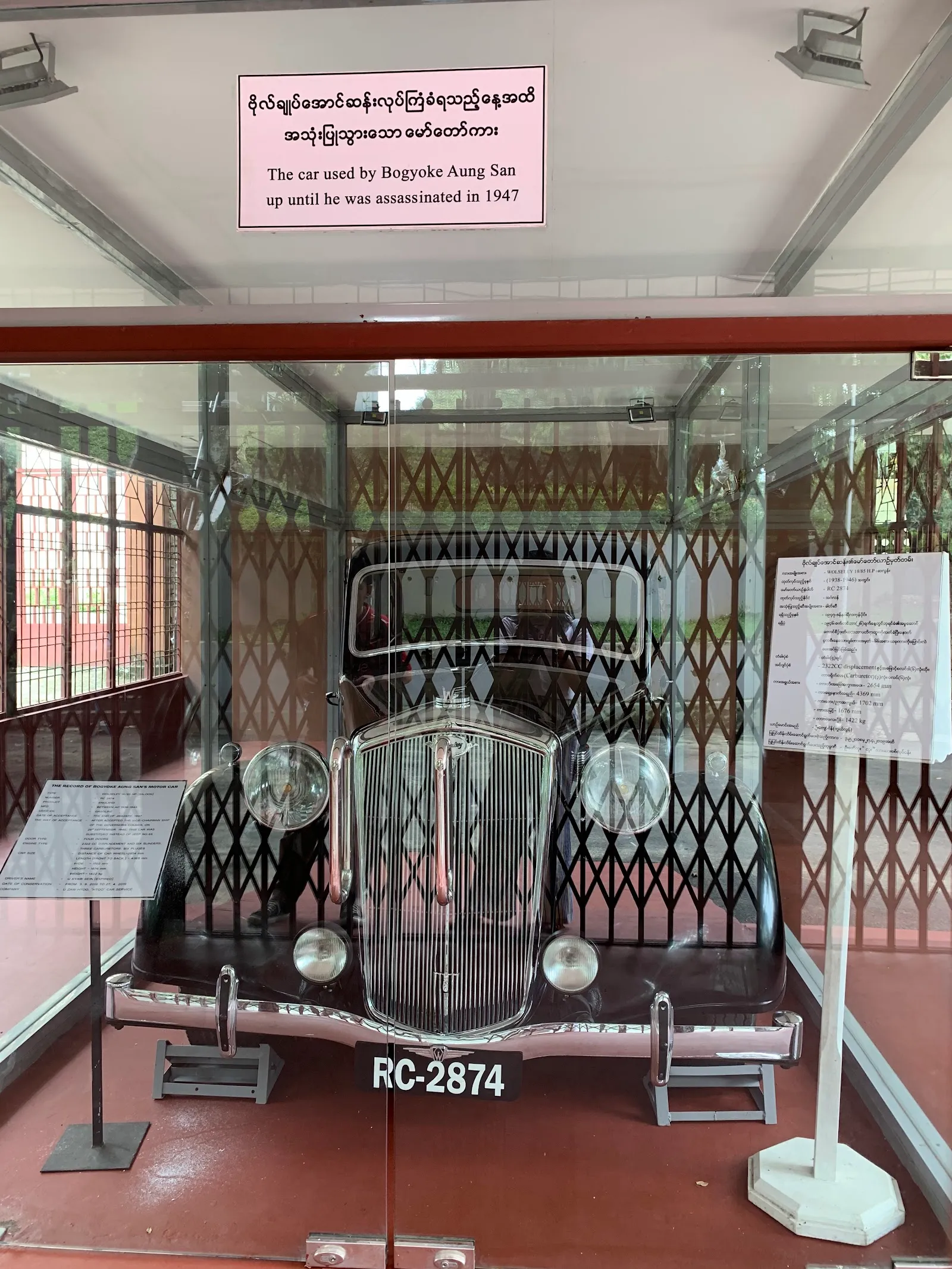
Shwedagon Pagoda rises above Yangon from Singuttara Hill, its central stupa covered in gold and visible across much of the city. Myanmar’s most sacred Buddhist site is an active place of worship, with prayer halls, shrines, smaller pagodas and Buddha images spread across its broad terrace. Walk barefoot around the complex, taking time to notice its varied details and the local rhythm of prayer and offerings. Near sunset, the gold shifts in colour, then the stupa glows under evening lights.
The golden stupa and its setting
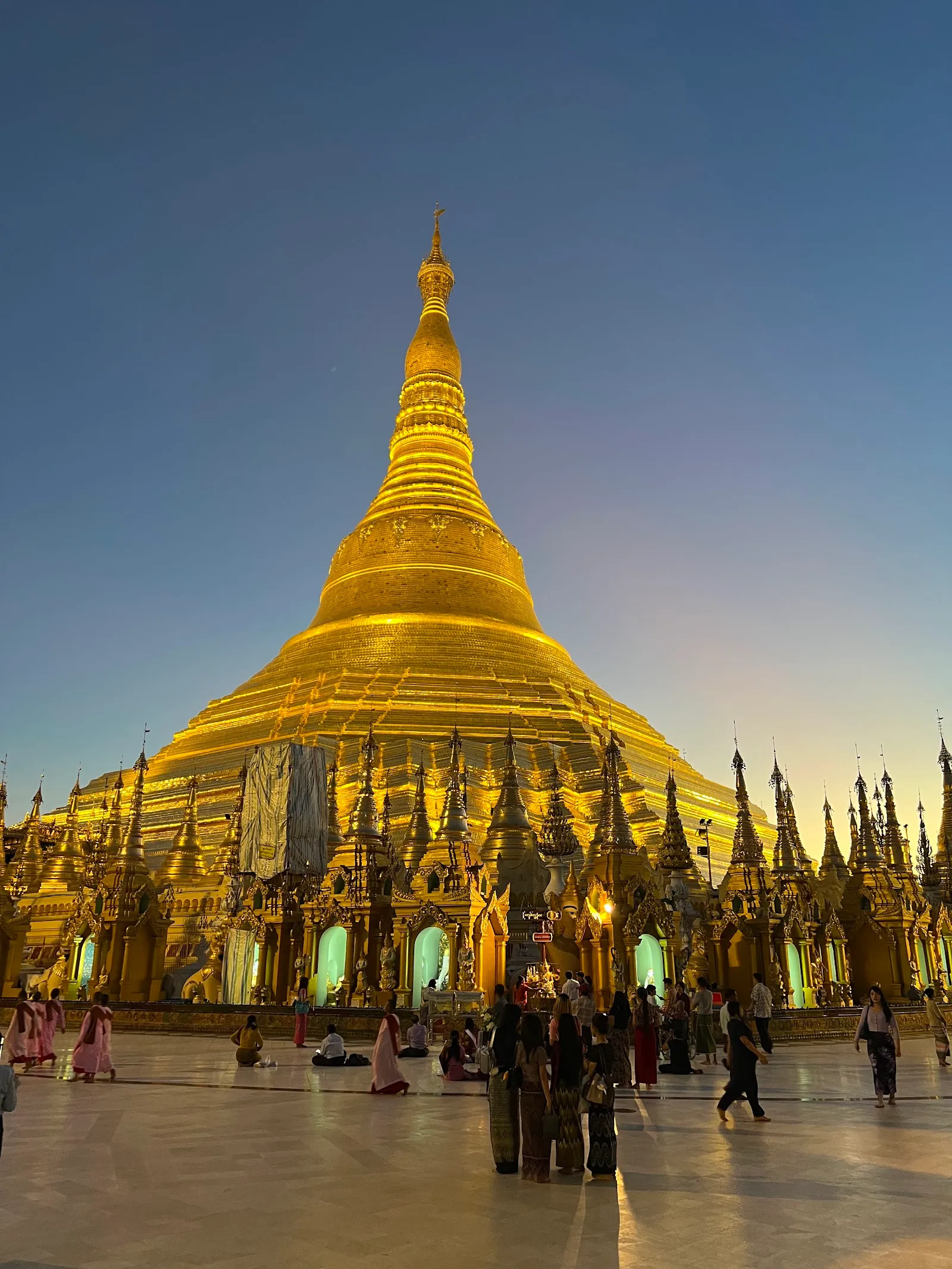
Shwedagon Pagoda stands on Singuttara Hill and rises above Yangon’s cityscape. Its central stupa is about 99 metres tall, covered with gold plates and crowned with precious stones. The stupa is a solid structure, not a building with rooms visitors can enter. Its importance lies in its role as a Buddhist shrine and in the relics it is believed to enshrine.
Buddhist tradition holds that the stupa contains eight hairs of Gautama Buddha, along with relics associated with three earlier Buddhas. The pagoda’s origins are told differently in legend and historical accounts: local tradition places its beginnings more than 2,500 years ago, while accounts of its construction and development vary. It has been rebuilt and repaired over time.
The terrace and its shrines
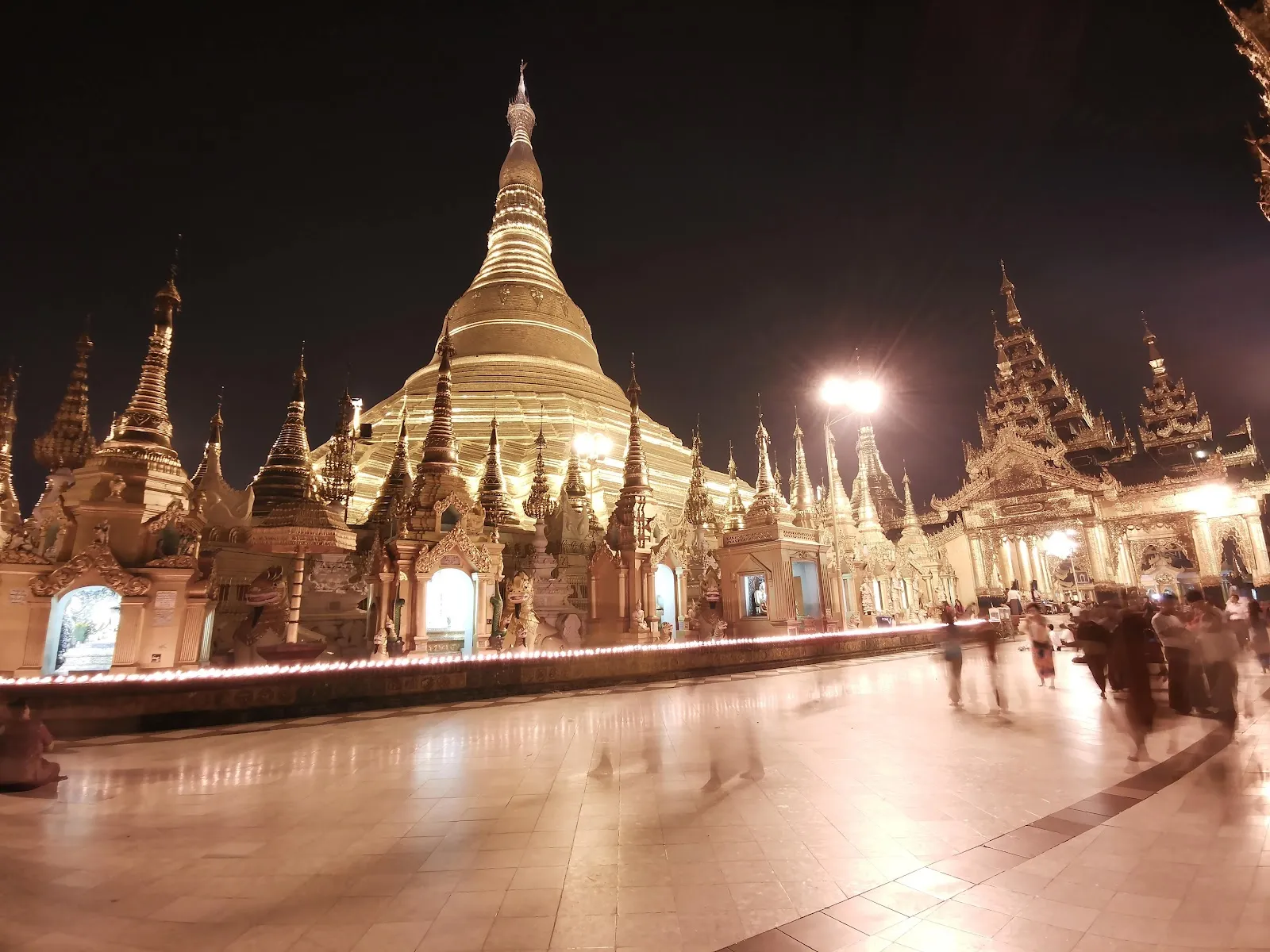
The main stupa sits within a large marble-paved terrace, where worshippers and visitors move among prayer halls, smaller stupas, shrines and Buddha images. The complex is an active religious site, not simply a viewpoint. People come to pray and make offerings, and monks walk through the grounds. Take time to look closely at the architectural details and the different personal shrines around the central monument.
The four main stair entrances approach the terrace from different directions. Once inside, visitors walk barefoot. A counter-clockwise circuit around the central stupa is noted as a local practice; move with care and leave space for people who are praying. The scale of the complex makes a slow visit more rewarding than a quick look at the main structure alone.
Choosing when to visit
The pagoda has a different character through the day. Early morning brings softer light and a quieter, prayerful atmosphere. In strong midday sun, the gold shines brightly. Arriving in late afternoon lets you see the terrace in daylight, watch the stupa take on warmer sunset colours, then stay as it is lit after dark.
Dress with the setting in mind. Long trousers that cover the knees can help avoid needing a longyi at the entrance; shorts may not be accepted. The reported entrance fee is around 25,000 kyat, but fees can change, so confirm the current amount before you go. If someone approaches inside the complex offering an explanation, agree on any fee in advance rather than assuming the help is free.
FAQ
How long do you need at Shwedagon Pagoda?
Allow around 2 to 3 hours to walk the terrace and explore the shrines. Arrive in late afternoon if you want to see the stupa in daylight, at sunset and after dark.
What should I wear to Shwedagon Pagoda?
Wear long trousers or other clothing that covers your knees. Shorts may mean you need to hire or buy a longyi at the entrance.
Do you have to take your shoes off at Shwedagon Pagoda?
Yes. Visitors walk barefoot on the sacred grounds.
How much is the entrance fee?
The reported fee is around 25,000 kyat. Confirm the current amount before visiting, since fees can change.