Pianifica un viaggio
Lingua: Italiano
Pianificatore di viaggiPianifica il tuo viaggio su una mappa

Le migliori destinazioni

EnglishDeutschFrançaisEspañolPortuguêsPortuguês (BR)Italiano
Avviso di viaggio · KenyaNairobi si trova in o vicino a un'area per cui i governi sconsigliano ogni viaggio non essenziale: Eastleigh (Nairobi), Kibera (Nairobi), Mathare (Nairobi), Pangani (Nairobi).Le indicazioni dipendono dal tuo passaporto. Leggi quelle del tuo governo prima di prenotare.Indicazioni ufficiali
Aree con avvisi
  • Confine con l'Etiopia · evitare ogni viaggio · Spagna, Francia, Nuova Zelanda
  • Confine con il Sud Sudan · evitare ogni viaggio · Spagna, Francia, Nuova Zelanda
  • Zone costiere a nord di Malindi · evitare ogni viaggio · Canada, Francia, Nuova Zelanda, Stati Uniti
  • Contea di Garissa · evitare ogni viaggio · Canada, Germania, Spagna, Italia, Nuova Zelanda, Stati Uniti
  • Contea di Lamu · evitare ogni viaggio · Spagna, Nuova Zelanda, Stati Uniti
  • Contea di Lamu, esclusi l'isola di Lamu e l'isola di Manda · evitare ogni viaggio · Canada, Germania, Francia, Regno Unito
  • Contea di Mandera · evitare ogni viaggio · Canada, Germania, Spagna, Italia, Nuova Zelanda, Regno Unito, Stati Uniti
  • Contea di Tana River, esclusi il Parco nazionale di Tsavo · evitare ogni viaggio · Italia, Stati Uniti
  • Contea di Wajir · evitare ogni viaggio · Canada, Germania, Spagna, Italia, Nuova Zelanda, Stati Uniti
  • Contea di Baringo · evitare i viaggi non essenziali · Germania, Italia
  • Costa tra il fiume Tana e il fiume Galana · evitare i viaggi non essenziali · Spagna, Regno Unito
  • Zone costiere della contea di Tana River · evitare i viaggi non essenziali · Canada, Nuova Zelanda
  • Eastleigh (Nairobi) · evitare i viaggi non essenziali · Spagna, Francia, Italia, Nuova Zelanda, Stati Uniti
  • Kibera (Nairobi) · evitare i viaggi non essenziali · Canada, Spagna, Francia, Nuova Zelanda, Stati Uniti
  • Mathare (Nairobi) · evitare i viaggi non essenziali · Spagna, Francia
  • Nord della contea di Tana River · evitare i viaggi non essenziali · Germania, Regno Unito
  • Pangani (Nairobi) · evitare i viaggi non essenziali · Francia, Italia
  • Contea di Turkana · evitare i viaggi non essenziali · Germania, Spagna
  • Contea di West Pokot · evitare i viaggi non essenziali · Germania, Italia, Stati Uniti

Segnalata anche da un solo governo: Aree al confine con la Somalia (Nuova Zelanda), Contea di Garissa, esclusi la città di Garissa, Lagdera e parti di Balambala (Regno Unito), Contea di Kilifi a nord della strada C103 (Stati Uniti), Zona marittima fino a 72° E e 15° S (Francia), Contea di Marsabit entro 110 km dai confini con il Sud Sudan e l'Etiopia (Canada), Contea di Marsabit entro 50 km dal confine con l'Etiopia (Stati Uniti), Fascia di confine con la Somalia, fino a 100 km all'interno del Kenya (Francia), Collegi elettorali di Tarbaj e Wajir East (Regno Unito), Contea di Turkana entro 110 km dai confini con il Sud Sudan e l'Etiopia (Canada), Contea di Turkana entro 50 km dal confine con l'Etiopia (Stati Uniti), Contea di Wajir entro 60 km dal confine con la Somalia (Regno Unito), Turkana occidentale (Stati Uniti), Regioni aride e remote del Kenya settentrionale (Italia), Sottocontee di Mukutani, Muchongoi, Bartabwa, Tiaty East e Tiaty West (Spagna), Contea di Elgeyo Marakwet (Italia), Sottocontee di Marakwet East e Marakwet West (Elgeyo Marakwet) (Spagna), Garissa (Regno Unito), Contea di Laikipia (Italia), Sottocontee di Olmoran, Ng'arua e Mukogodo (Laikipia) (Spagna), Isola di Lamu (Germania), Isola di Manda (Germania), Contea di Marsabit (Spagna), Mombasa (Italia), Zone periferiche della contea di Isiolo (Francia), Zone periferiche della contea di Turkana (Francia), Zone periferiche della contea di West Pokot (Francia), Regioni periferiche della contea di Marsabit (Francia), Itinerari terrestri tra Lamu e Malindi (Italia), Contea di Samburu: aree di Loroki e Kirisia (Spagna), Sottocontee di Turkana Sud, Turkana Est e Loima (Spagna), A ovest della contea di Garissa (Francia), A ovest della contea di Mandera (Francia), A ovest della contea di Wajir (Francia), Sottocontee di Pokot North e Sigor (West Pokot) (Spagna), Entro 75 km dal confine Kenya-Somalia (Irlanda)

GovernoConsigliAggiornatoLeggi le indicazioni
Regno Unito (FCDO)No advice against the whole country (regional advisories)–Leggi le indicazioni
Stati Uniti (Dipartimento di Stato)Reconsider travel19 ott 2026Leggi le indicazioni
Canada (Affari globali)Exercise a high degree of caution (regional advisories)–Leggi le indicazioni
Germania (Auswärtiges Amt)Increased caution nationwide; partial travel warnings for specific areas (regional advisories)19 ott 2026Leggi le indicazioni
Nuova Zelanda (SafeTravel)Exercise increased caution (regional advisories)–Leggi le indicazioni
Irlanda (Dipartimento per gli Affari esteri)High Degree of Caution (regional advisories)–Leggi le indicazioni
Francia (Ministero per l'Europa e gli Affari esteri)Vigilance renforcée (reste du territoire) (regional advisories)–Leggi le indicazioni

Verificato ogni giorno dalle indicazioni pubblicate dai governi; ultima verifica 2 nov 2026.RoamLedger riassume le indicazioni ufficiali; non è un consiglio di alcun governo.

a herd of zebra standing on top of a lush green field
Parco

Nairobi National Park

Nairobi National Park is a wildlife park on the southern side of Kenya's capital, about 7 km from the city centre.

Nairobi National Park is a wildlife park on the southern side of Kenya's capital, about 7 km from the city centre. It covers 117 square kilometres of open grassland, acacia bush and woodland, and it is Kenya's first national park, opened in 1946. Lions, giraffes, zebras, black rhinos and hippos live here, and more than 400 bird species have been recorded. The rhino sanctuary and the orphan care run by the David Sheldrick Wildlife Trust are the main draws. Plan a game drive early in the day.

Where the park is and how big it is
Nairobi National Park

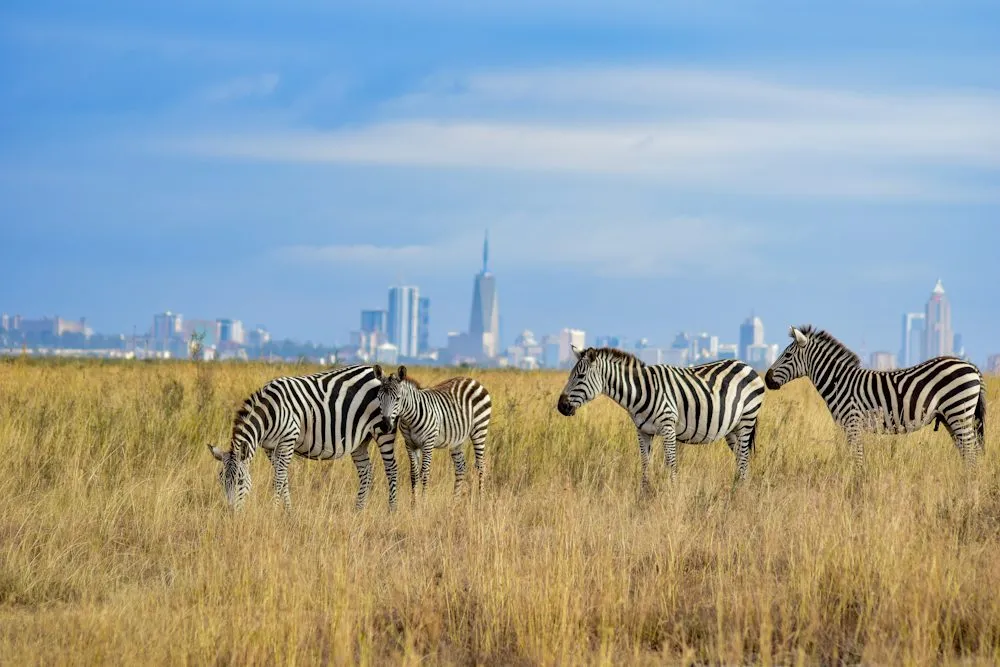
Nairobi National Park lies along Langata Road, about 7 km from the city centre, on the southern side of the capital. It covers 117 square kilometres. Its northern edges run alongside some of Nairobi's busiest roads, and the runway of Jomo Kenyatta International Airport is less than five kilometres from the fence, so planes coming in to land can be seen above the plains.

An electrified fence separates the wildlife from the city. Inside, the land is a mix of open grass plains, valleys, acacia bush and woodland where several rivers meet.

A park with a long history
Nairobi National Park

Opened in 1946, Nairobi National Park was the first national park in Kenya. It was set aside to protect wildlife from hunters and poachers, a job that still shapes how the park is run.

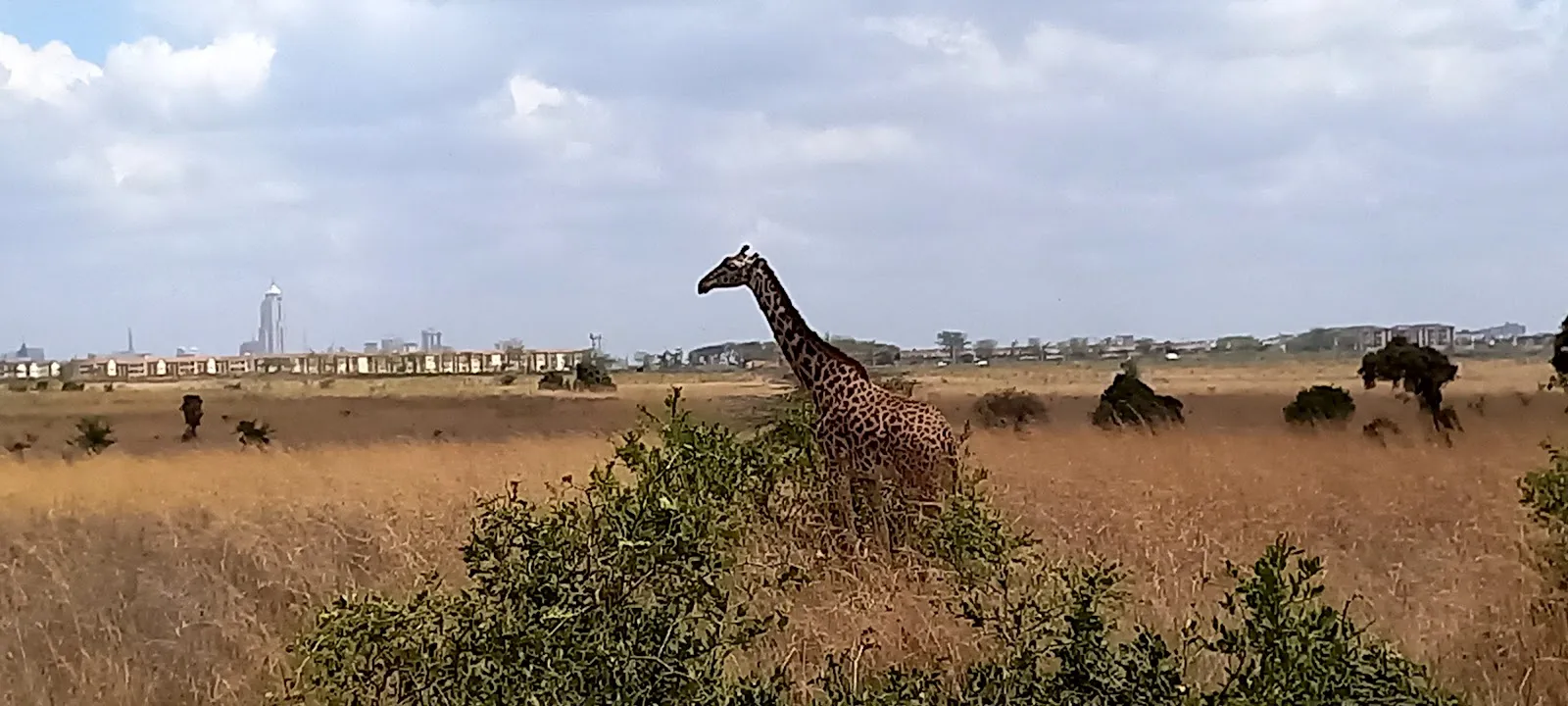
The city has grown up around the park. Housing, schools and busy roads now line parts of its edge, yet the animals have persisted on land their ancestors used for generations.

Wildlife on the plains and in the woodland

Lions, leopards, cheetahs, hyenas, buffalo, giraffes, zebras, wildebeest, eland, gazelles, warthogs, hippos and baboons all live in the park. Around 100 mammal species and more than 400 bird species have been recorded here. Among the birds are ostriches, martial eagles, secretary birds and grey crowned cranes.

Sightings are never certain. Some animals are harder to find on a given day, and lions and rhinos do not always appear on a drive. Early starts give you the best odds.

The rhino sanctuary and the 1989 tusk burning

The park has a rhino sanctuary that protects more than 50 rhinos. The black rhino is critically endangered, and the sanctuary is one of the places in Kenya where it is protected.

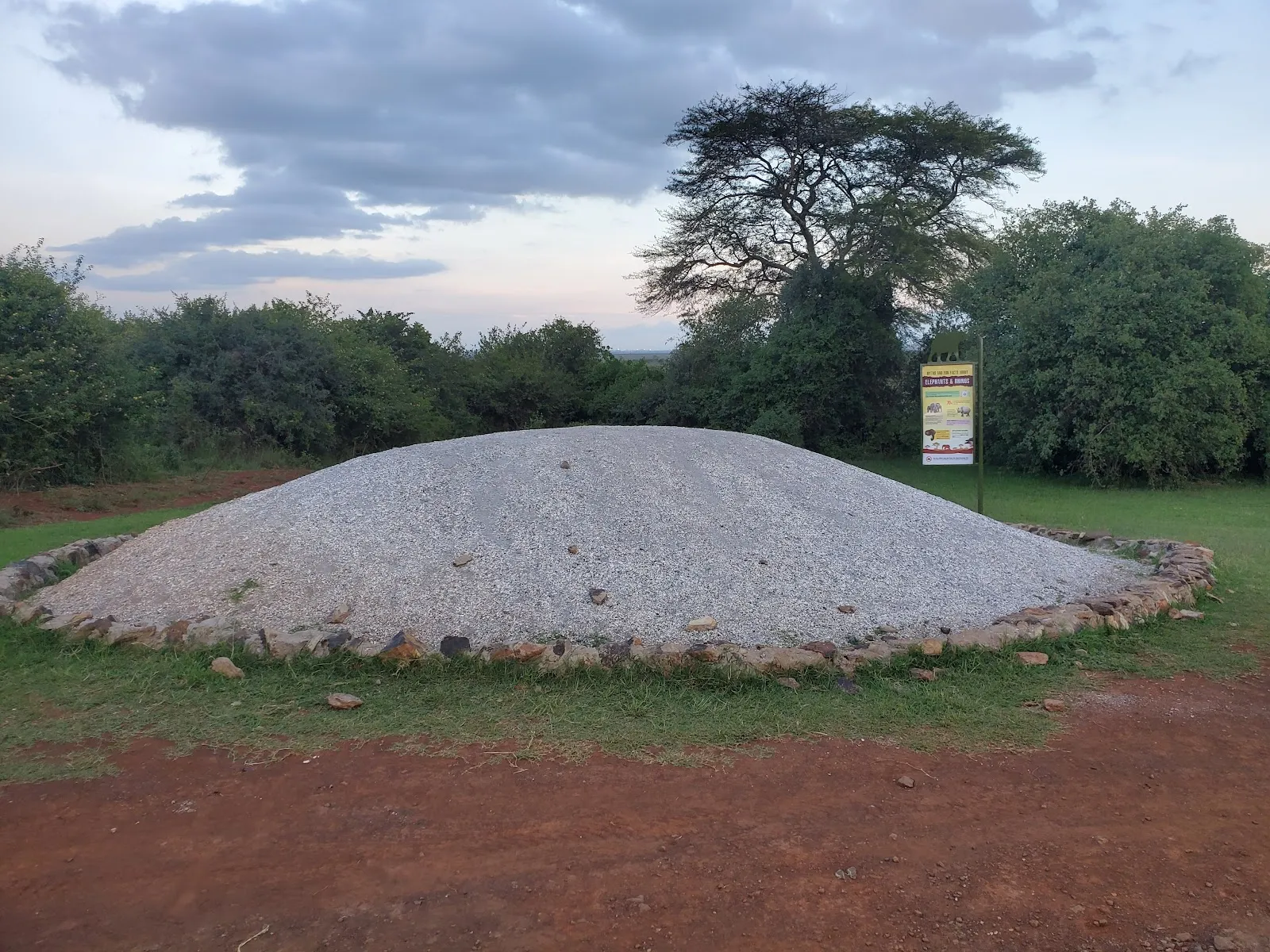
In 1989, President Moi set fire to 12 tons of elephant and rhino tusks to fight poaching and to strengthen Kenya's standing in conservation. A monument marks the ivory burning site inside the park, and visitors can stop there to read about the event.

Orphaned elephants and rhinos at the Sheldrick Trust

The David Sheldrick Wildlife Trust runs an orphanage inside the park. Keepers raise orphaned baby elephants and rhinos, many of which arrive orphaned because of poaching or other human activity.

Visitors can watch the daily feeding sessions and the mud baths. Animals that are rehabilitated here are moved to Tsavo East National Park, where they are released into the wild.

How a visit works

Visitors can take game drives, walk on safari, or stop for a picnic. The park also has walking trails, including one that runs to the hippo pools, hiking trails and three campsites.

The park opens early and closes in the evening. If you are visiting between flights, a driver can take you in from the city and bring you back, which keeps the trip short.

Entry fees and access

Entry fees depend on nationality and age, so check the Kenya Wildlife Service site for current rates before you go.

The entrance and parking lot are wheelchair accessible. The park has public toilets and picnic tables.

FAQ

Is there an entry fee?

Yes. Fees depend on nationality and age, so check the Kenya Wildlife Service site for current rates before you go.

How long do you need?

Half a day covers a game drive or a walk and a picnic. A few hours is enough for a short visit.

When is the best time to go?

Go early in the morning for better chances of seeing animals and cooler temperatures.

Can you see lions and elephants?

Lions live in the park, but sightings are not guaranteed. The elephants you can see at the David Sheldrick Wildlife Trust are orphans cared for there.

Is the park wheelchair accessible?

The entrance and parking lot are listed as wheelchair accessible.
Altre attrazioni imperdibili a Nairobi

Esplora tutto