Palazzo Pfanner is a 17th-century residence and museum on Via degli Asili, near Lucca’s historic walls. Its Baroque garden is the main draw: paths pass lemon trees, flowering plants, statues and fountains, with QR codes offering botanical details. Inside, you can see frescoed rooms, antique furnishings and a collection of medical instruments and texts associated with physician Pietro Pfanner. The palace is a worthwhile stop if you want a quieter garden visit alongside a glimpse of Lucca’s aristocratic homes; the interior collection is smaller than the grounds.
A residence shaped by merchant families
Palazzo Pfanner was commissioned by the Moriconi family, wealthy Lucca merchants, in 1660. After financial difficulties forced them to sell, the Controni family acquired the residence and expanded it. The palace later passed to the Pfanner family, whose name it carries today.
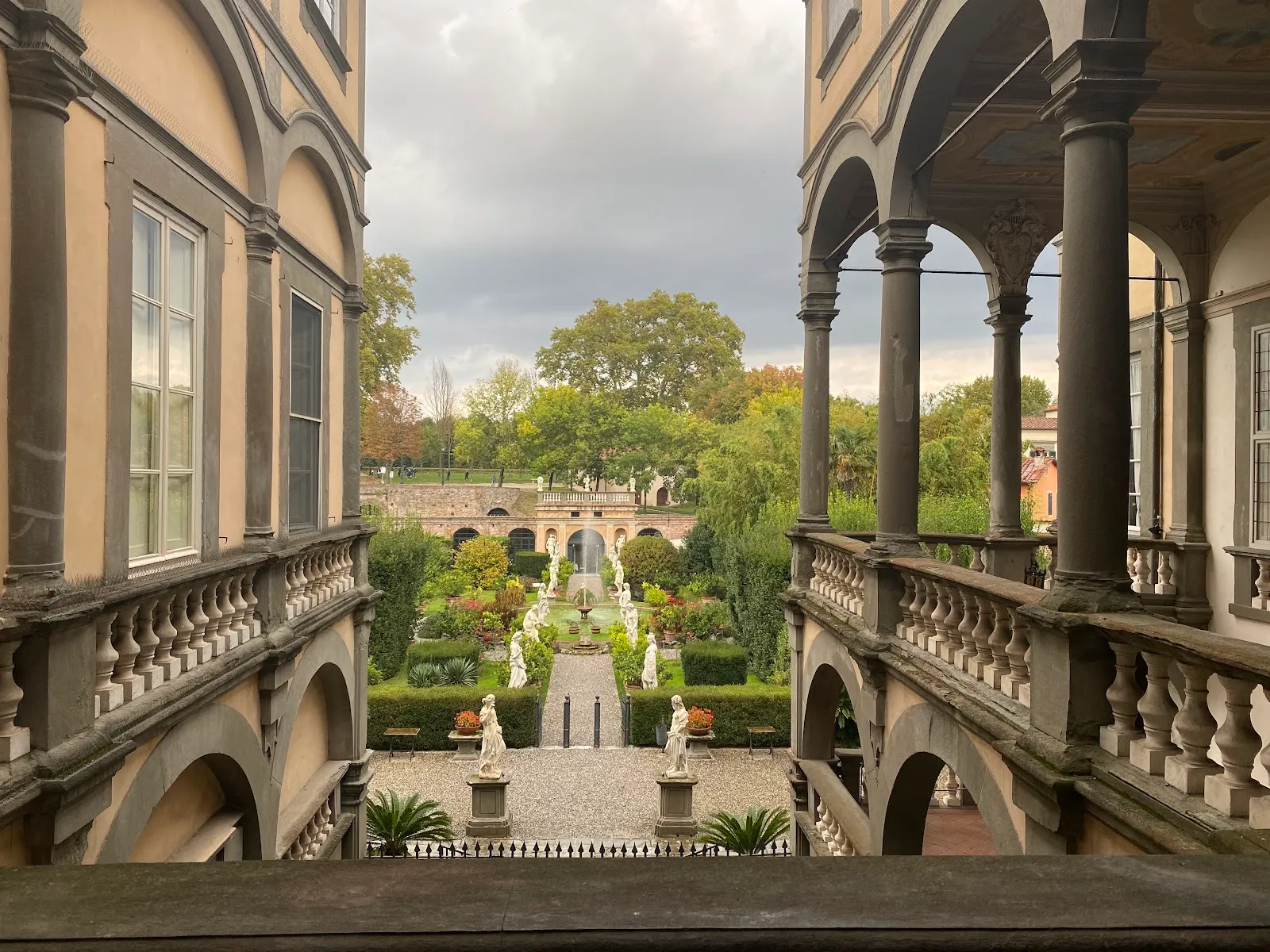
The building stands close to Lucca’s historic walls, among the city’s narrow streets. Its courtyard, arched entrance and grand stone staircase give a sense of the scale and formality of an aristocratic residence. The staircase is associated with architect Domenico Martinelli, while the garden’s design is attributed to Filippo Juvarra.
Inside the palace
A selection of rooms is open to the public. Look for painted decoration and frescoes in the principal salon, along with antique furnishings and objects that give the interiors a different character from the garden outside. The collection is relatively compact, so the visit is most rewarding when you take time to see both the house and its grounds.
The palace also preserves medical instruments and surgical texts associated with Pietro Pfanner, a physician who practised here and later became mayor of Lucca. These objects connect the family residence to the work of its former occupant. The rooms include other traces of the building’s varied history, including equipment linked to beer production.
The garden and the Pfanner brewery
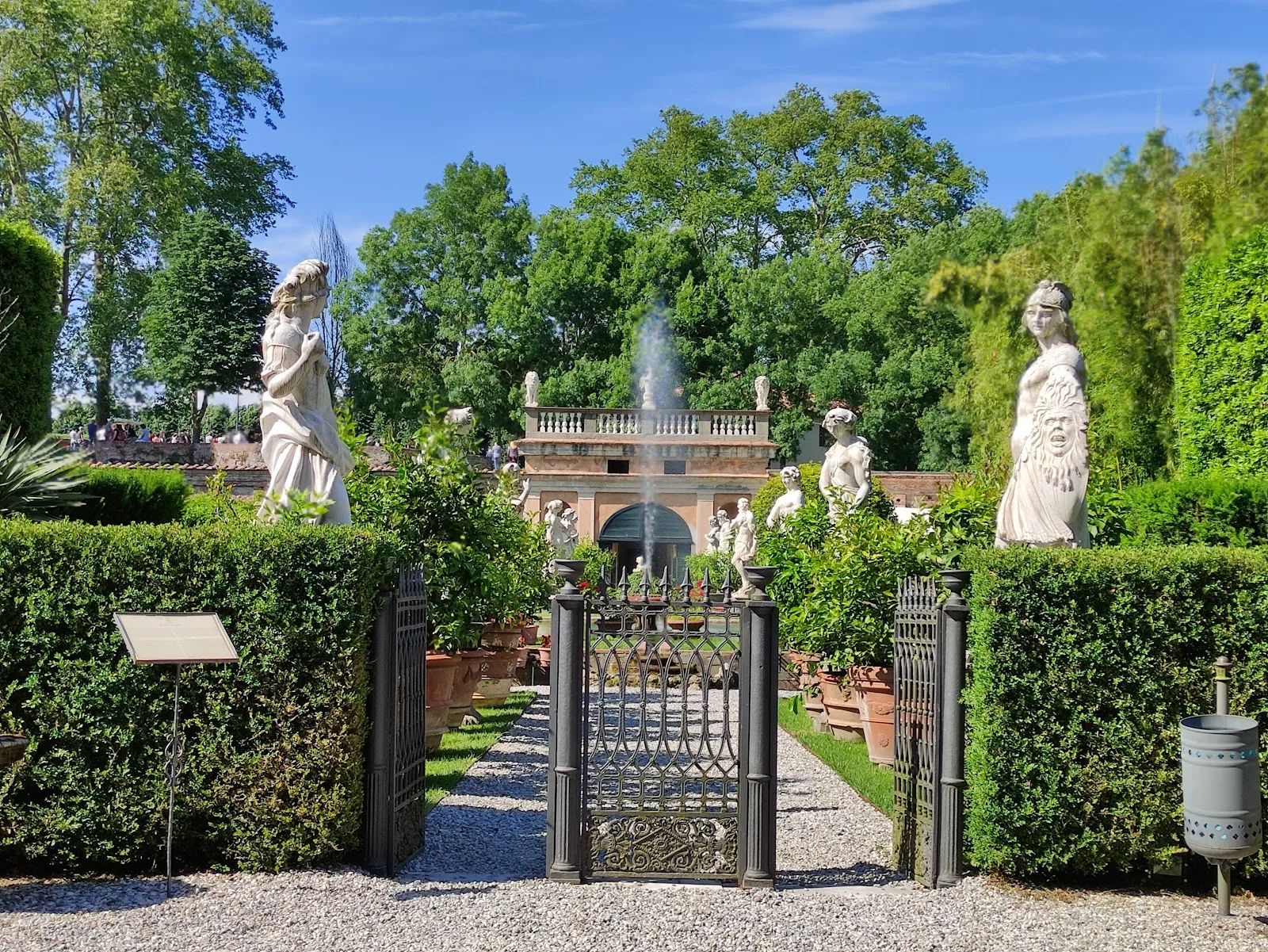
The formal garden is the best-known part of the estate. Its paths run between lawns, clipped greenery, flowers and classical statues, with water features along the way. Lemon trees, palms and bamboo add variety to the planting; the garden also contains roses and other seasonal blooms. Benches provide places to pause, and QR codes let you look up botanical information as you explore.
The Pfanner family brought brewing to the palace. Felix Pfanner, a brewer from the Lake Constance area, established a brewery here after arriving in Lucca. The premises remained in use for beer-making until 1929. The combination of garden, residence and brewing history gives the visit several distinct points of interest, even though only part of the palace interior is open.
FAQ
What is there to see at Palazzo Pfanner?
The visit includes a Baroque garden with statues, fountains and varied planting, as well as a selection of palace rooms. Inside, you can see frescoes, furnishings and medical objects associated with Pietro Pfanner.
Is the garden or the palace the main attraction?
The garden is the principal draw, with lemon trees, flowers, statues and water features. The palace adds frescoed rooms and a compact collection of historic objects.
When is a quieter time to visit Palazzo Pfanner?
Weekdays are a good choice if you want to avoid the larger crowds typically seen at weekends.