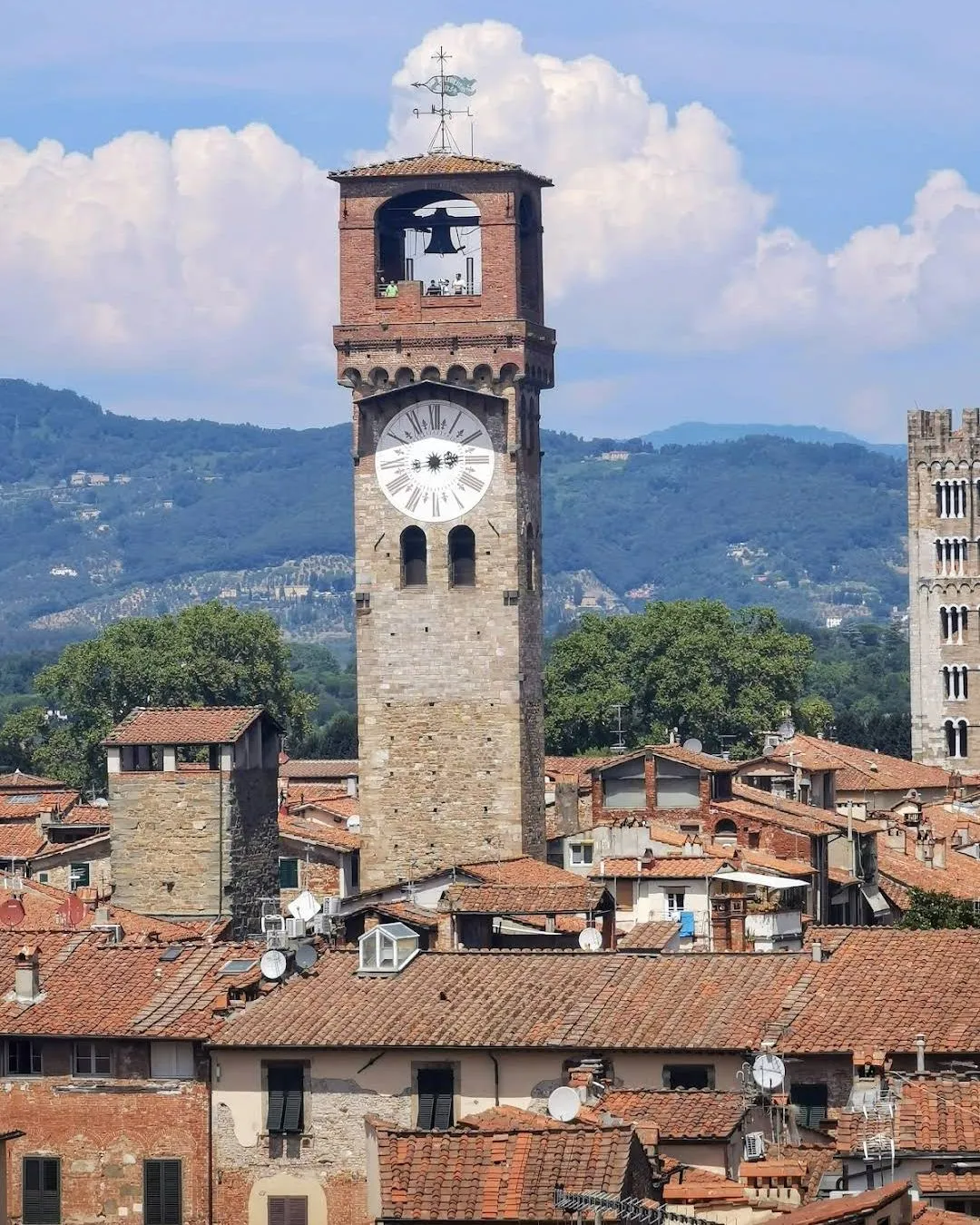
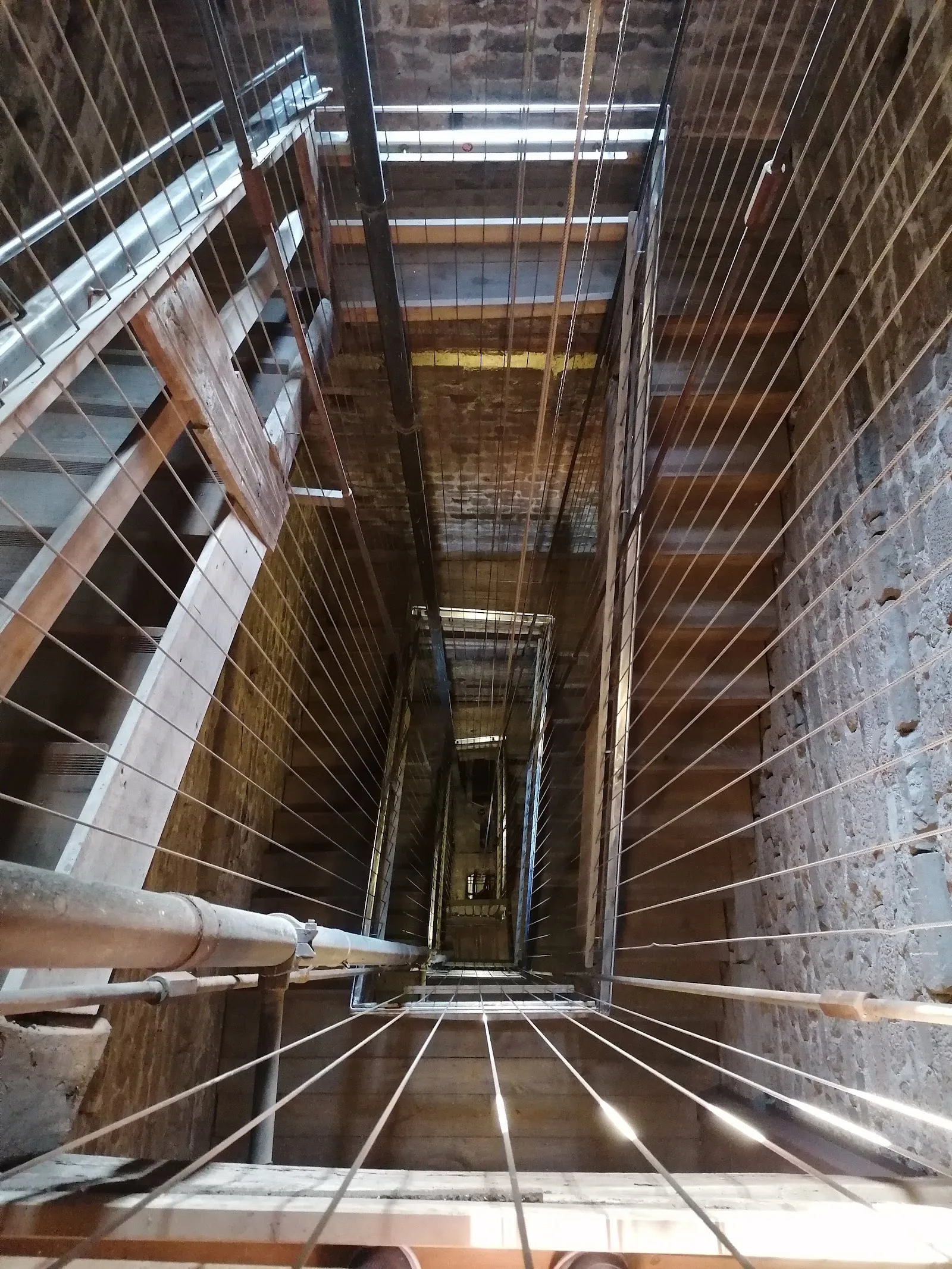
On Via Fillungo in Lucca’s historic centre, Torre delle Ore is a medieval clock tower that rises about 50 metres above the city. Its 207 wooden steps lead past a working clock mechanism to a rooftop view of Lucca’s tiled roofs, church towers and surrounding hills. The mechanism is still in use, and the wooden staircase gives the ascent a character distinct from the climb up nearby Torre Guinigi. Come for the view, then look closely at the clockwork on the way up.
A medieval tower on Via Fillungo
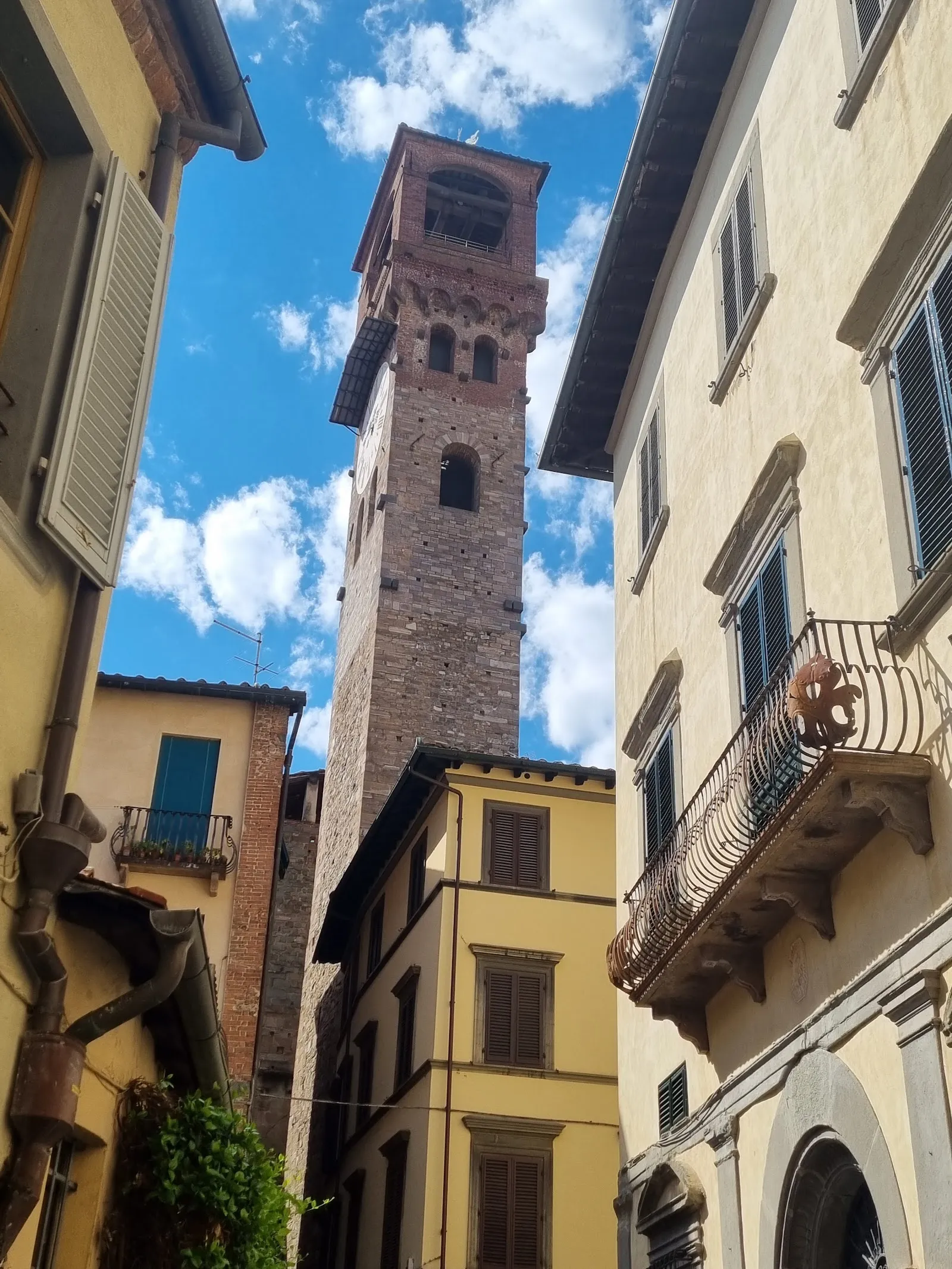
Torre delle Ore stands on Via Fillungo, Lucca’s central shopping street, near the corner with Via dell’Arancio. At about 50 metres, it is the tallest tower in the city. It dates to the medieval period, when Lucca had more than 200 towers. Many belonged to wealthy families and served as signs of status as well as places of defence. Only a small number remain today.
The tower was built in 1390 and later took on its role as a public clock tower, marking the time with its clock and bells. Its position above Via Fillungo makes the clock face visible from the street. The tower is one of the few surviving reminders of the many medieval towers that once shaped Lucca’s skyline.
The clock and its mechanism
The clock has been altered over the centuries. Its present mechanism dates to the 18th century, with 1754 given as the year it was made. It still works and is manually wound, a feature that sets the tower apart from a simple viewpoint. On the way up, pause to see the mechanism and consider how it keeps time for the city.
The bells are part of the tower’s clockkeeping role. Their sound can be loud inside the tower, so be ready for it if you are sensitive to sudden noise. The clock and bells also connect the building’s present-day visit with its original purpose: marking the hours for people moving through the city.
The Lucida Mansi legend
A local legend links the tower to Lucida Mansi, a noblewoman said to have made a pact with the devil in exchange for thirty more years of youth and beauty. When the time came to pay, the story says, she rushed up the tower stairs in an attempt to stop the clock before the deadline. The tale is part of the tower’s folklore, not an account of its construction or clock mechanism.
The legend gives the climb a dramatic thread, but the tower’s documented history is compelling on its own: a medieval structure that became a clock tower and still houses working machinery. Look from the street for its clock face, then notice how the tower rises above the roofs along Via Fillungo.
The view from the top
The climb ends above Lucca’s historic centre, with views across its roofs and church towers to the surrounding hills. You can also see Torre Guinigi from above. The two towers offer different perspectives on the city: Torre Guinigi is recognised by the trees on its rooftop, while Torre delle Ore gives you a higher vantage point and a close look at its clockwork on the ascent.
The wooden staircase is narrow and the climb is strenuous, so take it at a steady pace. The viewing area at the top is small; quieter times give you more room to look around. On a clear day, the view extends beyond the historic centre, while fog can obscure the distant hills.
FAQ
How many steps are there in Torre delle Ore?
The climb has about 207 wooden steps. The staircase is narrow, so take your time on the way up and down.
How long does a visit to Torre delle Ore take?
Allow about 30 to 60 minutes for the climb, time at the top and the return downstairs.
What can you see from the top of Torre delle Ore?
The rooftop gives you a view over Lucca’s historic centre and the surrounding hills. Torre Guinigi is also visible.
Is the clock mechanism still working?
Yes. The tower’s clock mechanism is still in use and is visible during the climb.