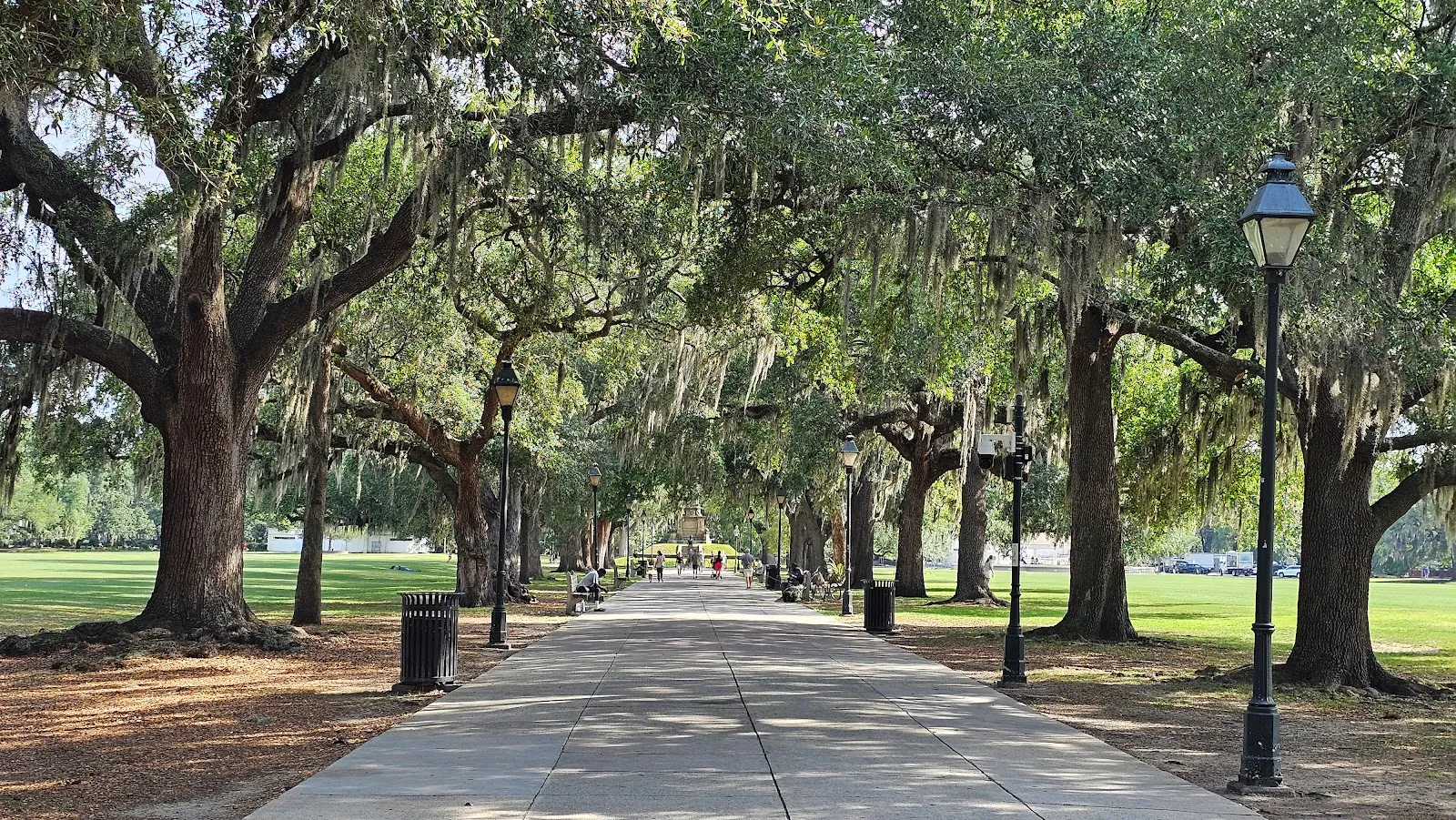
Colonial Park Cemetery is a historic burial ground in Savannah’s Historic District, at 200 Abercorn Street. Established in 1750 and closed to new burials in 1853, it holds more than 9,000 graves, including those of Revolutionary soldiers and victims of the 1820 yellow fever epidemic. Shaded paths, old headstones and historical markers make it a quiet stop on a walk through downtown. Look for the grave of Button Gwinnett, a signer of the Declaration of Independence, and consider a guided tour for more detail on the cemetery’s history.
A cemetery from Savannah’s early years
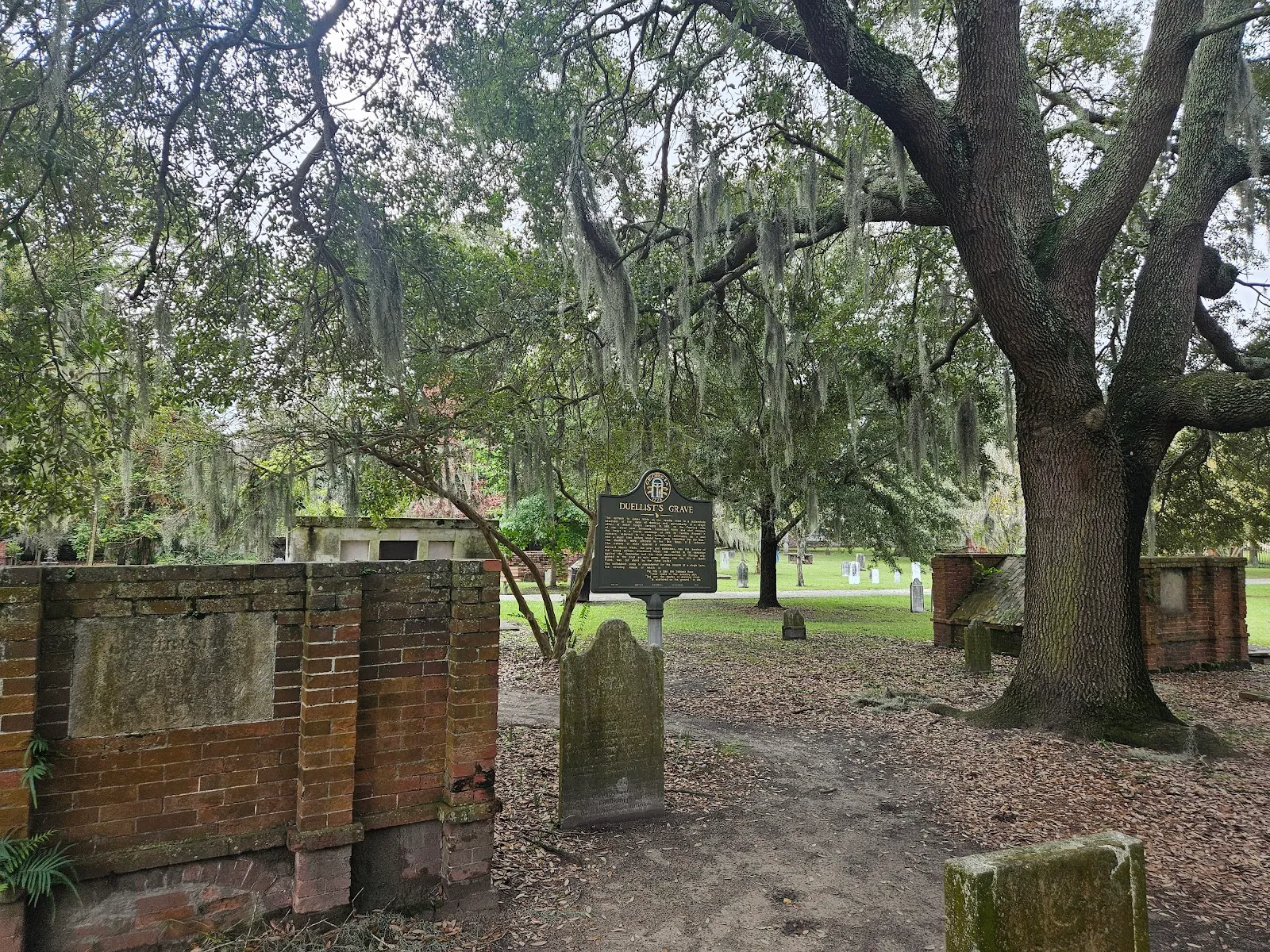
Colonial Park Cemetery opened in 1750, when Savannah was the capital of the British Province of Georgia. It served as the city’s primary public cemetery for more than a century, until burials ended in 1853. The six-acre grounds became a city park in 1896.
More than 9,000 people are buried here. Among them are Revolutionary soldiers and many people who died in the 1820 yellow fever epidemic. The cemetery offers a way to trace parts of Savannah’s early history through its graves and markers, as well as a pause from the surrounding Historic District.
Graves and historical markers
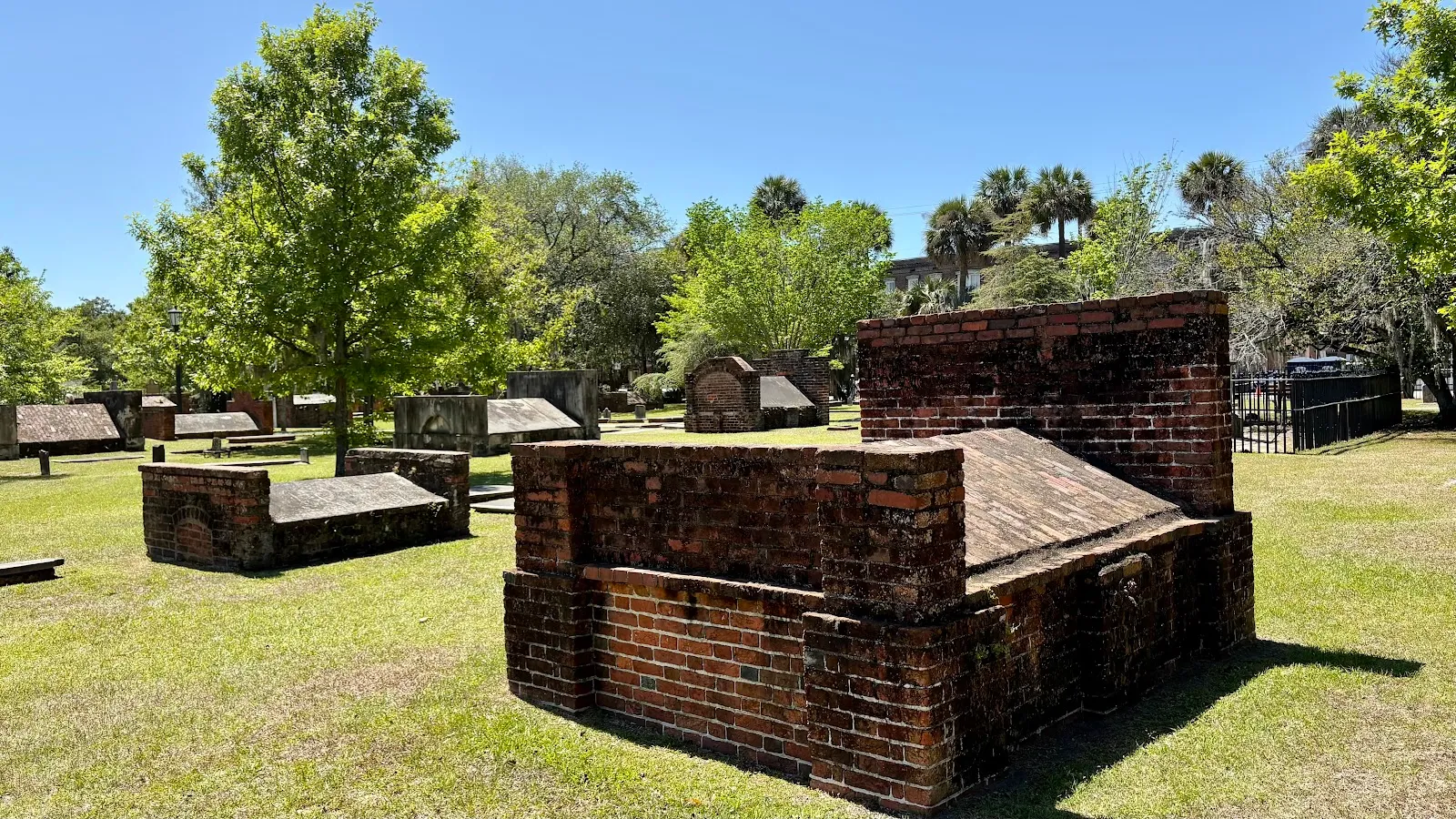
Button Gwinnett, a signer of the Declaration of Independence, is among the best-known people buried at Colonial Park. Other notable names include James Habersham, an acting royal governor of Georgia, and John Habersham, who served in the Continental Congress. Historical markers identify some people of particular significance.
The headstones vary in condition. Some inscriptions have faded with time and weather, so the markers can help add context as you walk. More than 700 yellow fever victims are buried in the cemetery. Their graves connect the grounds to one of the most consequential epidemics in Savannah’s history.
Walking the grounds and joining a tour
Shaded paths run through the park-like cemetery, with old stone markers beneath the trees. The grounds sit in the Historic District, close to the city’s streets and other historic sites. Take time to read the inscriptions that remain legible, and move respectfully around the graves.
Guided historical tours can give more background on the cemetery and its residents. Ghost tours also include Colonial Park, though some tell their stories from outside the gates instead of entering the grounds. The cemetery has a quieter feel during the day; a dusk visit changes the atmosphere, but the site remains a place of burial and remembrance.
FAQ
When was Colonial Park Cemetery established?
It was established in 1750 and served as Savannah’s primary public cemetery until 1853.
Who is buried at Colonial Park Cemetery?
More than 9,000 people are buried there, including Revolutionary soldiers, yellow fever victims and Button Gwinnett, a signer of the Declaration of Independence.
Can you visit Colonial Park Cemetery on a ghost tour?
Some ghost tours include stories about the cemetery from outside its gates. Guided daytime historical tours are another way to learn about the grounds.
Is Colonial Park Cemetery free to visit?
The cemetery is described as open and free to visitors during the day.