At 1201 Mason Street in Nob Hill, the Cable Car Museum explains how San Francisco’s cable cars work inside the barn and powerhouse that drives them. Watch enormous wheels pull the moving cables, then look over historic cars, photographs, models and mechanical parts that trace the system’s development from 1873. The museum is free to enter, and its exhibits pair the engineering with the city’s transport history. Allow time to read the displays and browse the cable-car-themed gift shop.
A museum inside the cable car powerhouse
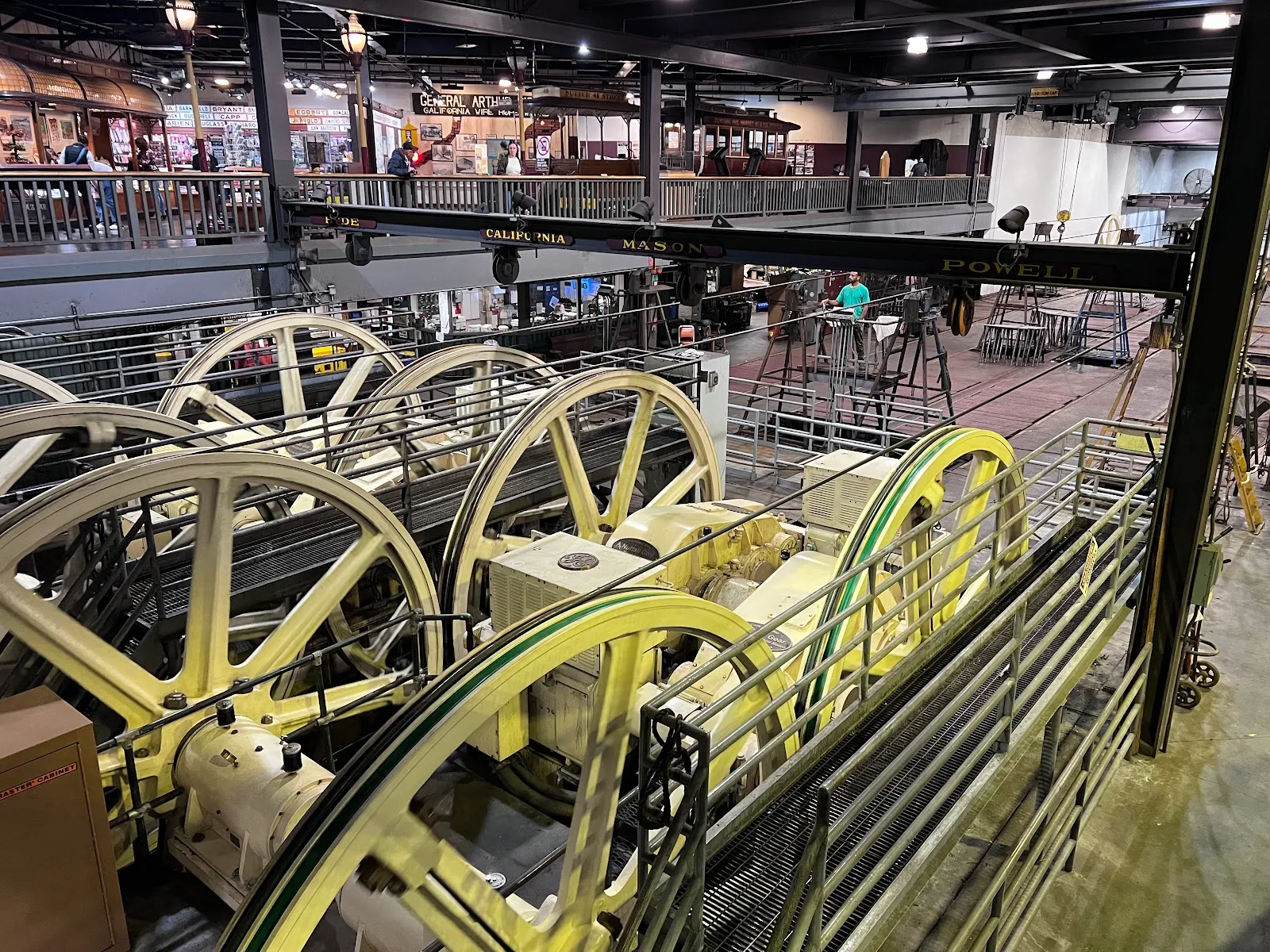
The Cable Car Museum occupies the Washington-Mason cable car barn and powerhouse at 1201 Mason Street in Nob Hill. It combines an exhibition space with the machinery that pulls the cars along the city’s tracks. From the viewing area, you can watch large wheels turn as they draw the cables through the system.
That working setting is central to the visit. The cables are not simply historic objects on display: they are part of the machinery operating beneath the museum. Seeing them in motion helps make sense of the mechanical displays and the explanations on the museum floor.
The cars and the system’s early years
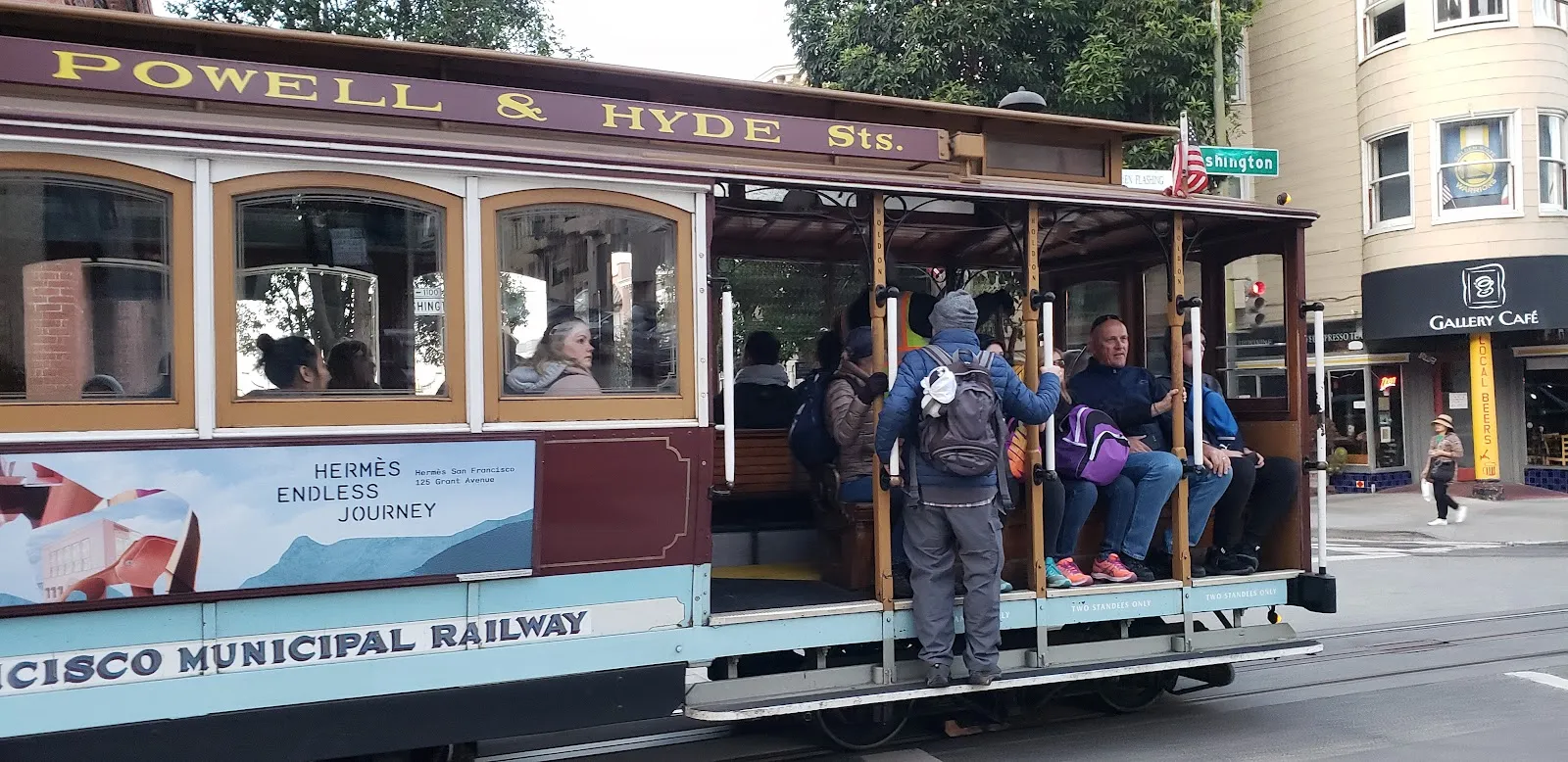
The museum traces the cable car system back to 1873, when the first cars began running in San Francisco. Its collection includes three antique cars from that era: Sutter Street Railway No. 46, a grip car; No. 54, a trailer; and Clay Street Hill Railroad No. 8, the sole surviving car from that first cable car company.
The displays also cover the people, equipment and engineering behind the system. Photographs, models and mechanical parts show how the cars were built and operated. Look for components such as grips, tracks, cables and brakes, which give the system’s workings a more tangible explanation than a route map alone.
How to explore the exhibits
Take time with the explanatory displays if you want to follow the mechanics step by step. The museum has plenty of written material, alongside historical photographs and objects from the cars. The powerhouse view adds a live demonstration: you can see the moving machinery behind the transport system the exhibits describe.
The museum also presents the obstacles that shaped the cable cars’ history, including earthquakes and fires, and describes efforts to preserve the system. Together, the historical and operational displays show how the cars became part of San Francisco’s transport story and how the equipment continues to function.
The gift shop and visit details
A small gift shop sells cable-car-related souvenirs and other items. It is worth leaving a little time to browse, especially if you are looking for a memento connected to the museum’s subject. The shop is cash only, so bring cash if you plan to buy something.
Admission to the museum is free. The site is closed on Mondays and is wheelchair accessible, including its entrance and restroom. A visit can take as little as about 15 minutes, but setting aside 30 to 60 minutes gives you more time for the displays and shop.
FAQ
Is the Cable Car Museum free?
Yes. Admission is free.
How long should I spend at the Cable Car Museum?
A quick visit can take around 15 minutes. Allow 30 to 60 minutes if you want time for the exhibits and gift shop.
What can you see at the Cable Car Museum?
The collection includes three antique cable cars, photographs, models and mechanical parts. You can also watch the working wheels and cables that power the cars.
Is the Cable Car Museum open on Mondays?
No. The museum is closed on Mondays.