
The Natural History Museum of Utah sits on the University of Utah campus, in the foothills of the Wasatch Range above Salt Lake City. Its galleries cover the geology of the state, its dinosaurs and fossils, its ecosystems, and the history of Utah's Indigenous peoples. The dinosaur halls are the main draw, with a large collection of horned dinosaur skulls and a window into a working paleontology lab. The copper-clad building and its outdoor terrace are part of the visit. Allow two to three hours for the full museum.
The building and its setting
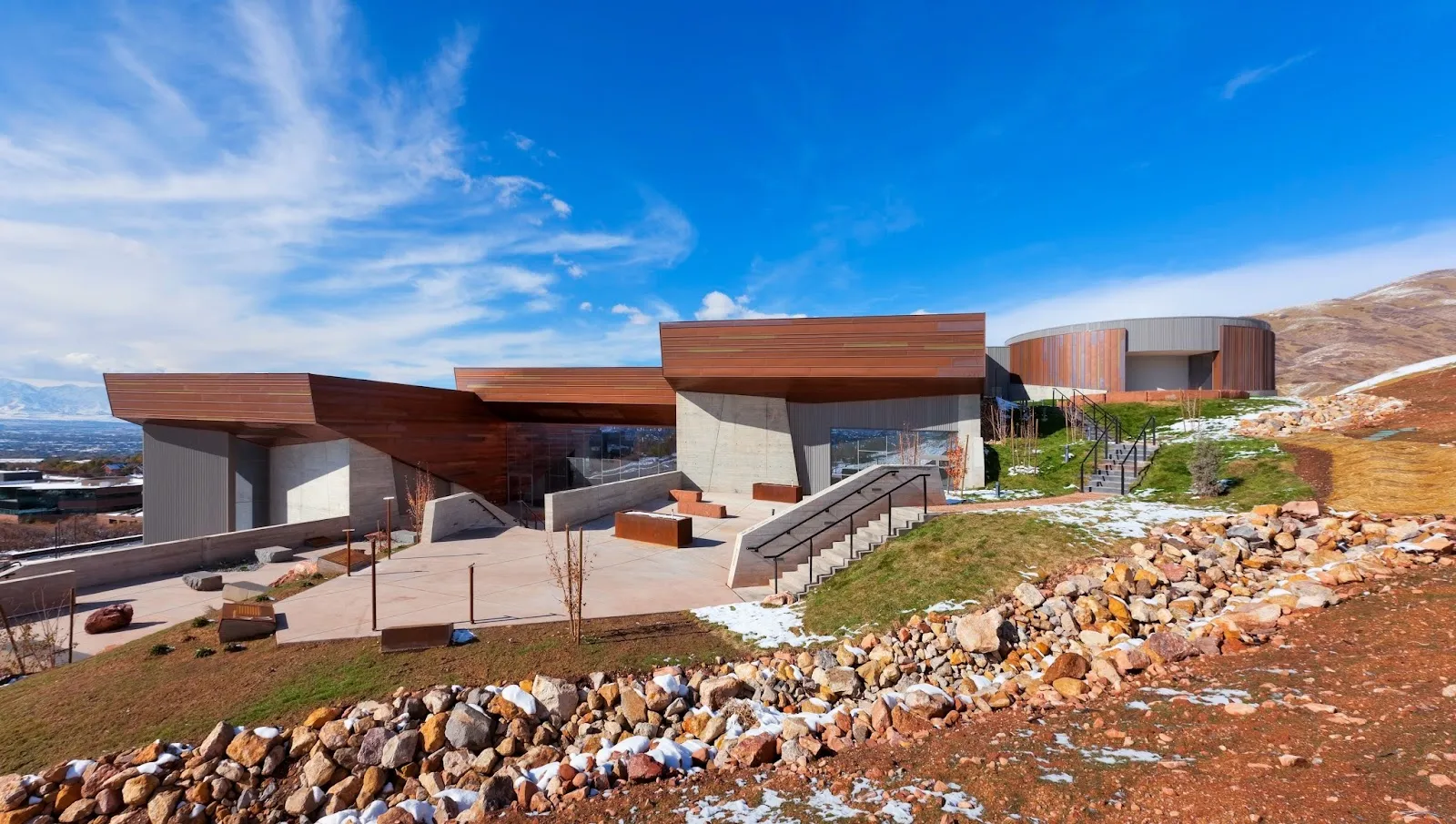
The museum has been housed at the Rio Tinto Center since 2011, on the University of Utah campus in the foothills of the Wasatch Range. It first opened to the public in 1969 at an earlier location on campus.
The building is clad in 42,000 square feet of standing seam copper, mined from Kennecott Utah Copper's Bingham Canyon Mine. Its form rests on terraces that follow the slope of the hillside, and the base is board-formed concrete. The structure is LEED Gold certified. The Bonneville Shoreline Trail runs alongside the site, and it is popular with hikers and mountain bikers.
Inside, a multistory indoor canyon runs through the building, and you walk up through its layers as you move between galleries. Outside, the Land Terrace has copper windows that reflect the mountains. A free architectural tour, lasting 45 to 60 minutes, is available for visitors who want to learn about the building itself.
Dinosaur halls and fossil collections
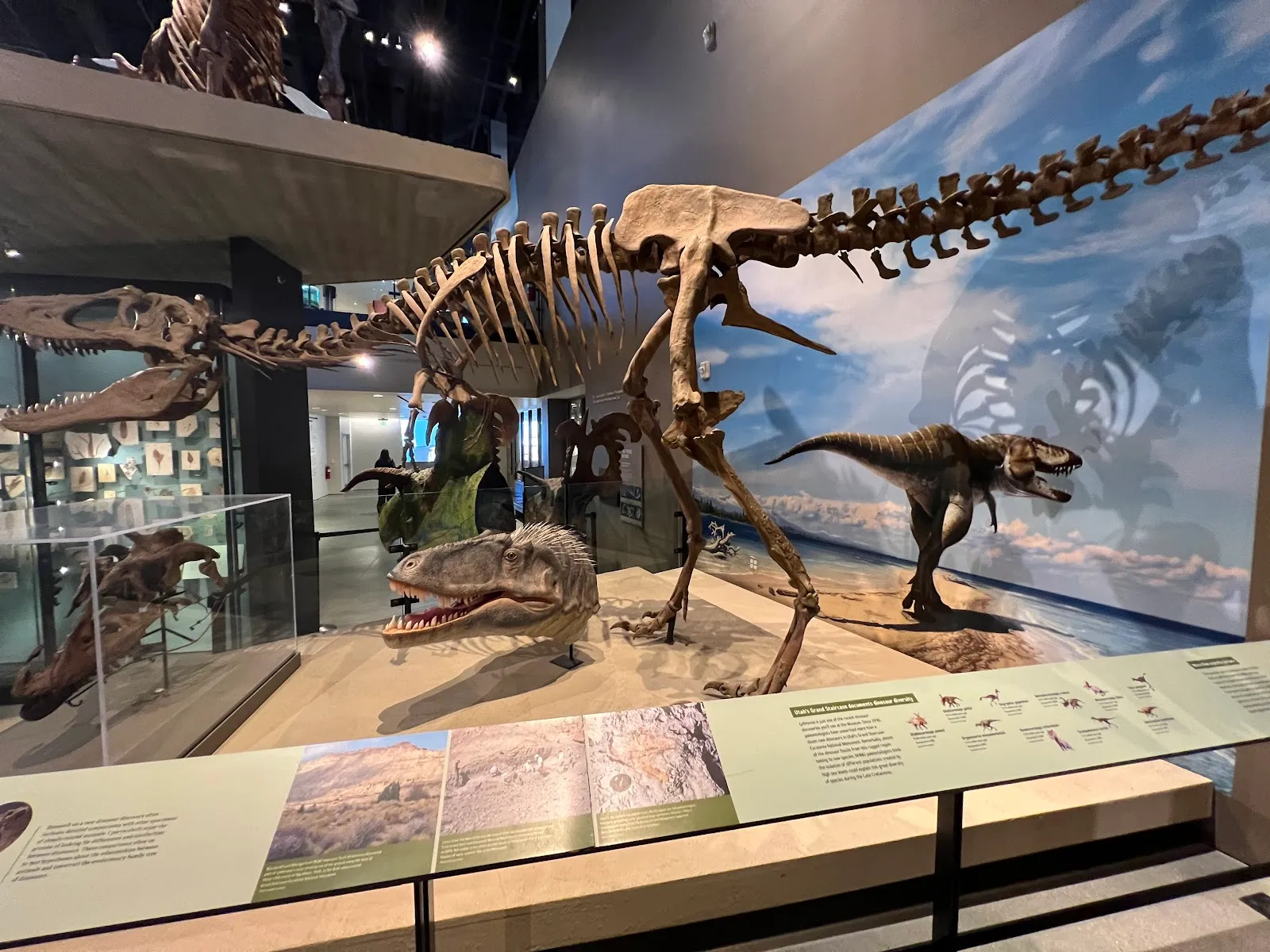
The museum's best-known holding is its collection of horned dinosaur skulls, which is the largest of its kind in the world. Mounted skeletons include Allosaurus, Stegosaurus and Camptosaurus from the Cleveland-Lloyd Dinosaur Quarry.
The Past Worlds displays let you see the fossils from beneath, beside and above. Several sections of the dinosaur hall have glass floors over dig sites, so you walk above fossils still in the ground. A dig site room lets you step inside and get a sense of excavation work.
Through a window, you can watch staff in the Palaeontology Preparation Lab at work on fossils. Some specimens come from recent finds in Grand Staircase-Escalante National Monument, which have added new species to the collection.
Indigenous history and Native voices
The galleries cover the history of Utah's Indigenous peoples, from artifacts made thousands of years ago to the present day. The Nature Voices exhibit documents the history of the state's tribal groups. A circular room is dedicated to Native voices.
The Great Salt Lake, The Land and First Peoples section holds pottery and other ancient artifacts. A hands-on puzzle asks you to reconstruct shattered pots using magnetic pieces.
Rotating exhibits and the wider collection
The museum holds more than 1.6 million objects and specimens, and its exhibition space covers 50,000 square feet. Permanent galleries cover minerals and gems, geology, ancient life and the history of the state.
Special exhibits rotate through the year, usually once or twice a year. Past rotating shows have included an insect exhibit with walk-through pods and enlarged models, designed with children in mind. Check which exhibit is open before you plan your day.
Planning the visit
Most visits take two to three hours. The galleries spread across five levels, and the layout keeps the walking manageable.
The museum has a cafe, a restaurant, a theater, a gift shop and a coat check. Parking is on site, with a free parking garage and a paid lot. The entrance, restrooms, parking lot and seating are wheelchair accessible. Assisted listening devices are available, and there are changing tables.
FAQ
Is there an entry fee?
Yes, the museum charges admission. Check the museum's website for current prices and any free days or events before you go.
How long do you need?
Allow about two to three hours to see the galleries and the building.
Is the museum good for children?
Yes. The museum has interactive and hands-on exhibits, kid-friendly activities and changing tables.
Should I buy tickets in advance?
The museum recommends getting tickets in advance.
Is the museum wheelchair accessible?
Yes. The entrance, restrooms, parking lot and seating are listed as wheelchair accessible, and assisted listening devices are available.


