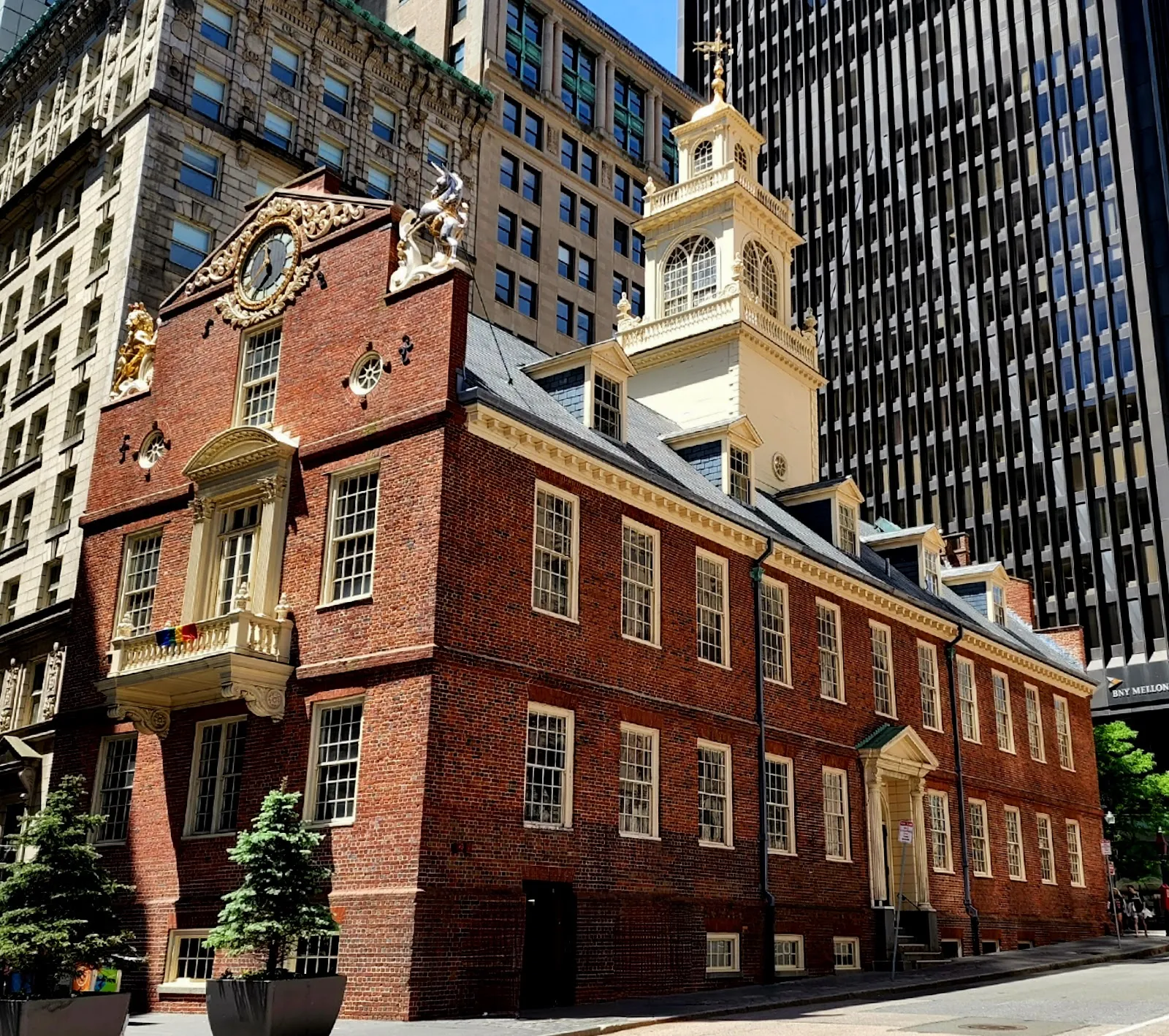
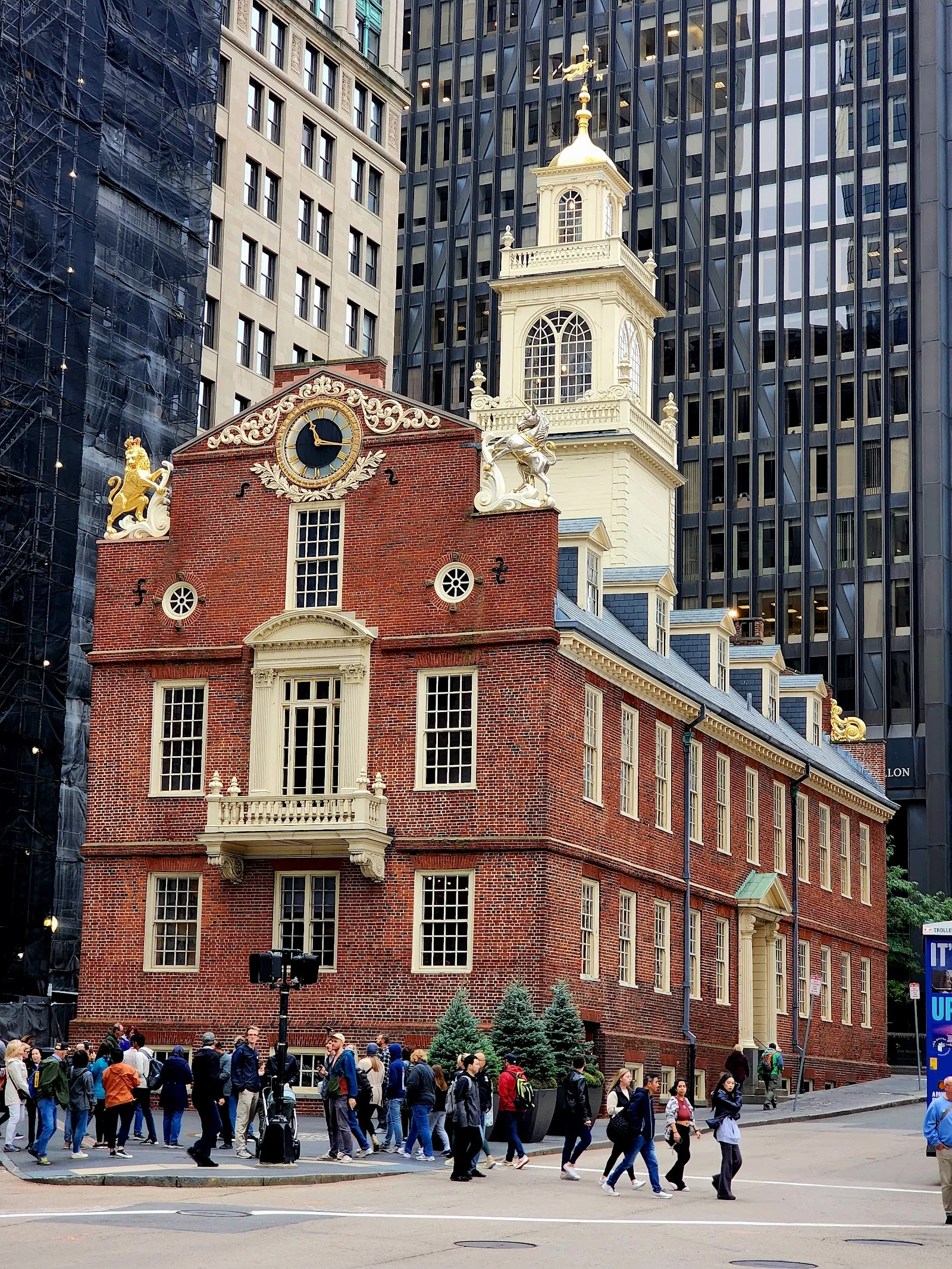
At 206 Washington Street, the Old State House is Boston’s oldest surviving public building and a museum on the Freedom Trail. Built in 1713 as the seat of colonial government, it later became a setting for events that helped shape the Revolution. Inside, explore exhibits across several levels, including artifacts such as John Hancock’s coat and displays about the Boston Massacre. Outside, a marker identifies the site of the 1770 killings. Give yourself time for the building’s interior staircase and the interactive exhibit on public education.
A seat of colonial government
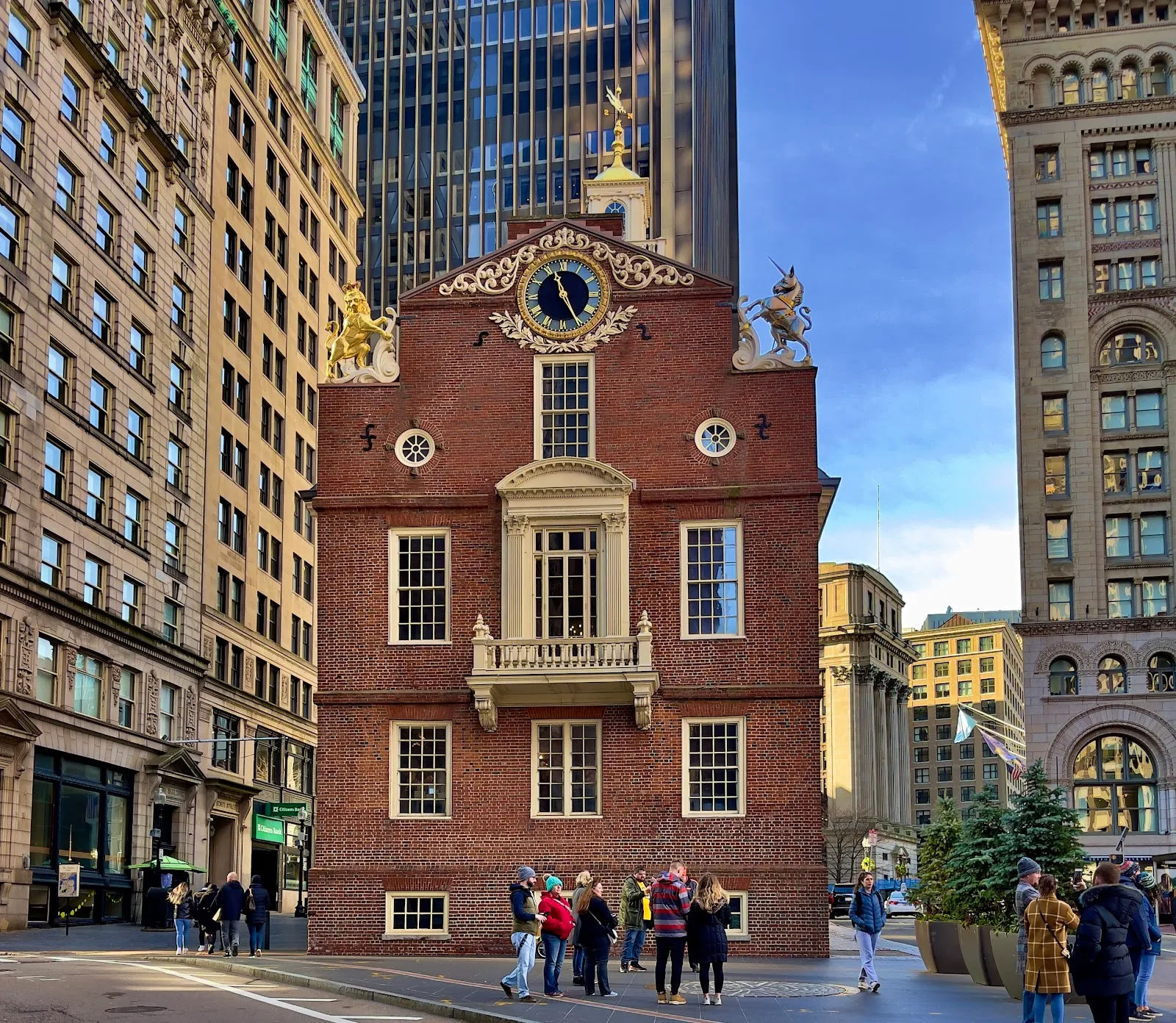
Built in 1713, the Old State House was the center of government for Massachusetts Bay Colony. The Massachusetts Assembly met there, and the royal governor had an office in the building. Its rooms were part of Boston’s civic and political life before the Revolution, when colonists debated their relationship with British rule.
The building’s history continued after independence. It became Massachusetts’ state house until 1798, when the government moved to the newer State House on Beacon Street. In later years, it was used as a post office, shopping arcade and city hall. It has been a museum since 1881.
The Boston Massacre and the balcony
On March 5, 1770, British soldiers fired into a crowd outside the building. Five people were killed, including Crispus Attucks. The event became known as the Boston Massacre. A marker outside identifies the site, placing the account of the violence in the street where it happened.
The building’s balcony is associated with a different turning point. On July 18, 1776, Colonel Thomas Crafts read the Declaration of Independence to the people of Boston from the east balcony. The proclamation followed years of political debate in and around the Old State House.
Inside the museum
The museum follows Boston’s history through exhibits on several levels. Artifacts and displays cover the Revolutionary period and the city’s role in the events that led to independence. Objects connected with the Boston Tea Party and the Battle of Bunker Hill are among the historical material associated with the museum; John Hancock’s coat is another notable object.
Look for the Council Chamber and the building’s internal staircase. Videos and multimedia presentations help explain the Boston Massacre and the wider history of colonial Boston. The exhibits also reach beyond the Revolution: one explores the history of school busing and invites visitors to contribute written reflections on public education today. Another uses scent as part of its interpretation, an unusual format that may not appeal to everyone.
A stop on the Freedom Trail
The Old State House is one of the Freedom Trail’s historic sites, set among the modern buildings of Boston’s Financial District. Its red brick exterior and cupola make it easy to pick out at the junction of Washington and State streets. The contrast between the compact historic building and the taller offices around it is part of the setting.
Inside, you can explore independently or join a tour. The museum has also hosted guided programs and performances, including presentations by costumed interpreters. If you are following the trail on a tight schedule, a focused visit can still cover the main rooms and exhibits, but a slower walk through each level gives more context to the objects and the building’s changing uses.
FAQ
How long do you need at the Old State House?
Allow about 40 to 60 minutes for a self-guided visit through the museum.
Is the Old State House on the Freedom Trail?
Yes. It is one of the Freedom Trail’s historic sites in downtown Boston.
Can you see the Boston Massacre site outside?
Yes. A marker outside the building identifies the site of the 1770 Boston Massacre.
Is there a ticket for the Old State House museum?
Admission to the museum is paid. A combo ticket with the Old South Meeting House is available; the National Park Service passport stamp in the shop can be obtained without paying for museum admission.