At 10½ Beacon Street in Beacon Hill, the Boston Athenaeum combines a historic library, art collections and public exhibitions. Founded in 1807, it holds more than 500,000 volumes alongside maps, manuscripts, photographs and works of art. On the first floor, browse the galleries and reading rooms; changing exhibitions bring new subjects into view. Access beyond the public areas depends on the ticket or tour you choose, so check the current options before you go. It suits readers, art lovers and anyone curious about Boston’s cultural history.
A library with an art collection
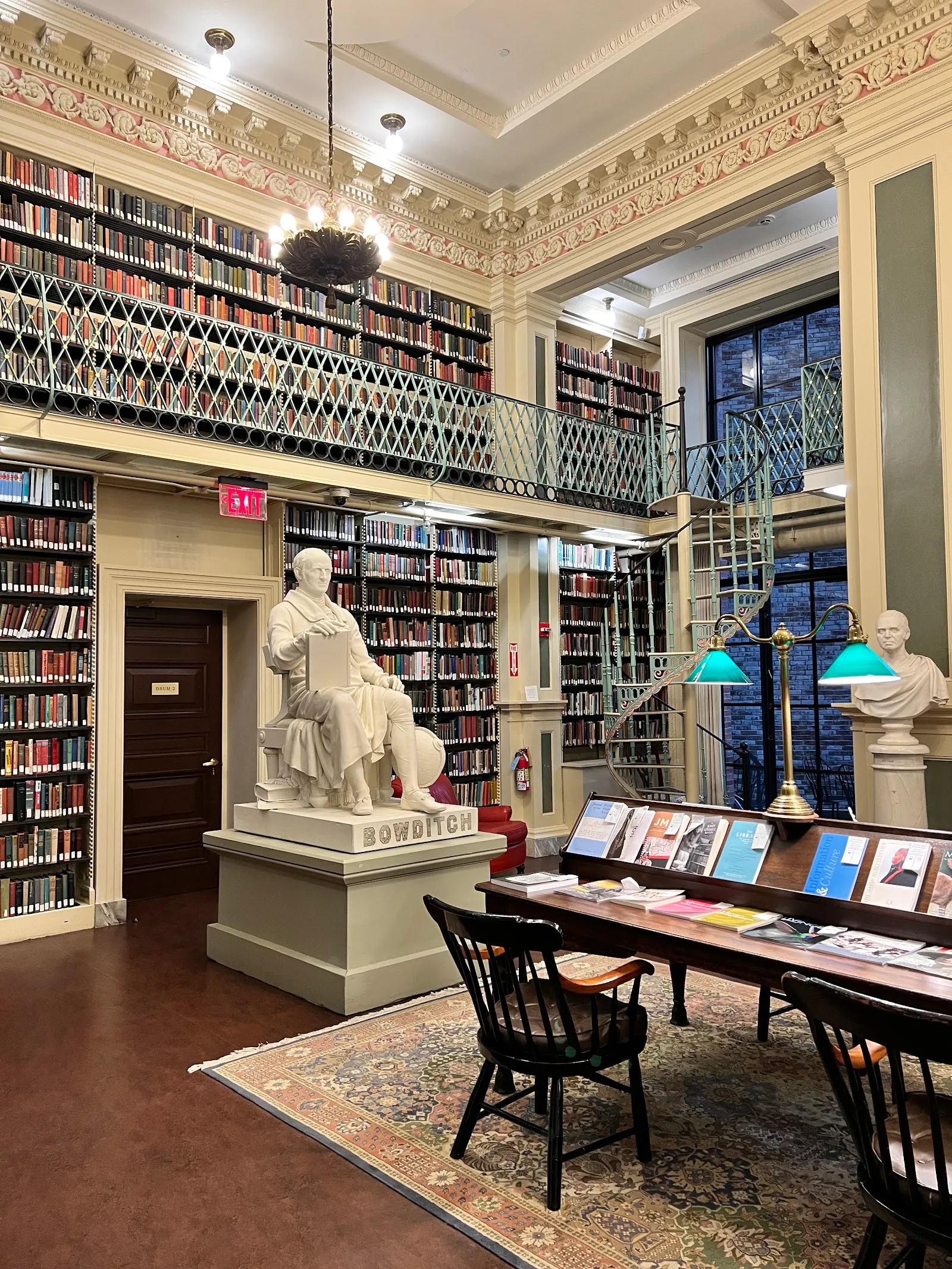
Founded in 1807, the Boston Athenaeum is one of the oldest independent libraries in the United States. Its Beacon Hill building dates to 1849 and has a landmarked neoclassical design. The institution brings together a working library, museum collections and cultural events.
The holdings include more than 500,000 volumes, as well as maps, manuscripts, photographs and other historical material. Its art collection includes paintings by John Singer Sargent, Gilbert Stuart and Allan Rohan Crite. The collection also has sculptures, prints and decorative arts. The library’s focus includes Boston and New England history, literature and the fine arts.
What the public can see
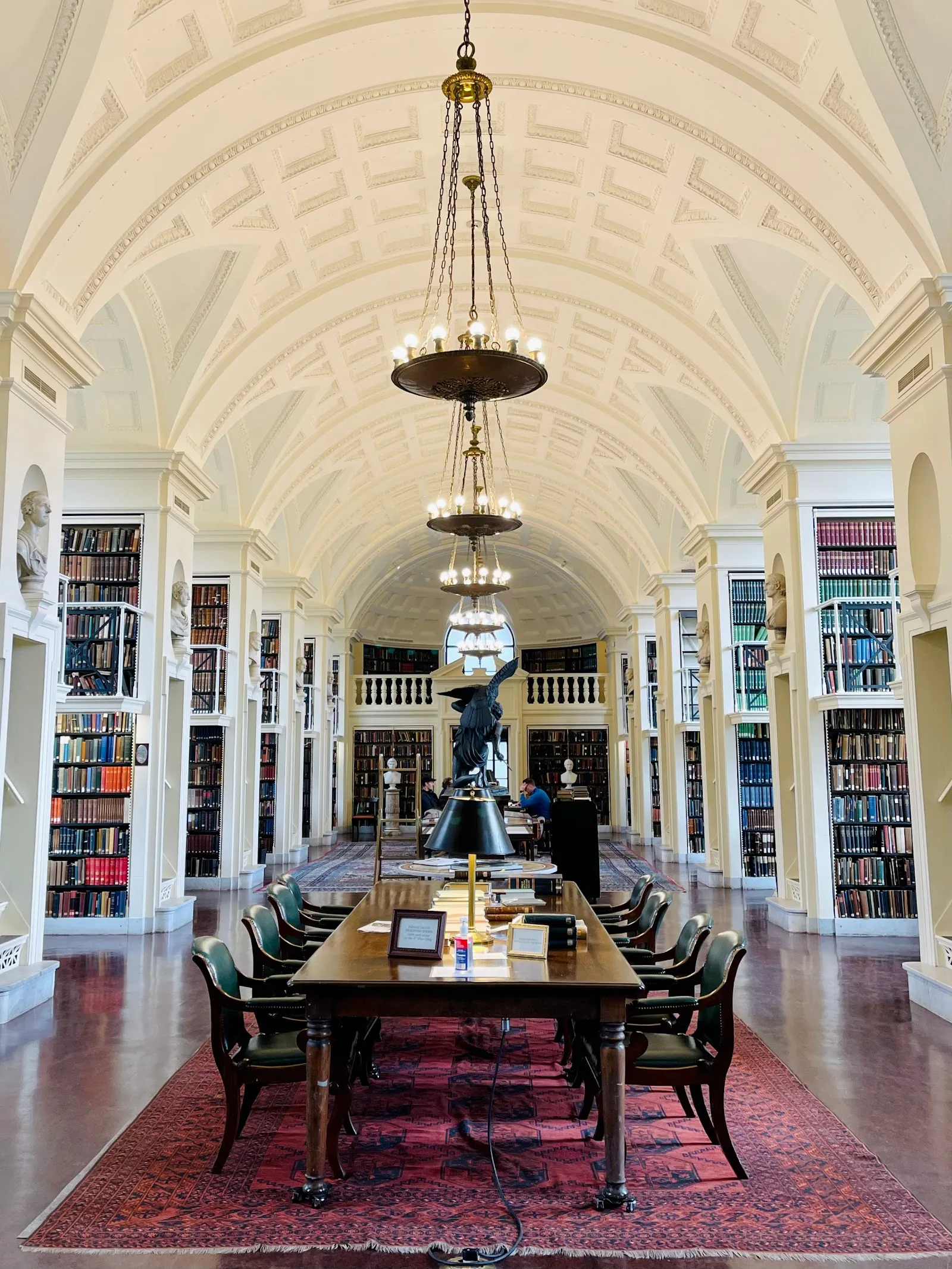
The first-floor galleries are open to the public, with exhibitions that change over time. Past displays have included historical photographs of Boston and artists’ books addressing democracy. The galleries also contain paintings, sculptures, books and other objects from the Athenaeum’s collections.
Reading rooms are part of the building’s appeal, with historic interiors and spaces for quiet reading or study. The King’s Chapel Library collection has roots in Boston’s early settlement. Other notable holdings include the library of George Washington and a rare memoir of the highway robber James Allen, bound in material taken from his body at his request.
Choosing a tour or ticket
The extent of a public visit depends on the access option. A general visit can include the first-floor galleries and reading rooms; a full-day pass provides broader access to the library. Guided art and architecture tours are another way to see additional floors and learn about the building and its collections. Some tours cover the stacks and the historic card catalog.
Check the Athenaeum’s current ticket and tour details before setting out, since access varies by option. Advance booking is recommended for tickets. Visitors carrying large bags or luggage can use the free lockers.
The Athenaeum’s history
The institution was founded in 1807 and developed from a reading room into a library and cultural center. Its members have included writers Nathaniel Hawthorne, Louisa May Alcott, Harriet Beecher Stowe and Ralph Waldo Emerson. The library remains membership-based, and borrowing books is reserved for members.
The building underwent a historically sensitive restoration, renovation and expansion, unveiled in 2022. Its location on Beacon Street places it beside the Granary Burying Ground, which several of the building’s floors overlook.
FAQ
Can the public visit the Boston Athenaeum?
Yes. The first-floor galleries and reading rooms are open to the public. Tours and broader access options allow visitors to see more of the building.
Can non-members see the upper floors?
Access depends on the ticket or tour. Check current options for a full-day pass or a guided art and architecture tour.
How long is the architecture and art tour?
A tour focusing on the library’s architecture and art collection is described as 60 minutes.
Does the Boston Athenaeum have changing exhibitions?
Yes. Its first-floor galleries host rotating exhibitions, with subjects that have included Boston history and artists’ books.