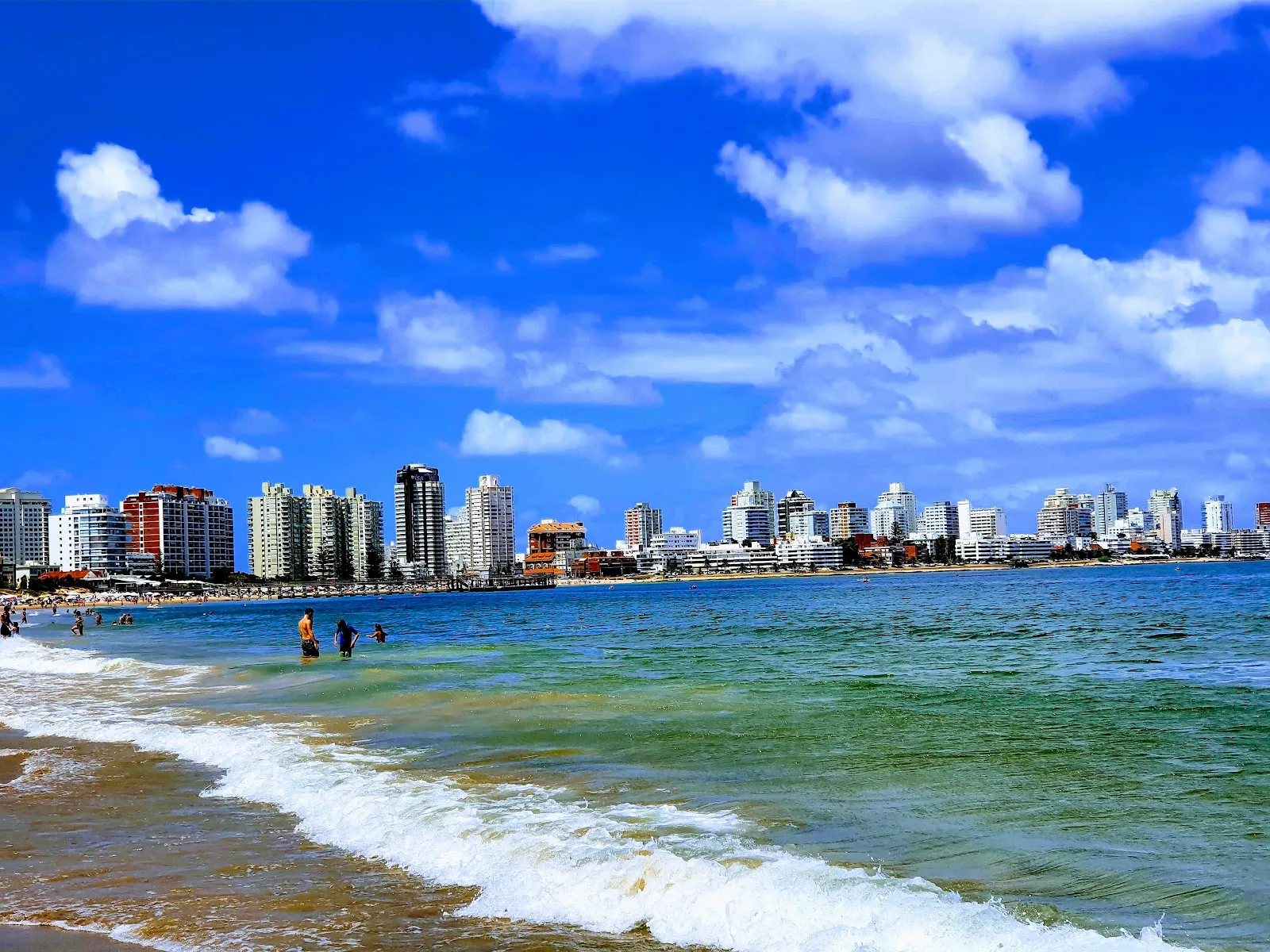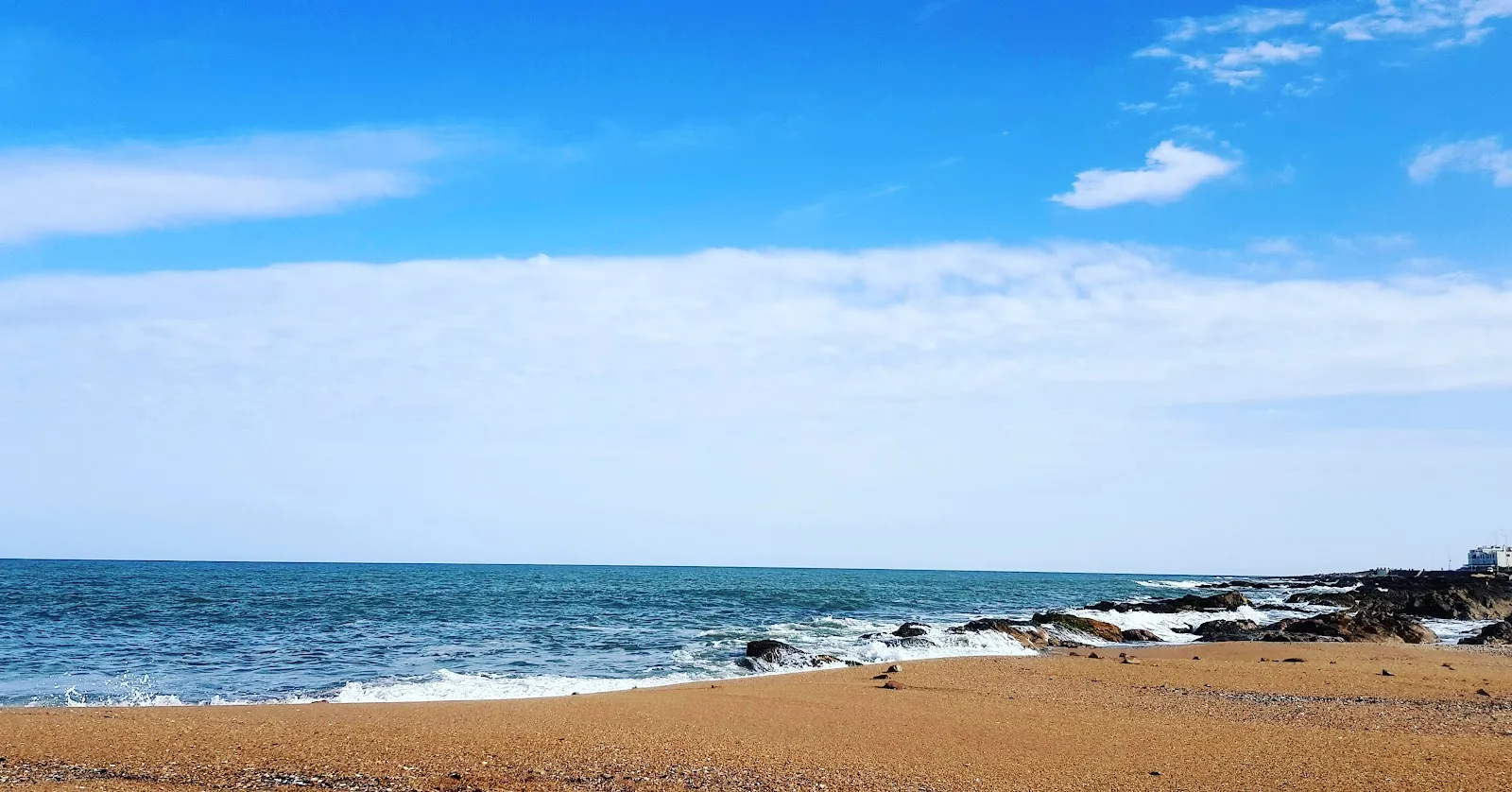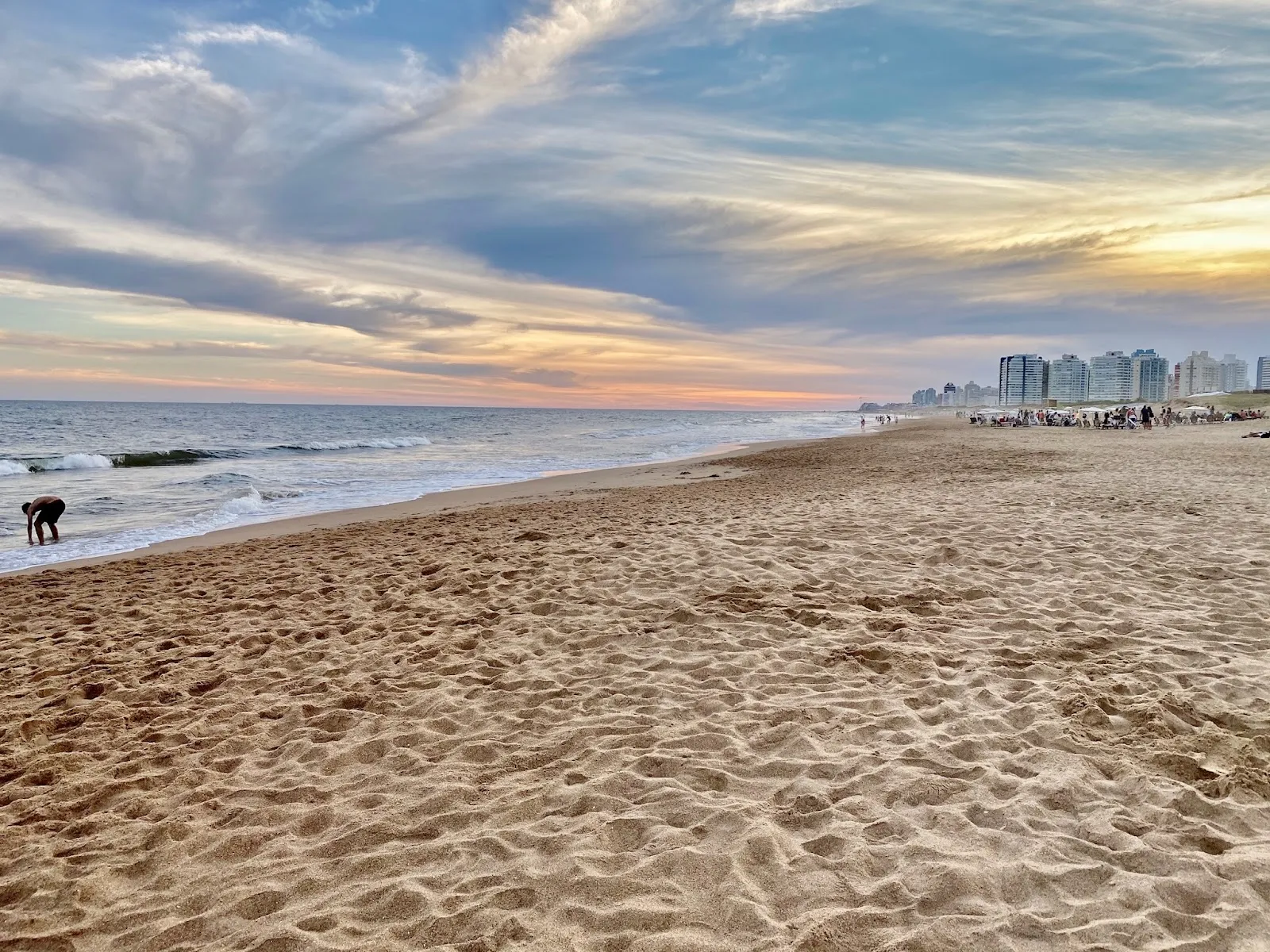
On Punta del Este’s Atlantic side, Playa Brava is a broad sandy beach known for strong waves and surfing. Its best-known landmark is La Mano, the giant hand sculpture rising from the sand near the start of the beach. Come to watch the surf, stroll the shore or take a photo by the sculpture. The rough water is less suited to swimming than the calmer Playa Mansa across the peninsula. Restrooms and parking are available, and the beach can feel quieter outside peak times.
The Atlantic side of Punta del Este
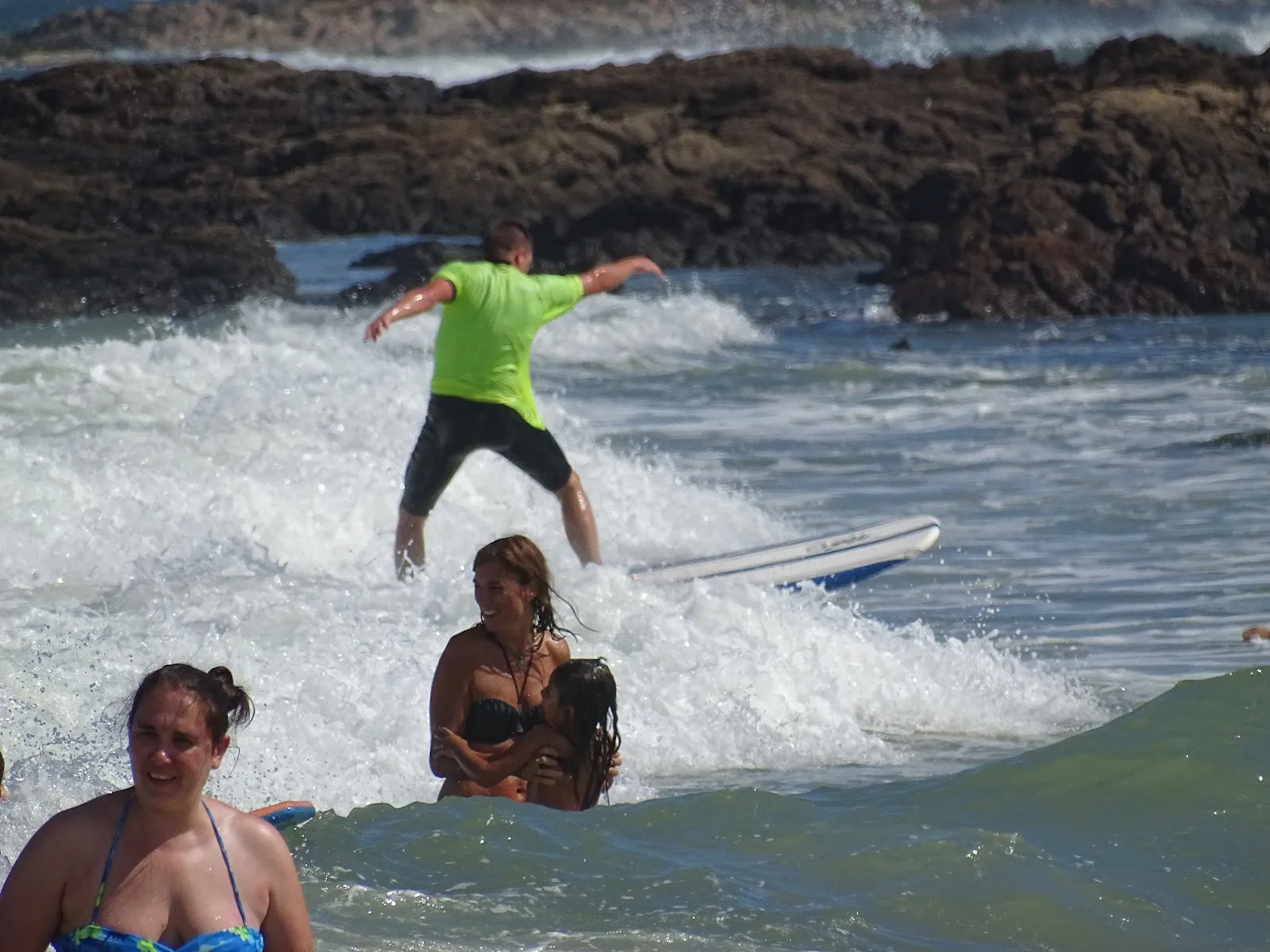
Playa Brava faces the Atlantic on the eastern side of Punta del Este’s peninsula. Its name means “rough beach,” a fitting description of the stronger waves and less sheltered water. The contrast with Playa Mansa, on the Río de la Plata side, is clear: Mansa has calmer conditions, while Brava draws surfers looking for ocean swell.
The open shoreline gives you room to walk or settle on the sand. Conditions change, so check the surf before heading out, and take care in the water. If calm swimming is your priority, Playa Brava may not be the right choice; Playa Mansa is the more sheltered option.
La Mano in the sand
The beach’s defining landmark is La Mano, also called Los Dedos, a sculpture of five fingers emerging from the sand. Chilean artist Mario Irarrázabal created it, and it has become one of Punta del Este’s best-known symbols. The sculpture stands near the beginning of Playa Brava and is a familiar subject for holiday photos.
Take time to look at it from different angles as you walk around the fingers. The work is often associated with a warning about the dangers of the sea, a meaning that suits its setting on a beach known for rough water. The sculpture is free to visit.
Planning time on the beach
Playa Brava is close to the city and has parking and public restrooms. Early morning can bring a quieter stretch of sand; outside the busy season, the beach also tends to be less crowded. If you are coming to surf, check the conditions first rather than assuming the waves will suit your plans.
You can make the beach part of a longer coastal outing. Casapueblo, in Punta Ballena, is among the nearby sights to consider, and the coast also passes residential neighbourhoods. For a simple visit, walk along the shore and stop at La Mano; for a swim-focused day, compare the conditions with Playa Mansa before choosing where to spend your time.
FAQ
Is Playa Brava good for swimming?
Its waves are strong and the water can be rough, so it is less suited to swimming. Playa Mansa has calmer conditions.
What is La Mano?
La Mano, also called Los Dedos, is a sculpture of five fingers emerging from the sand. Chilean artist Mario Irarrázabal created it.
Is there a fee to see La Mano?
No. The sculpture is free to visit.
Are there restrooms and parking at Playa Brava?
Yes, restrooms and parking are available.