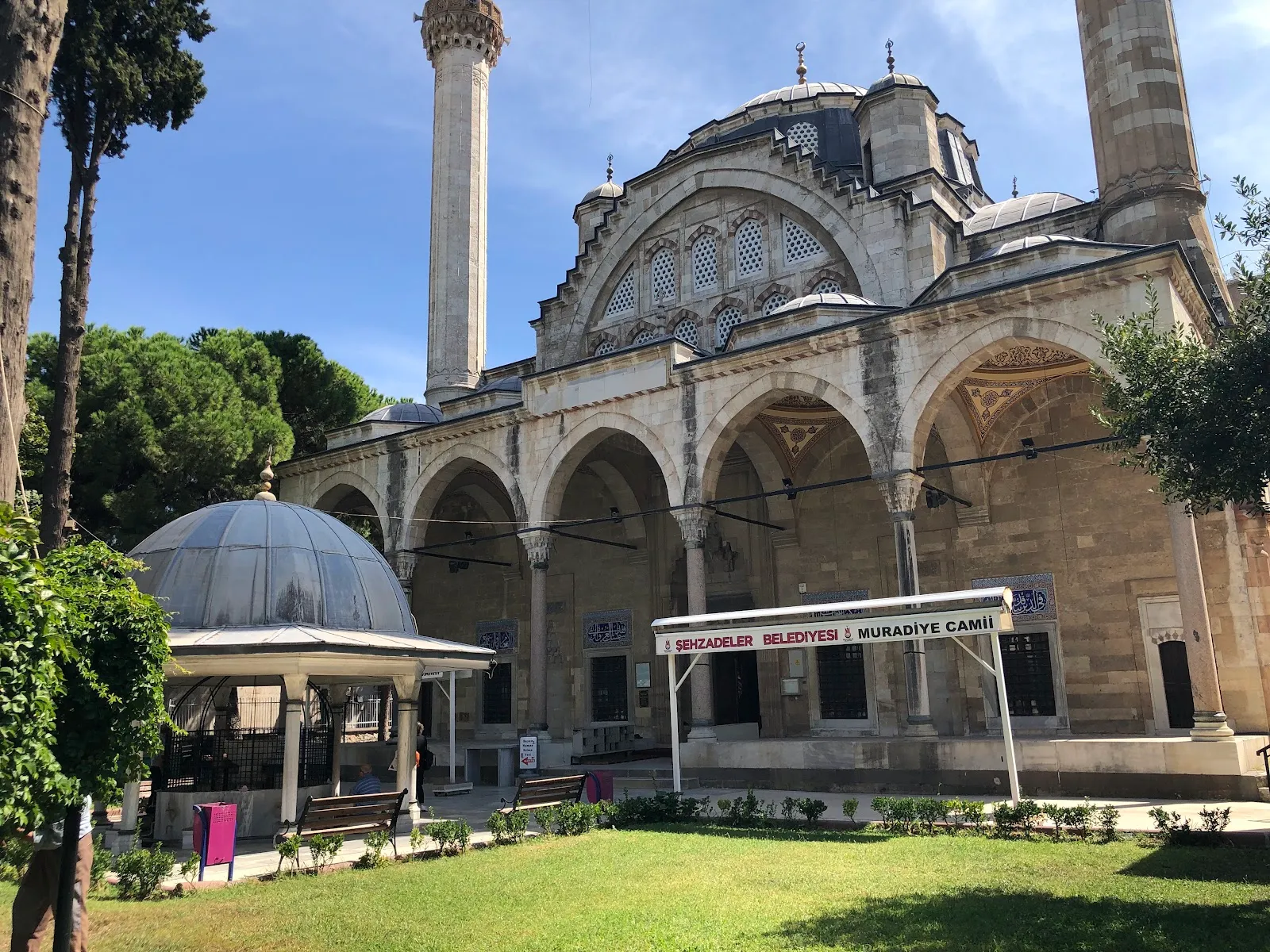
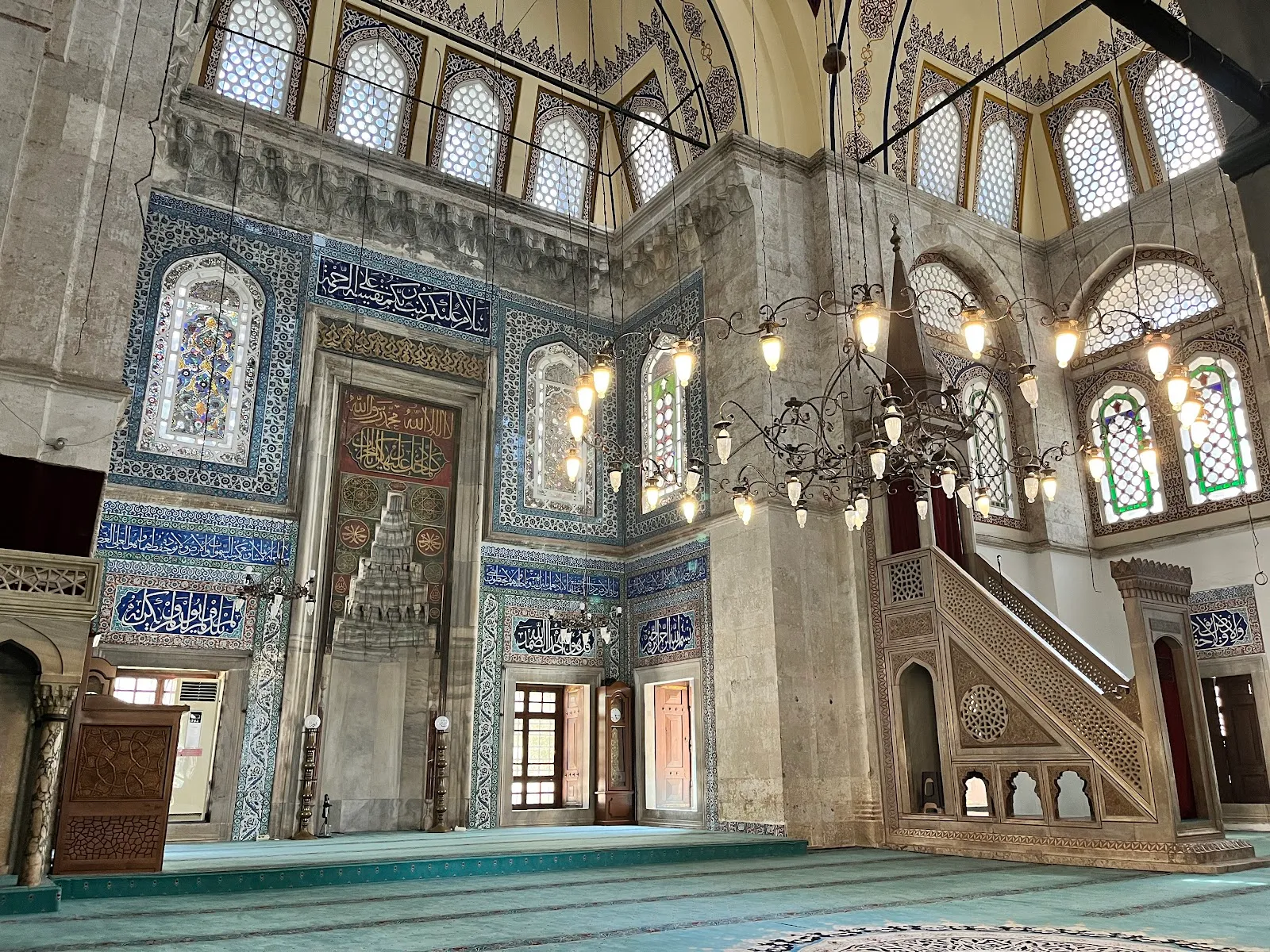
Muradiye Mosque is an Ottoman mosque in İzmir, built between 1583 and 1585 for Sultan Murat III. Its twin minarets and decorated front portico lead to an interior with İznik tiles, stained glass and painted details. Look closely at the mihrab and minbar, then search the walls for rotating stone cylinders associated with earthquake warnings. The mosque is a quiet place to see Ottoman craftsmanship; go early if you want to take in the details at a calmer pace.
Built for Sultan Murat III
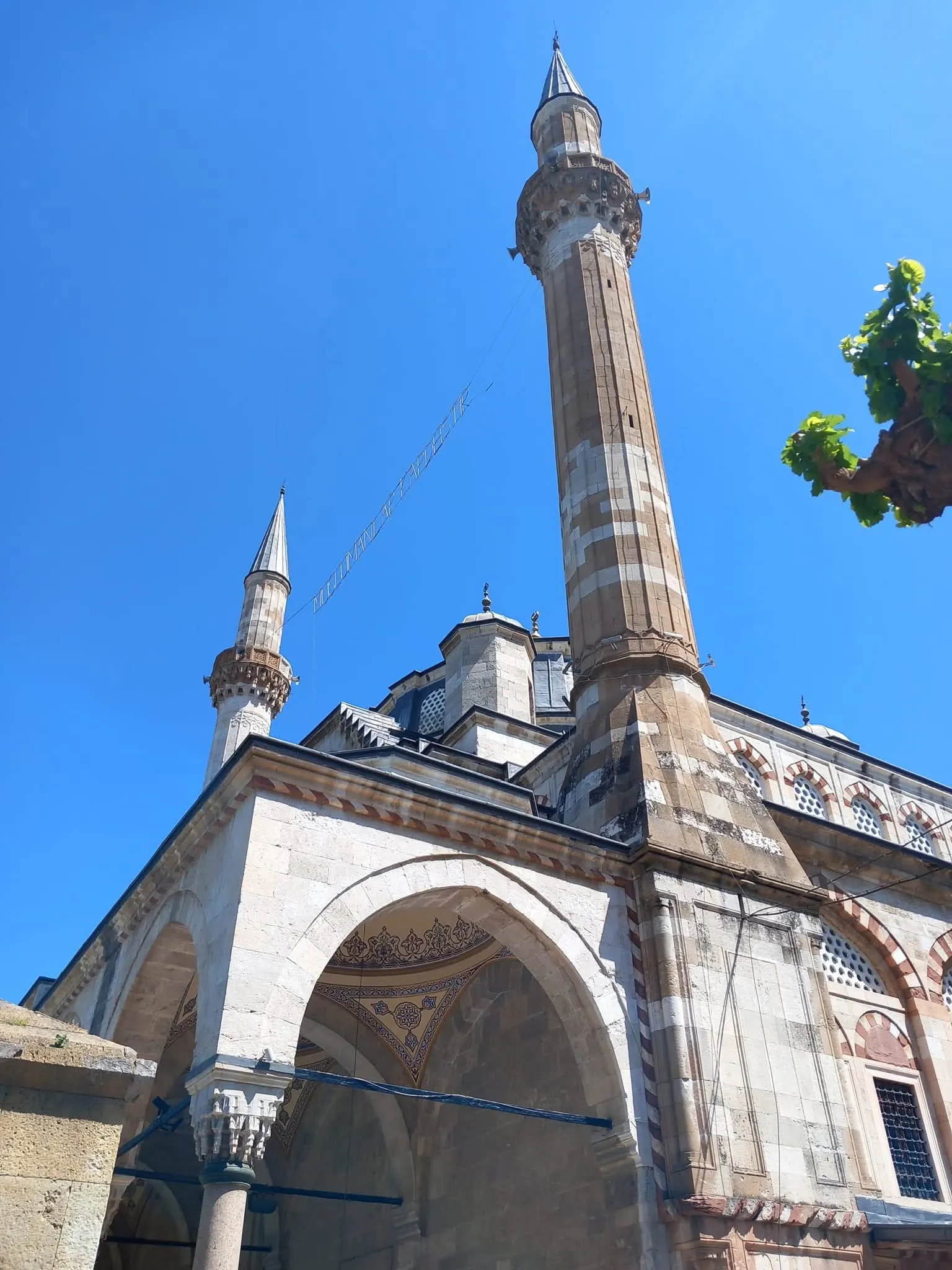
Muradiye Mosque was commissioned by Sultan Murat III and constructed between 1583 and 1585. Its twin minarets and front portico form the approach to the mosque. The entrance door combines inlaid wood and marble, details to notice before stepping inside.
Tile, glass and stonework
Inside, İznik tiling and delicate stained glass sit alongside painted details and original stonework. Windows bring light into the interior. The mihrab, the prayer niche, and the minbar, the pulpit, are particularly fine examples of the mosque’s decoration.
Rotating stone cylinders are built into the walls. They are associated with an earthquake warning method: the cylinders are said to spin and rattle before a tremor. Look for them as you move through the building.
FAQ
When was Muradiye Mosque built?
It was constructed between 1583 and 1585 for Sultan Murat III.
What can you see inside Muradiye Mosque?
Look for İznik tiles, stained glass, painted details and original stonework. The mihrab and minbar are notable features.
What are the rotating stone cylinders in the walls?
They are associated with an earthquake warning method and are said to spin and rattle before a tremor.