İsa Bey Mosque stands on Ayasuluk Hill in Selçuk, between the remains of the Temple of Artemis and the Basilica of St. John. Completed in 1375, it is an active mosque and an important example of architecture from the Anatolian beylik period. Look for its asymmetrical layout, stonework made partly with reused material from Ephesus, and a broad courtyard with a fountain and historic tombstones. The calm setting makes it a worthwhile stop alongside the hill’s other historic sites.
A mosque from the beylik period
İsa Bey Mosque was built between 1374 and 1375 for İsa Bey of the Aydınids, a ruling family of the period. Its architect was Ali ibn Mushaimish, whose name appears in the building inscription alongside İsa Bey’s. The mosque belongs to a period between Seljuk rule and the rise of the Ottoman Empire, and its design combines Anatolian traditions with architectural ideas associated with the Umayyad Mosque in Damascus.
The building is still used as a mosque. Its position on Ayasuluk Hill places it among sites associated with different faiths and periods: the remains of the Temple of Artemis lie nearby, as does the Basilica of St. John. The hill also rises toward Ayasuluk Fortress, making the mosque a natural stop on a visit to this compact historic area.
Courtyard, plan and reused stone
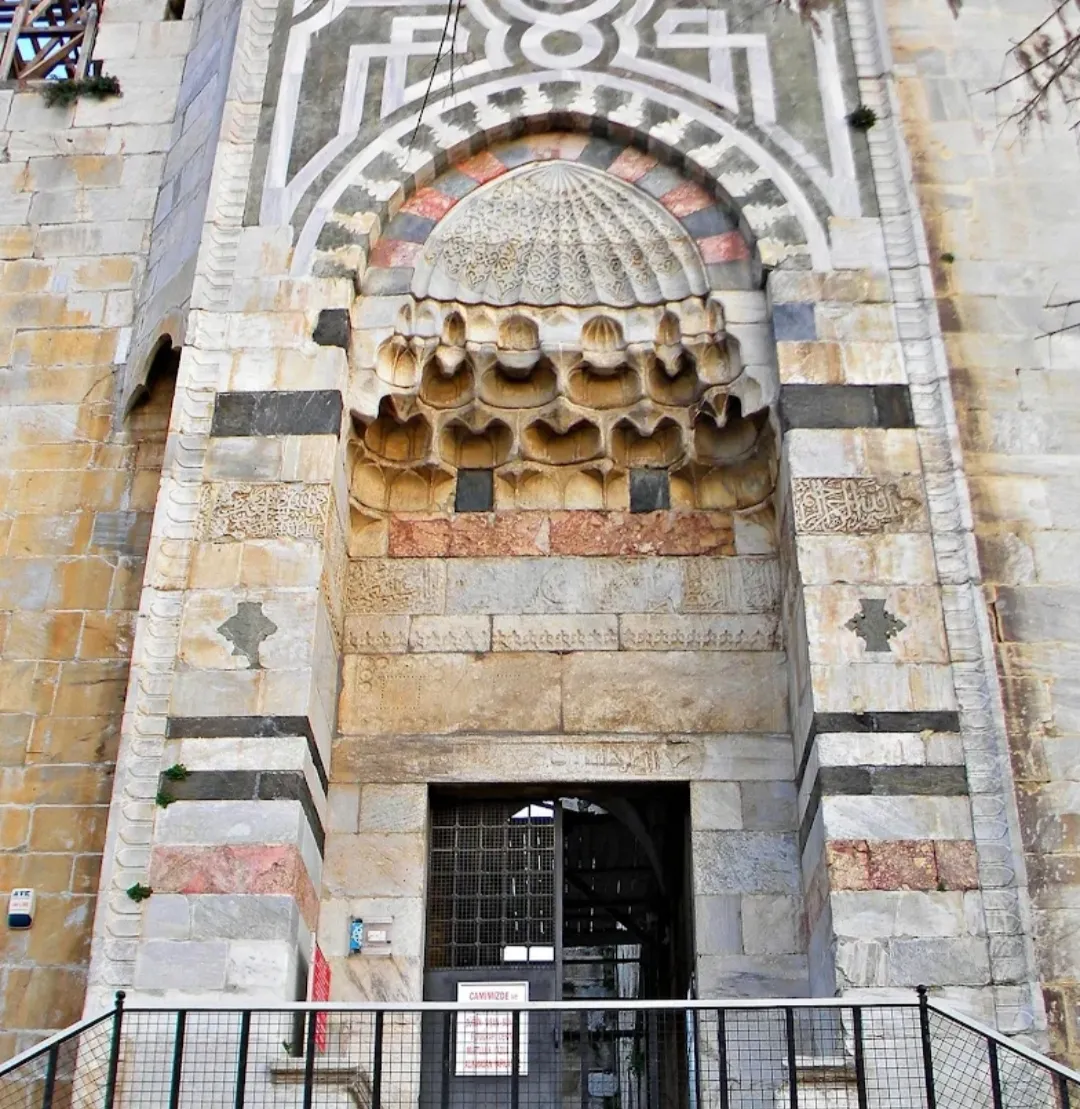
The mosque is known for its asymmetrical design. Its doors, windows and domes are not arranged in a uniform plan, giving the exterior a different profile from more regular mosque layouts. The building has two domes and a large courtyard, a feature associated with later Ottoman mosque design. A fountain stands in the courtyard, where historic tombstones can also be seen.
Look closely at the masonry. Builders reused material from ancient sites around Selçuk, including stone from Ephesus and the Temple of Artemis. The reused pieces include columns and marble blocks, some bearing Latin inscriptions. These materials connect the mosque’s construction to the much older remains around Ayasuluk Hill.
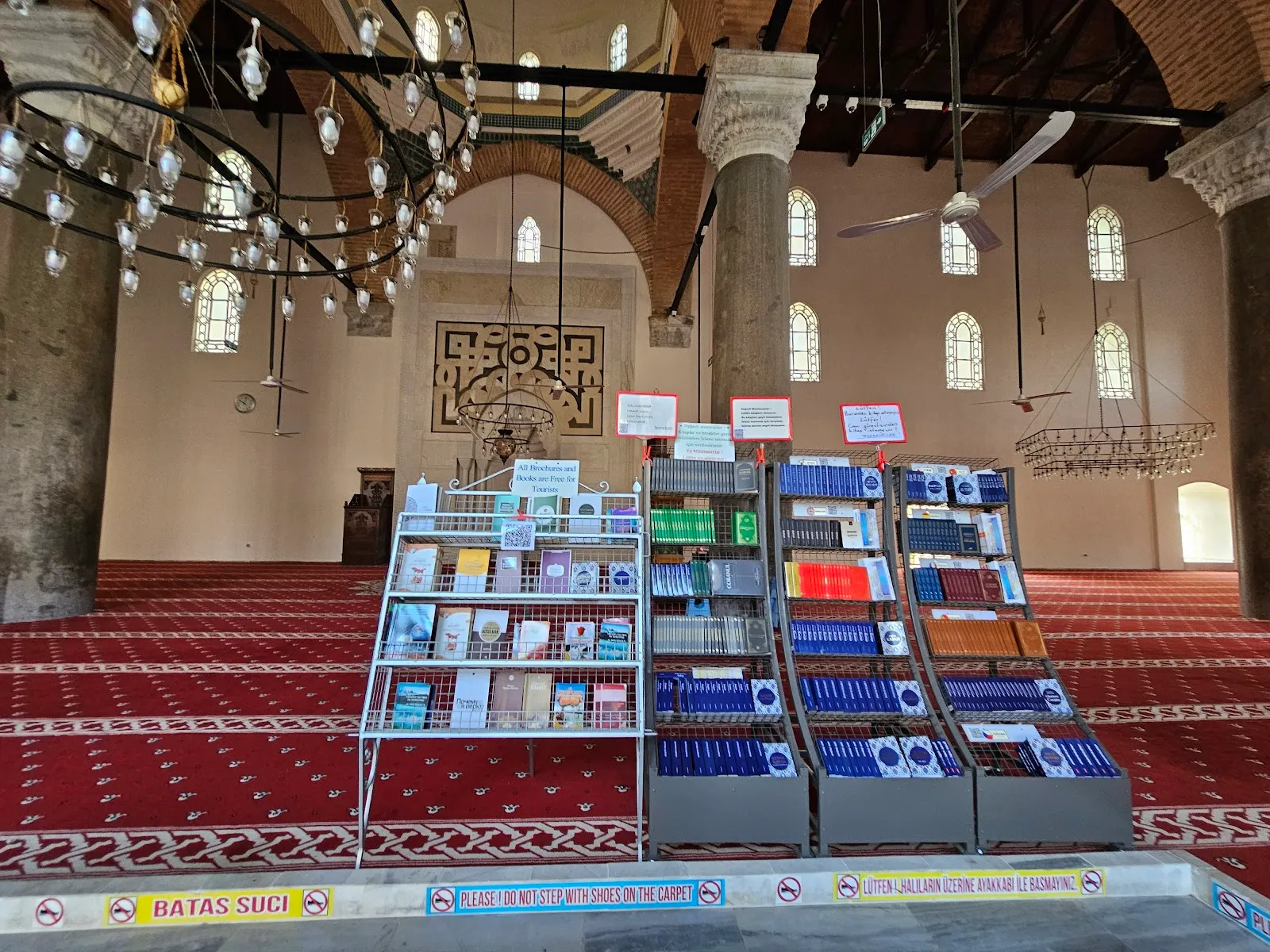
The entrance and courtyard lead into the prayer space. The interior is comparatively plain, so much of the visit’s architectural interest lies in the building’s stonework, its unusual layout and the contrast between the courtyard and the mosque’s interior.
Planning a respectful visit
Allow around half an hour to look through the mosque and courtyard. Its location makes it easy to combine with the nearby Basilica of St. John, the Temple of Artemis and Ayasuluk Fortress. The surrounding sites represent different periods and traditions within a short distance of one another.
Because İsa Bey Mosque remains active, visitors should treat it as a place of worship, not simply as a monument. Be considerate if prayers are taking place. The approach includes steps, so suitable footwear is useful. The garden ablution area may not have warm water in winter.
FAQ
When was İsa Bey Mosque built?
Construction was completed in 1375. The mosque was commissioned by İsa Bey of the Aydınids.
What is distinctive about the mosque’s architecture?
It has an asymmetrical plan, two domes and a large courtyard. Stone and columns from ancient sites, including Ephesus and the Temple of Artemis, were reused in its construction.
Is İsa Bey Mosque still in use?
Yes. It remains an active mosque, so visitors should be considerate of worshippers.
What can you see in the courtyard?
The courtyard has a fountain and historic tombstones. Its broad layout is one of the mosque’s notable architectural features.