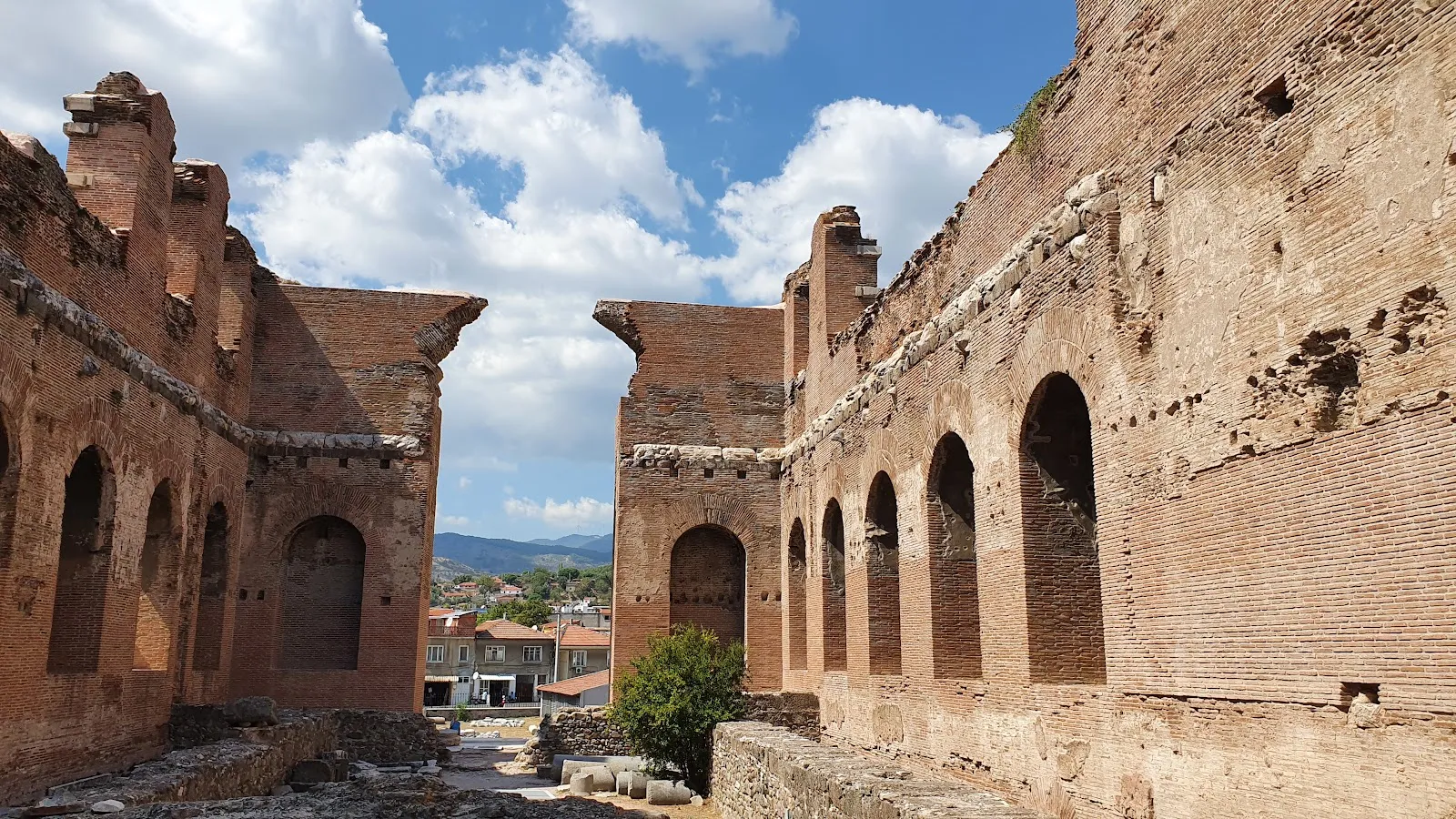
On Ayasuluk Hill in Selçuk, the Basilica of Saint John is a vast 6th-century Byzantine church built by Emperor Justinian I over the believed burial place of John the Apostle. Its surviving walls and columns give a sense of the scale of the original six-domed building. Look for the tomb marked by a marble slab, carved imperial monograms on nearby capitals and the octagonal baptistery with its deep pool. The site is a useful stop for understanding Selçuk’s religious history and pairs naturally with the nearby Ayasuluk landmarks.
A church built over a believed tomb
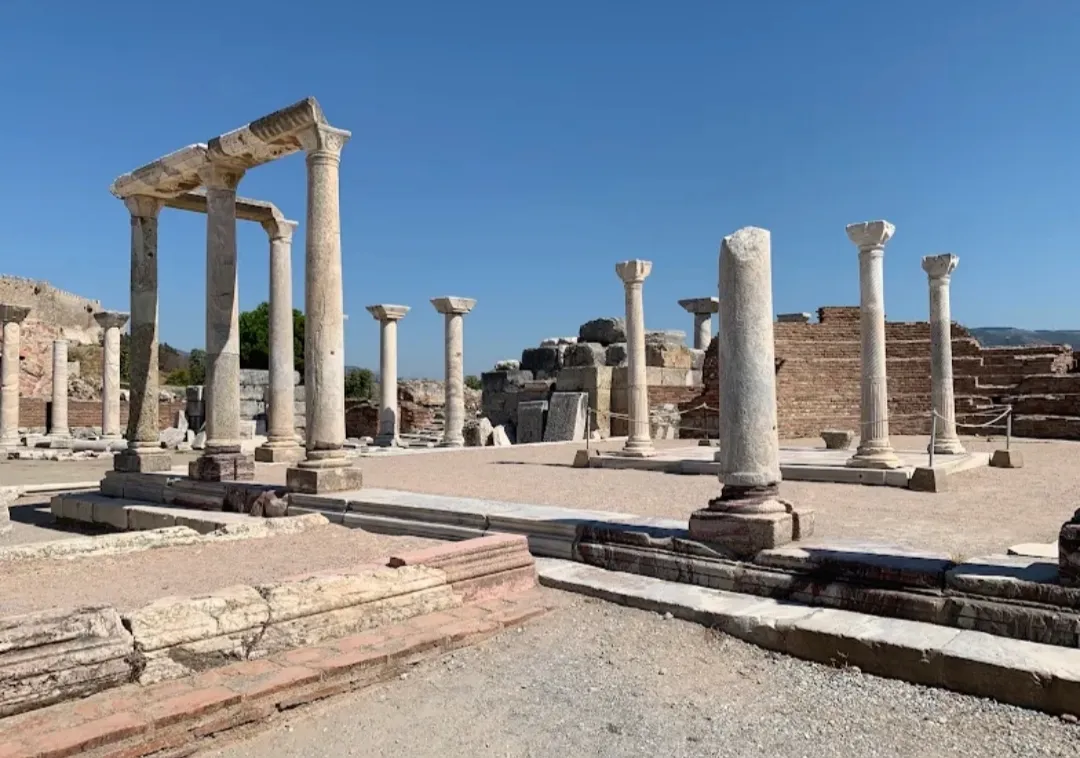
The Basilica of Saint John stands on the slopes of Ayasuluk Hill in Selçuk. Emperor Justinian I directed its construction in the 6th century over the place then believed to be the burial site of John the Apostle. The church was cross-shaped and had six domes. Today, its surviving walls, arches and columns suggest the scale of the building, while its open, ruined interior lets you follow parts of its original plan.
The apostle’s tomb is marked by a flat marble slab. The site’s significance comes both from this association and from its place in the history of Byzantine church architecture. The basilica once drew pilgrims, and its design is said to have influenced St. Mark’s Basilica in Venice.
Details to look for among the ruins
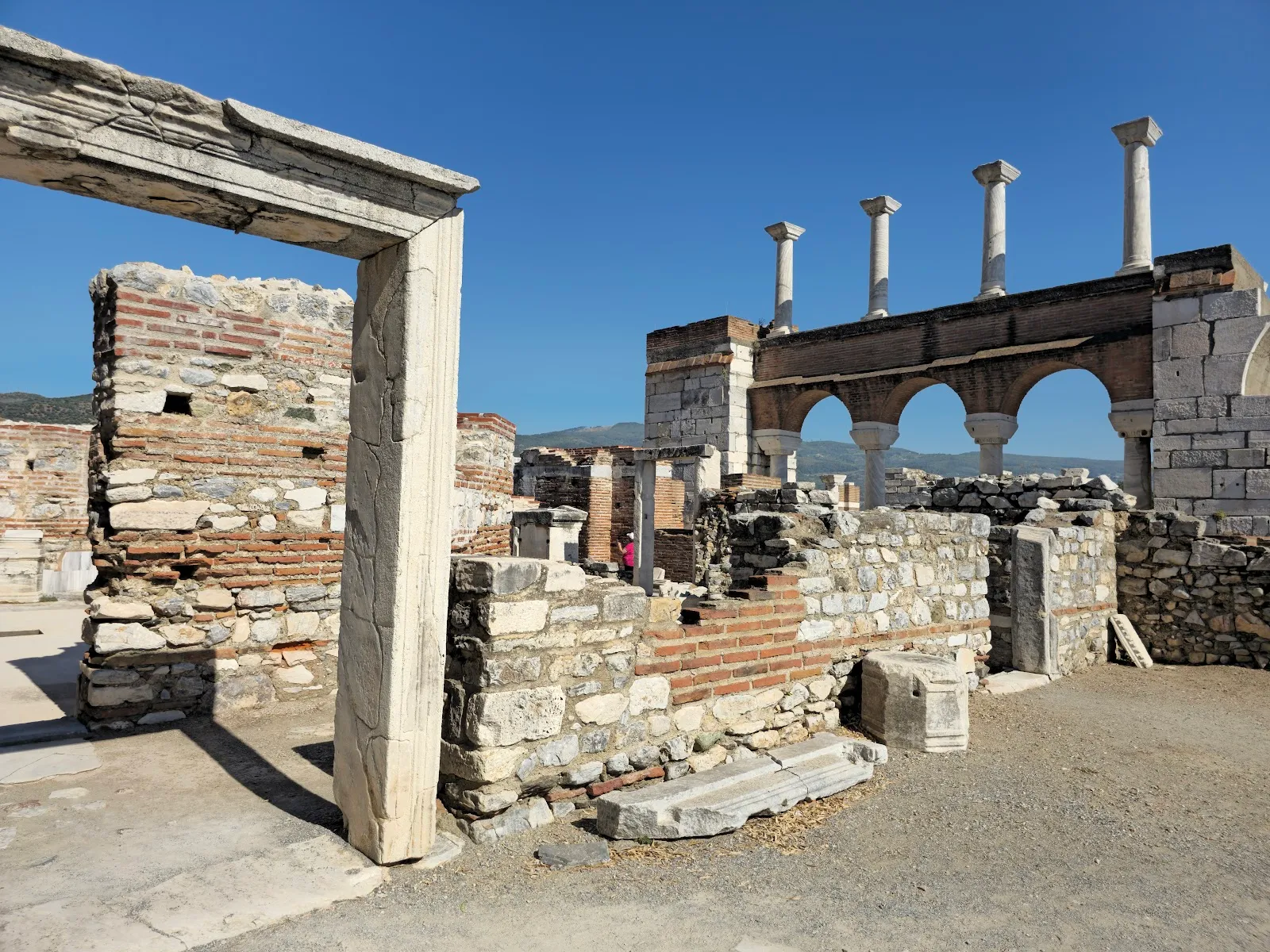
Near the tomb, inspect the marble capitals for imperial monograms associated with Justinian and Empress Theodora. Marble from the nearby Temple of Artemis was reused in the basilica, linking two of the area’s major historical sites. The remains of columns, walls and arches show how the structure was assembled from earlier material as well as newly carved stone.
The octagonal baptistery is another key stop. Its deep pool was large enough for adult baptism. Give yourself time to look closely at these features rather than only walking through the main ruins. A guide can add context; signs around the site also provide information as you explore.
FAQ
Where is the Basilica of Saint John?
It is on Ayasuluk Hill in Selçuk, İzmir Province, Türkiye.
What can you see at the basilica?
The ruins include the believed tomb of John the Apostle, carved marble capitals, columns and an octagonal baptistery with a deep pool.
When is a good time to visit?
Early or late in the day is recommended for a quieter visit.