
On the European shore of the Bosphorus in Beşiktaş, Dolmabahçe Palace was built for Sultan Abdülmecid I and completed in 1856. Its design pairs Ottoman elements with Baroque, Rococo and Neoclassical influences. Inside, look for the grand ceremonial spaces, crystal details, marble and gilded ceilings; outside, the gardens open towards the water. The palace also traces a later chapter of Turkish history: Mustafa Kemal Atatürk used it as a residence in Istanbul and died here in 1938. Set aside time for both the rooms and the grounds.
A new residence on the Bosphorus
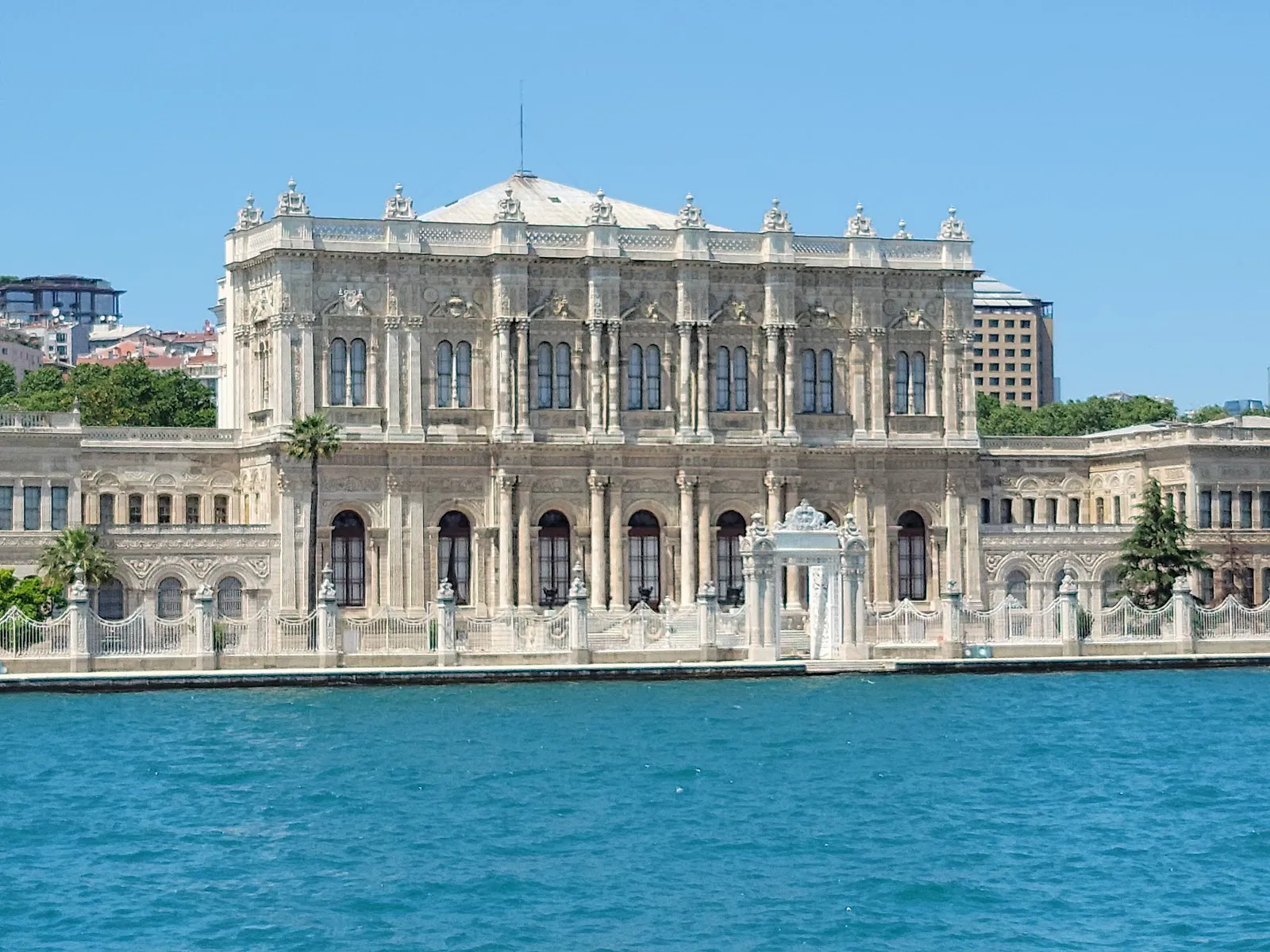
Sultan Abdülmecid I commissioned Dolmabahçe Palace as a modern residence for the Ottoman court. Construction began in 1843 and the palace was completed in 1856. The move from Topkapı Palace reflected a change in taste: the new residence drew on European architectural styles while retaining Ottoman elements.
Armenian Ottoman architects from the Balyan family designed the palace. Baroque, Rococo and Neoclassical influences appear alongside Ottoman features, giving the building a different character from Topkapı. Its position on the European shore of the Bosphorus links the palace to the water and to the city’s two continents.
State rooms, ceremonial hall and harem
The palace is arranged around three principal sections: the Selamlık, the Ceremonial Hall and the Harem. The Selamlık was used for state affairs. The Ceremonial Hall hosted gatherings between the sultan and important figures of the state. The Harem was the private part of the residence, where the sultan lived with his family.
As you move through the interiors, notice the contrast between the palace’s formal spaces and its private rooms. Monumental staircases, marble details and high ceilings set the scale; crystal chandeliers and gilded decoration bring the European-influenced interiors into focus. The ceremonial spaces are among the most striking parts of the visit, so leave time to look up as well as around.
A palace with later chapters
Dolmabahçe became the Ottoman Empire’s main administrative centre after its completion, replacing Topkapı in that role. It remained the centre of imperial administration until the end of Ottoman rule. Six sultans lived in the palace before the caliphate was abolished in 1924.
After the founding of the Turkish Republic, Mustafa Kemal Atatürk used Dolmabahçe as his residence when he was in Istanbul. He died in the palace in 1938. That history gives the rooms a significance beyond their design: the same residence is tied to both the final years of the Ottoman court and the early republic.
The gardens and waterfront
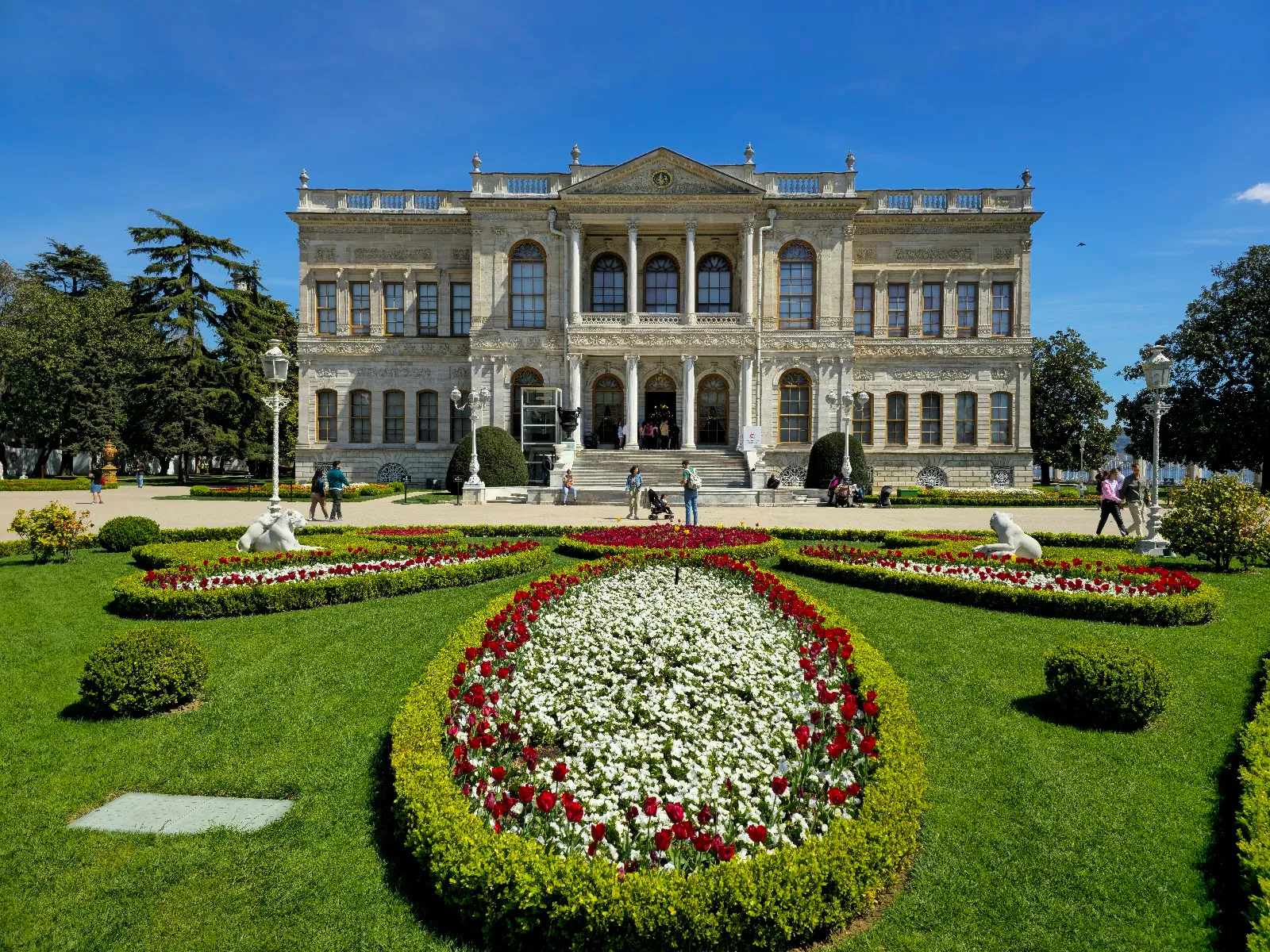
The grounds are part of the visit, not just a route between rooms. Paths cross lawns and planted areas, with open views towards the Bosphorus. Take a walk outside after the interiors to see the palace from the garden and the water-facing side.
For a quieter start, arrive early and begin with the grounds before they become busier. The waterfront setting also gives you a chance to pause after the palace’s highly decorated interiors. If you are planning to see the rooms, gardens and surrounding complex at an unhurried pace, allow several hours rather than treating the palace as a quick photo stop.
FAQ
How long should you spend at Dolmabahçe Palace?
Allow around 3 to 4 hours to explore the palace and grounds at a relaxed pace.
When is the best time to visit?
Arrive early, ideally before 10 am, to avoid the busiest part of the day and take quieter garden photos.
Are audio guides available?
Yes. A cash deposit or passport is required as collateral.
Should you buy tickets in advance?
Advance ticket arrangements are recommended. Check current ticket details before you go, as prices for international visitors may differ from local prices.


