Wat Phra Si Rattana Mahathat, known to locals as Wat Yai, sits on the east bank of the Nan River near Naresuan Bridge in Phitsanulok. It is the city's most important temple and the home of Phra Phuttha Chinnarat, a gold-covered bronze Buddha image that some Thais consider one of the most beautiful in the country. Visitors come for the main hall, with its gilded details, crystal chandeliers and murals, and for the calm inside. Plan a short visit, dress modestly and take off your shoes before you enter the main hall.
Founding and history
King Lithai of Sukhothai founded the temple in 1357, during the Sukhothai era. The name is often translated as the Temple of the Great Jeweled Reliquary. Locals call it Wat Yai, or Big Temple, a name that refers to its size and to its place as the most important temple in Phitsanulok and the province.
The temple's most important object is a bronze Buddha image that was cast at the same time as two other statues. Those two now stand at Wat Bowon Niwet in Bangkok. The gold covering seen today is believed to be the work of King Ekathotsarot, who reigned from 1605 to 1610.
Phra Phuttha Chinnarat
The image shows the Buddha in the Mara Vichaya posture, the pose associated with subduing Mara. Many Thais regard it as one of the most beautiful Buddha images in the country, and it is often ranked second only to the Emerald Buddha in Bangkok. It is also one of the most copied Buddha images in Thailand.
The statue follows the late Sukhothai style, although its head is a little wider than is usual for that style. This gives the figure a solid, grounded look when seen in the hall.
Inside the temple
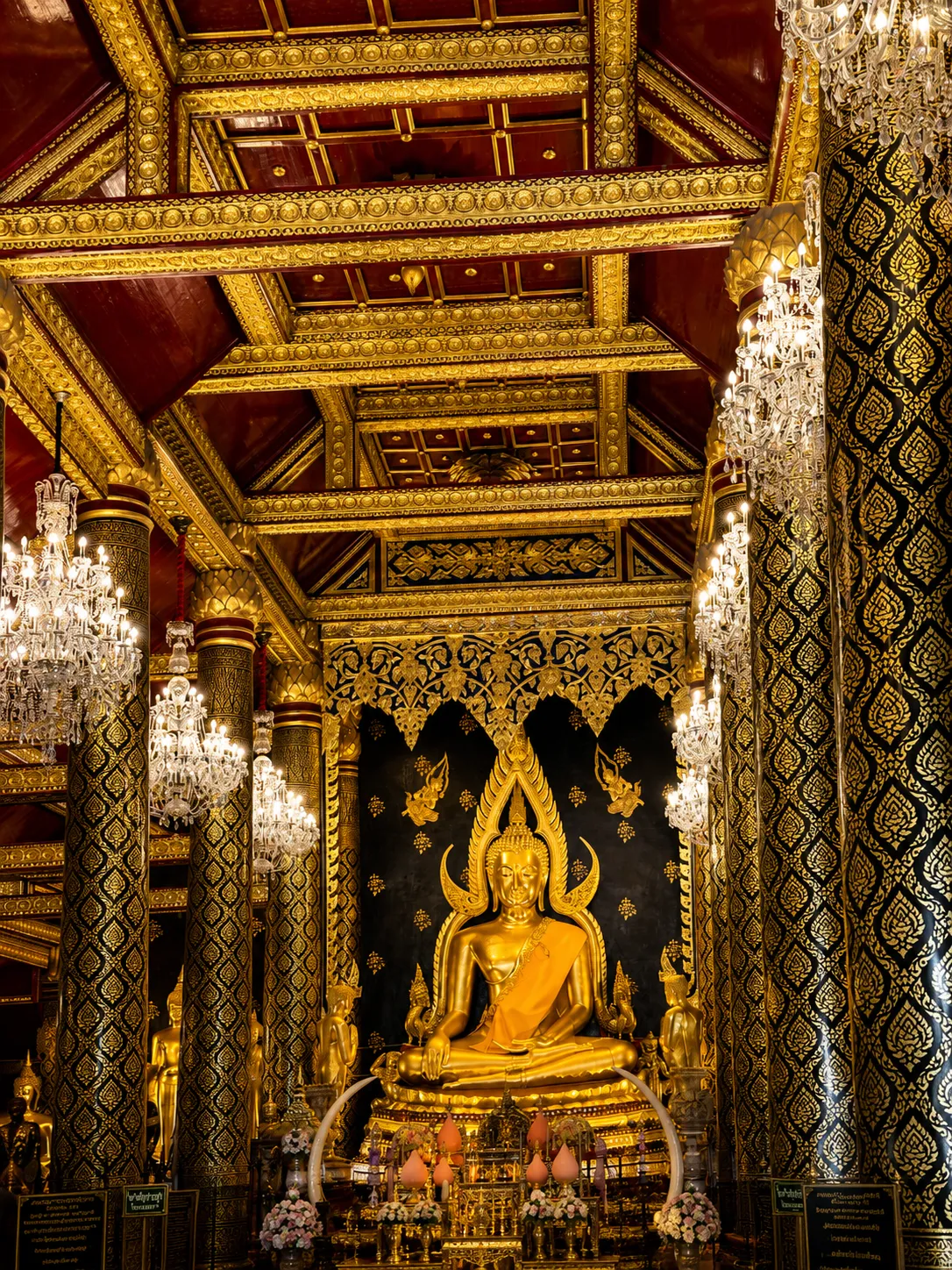
The main hall, or viharn, is the center of the visit. Gold details, deep colors, crystal chandeliers and murals fill the space, and the statue sits at its heart. The temple doors are large and finely ornate.
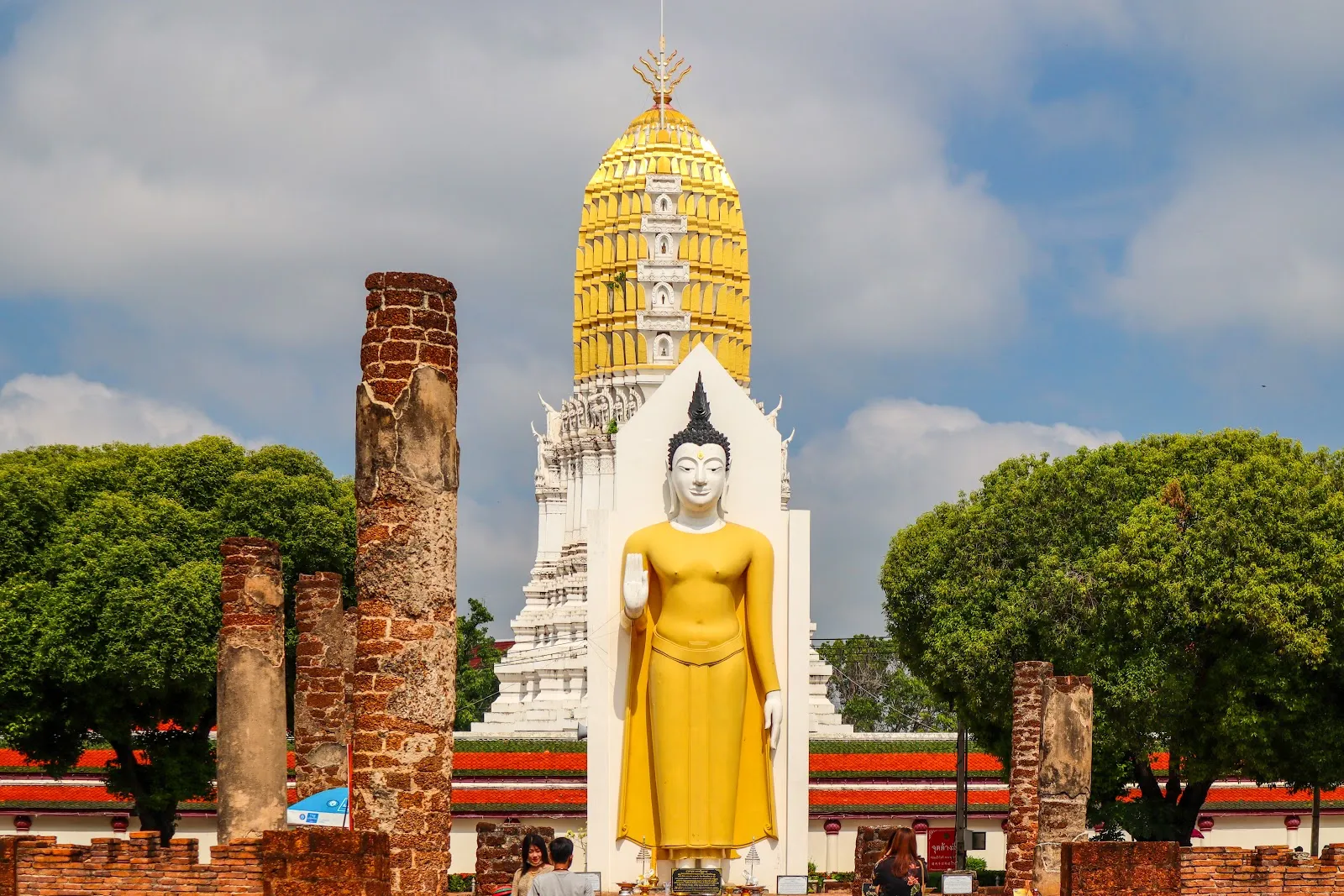
The temple also has a prang in the Ayutthaya style, about 37 meters high, which holds Buddhist relics. It is one of the features that stands out when you look across the grounds.
Visiting the grounds
The entrance is through the eastern gate. The temple sits on the east bank of the Nan River, near Naresuan Bridge and opposite Phitsanulok Provincial Hall.
The city's other landmarks include Wat Ratchaburana and Wat Nang Phaya. A free parking lot is available on site. The entrance, restroom and parking lot are all wheelchair accessible.
Festival and fair
A large fair takes place at the temple every January.
Etiquette inside
Remove your shoes before entering the main hall. Some areas can be hot underfoot, so socks help. Keep your voice low inside and dress respectfully. You can make a small donation if you wish. Buddha statues on site are available for worship or purchase.
FAQ
What are the opening hours?
The temple is open every day, from early morning until evening.
How long do you need?
Allow 30 to 60 minutes, or longer if you want to photograph the temple or explore slowly.
Do you need to take off your shoes?
Yes, remove your shoes before entering the main hall. Wear socks, as some areas can be hot.
Is there parking?
A free parking lot is available on site.